


Contact us
Lint Free Wipes: What Makes Them Different?
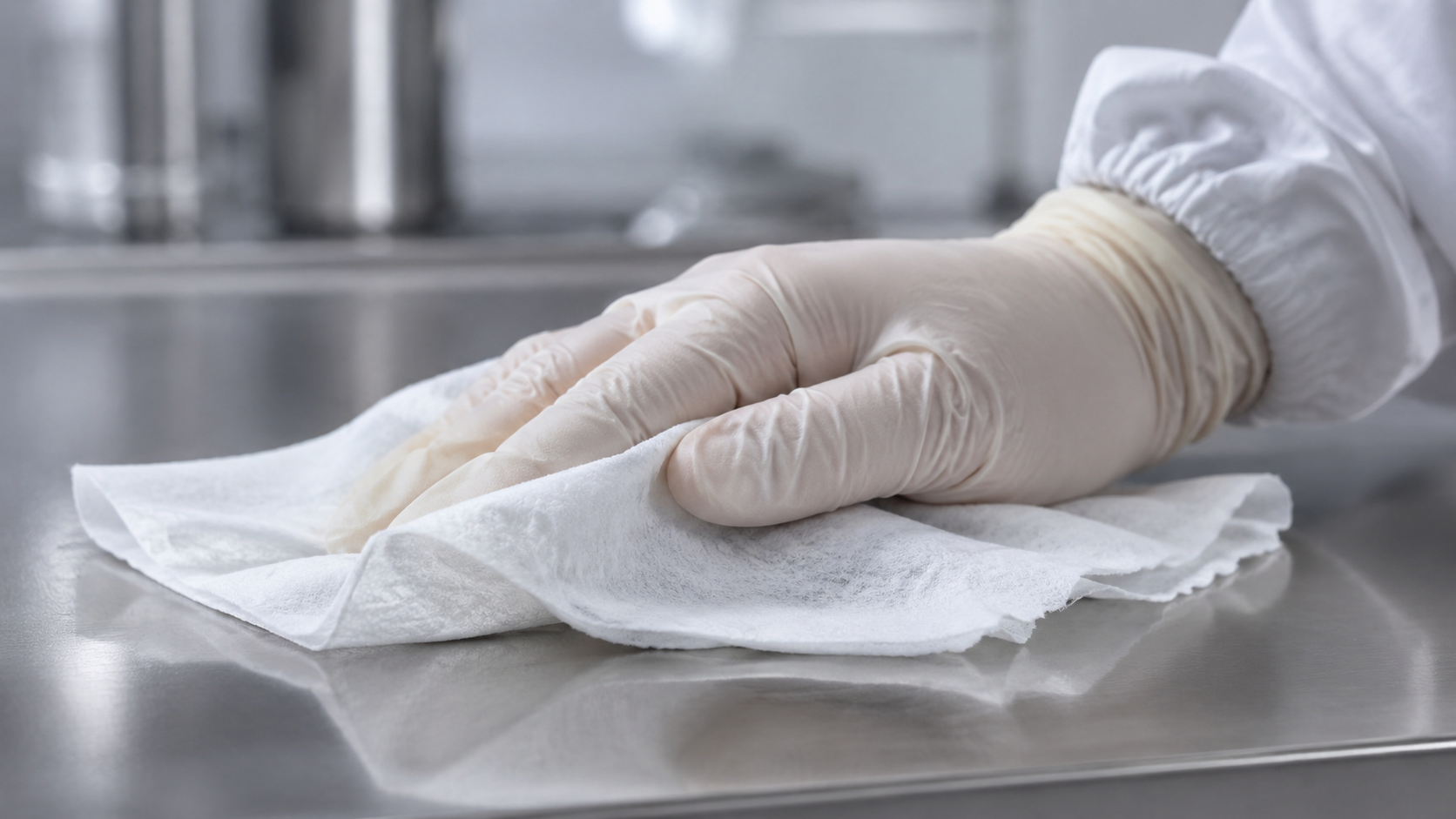
In precision cleaning, the wipe you choose can be as critical as the process itself. Lint free wipes leave no fibers, residue, or contamination on the surfaces they clean. This is exactly why they are the standard in electronics, cleanrooms, pharmaceutical production, and automotive detailing. This guide explains what they are, what lint free cloth is made of, how they are manufactured, and how to choose the right one for your application.
-
Recent Post
-
Biodegradable Nonwoven Fabric: Materials, Benefits & Sustainability Impact
Sustainability has moved on from being a preference to a specification in nonwoven manufacturing. Bi
31.05.2026
Read Article -
Surface Cleaning Wipes: Material Guide and Applications
Surface cleaning wipes are a hygiene essential across household, healthcare, dental, and industrial
15.05.2026
Read Article -

INDEX 2026 Geneva: Everything You Need to Know About the World's Biggest Nonwovens Trade Show
INDEX 2026 is the world's largest nonwovens trade show, held every three years at Palexpo Geneva. Th
05.05.2026
Read Article -
Industrial Wipes: Types and Key Benefits
Every factory floor, workshop, and cleanroom runs on something smaller than it looks: the right wipe
01.05.2026
Read Article -
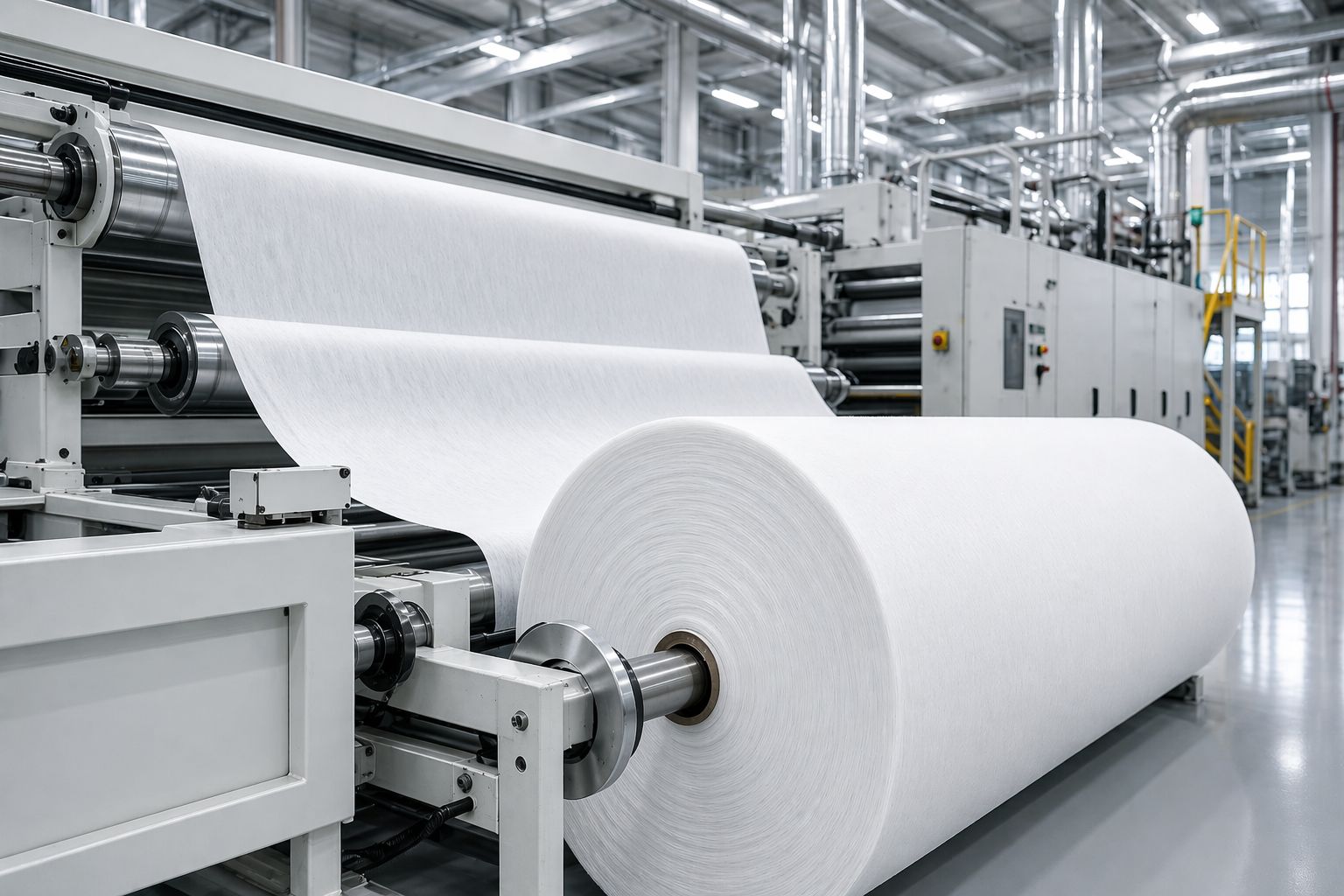
Non Woven Fabric Manufacturing Process: A Complete Guide to Methods, Materials, and Quality Control
Non woven fabric manufacturing begins with a simple decision: which fiber, which formation method, a
24.04.2026
Read Article -
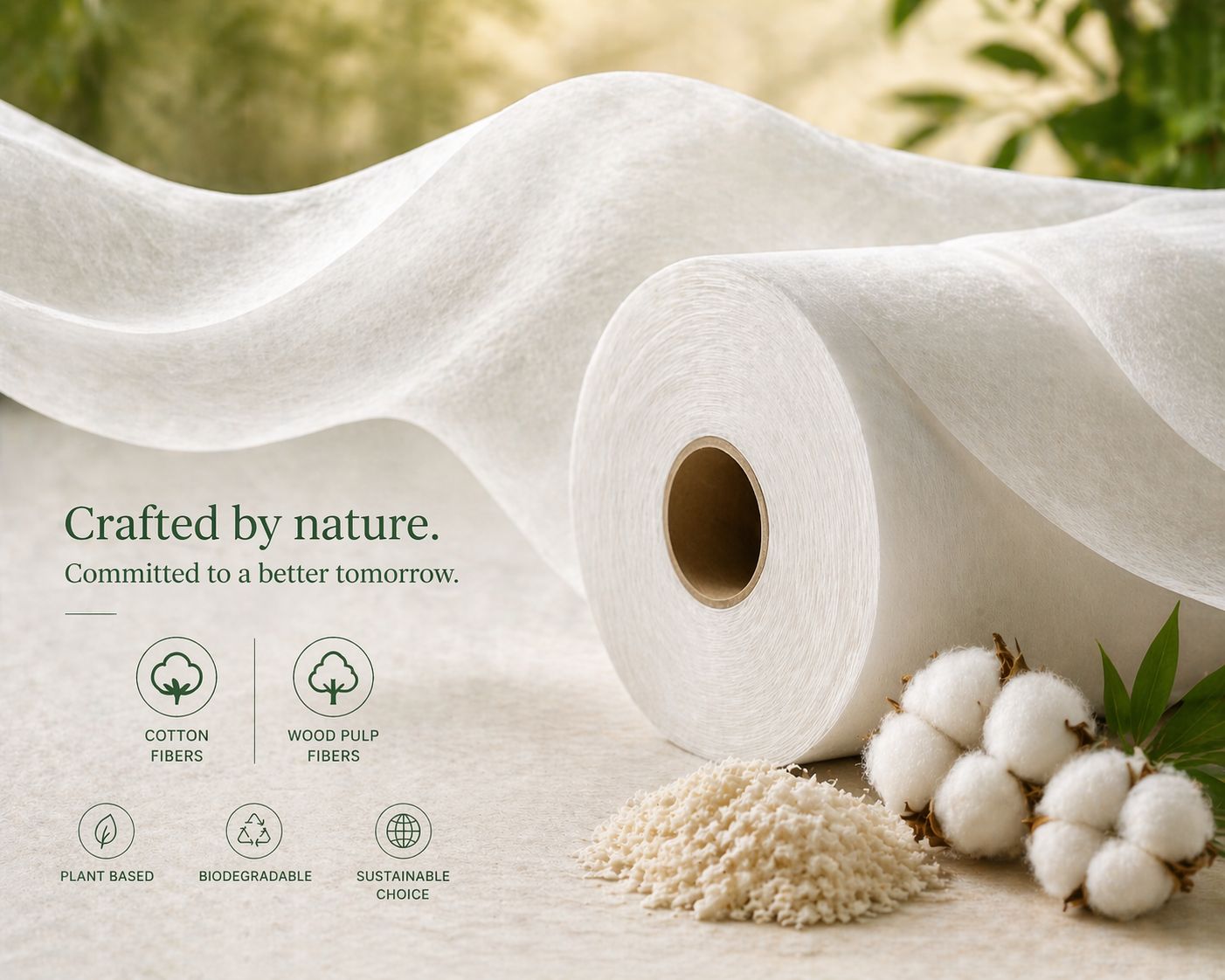
Spunlace Non Woven Fabric: Applications, Properties, and Performance Guide
There is a good chance you touched spunlace non woven fabric in a facial wipe, a baby care pad, or a
27.04.2026
Read Article -
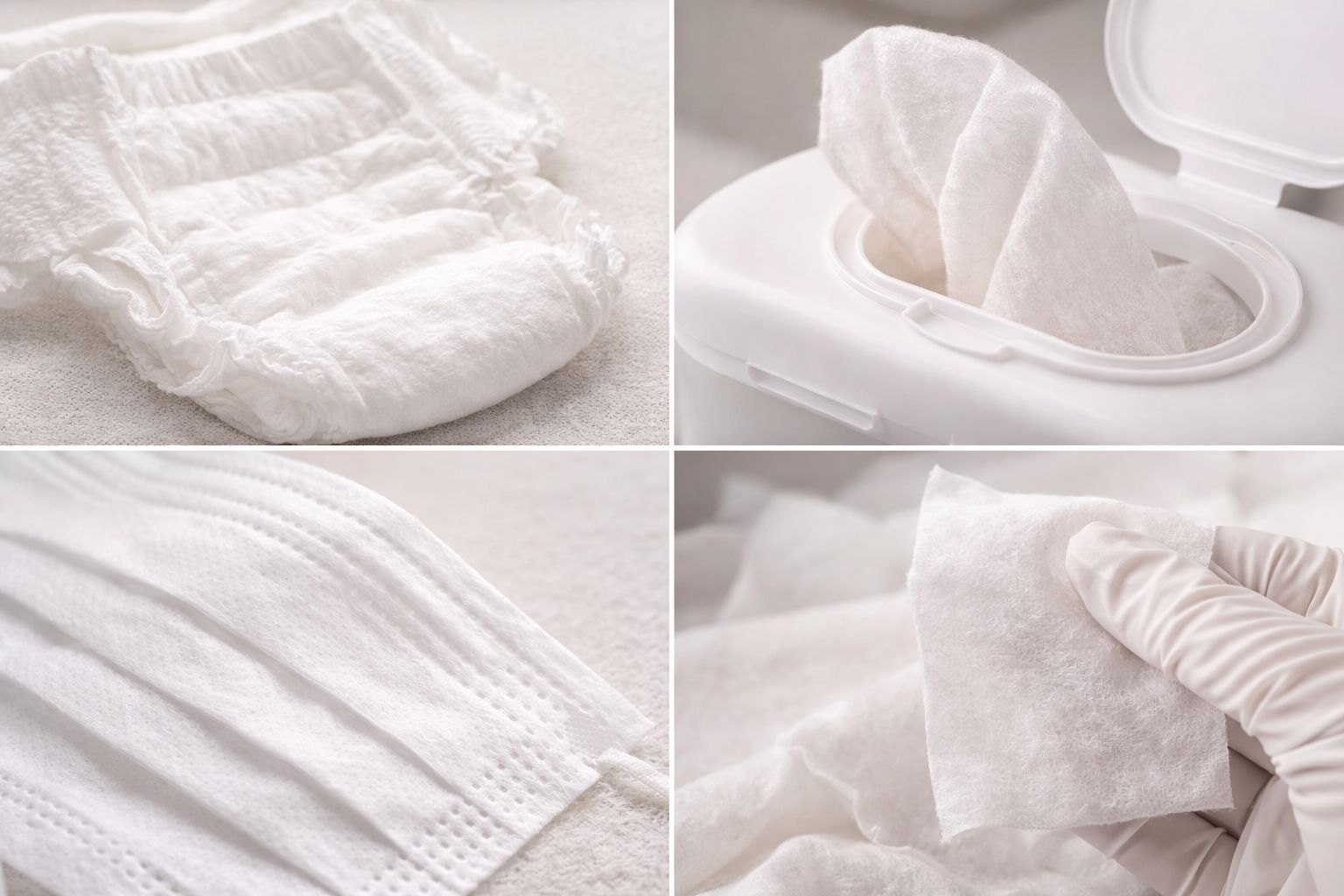
What Is Non woven Fabric? Types, Uses, and Key Benefits Explained
What is non woven fabric? This question is becoming increasingly relevant as industries move toward
28.04.2026
Read Article -
Built for the Planet: How Nonwovens Are Leading the Sustainable Manufacturing Revolution
On World Earth Day 2026, Elixrr explores how pulp-based spunlace nonwovens drive real environmental
25.04.2026
Read Article -
Medical Wipes: Types, Uses & Nonwoven Materials Guide
Medical wipes are specially designed cleaning products that remove germs, bacteria, and contaminants
10.04.2026
Read Article -
Non Woven Fabric Textile Applications Across Industries: Comprehensive Use Cases
Nonwoven fabrics are widely used across industries for their versatility, cost-effectiveness, and ta
25.03.2026
Read Article -
Global Nonwoven Market Trends and Growth Opportunities: 2026 Outlook
The global nonwoven market is expanding rapidly due to strong demand from hygiene, medical, filtrati
18.03.2026
Read Article -
Difference Between Woven and Non-Woven Fabrics: Key Structural, Performance, and Application Differences
Woven and non-woven fabrics differ in how they are made, how they perform, and where they are used.
05.03.2026
Read Article -
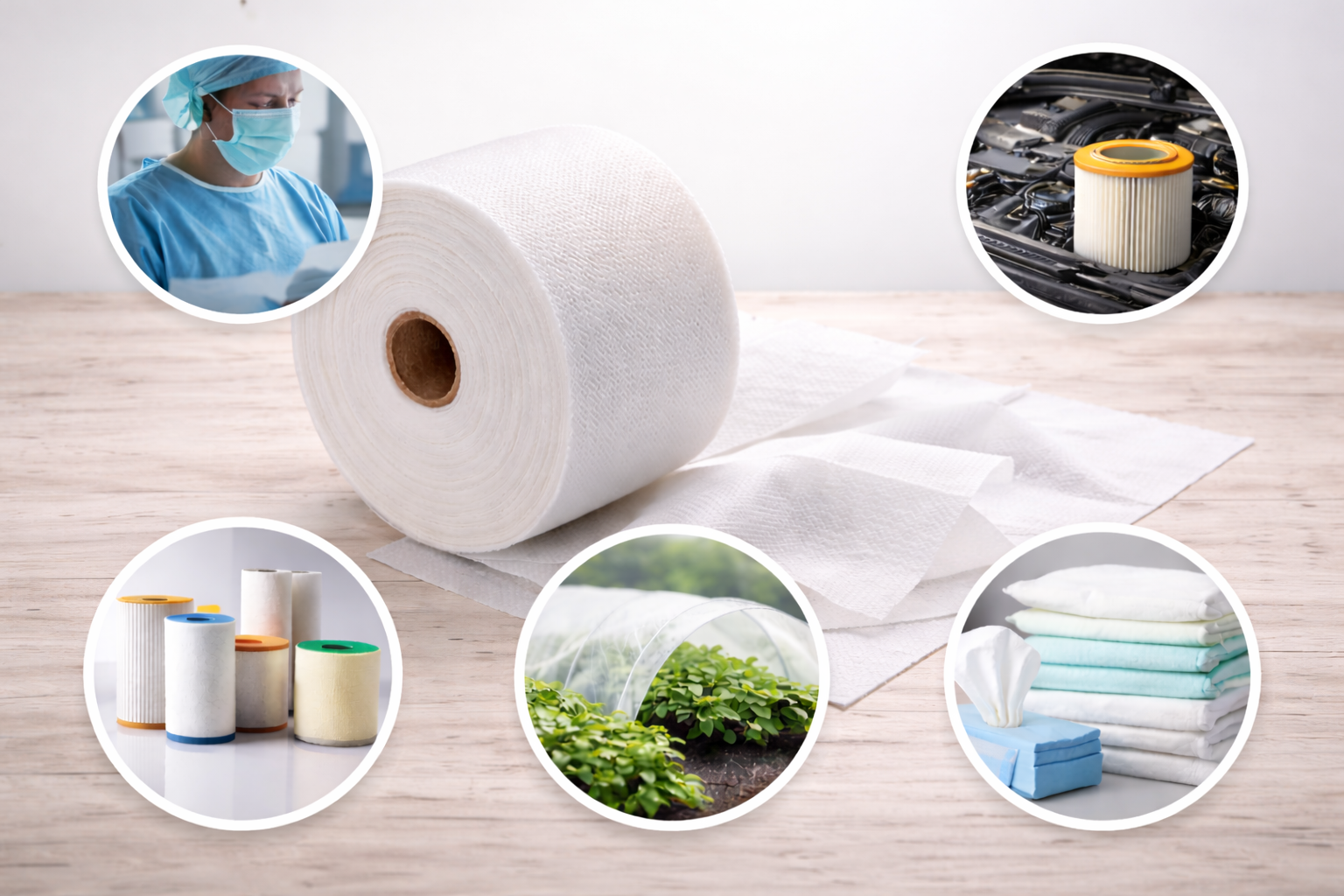
What Are the Uses of Nonwoven Fabric? Practical Applications and Industry Examples
Nonwoven fabrics are versatile materials used across healthcare, hygiene, filtration, automotive, ag
20.02.2026
Read Article -

Types of Non-Woven and Their Uses: Applications, Manufacturing Methods, and Industry Examples
Nonwoven fabrics are engineered materials made by bonding fibres rather than weaving them together.
06.02.2026
Read Article -
What Are Biodegradable Materials and Why Do They Matter?
What biodegradable materials are, how they work, real-world examples, and why they are becoming non-
09.01.2026
Read Article -
What is Recyclable Nonwoven Fabric and Why is it Important?
That’s where recyclable nonwoven fabric comes in. It addresses a real problem. High-volume disposa
14.01.2026
Read Article -
Uses of Non Woven Fabric: 15 Practical Applications
Explore the top uses of non woven fabric across medical, hygiene, filtration, automotive, agricultur
11.12.2025
Read Article -
Why Use Nonwovens in Medical and Healthcare?
Nonwovens are used in medical and healthcare because they solve the real constraints of modern care:
15.12.2025
Read Article -
Dry Wipes Non Woven Fabric. Uses, Types and Benefits
Learn what dry wipes non woven fabric is, its types, materials, manufacturing process, applications,
25.12.2025
Read Article -
Non Woven Fabric Manufacturer | Top Suppliers & Uses Guide
Looking for a trusted non woven fabric manufacturer? Explore leading global suppliers, including Eli
24.12.2025
Read Article -
Top 10 Medical Nonwoven Fabric Exporters Trusted by Global Healthcare Brands
Discover the top medical nonwoven fabric exporters trusted worldwide. Explore quality, applications
16.12.2025
Read Article -
Cellulose Based Nonwoven Fabric | Eco Friendly Innovation
Explore the benefits of cellulose-based nonwoven fabric—biodegradable, soft, and sustainable. Idea
19.11.2025
Read Article -
Beautyworld Dubai: Discovering New Opportunities for Elixrr
Exploring innovative trends and partnerships at Beautyworld Dubai, uncovering exciting growth opport
07.11.2025
Read Article -
Green Nonwoven Technology: Sustainable Innovation in Nonwoven Fabrics
Learn how green nonwoven technology uses eco-friendly materials and energy-efficient manufacturing t
30.10.2025
Read Article -
Types of Nonwoven Fabric and Their Uses in 2025
Explore the 7 main types of nonwoven fabric—spunbond, meltblown, spunlace, and more. Learn how eac
28.10.2025
Read Article -

Biodegradable Nonwoven Fabric: The Future of Sustainable Textiles
Biodegradable nonwoven fabrics are reshaping industries with eco-friendly performance and natural de
28.10.2025
Read Article -
Best Non Woven Fabric Manufacturers in India (2025 Edition)
Discover the top 10 non woven fabric manufacturers in India. Explore eco-friendly, high-quality opti
28.10.2025
Read Article -
Top 10 Applications of Non-Woven Fabrics in 2025 — And Why the Market Is Booming
Top 10 Applications of Non-Woven Fabrics in 2025 — And Why the Market Is Booming
20.05.2025
Read Article -

Reinventing Wipes: How Sustainable Nonwovens Are Reshaping the Industry
Elixrr explores how next-generation sustainable nonwovens, from wet-laid spunlace to carded-pulp tec
21.10.2025
Read Article -
Woven Fabric Material Guide: Composition, Types & Common Applications
Explore woven fabric materials—learn their composition, major types, and everyday applications in
09.10.2025
Read Article -
Non Woven Polypropylene Fabric: Uses, Strengths & Comparison with Woven Fabric
Non woven polypropylene (PP) fabric has become one of the most widely used materials across industri
09.10.2025
Read Article -
What Is Knitted Woven Fabric? Types, Techniques & Benefits
Knitted woven fabric is a hybrid textile that blends the structural strength of woven fabrics with t
16.10.2025
Read Article -
Non Woven vs Woven Fabrics: Key Differences & When to Use Each
Non Woven vs Woven Fabrics: Key Differences & When to Use Each
18.09.2025
Read Article -
Non Woven Polypropylene Fabric: Uses, Strengths & Comparison with Woven Fabric
Non Woven Polypropylene Fabric: Uses, Strengths & Comparison with Woven Fabric
19.09.2025
Read Article -
Spunbond Non Woven Fabric: How It’s Made and Where It’s Used
Explore the manufacturing process and applications of spunbond non woven fabric. Learn why it’s wi
11.09.2025
Read Article -
Polyester Non Woven Fabric: Benefits, Properties & Industrial Uses
Discover the benefits and industrial uses of polyester non woven fabric. Learn about its properties,
03.09.2025
Read Article -

What Is Non Woven Fabric? Definition, Manufacturing & Applications
Explore what non woven fabric is, how it’s made, and where it’s used. Learn about its unique pro
04.09.2025
Read Article -

Types of Nonwoven Fabric – A Complete Guide to Nonwoven Fabric
Learn about different types of nonwoven fabrics, their properties, manufacturing methods, and indust
20.05.2025
Read Article -
Redefining the Future of Wipes: Insights from WOW 2025
Elixrr Nonwovens shares key takeaways from WOW 2025, highlighting sustainable innovations, energy-ef
29.07.2025
Read Article -

Sustainability is Elixrr’s Focus at Global Wipes Markets at Wow 2025
Visit the WOW conference and see our proprietary nonwoven wipes fabrics Enduraspun, Ecopun and Softs
03.07.2025
Read Article -

Inside Elixrr: A Conversation with Subir Barman on the Future of Nonwovens and Next-Gen Manufacturing
As the global demand for sustainable, high-performance materials accelerates, Elixrr Nonwovens conti
20.05.2025
Read Article -
Spunlace Nonwoven Fabrics: Explore Characteristics and Benefits
In a world where hygiene, safety, and softness intersect, material science has a quiet hero, spunlac
20.05.2025
Read Article -
PentaTech™ by Elixrr Nonwovens: Pioneering the Future of High-Performance and Sustainable Nonwovens
Innovation in nonwoven materials isn’t optional anymore. It’s what drives progress. As industrie
07.05.2025
Read Article -
Is Non-Woven Fabric Biodegradable? Exploring the Eco-Friendliness of Non-Wovens
Every business is searching for environmentally appropriate substitutes as the globe moves towards s
02.05.2025
Read Article -
What Are Non Woven Fabrics Used For? Key Examples & Features
In an era defined by performance, precision, and sustainability, materials are no longer just passiv
28.04.2025
Read Article -
Is Leather a Non-Woven Fabric? Let’s Unravel the Truth!
Leather embodies luxury, durability, and style. However, in a society increasingly focused on novel
21.04.2025
Read Article -
Can You Heat Press Non-Woven Fabric? A Complete Guide
The textile industry has embraced heat pressing. Adding colourful graphics to cloth banners or perso
18.04.2025
Read Article -
Can Non-Woven Fabric Be Washed? Let’s Unravel the Truth
Non-woven fabrics are used in a variety of applications, including medical masks, reusable shopping
14.04.2025
Read Article -

Non Woven Fabrics Vs Woven Fabrics: Choose the Right Fabric
If you have ever asked yourself why some materials are all about robustness while others are cutting
11.04.2025
Read Article -

Top 10 Non-Woven Fabric Manufacturers in Europe
The non-woven fabric industry has grown significantly in Europe, driven by the demand for high-quali
27.06.2025
Read Article -

Non-Woven Fabric: Moisture Absorption, Properties & Uses
When it comes to fabric selection, understanding the properties of different materials is essential,
04.04.2025
Read Article -

Types of Fabric: A Beginner Comprehensive Fabric Guide | 2025
Fabrics are the foundation of countless industries and everyday life, influencing everything from th
31.03.2025
Read Article -

What are Non-Woven fabrics?
India has always had a rich relationship with textiles. From the fine muslin that adorned royalty to
28.03.2025
Read Article
-
Explore Recent Blogs
Biodegradable Nonwoven Fabric: Materials, Benefits & Sustainability Impact
Sustainability has moved on from being a preference to a specification in nonwoven manufacturing. Bi
Read More
Lint Free Wipes: What Makes Them Different?
In precision cleaning, the wipe you choose can be as critical as the process itself. Lint free wipes
Read More
Surface Cleaning Wipes: Material Guide and Applications
Surface cleaning wipes are a hygiene essential across household, healthcare, dental, and industrial
Read More
INDEX 2026 Geneva: Everything You Need to Know About the World's Biggest Nonwovens Trade Show
INDEX 2026 is the world's largest nonwovens trade show, held every three years at Palexpo Geneva. Th
Read More

Weave Your Success with Our Revolutionary Fabrics
Power your business with Elixrr's cutting-edge nonwoven fabric solutions. Eco-friendly, customizable, and engineered for excellence—because innovation starts with the right foundation.

In precision cleaning, the wipe you choose can be as critical as the process itself. Lint free wipes leave no fibers, residue, or contamination on the surfaces they clean. This is exactly why they are the standard in electronics, cleanrooms, pharmaceutical production, and automotive detailing. This guide explains what they are, what lint free cloth is made of, how they are manufactured, and how to choose the right one for your application.
Key Takeaways
What Are Lint Free Wipes?
Lint free wipes are cleaning cloths or sheets engineered to shed no visible fibers onto the surface being cleaned. In everyday cleaning, a small amount of fiber transfer is tolerable; it is barely noticeable on a kitchen counter or a car seat. But in precision environments, even a single loose fiber can compromise a semiconductor wafer, contaminate a pharmaceutical batch, or leave a streak across a polished optical surface.
The term ‘lint free’ is a premium performance claim. A true lint free wipe achieves near-zero fiber shedding through the construction of its base material, not through a surface coating or finishing treatment that can degrade with use. This distinction matters when sourcing: a cloth wipe that claims lint-free performance through a finishing spray will shed fibers once the coating wears off. A wipe that is lint-free by virtue of its manufacturing process maintains that performance across its entire working life.
How lint free wipes differ from regular cloth wipes comes down to fiber cohesion. Standard cotton or terry cloth wipes are woven from twisted yarn. Individual fibers protrude from the surface and release when the cloth is used under pressure or friction. Lint free wipes are manufactured using processes that lock fibers together mechanically, eliminating surface protrusions and the shedding that results from them.
What Is Lint Free Cloth Made Of?
The lint free cloth material determines everything: absorbency, softness, chemical compatibility, durability, and, most critically, fiber shedding performance. Three main material categories appear in lint free wipes, each suited to different applications.
Polyester. Polyester fibers are synthetic, smooth, and uniform in diameter. Polyester lint free cloth material produces a fabric with low absorbency but excellent chemical resistance and near-zero fiber shedding. Polyester wipes are the standard in cleanroom environments, semiconductor fabrication, and electronics assembly, where solvent compatibility and particle control are the priority. They tolerate aggressive cleaning chemistries such as IPA, acetone, and similar solvents without breaking down or releasing fibers.
Cellulose and viscose blends. Blended lint free cloth material combines cellulose or viscose with polyester to balance absorbency and lint-free performance. Cellulose fibers are highly hydrophilic. They absorb liquids rapidly making cellulose-polyester blends the preferred choice where both fluid pickup and surface cleanliness are required. These blends are widely used in medical, pharmaceutical, and food-contact applications, where softness and fluid management complement the lint-free requirement.
Microfiber. Microfiber is a synthetic lint free cloth material made from fibers typically finer than 1 denier—much finer than a human hair. The microscopic scale of the fibers means they interlock tightly within the fabric structure, leaving virtually nothing on the surface during cleaning. Microfiber wipes are highly absorbent and can trap particles mechanically within the fiber matrix. They are frequently reusable with proper laundering, which makes them cost-effective for applications that permit reuse.
The role of lint free cloth in cleaning is to deliver consistent, residue-free contact between a cleaning agent and a surface without introducing contamination of its own. In precision environments, the wipe is not passive; it is an active part of the cleaning system. The lint free cloth material must be compatible with the surface being cleaned, the solvent or chemical being applied, and the regulatory requirements of the environment.
How Lint Free Wipes Are Manufactured
Understanding how lint free wipes are made explains why some constructions are lint-free and others are not.
Woven and knitted constructions are produced by interlacing yarns or looping threads. Woven microfiber wipes achieve good lint-free performance because the microfiber yarns are extremely fine and tightly interlaced. However, woven fabrics still have cut edges and surface protrusions that require careful finishing. Most woven lint free wipes are hemmed or edge-sealed specifically to prevent fraying.
Non woven wipes are produced without yarn or interlacing. The most important non-woven wipes for lint-free performance are spunlace, which are made by the hydroentanglement process. In spunlace manufacturing, high-pressure water jets mechanically entangle loose fibers into a cohesive fabric without chemical binders, adhesives, or heat bonding. Because the fibers are interlocked throughout the full web, spunlace non woven wipes achieve near-zero fiber shedding by construction. There is no coating to degrade, no binder to release, and no surface protrusion to transfer.
This is what makes spunlace the premium lint free cloth material for disposable wipes. You can read more about how the process works in our spunlace nonwoven fabric guide.
Quality control for lint free wipes involves particle count testing, fiber release testing under friction, and absorbency measurement across production batches. In ISO Class 5 and Class 3 cleanroom environments, wipes are tested against ISO 14644 particle count standards before qualification. Reputable manufacturers provide lot-specific test data covering fiber shedding, extractables, and chemical compatibility. Buyers in regulated environments should always request this.
Lint Free Wipes vs Regular Cloth Wipes
The difference between lint free wipes and regular cloth wipes is structural, not cosmetic.
Regular cloth wipes such as cotton flannels, terry towels, and general-purpose industrial rags are made from twisted or woven yarn. Individual fibers extend from the yarn surface and shed progressively with every use. Under magnification, a cotton cloth used on a polished surface leaves a visible fiber trail. On a semiconductor component or a precision optical lens, that fiber trail is a defect.
Lint free wipes eliminate this through manufacturing. Spunlace non woven wipes entangle fibers mechanically. There are no protruding surfaces to shed. Polyester lint free cloth is extruded into smooth, continuous filaments that do not break down into loose fibers under use. Microfiber wipes compress fine fibers so tightly that shedding is negligible under normal operating conditions.
The practical consequence for the buyer:
Regular cloth wipes suit general cleaning tasks where surface contamination is not critical, such as floor cleaning, external equipment wiping, and spill absorption in non-regulated environments.
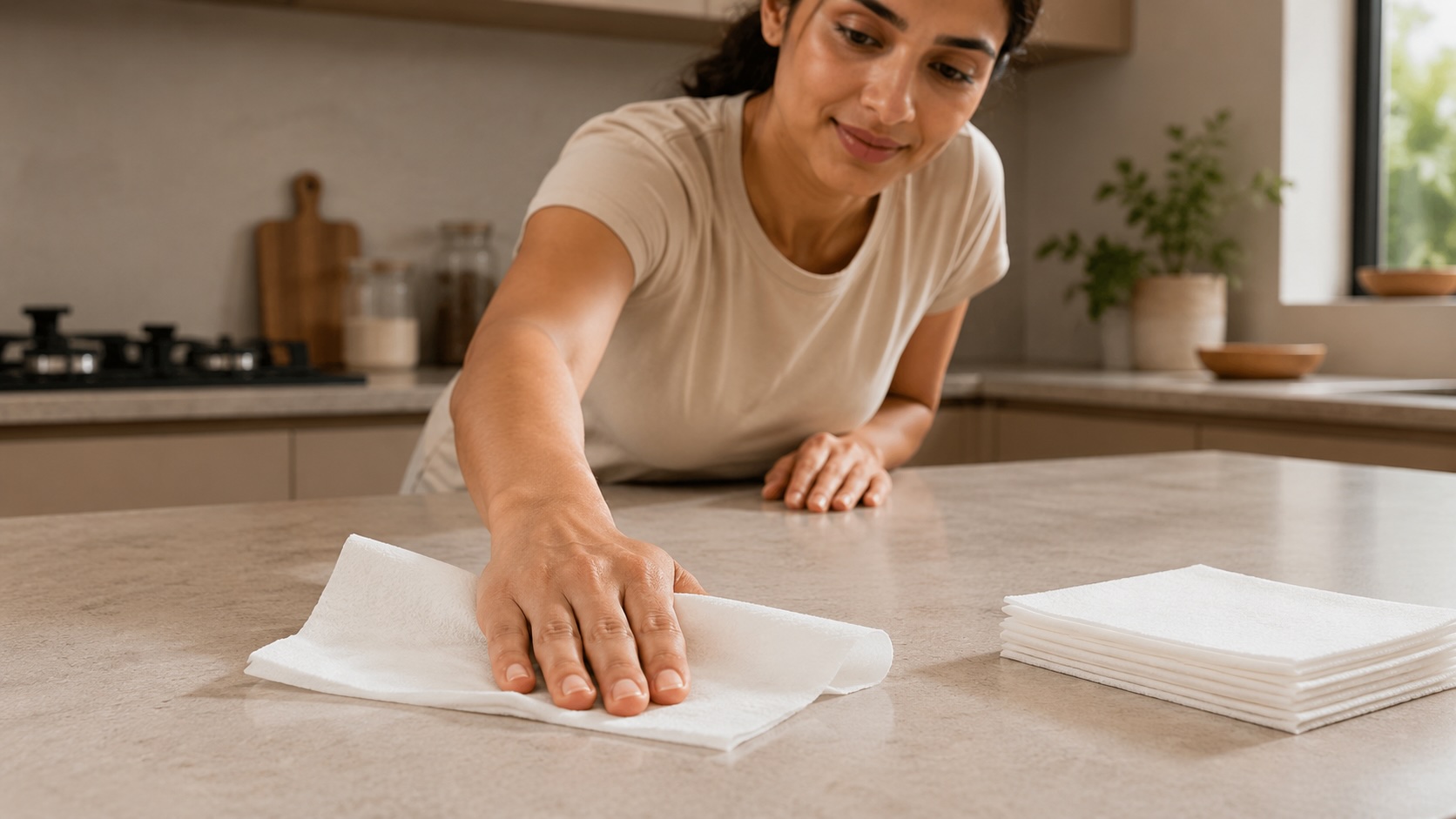
Lint free wipes are required wherever a fiber on the surface would cause a defect, a contamination event, or a compliance failure. Electronics, cleanrooms, dental preparation, pharmaceutical production, precision printing, and high-spec automotive detailing all fall into this category. Our surface cleaning wipes guide covers these requirements across sectors in more detail.
Types of Lint Free Wipes
Microfiber Wipes
Microfiber wipes are produced from split or extruded synthetic fibers, typically polyester-polyamide blends, finer than one denier in diameter. The fineness of the fiber creates a high surface area that mechanically captures particles, bacteria, and fine debris without the need for a chemical cleaning agent. This makes microfiber wipes effective as both a dry cleaning cloth and a pre-moistened lint free wipe.
Their absorbency is notably higher than standard polyester lint free cloth. Microfiber can absorb several times its own weight in liquid. They are soft enough for delicate surfaces including screen glass, optics, and coated paintwork. The main commercial consideration is that microfiber wipes are almost always woven or knitted constructions, making them reusable with appropriate laundering — but also more expensive per unit than disposable non woven wipes.
Non Woven Wipes
Non woven wipes are the most widely used format in industrial and regulated lint-free cleaning. They are produced without weaving or knitting. Fibers are bonded directly into a fabric sheet using mechanical, thermal, or chemical processes. Among nonwoven wipes, spunlace hydroentangled fabric is the lint-free benchmark: no binders, no coating, inherent fiber cohesion, and compatibility with biodegradable fiber inputs including lyocell and cotton.
Non woven wipes are almost exclusively disposable, which makes them the preferred format wherever cross-contamination risk between uses must be eliminated, such as cleanrooms, sterile pharmaceutical production, and surgical environments. Their consistent lot-to-lot quality, controlled basis weight, and available cleanliness certifications make them specification-ready for regulated buying. For a detailed look at how non woven wipes perform across industrial cleaning applications, read our industrial wipes guide.
Polyester Wipes
Polyester lint free wipes are the standard substrate for critical cleanroom and electronics cleaning. Continuous polyester filaments are extruded to a highly consistent diameter and processed into either a woven or nonwoven fabric, the uniformity of the filament is what delivers reliable lint-free performance across every wipe in the batch. Polyester's chemical resistance makes these wipes compatible with the full range of solvents used in electronics fabrication, optics cleaning, and precision industrial maintenance.
The limitation of polyester lint free wipes is relatively low absorbency compared to cellulose or microfiber constructions. Polyester does not absorb liquids, it moves them. For applications requiring both solvent compatibility and liquid pickup, a polyester-cellulose blend lint free cloth material delivers the right balance.
Applications of Lint Free Wipes
Electronics and semiconductor manufacturing.
Lint free wipes in this sector are specified against ISO 14644 cleanroom particle standards, tested for ionic contamination, and often packaged in cleanroom conditions. Polyester or polyester-cellulose non woven wipes dominate this application.
Pharmaceutical and cleanroom environments.
Cleanroom-classified lint free wipes are validated for use in ISO Class 3 through Class 8 environments, where particle counts and microbial contamination are controlled parameters. According to EDANA, demand for high-specification cleanroom wipes continues to grow alongside the expansion of global pharmaceutical manufacturing. Non woven wipes with validated low-extractable chemistries are the standard specification.
Automotive detailing.
Paint, lacquer, and coated glass surfaces require lint free cloth that will not scratch or leave fibers embedded in the finish. Microfiber wipes are the dominant format in automotive detailing. Their and particle capture capability protects delicate surfaces while delivering thorough cleaning without residue.
Printing and industrial cleaning.
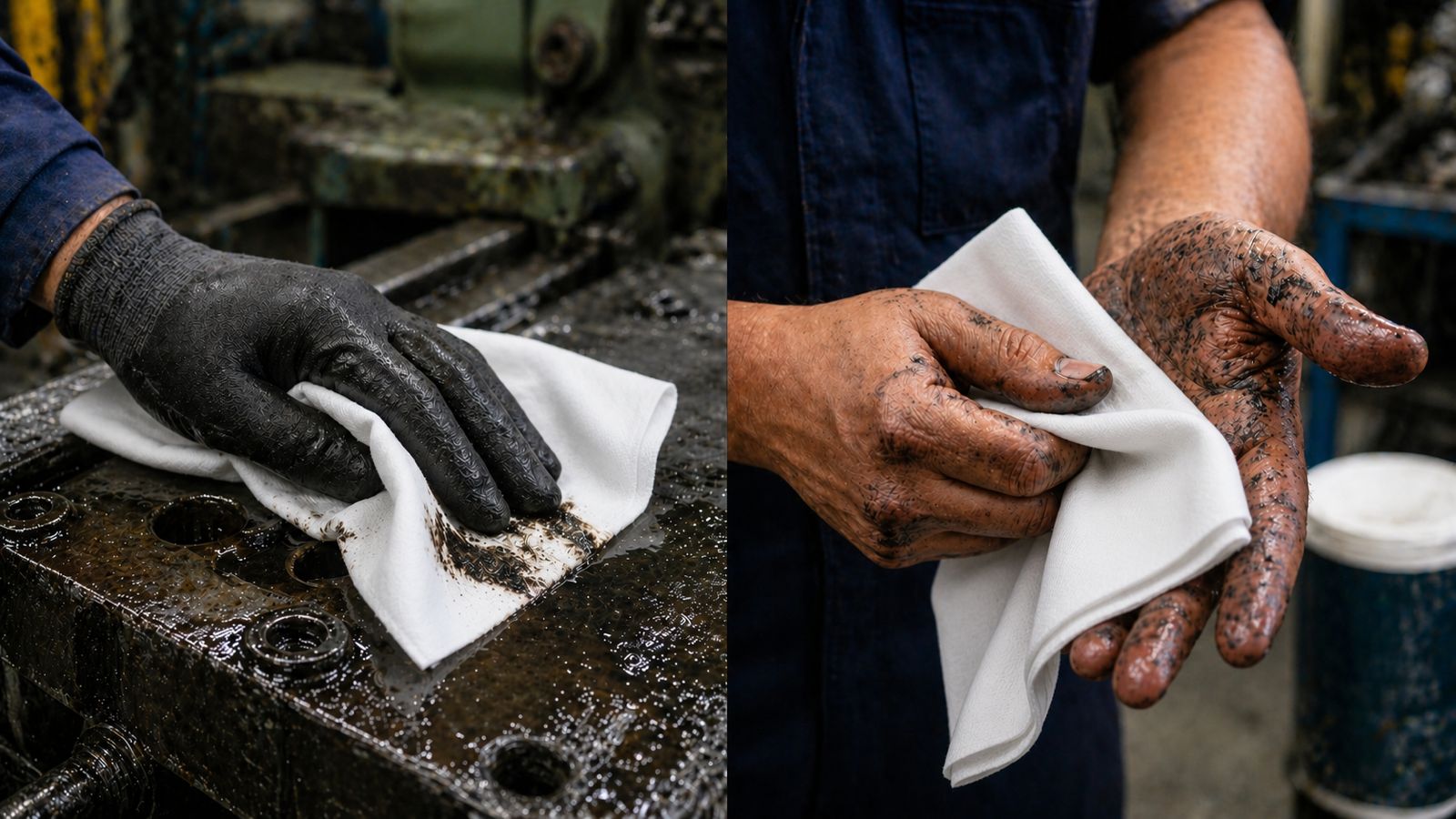
Printing press rollers, doctor blades, and precision engineering surfaces require lint free wipes that can remove inks, oils, and debris without depositing fibers that would transfer to the next substrate or cause mechanical interference. Polyester and spunlace non woven wipes are both used in this sector, depending on the solvent chemistry involved.
Benefits of Using Lint Free Wipes
No residue or fibers. The defining benefit of lint free wipes is their purpose: surfaces stay clean after the wipe passes over them. In precision applications, this is non-negotiable.
High absorbency. Spunlace and microfiber lint free wipes absorb significantly more fluid per gram of fabric than standard cloth wipes. This means fewer passes to achieve a clean surface, less solvent waste, and lower cost per cleaning cycle.
Safe for delicate surfaces. Lint free cloth materials, particularly microfiber and spunlace, are soft enough for optical glass, coated metal, sensitive electronics, and precision-machined components without scratching or marking.
Consistent cleaning performance. Manufactured lint free wipes, particularly non woven wipes produced to quality standards, deliver consistent performance across every unit in a batch. There is no variability between wipes from the same lot, which matters in validated cleaning processes where consistency is a compliance requirement.
How to Choose the Right Lint Free Wipes
Match material to application. Polyester for solvent-heavy cleanroom and electronics applications. Spunlace viscose-polyester blends for medical, pharmaceutical, and skin-contact uses. Microfiber wipes for reusable, surface-safe automotive and optical cleaning.
Consider absorbency requirements. If your application involves solvent application to a surface, a low-absorbency polyester lint free cloth may be correct. Here, the solvent is transferred to the surface rather than remaining in the wipe. If fluid pickup is the priority, a cellulose blend or microfiber construction absorbs and retains more.
Disposable vs reusable. Non woven wipes are almost always single-use. Each wipe arrives uncontaminated and is discarded after one task, eliminating cross-contamination. Microfiber wipes are typically reusable, but require validated laundering protocols to maintain lint-free performance and prevent contamination transfer between uses.
Check quality standards. For regulated environments, always request particle count test data, fiber shedding validation, and chemical extractables information. A supplier unable to provide lot-specific test data is not a qualified source for cleanroom or pharmaceutical lint free wipes.
Common Mistakes to Avoid
Using regular cloth instead of lint free wipes. It is the most common and costly error. General-purpose cotton rags, paper towels, or standard cloth wipes leave fibers on precision surfaces. Once a fiber contaminates a component or a pharmaceutical batch, the cost of the wipe saving is dwarfed by the cost of the failure.
Choosing the wrong lint free cloth material. Specifying a polyester wipe for an application requiring absorbency, or a cellulose wipe for a solvent environment where it will degrade — material mismatches are specification errors, not product failures. The lint free cloth material must be matched to the chemistry and the surface.
Ignoring quality standards and certification. In regulated environments, ‘lint free’ is not a sufficient specification. Lot-specific particle count testing, cleanroom packaging, and validated chemical compatibility are the standards a serious supplier should meet without being asked. Accepting a wipe without this data in a cleanroom or pharmaceutical application is a compliance risk.
Future Trends in Lint Free Cleaning Materials
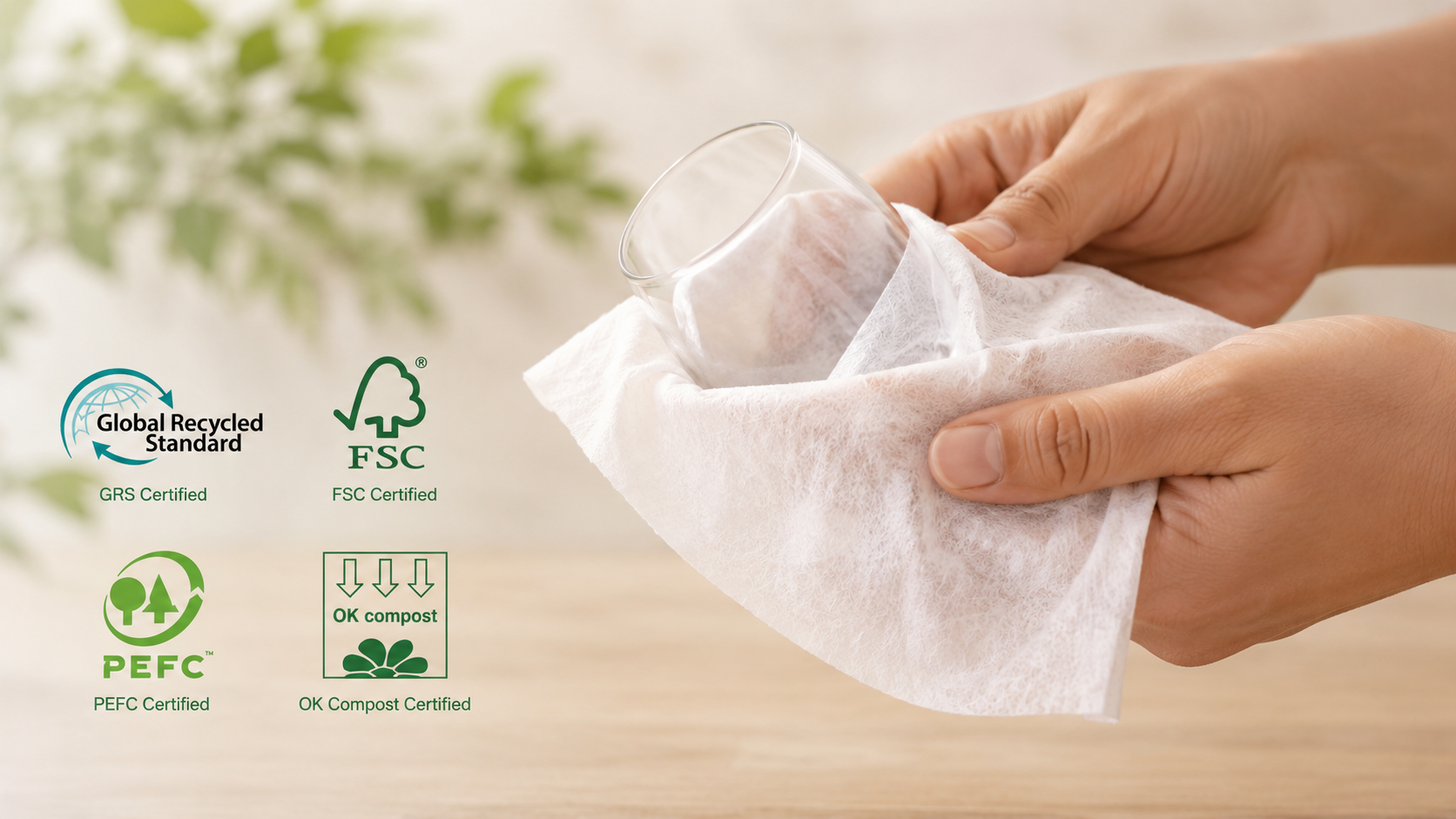
Sustainable non woven wipes. The fastest-growing development area in lint free wipes is biodegradable substrate options. Spunlace non woven wipes made from lyocell or cotton carry GRS, FSC, and OK Compost certifications. Moreover, as the hydroentanglement process uses no chemical binders, these substrates are genuinely biodegradable without residue. As EU Single-Use Plastics Directive enforcement expands, sustainable lint free cloth material options are moving from premium to procurement standard.
Advanced nonwoven wipes with functional finishes. In-line functional finishing, such as antimicrobial coatings, static-dissipative treatments, and engineered surface textures, is expanding what nonwoven wipes can do in a single substrate. Cleanroom-compatible antimicrobial wipes and ESD-safe lint free wipes for electronics applications are already in commercial production; expect the range to expand.
Precision-engineered microfiber wipes. Ultra-fine nanofiber technology is producing microfiber wipes with particle capture efficiency approaching filtration media levels. These substrates are entering optical, medical device, and semiconductor markets where conventional lint free wipes are insufficient for the contamination control required.
According to Grand View Research, the global nonwovens market continues to grow at a CAGR of approximately 5–6% through 2030, with cleanroom, pharmaceutical, and electronics applications among the highest-growth segments — precisely the markets that drive demand for premium lint free wipes.
Final Thoughts: Why Lint Free Wipes Matter
The difference between lint free wipes and an ordinary cloth wipe is not visible until it matters. In a semiconductor fab, a pharmaceutical filling line, or an optics assembly room, that difference shows up as a defect rate, a contamination event, or a compliance failure. At Elixrr, care in performance means that every spunlace substrate we produce, from the fiber selection through to the manufacturing process, is built to deliver the lint-free consistency that precision environments demand. The right lint free cloth material, specified correctly, is not a minor procurement detail. It is the foundation of a reliable cleaning process.
Frequently Asked Questions
1. What are lint free wipes?
Lint free wipes are cleaning materials engineered to leave no fibers or residue on surfaces. They are used in precision environments like electronics, cleanrooms, pharmaceutical, and automotive, where fiber contamination causes defects or compliance failures.
2. What is lint free cloth made of?
Lint free cloth is typically made from polyester, microfiber, or spunlace nonwoven constructions using cellulose, viscose, or blended synthetic fibers. The lint free cloth material must achieve near-zero fiber shedding through its construction, not through a surface coating.
3. Are microfiber wipes lint free?
Yes, quality microfiber wipes are lint-free by virtue of their ultra-fine fiber structure, which interlocks tightly and sheds negligibly. They are particularly effective for optical, glass, and coated surfaces where softness and particle capture both matter.
4. What are non woven wipes?
Non woven wipes are disposable cleaning materials made from bonded fibers rather than woven or knitted threads. Spunlace non woven wipes, produced by hydroentanglement, are the premium format for lint-free applications, with inherent fiber cohesion and no chemical binders.
5. Where are lint free wipes used?
Lint free wipes are used in electronics and semiconductor manufacturing, pharmaceutical cleanrooms, automotive detailing, precision printing, optical cleaning, and medical and dental environments — any setting where fiber contamination must be controlled.
6. What is the difference between lint free wipes and regular cloth wipes?
Lint free wipes are manufactured to leave no fibers on surfaces; regular cloth wipes made with cotton or terry constructions shed fibers progressively under use. For precision cleaning, the difference translates directly into contamination control and surface integrity.
7. How do I choose the right lint free wipes?
Match material to application: polyester for solvent-heavy cleanroom and electronics use; spunlace blends for medical and pharmaceutical applications; microfiber for reusable, surface-safe cleaning. Always request particle count and fiber shedding test data from suppliers for regulated applications.