


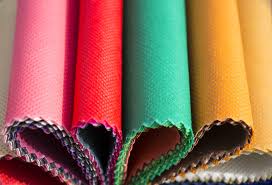
Types of Nonwoven Fabric and Their Uses in 2025
Explore the 7 main types of nonwoven fabric—spunbond, meltblown, spunlace, and more. Learn how each type differs in structure, use, and benefits.
-
Recent Post
-
What European Buyers Often Get Wrong About Sourcing Nonwovens from India
Sourcing nonwovens from India is no longer driven by cost alone. This blog explains why European buy
29.07.2026
Read Article -
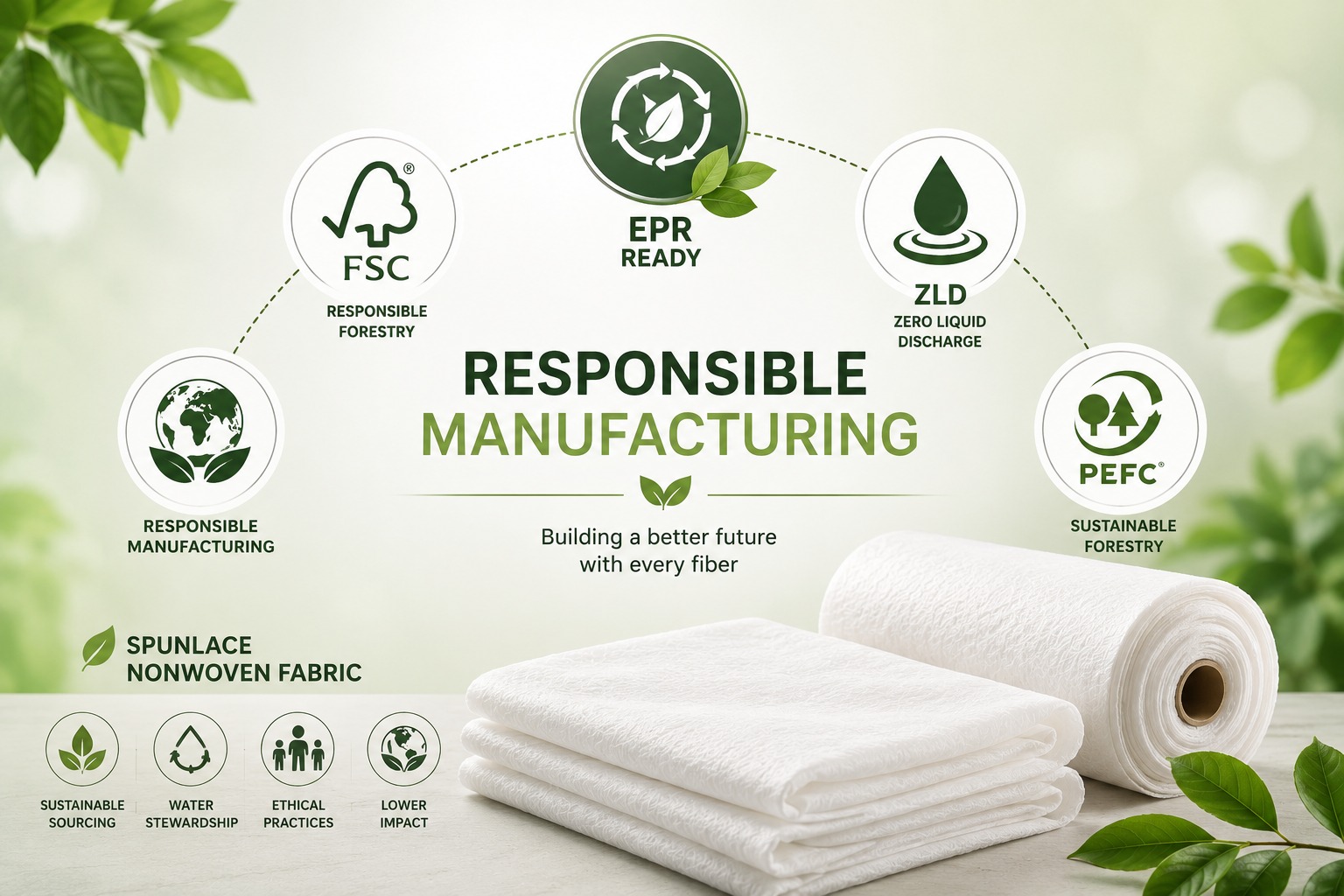
Beyond the Material: What Global Buyers Should Know About Responsible Nonwoven Manufacturing
Responsible nonwoven manufacturing enables global buyers to meet ESG goals through ZLD, FSC and PEFC
22.07.2026
Read Article -

Medical Nonwovens in 2026: What Global Healthcare Buyers Should Prioritise
Learn what global healthcare buyers should prioritise when sourcing medical spunlace nonwovens in 20
15.07.2026
Read Article -
Sustainable Nonwoven Fabric: Are Nonwovens Eco-Friendly?
Discover whether sustainable nonwoven fabric is truly eco-friendly, biodegradable, and recyclable. T
07.07.2026
Read Article -

Non Woven Fabric Textile Applications Across Industries: Comprehensive Use Cases
Nonwoven fabrics are widely used across industries for their versatility, cost-effectiveness, and ta
20.06.2026
Read Article -
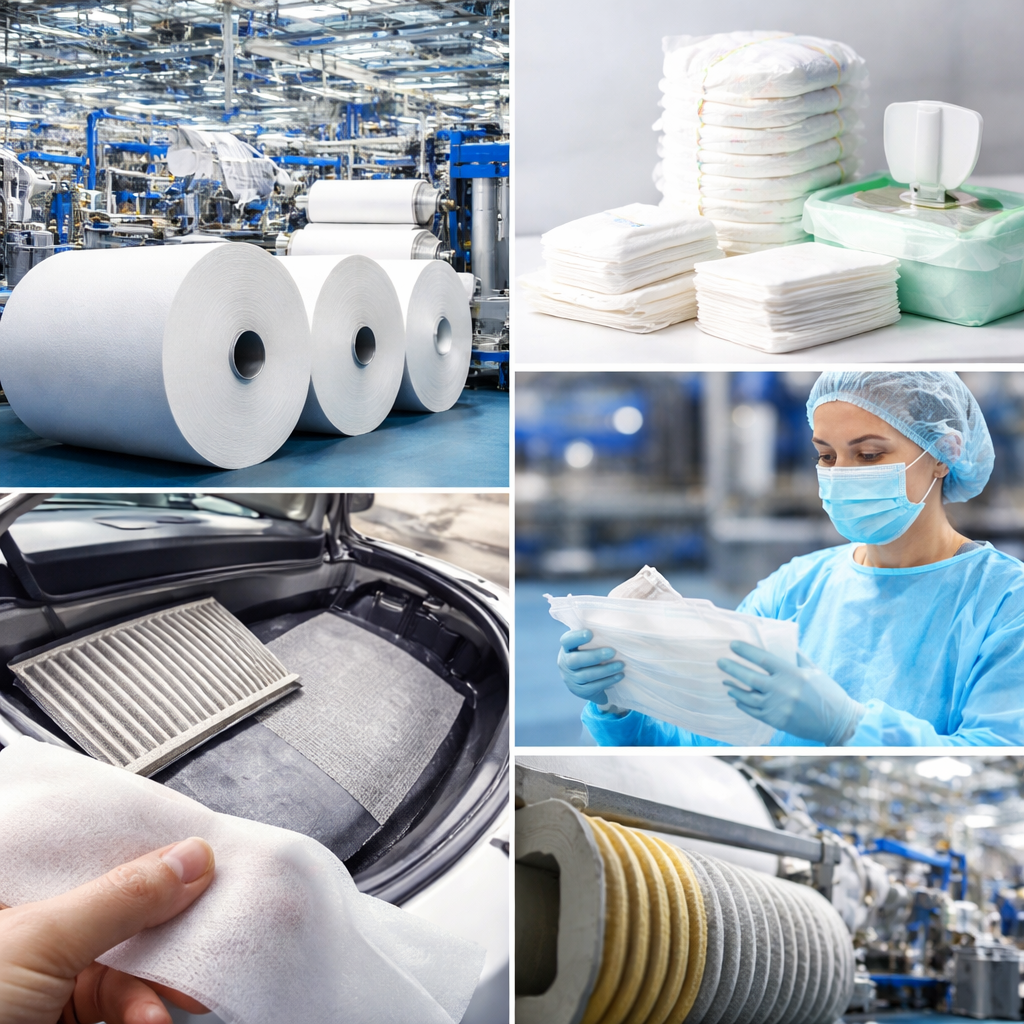
Global Nonwoven Market Trends and Growth Opportunities: 2026 Outlook
The global nonwoven market is expanding rapidly due to strong demand from hygiene, medical, filtrati
20.06.2026
Read Article - View All Blogs
-
Need nonwoven solutions for your application?
Talk to our team about custom fabrics, sustainability, and product development tailored to your industry.
Explore Recent Blogs
What European Buyers Often Get Wrong About Sourcing Nonwovens from India
Sourcing nonwovens from India is no longer driven by cost alone. This blog explains why European buy
Read More
Beyond the Material: What Global Buyers Should Know About Responsible Nonwoven Manufacturing
Responsible nonwoven manufacturing enables global buyers to meet ESG goals through ZLD, FSC and PEFC
Read More
Medical Nonwovens in 2026: What Global Healthcare Buyers Should Prioritise
Learn what global healthcare buyers should prioritise when sourcing medical spunlace nonwovens in 20
Read More
Sustainable Nonwoven Fabric: Are Nonwovens Eco-Friendly?
Discover whether sustainable nonwoven fabric is truly eco-friendly, biodegradable, and recyclable. T
Read More

Weave Your Success with Our Revolutionary Fabrics
Power your business with Elixrr's cutting-edge nonwoven fabric solutions. Eco-friendly, customizable, and engineered for excellence—because innovation starts with the right foundation.

Nonwoven fabric types are categorized based on their manufacturing techniques, fiber bonding methods, and material compositions. The main types of nonwoven fabrics include spunbond, meltblown, spunlace, needle-punched, thermal-bonded, airlaid, and chemical-bonded fabrics. Each type of nonwoven fabric has distinct properties and applications in industries such as healthcare, hygiene, agriculture, and filtration.
What are the main types of nonwoven fabric?
The main types of nonwoven fabric are spunbond, meltblown, and spunlace fabrics because they dominate the global nonwoven market. These three types account for over 80% of all nonwoven production due to their versatility, strength, and cost efficiency.
What are the other types of nonwoven fabrics apart from the main three?
Other types of nonwoven fabrics include needle-punched, thermal-bonded, airlaid, and chemically bonded fabrics. These types serve specific performance needs that the main categories cannot fulfill.
How are nonwoven fabrics classified based on bonding methods?
Nonwoven fabrics are classified into mechanical, thermal, and chemical bonding types based on how their fibers are joined.
Each bonding method impacts the fabric’s strength, softness, and cost. For example, mechanical bonding enhances flexibility, thermal bonding ensures durability, and chemical bonding provides stability for heavy-duty use.
What are the types of nonwoven fabric based on raw materials?
Nonwoven fabrics are categorized by synthetic, natural, or blended fibers used in their production.
For instance, bamboo-polyester blended spunlace nonwovens are gaining popularity in Europe’s personal care sector for their softness and biodegradability.
How do the types of nonwoven fabric differ in applications?
Each nonwoven fabric type serves distinct applications depending on texture, absorbency, and cost.
The choice of nonwoven type depends on fiber type, bonding strength, and intended end-use.
Which type of nonwoven fabric is most used globally?
The spunbond-meltblown-spunbond (SMS) composite fabric is the most used nonwoven fabric globally. It combines the strength of spunbond layers with the filtration efficiency of meltblown layers, making it the preferred material for medical masks, protective clothing, and hygiene products. The SMS structure ensures breathability, liquid repellency, and barrier protection, making it dominant in healthcare and industrial safety sectors.
Summary
There are seven main types of nonwoven fabric—spunbond, meltblown, spunlace, needle-punched, thermal-bonded, airlaid, and chemically bonded—each offering distinct performance benefits.
Spunbond and meltblown dominate due to strength and filtration capacity, while spunlace excels in softness. Advanced composites like SMS and SMMS nonwovens are shaping the future of medical and hygiene applications. As global demand rises for biodegradable and sustainable nonwovens, natural fiber blends and recyclable PP nonwovens are expected to lead innovation in 2025 and beyond.