


Contact us
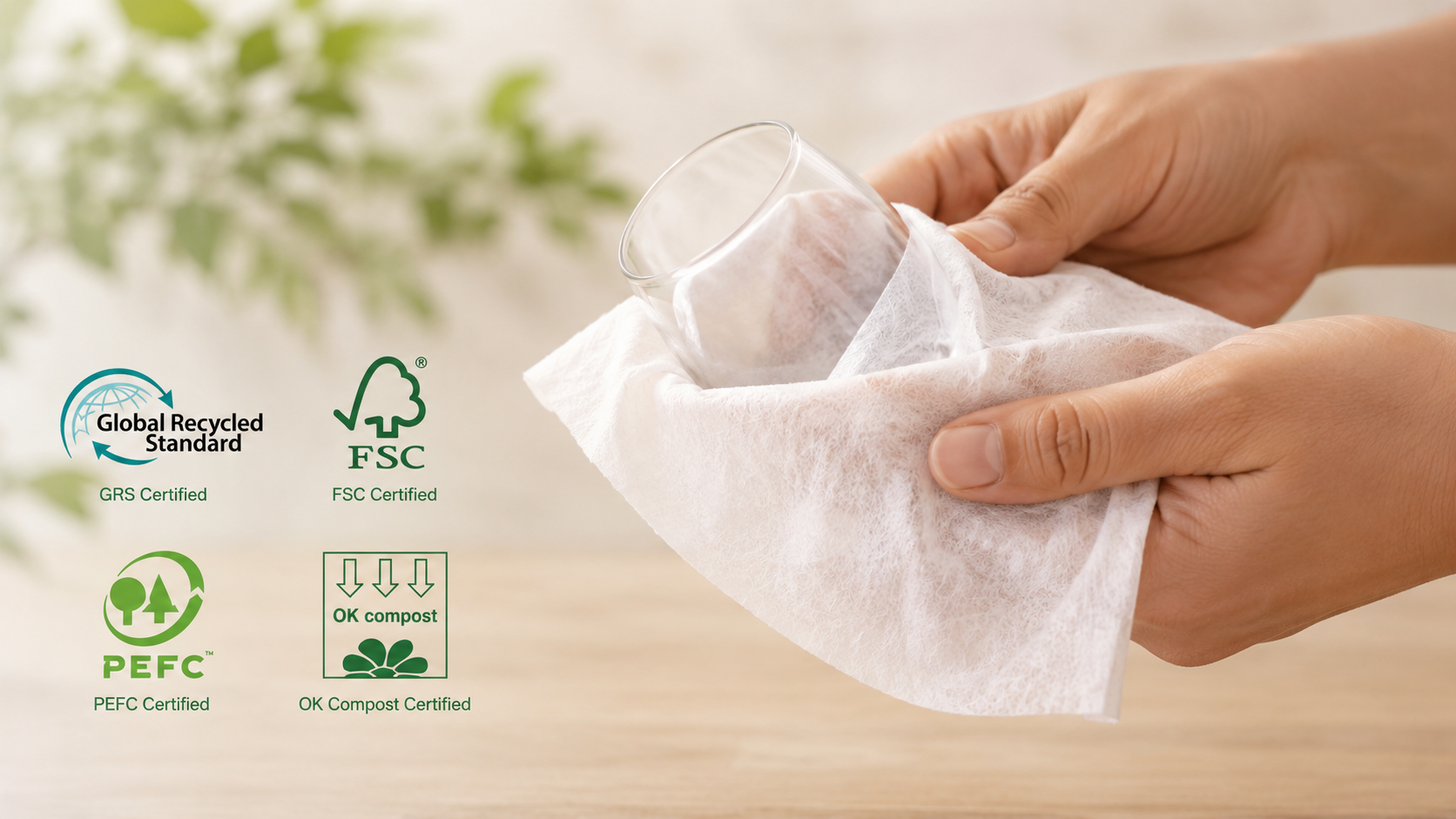
Biodegradable Nonwoven Fabric: Materials, Benefits & Sustainability Impact
Sustainability has moved on from being a preference to a specification in nonwoven manufacturing. Biodegradable nonwoven fabric has moved from niche to procurement priority. Brands, regulators, and buyers across hygiene, medical, and packaging sectors align on one direction: materials that perform at the point of use and leave nothing damaging behind. This article covers what biodegradable nonwoven fabric is, how it is made, where it performs, and why it is shaping the future of sustainable nonwoven materials.
-
Recent Post
-
Lint Free Wipes: What Makes Them Different?
In precision cleaning, the wipe you choose can be as critical as the process itself. Lint free wipes
31.05.2026
Read Article -
Surface Cleaning Wipes: Material Guide and Applications
Surface cleaning wipes are a hygiene essential across household, healthcare, dental, and industrial
15.05.2026
Read Article -
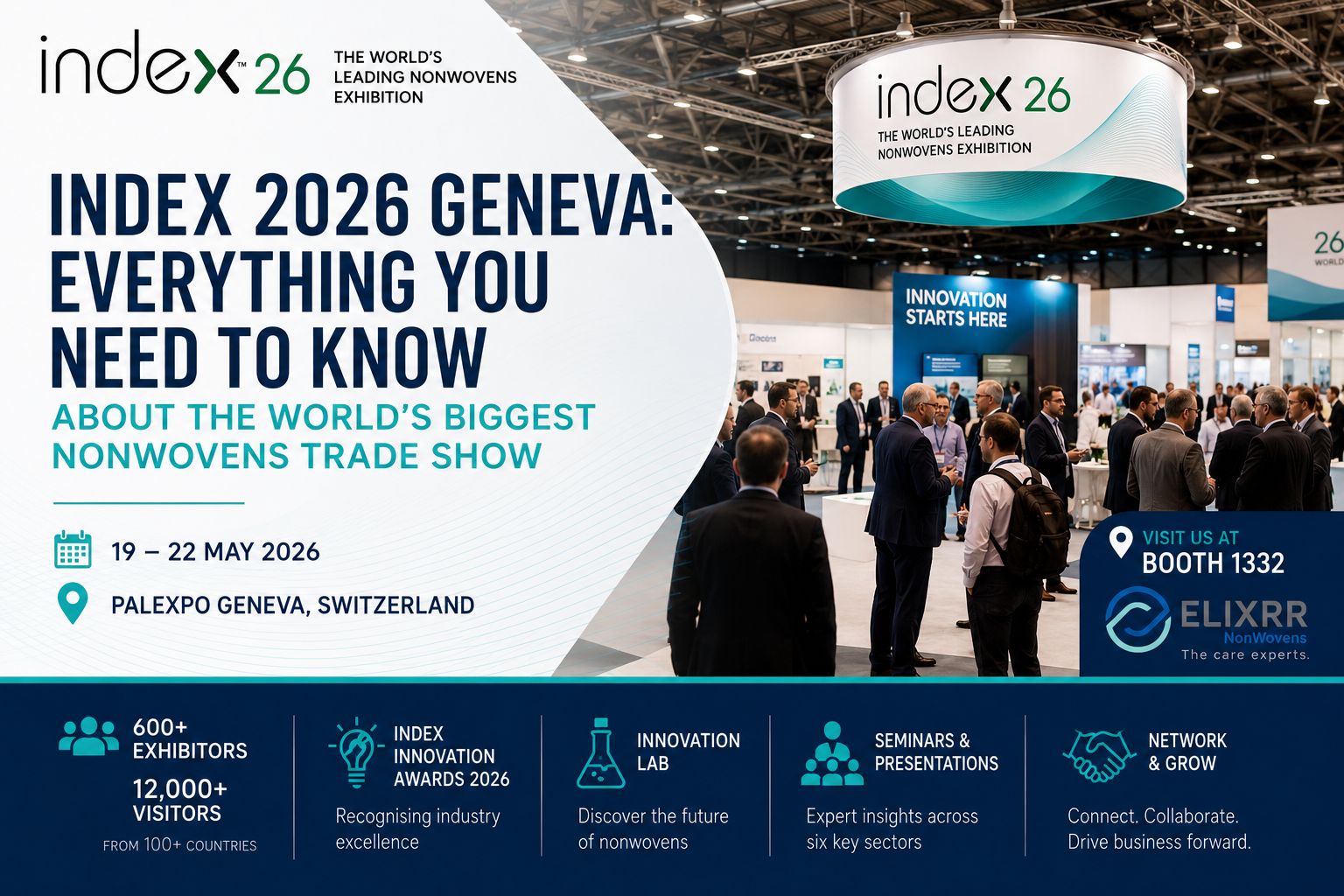
INDEX 2026 Geneva: Everything You Need to Know About the World's Biggest Nonwovens Trade Show
INDEX 2026 is the world's largest nonwovens trade show, held every three years at Palexpo Geneva. Th
05.05.2026
Read Article -
Industrial Wipes: Types and Key Benefits
Every factory floor, workshop, and cleanroom runs on something smaller than it looks: the right wipe
01.05.2026
Read Article -
Non Woven Fabric Manufacturing Process: A Complete Guide to Methods, Materials, and Quality Control
Non woven fabric manufacturing begins with a simple decision: which fiber, which formation method, a
24.04.2026
Read Article -
Spunlace Non Woven Fabric: Applications, Properties, and Performance Guide
There is a good chance you touched spunlace non woven fabric in a facial wipe, a baby care pad, or a
27.04.2026
Read Article -
What Is Non woven Fabric? Types, Uses, and Key Benefits Explained
What is non woven fabric? This question is becoming increasingly relevant as industries move toward
28.04.2026
Read Article -
Built for the Planet: How Nonwovens Are Leading the Sustainable Manufacturing Revolution
On World Earth Day 2026, Elixrr explores how pulp-based spunlace nonwovens drive real environmental
25.04.2026
Read Article -
Medical Wipes: Types, Uses & Nonwoven Materials Guide
Medical wipes are specially designed cleaning products that remove germs, bacteria, and contaminants
10.04.2026
Read Article -
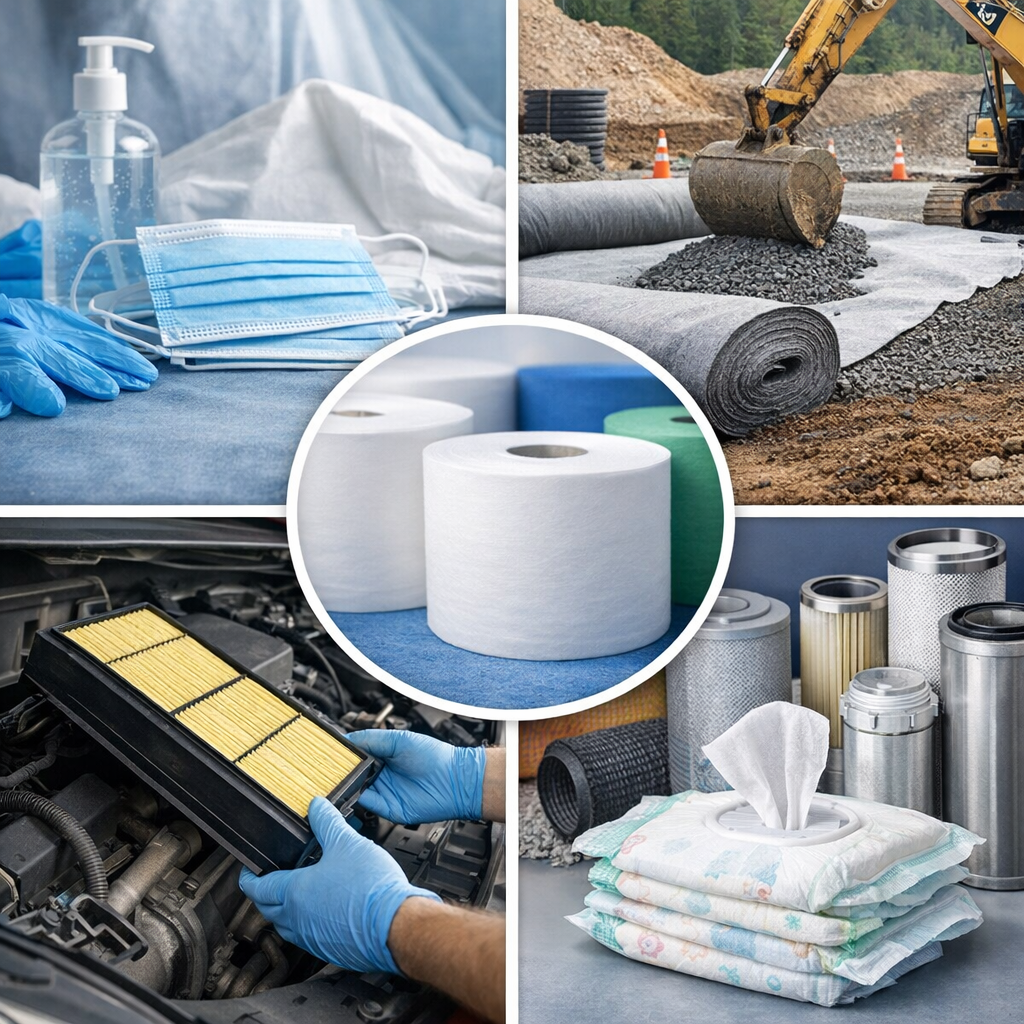
Non Woven Fabric Textile Applications Across Industries: Comprehensive Use Cases
Nonwoven fabrics are widely used across industries for their versatility, cost-effectiveness, and ta
25.03.2026
Read Article -
Global Nonwoven Market Trends and Growth Opportunities: 2026 Outlook
The global nonwoven market is expanding rapidly due to strong demand from hygiene, medical, filtrati
18.03.2026
Read Article -
Difference Between Woven and Non-Woven Fabrics: Key Structural, Performance, and Application Differences
Woven and non-woven fabrics differ in how they are made, how they perform, and where they are used.
05.03.2026
Read Article -
What Are the Uses of Nonwoven Fabric? Practical Applications and Industry Examples
Nonwoven fabrics are versatile materials used across healthcare, hygiene, filtration, automotive, ag
20.02.2026
Read Article -
Types of Non-Woven and Their Uses: Applications, Manufacturing Methods, and Industry Examples
Nonwoven fabrics are engineered materials made by bonding fibres rather than weaving them together.
06.02.2026
Read Article -
What Are Biodegradable Materials and Why Do They Matter?
What biodegradable materials are, how they work, real-world examples, and why they are becoming non-
09.01.2026
Read Article -
What is Recyclable Nonwoven Fabric and Why is it Important?
That’s where recyclable nonwoven fabric comes in. It addresses a real problem. High-volume disposa
14.01.2026
Read Article -
Uses of Non Woven Fabric: 15 Practical Applications
Explore the top uses of non woven fabric across medical, hygiene, filtration, automotive, agricultur
11.12.2025
Read Article -
Why Use Nonwovens in Medical and Healthcare?
Nonwovens are used in medical and healthcare because they solve the real constraints of modern care:
15.12.2025
Read Article -
Dry Wipes Non Woven Fabric. Uses, Types and Benefits
Learn what dry wipes non woven fabric is, its types, materials, manufacturing process, applications,
25.12.2025
Read Article -
Non Woven Fabric Manufacturer | Top Suppliers & Uses Guide
Looking for a trusted non woven fabric manufacturer? Explore leading global suppliers, including Eli
24.12.2025
Read Article -
Top 10 Medical Nonwoven Fabric Exporters Trusted by Global Healthcare Brands
Discover the top medical nonwoven fabric exporters trusted worldwide. Explore quality, applications
16.12.2025
Read Article -
Cellulose Based Nonwoven Fabric | Eco Friendly Innovation
Explore the benefits of cellulose-based nonwoven fabric—biodegradable, soft, and sustainable. Idea
19.11.2025
Read Article -
Beautyworld Dubai: Discovering New Opportunities for Elixrr
Exploring innovative trends and partnerships at Beautyworld Dubai, uncovering exciting growth opport
07.11.2025
Read Article -
Green Nonwoven Technology: Sustainable Innovation in Nonwoven Fabrics
Learn how green nonwoven technology uses eco-friendly materials and energy-efficient manufacturing t
30.10.2025
Read Article -
Types of Nonwoven Fabric and Their Uses in 2025
Explore the 7 main types of nonwoven fabric—spunbond, meltblown, spunlace, and more. Learn how eac
28.10.2025
Read Article -

Biodegradable Nonwoven Fabric: The Future of Sustainable Textiles
Biodegradable nonwoven fabrics are reshaping industries with eco-friendly performance and natural de
28.10.2025
Read Article -
Best Non Woven Fabric Manufacturers in India (2025 Edition)
Discover the top 10 non woven fabric manufacturers in India. Explore eco-friendly, high-quality opti
28.10.2025
Read Article -
Top 10 Applications of Non-Woven Fabrics in 2025 — And Why the Market Is Booming
Top 10 Applications of Non-Woven Fabrics in 2025 — And Why the Market Is Booming
20.05.2025
Read Article -

Reinventing Wipes: How Sustainable Nonwovens Are Reshaping the Industry
Elixrr explores how next-generation sustainable nonwovens, from wet-laid spunlace to carded-pulp tec
21.10.2025
Read Article -
Woven Fabric Material Guide: Composition, Types & Common Applications
Explore woven fabric materials—learn their composition, major types, and everyday applications in
09.10.2025
Read Article -
Non Woven Polypropylene Fabric: Uses, Strengths & Comparison with Woven Fabric
Non woven polypropylene (PP) fabric has become one of the most widely used materials across industri
09.10.2025
Read Article -
What Is Knitted Woven Fabric? Types, Techniques & Benefits
Knitted woven fabric is a hybrid textile that blends the structural strength of woven fabrics with t
16.10.2025
Read Article -
Non Woven vs Woven Fabrics: Key Differences & When to Use Each
Non Woven vs Woven Fabrics: Key Differences & When to Use Each
18.09.2025
Read Article -
Non Woven Polypropylene Fabric: Uses, Strengths & Comparison with Woven Fabric
Non Woven Polypropylene Fabric: Uses, Strengths & Comparison with Woven Fabric
19.09.2025
Read Article -
Spunbond Non Woven Fabric: How It’s Made and Where It’s Used
Explore the manufacturing process and applications of spunbond non woven fabric. Learn why it’s wi
11.09.2025
Read Article -
Polyester Non Woven Fabric: Benefits, Properties & Industrial Uses
Discover the benefits and industrial uses of polyester non woven fabric. Learn about its properties,
03.09.2025
Read Article -

What Is Non Woven Fabric? Definition, Manufacturing & Applications
Explore what non woven fabric is, how it’s made, and where it’s used. Learn about its unique pro
04.09.2025
Read Article -

Types of Nonwoven Fabric – A Complete Guide to Nonwoven Fabric
Learn about different types of nonwoven fabrics, their properties, manufacturing methods, and indust
20.05.2025
Read Article -
Redefining the Future of Wipes: Insights from WOW 2025
Elixrr Nonwovens shares key takeaways from WOW 2025, highlighting sustainable innovations, energy-ef
29.07.2025
Read Article -

Sustainability is Elixrr’s Focus at Global Wipes Markets at Wow 2025
Visit the WOW conference and see our proprietary nonwoven wipes fabrics Enduraspun, Ecopun and Softs
03.07.2025
Read Article -

Inside Elixrr: A Conversation with Subir Barman on the Future of Nonwovens and Next-Gen Manufacturing
As the global demand for sustainable, high-performance materials accelerates, Elixrr Nonwovens conti
20.05.2025
Read Article -
Spunlace Nonwoven Fabrics: Explore Characteristics and Benefits
In a world where hygiene, safety, and softness intersect, material science has a quiet hero, spunlac
20.05.2025
Read Article -
PentaTech™ by Elixrr Nonwovens: Pioneering the Future of High-Performance and Sustainable Nonwovens
Innovation in nonwoven materials isn’t optional anymore. It’s what drives progress. As industrie
07.05.2025
Read Article -
Is Non-Woven Fabric Biodegradable? Exploring the Eco-Friendliness of Non-Wovens
Every business is searching for environmentally appropriate substitutes as the globe moves towards s
02.05.2025
Read Article -
What Are Non Woven Fabrics Used For? Key Examples & Features
In an era defined by performance, precision, and sustainability, materials are no longer just passiv
28.04.2025
Read Article -
Is Leather a Non-Woven Fabric? Let’s Unravel the Truth!
Leather embodies luxury, durability, and style. However, in a society increasingly focused on novel
21.04.2025
Read Article -
Can You Heat Press Non-Woven Fabric? A Complete Guide
The textile industry has embraced heat pressing. Adding colourful graphics to cloth banners or perso
18.04.2025
Read Article -
Can Non-Woven Fabric Be Washed? Let’s Unravel the Truth
Non-woven fabrics are used in a variety of applications, including medical masks, reusable shopping
14.04.2025
Read Article -
Non Woven Fabrics Vs Woven Fabrics: Choose the Right Fabric
If you have ever asked yourself why some materials are all about robustness while others are cutting
11.04.2025
Read Article -

Top 10 Non-Woven Fabric Manufacturers in Europe
The non-woven fabric industry has grown significantly in Europe, driven by the demand for high-quali
27.06.2025
Read Article -

Non-Woven Fabric: Moisture Absorption, Properties & Uses
When it comes to fabric selection, understanding the properties of different materials is essential,
04.04.2025
Read Article -

Types of Fabric: A Beginner Comprehensive Fabric Guide | 2025
Fabrics are the foundation of countless industries and everyday life, influencing everything from th
31.03.2025
Read Article -

What are Non-Woven fabrics?
India has always had a rich relationship with textiles. From the fine muslin that adorned royalty to
28.03.2025
Read Article
-
Explore Recent Blogs
Biodegradable Nonwoven Fabric: Materials, Benefits & Sustainability Impact
Sustainability has moved on from being a preference to a specification in nonwoven manufacturing. Bi
Read More
Lint Free Wipes: What Makes Them Different?
In precision cleaning, the wipe you choose can be as critical as the process itself. Lint free wipes
Read More
Surface Cleaning Wipes: Material Guide and Applications
Surface cleaning wipes are a hygiene essential across household, healthcare, dental, and industrial
Read More
INDEX 2026 Geneva: Everything You Need to Know About the World's Biggest Nonwovens Trade Show
INDEX 2026 is the world's largest nonwovens trade show, held every three years at Palexpo Geneva. Th
Read More

Weave Your Success with Our Revolutionary Fabrics
Power your business with Elixrr's cutting-edge nonwoven fabric solutions. Eco-friendly, customizable, and engineered for excellence—because innovation starts with the right foundation.

Sustainability has moved on from being a preference to a specification in nonwoven manufacturing. Biodegradable nonwoven fabric has moved from niche to procurement priority. Brands, regulators, and buyers across hygiene, medical, and packaging sectors align on one direction: materials that perform at the point of use and leave nothing damaging behind. This article covers what biodegradable nonwoven fabric is, how it is made, where it performs, and why it is shaping the future of sustainable nonwoven materials.
Key Takeaways
What Is Biodegradable Nonwoven Fabric?
Biodegradable nonwoven fabric is a nonwoven material that breaks down naturally through biological processes such as microbial activity, moisture, and heat, after its useful life. Unlike conventional synthetic nonwovens, which persist in landfill for decades, biodegradable non woven fabric returns to natural compounds within a defined time frame.
The distinction between "biodegradable" and "compostable" matters. Biodegradable nonwoven fabric will decompose in the environment over time; compostable nonwoven fabric is designed to fully break down in industrial or home composting conditions, leaving no harmful residue. Compostable carries the higher standard, and the substrate composition must substantiate it through certified testing, not labelling alone.
Conventional nonwovens, such as those made with polypropylene and polyester, perform well but contribute to plastic accumulation. Biodegradable non woven fabric addresses this by using natural or bio-based inputs. The sustainability advantage is real but substrate-dependent: the fiber composition determines what decomposition credentials a product can honestly claim.
Types of Biodegradable Nonwoven Fabric Materials
Natural Fiber-Based Nonwovens
Lyocell, cotton, viscose, bamboo, and jute are the core natural fiber inputs for biodegradable non woven fabric. Lyocell, produced through a closed-loop solvent process from sustainably sourced wood pulp, is the most environmentally credentialled option. It combines biodegradability with strong wet tensile properties and a premium surface feel. It is the fiber of choice for compostable nonwoven fabric in wipes, personal care, and medical applications. Cotton-based sustainable nonwoven materials offer high absorbency; viscose adds hydrophilic performance. Both support GRS, FSC, and PEFC certifications that procurement teams in Europe and the UK increasingly require.
Biodegradable Polymers
Polylactic acid (PLA), derived from fermented plant starch, is the leading synthetic biodegradable polymer in nonwoven fabric production. PLA-based eco friendly nonwoven fabric is compatible with spunbond processes and suits packaging, agricultural films, and some hygiene applications. Its limitation is that it requires industrial composting infrastructure to fully decompose, and buyers must verify that end-of-life systems are available in target markets before making compostable nonwoven fabric claims.
Blended Eco-Friendly Materials
Lyocell-cotton spunlace blends deliver compostable nonwoven fabric with certified biodegradability, premium softness, and high absorbency. Blend ratios can be adjusted for specific performance requirements such as tensile strength, fluid management, or surface texture. It makes blended eco friendly nonwoven fabric the commercial mainstream for verified sustainability claims.
How Biodegradable Nonwoven Fabric Is Made
Spunlace (hydroentanglement) is the most important manufacturing process for premium biodegradable non woven fabric. High-pressure water jets mechanically entangle fibers without chemical binders or adhesives. The binder-free construction is critical: chemical binders in a nominally natural fiber wipe will prevent biodegradation and invalidate composting certification. Spunlace made from lyocell, cotton, or viscose is fully biodegradable by construction. Our spunlace nonwoven guide covers the process in detail.
Among other methods, needle-punching entangles fibers without binders for heavier-weight sustainable nonwoven materials in geotextiles and agriculture. PLA spunbond produces lightweight, eco-friendly nonwoven fabric for packaging and agricultural films.
It is also important to verify environmental considerations in the manufacturing process. They include energy use, closed-loop water management, and FSC or PEFC-certified fiber sourcing. These are the baseline expectations for a credible biodegradable nonwoven fabric. For context on what biodegradability means at the materials level, read our biodegradable materials guide.
Benefits of Biodegradable Nonwoven Fabric
Reduced environmental impact: Biodegradable nonwoven fabric eliminates the persistence of synthetic plastics in landfills. In wipes and hygiene products, this is the primary sustainability advantage.
Lower carbon footprint: Natural fiber sustainable nonwoven materials typically carry lower embodied carbon than virgin polypropylene, particularly when sourced from certified feedstocks.
Green textile credentials and circular economy alignment: Compostable nonwoven fabric made from lyocell or cotton re-enters the nutrient cycle after use, without leaving microplastic residue. This positions biodegradable nonwoven fabric as a genuine contributor to green textiles and circular supply chains. According to EDANA, the shift toward sustainable nonwoven inputs is accelerating across the industry.
Certification-ready: Eco friendly nonwoven fabric produced from certified fibers through binder-free processes can carry GRS, FSC, PEFC, and OK Compost labels, giving brands verified claims that their markets require.
Applications of Eco Friendly Nonwoven Fabric
Hygiene and medical: Wet wipes, baby care, cosmetic pads, and medical dressings are the largest applications for biodegradable non-woven fabric. Spunlace in lyocell or cotton delivers softness and absorbency while supporting compostable claims. Explore Elixrr's sustainable nonwoven product range for certified substrate options.
Packaging: Eco friendly nonwoven fabric is growing as an alternative to plastic packaging. Compostable nonwoven fabric liners and wraps serve luxury retail, food, and protective applications where sustainability positioning matters.
Agriculture and geotextiles: Biodegradable nonwoven fabric in agricultural mulch films and crop covers replaces conventional plastic sheeting. After the growing season, the material can be worked back into the soil as a direct circular economy application of sustainable nonwoven materials.
Biodegradable vs Conventional Nonwoven Fabric
Conventional nonwovens offer lower unit cost and greater processing versatility than most biodegradable non woven fabric options currently available. The performance gap is narrowing, but exists in applications requiring heat resistance or solvent compatibility.
The environmental case runs the other way. Conventional nonwovens persist in landfill for decades; properly specified biodegradable non woven fabric does not. As the Ellen MacArthur Foundation has documented, the shift to circular, bio-based systems is essential to reducing plastic waste at scale. Lyocell and cotton spunlace are now cost-competitive in premium wipe markets where sustainability is a product-positioning requirement, not just compliance.
Challenges of Biodegradable Nonwoven Fabric
Cost: Natural fiber sustainable nonwoven materials cost more per kilogram than polypropylene. Capacity for PLA and lyocell-based nonwovens is growing, but has not matched the synthetic scale.
Performance trade-offs: Compostable nonwoven fabric may have lower tensile strength or reduced heat resistance in some applications. It is necessary to test and validate before committing to the specification.
Composting infrastructure: Compostable claims are only meaningful if appropriate end-of-life systems are in place in the target market. Without industrial composting access, even certified compostable fabric may reach landfills.
Future of Sustainable Nonwoven Materials
Innovation in biodegradable nonwoven fabric is advancing in fiber development (next-generation lyocell, hemp, seaweed inputs), process efficiency, and circular economy integration (design for compostability from fiber to packaging).
The EU Single-Use Plastics Directive is mandating biodegradable and recycled content requirements across European wipes markets, with similar frameworks developing in the UK and other global markets. Brands that build biodegradable nonwoven fabric into specifications now, with certified evidence, will be ahead of compliance timelines.
Final Thoughts: Moving Toward Eco-Friendly Nonwoven Solutions
Biodegradable nonwoven fabric is not a compromise between sustainability and performance. It is the convergence of both. When sustainability is built into the substrate from the fiber up, through binder-free processes, with certified end-of-life credentials, the two coexist. At Elixrr, care in performance means every sustainable nonwoven material we produce is engineered to perform exactly as specified and support the sustainability commitments of the brands that use it.
Frequently Asked Questions
1. What is biodegradable nonwoven fabric?
Biodegradable nonwoven fabric is made from natural or bio-based materials that decompose naturally after use, such as lyocell, cotton, viscose, or PLA, without leaving synthetic residue in the environment.
2. What materials are used in biodegradable nonwoven fabric?
Common sustainable nonwoven materials include lyocell, cotton, viscose, bamboo, and PLA (polylactic acid). The fiber composition determines the biodegradation rate and what certifications the product can carry.
3. Is biodegradable nonwoven fabric eco-friendly?
Yes. Eco friendly nonwoven fabric made from certified natural fibers through binder-free processes genuinely reduces plastic waste and supports circular economy goals, provided end-of-life infrastructure matches the product's composting requirements.
4. What is compostable nonwoven fabric?
Compostable nonwoven fabric is designed to break down fully in industrial or home composting conditions within a defined timeframe, leaving no harmful residue. It must carry verified certification like OK Compost, EN 13432, or equivalent, to substantiate the claim.
5. Where is biodegradable nonwoven fabric used?
Biodegradable nonwoven fabric is used in hygiene wipes, baby care, medical dressings, cosmetic pads, sustainable packaging, agricultural mulch films, and geotextile applications.
6. What are the benefits of biodegradable nonwoven fabric?
Reduced landfill persistence, lower carbon footprint from bio-based feedstocks, compatibility with circular economy composting systems, and access to GRS, FSC, PEFC, and OK Compost certifications.
7. Is biodegradable nonwoven better than conventional nonwoven?
For sustainability impact, yes. For raw cost and some performance parameters, conventional nonwovens currently retain advantages. The gap is narrowing as bio-based production rises and as regulatory requirements make sustainability a procurement baseline rather than a premium option.