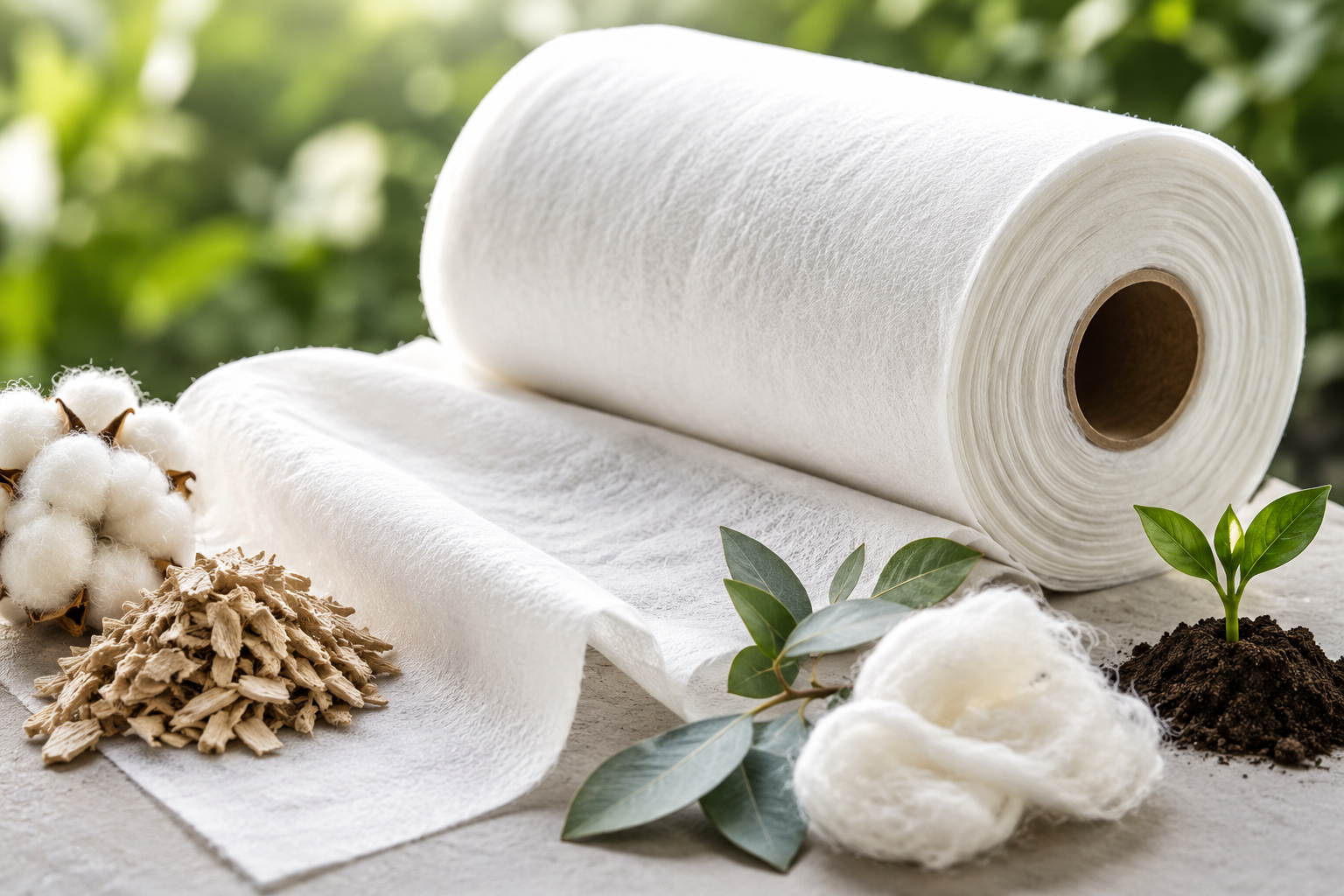
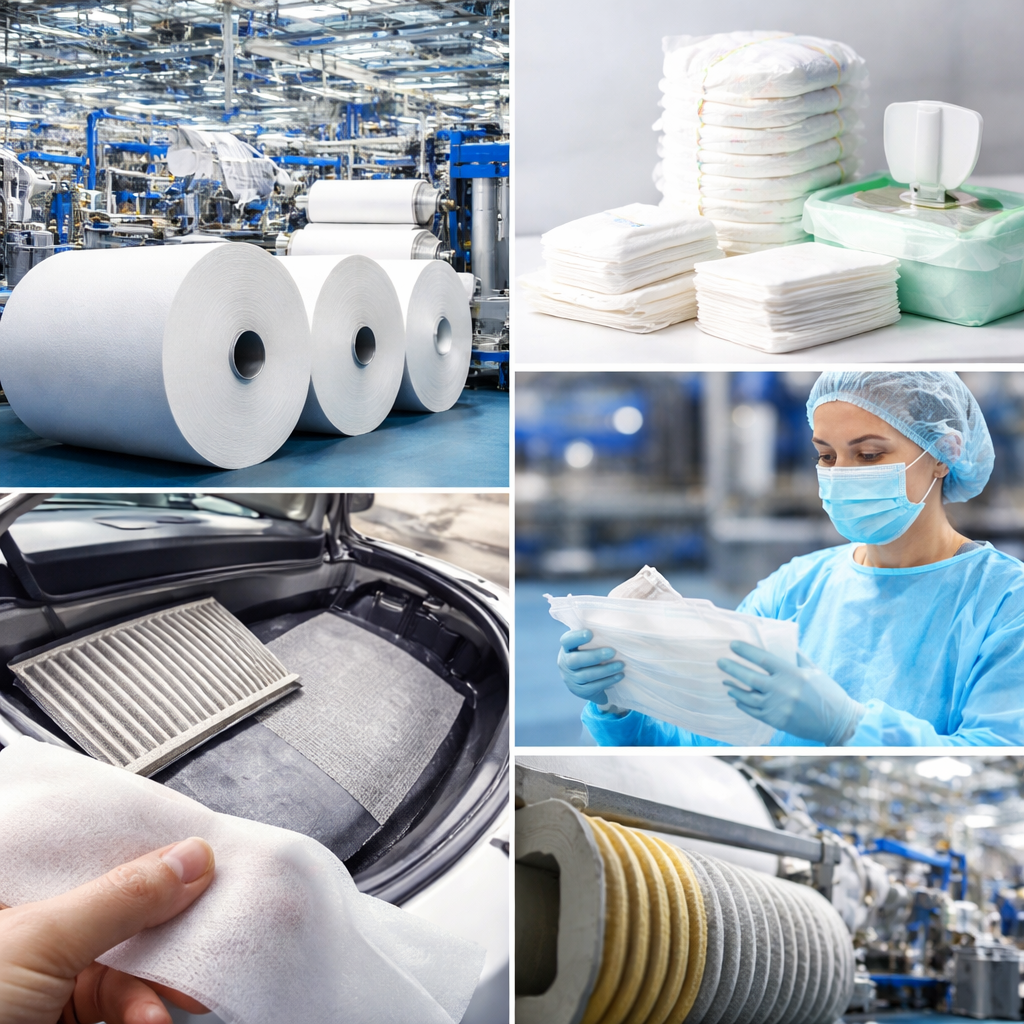
You use nonwoven fabrics every day, often without noticing them — in masks, wipes, filters, insulation, and packaging — because they combine light weight, strength, and cost-effectiveness for many jobs.
Nonwoven textiles let you pick the right balance of filtration, absorbency, durability, or biodegradability for each application, which is why industries from healthcare to construction rely on them.
If you want to understand which nonwoven type fits your need and why manufacturers choose specific materials and bonding methods, this article breaks down the key types, their practical properties, and real industry uses.
Expect clear examples and simple guidance so you can spot suitable nonwoven solutions for hygiene, filtration, automotive, agriculture, and specialty projects.
Key Takeaways
- Nonwoven fabrics offer tailored properties for specific practical needs.
- Different production methods create distinct performance trade-offs.
- Industries adopt nonwovens where cost, function, and sustainability align.
Fundamental Types and Properties of Non Woven Fabric
Nonwoven textiles combine specific manufacturing methods with targeted material choices to deliver porosity, strength, and absorbency for medical, hygiene, filtration, and industrial uses. You will see how production routes change fiber arrangement and how that affects comfort, barrier performance, and durability.
Nonwoven Fabric Manufacturing Methods
Nonwoven production forms a fiber web and bonds it without weaving or knitting.
Common methods include:
- Spunbond: molten polymer extrudes into continuous filaments that lay into a web and undergo thermal bonding. This yields a lightweight, durable spunbond non-woven fabric used for bags and facemasks.
- Meltblown: a fine microfiber web made by high-velocity air draws; meltblown non-woven fabric gives very fine porosity for filtration media.
- Spunlace (hydroentangled): high-pressure water jets entangle staple fibers, producing soft spunlace non-woven fabric for wipes and medical drapes.
- Needle-punched: barbed needles mechanically entangle fibers into a dense felt; needle-punched non-woven is thick and tear-resistant for geotextiles and automotive carpets.
- Airlaid and wetlaid: pulp or short fibers are dispersed in air or water then bonded with adhesives or heat for absorbent cores and filters.
You should note bonding types—thermal bonding, chemical bonding, and mechanical entanglement—directly affect surface feel, stiffness, and recyclability.
Key Performance Properties: Breathability, Strength, and Absorbency
Breathability depends on pore size and fiber layout.
Meltblown and fine-spun webs give low air permeability for barriers, while spunbond and spunlace offer higher breathability and comfort for apparel and wipes.
Tensile strength and tear resistance hinge on fiber type and bonding.
Spunbond non-woven fabric and thermal-bonded composites provide good tensile strength and tear resistance for reusable bags and industrial panels.
Needle-punched non-wovens deliver high durability under shear and abrasion because fibers are physically entangled.
Absorbency varies by fiber chemistry and web structure.
Airlaid and wetlaid nonwoven fabrics with cellulose or natural fibers show high absorbency for hygiene products.
Spunlace fabrics combine softness and liquid handling for wet wipes.
You should balance absorbency with barrier needs—high absorbency often lowers liquid repellence.
Variants and Composites: Spunbond, Meltblown, Needle-Punched, and Spunlace
Spunbond non-woven fabric works well as a strong, low-cost outer layer.
You will find it in SMS (spunbond-meltblown-spunbond) composites where spunbond provides strength and meltblown supplies filtration.
Meltblown non-woven fabric forms the filtration core in respirators and liquid filters.
Its microfibers create small pores and high surface area, improving capture efficiency without much bulk.
Needle-punched non-woven uses mechanical needle-punching to make thick, rugged sheets with good tear resistance and insulation.
It suits automotive liners, geotextiles, and erosion control where durability matters.
Spunlace non-woven fabric yields soft, cloth-like sheets with good hand feel and moderate strength.
Hydroentangled spunlace is common in medical wipes and cosmetic pads.
Composite nonwovens combine these variants—thermal bonding or chemical bonding joins layers to tune barrier properties, comfort, and durability for your specific product.
Emerging Trends in Biodegradable and Sustainable Nonwovens
You will see rising use of biodegradable materials like PLA, kapok, hemp, and regenerated cellulose to reduce microplastic pollution and landfill life.
Manufacturers blend biodegradable fibers with recycled polyester to cut cost while improving eco-credentials.
Closed-loop water systems and energy-efficient processes (reduced thermal bonding cycles, recycled energy) lower the environmental footprint of spunlace and other hydroentangled lines.
Certifications such as OEKO-TEX® guide material choices for biobased and recycled inputs.
Designers also push for recyclable composite nonwovens and mono-material constructions to simplify end-of-life processing.
These moves affect porosity, barrier properties, and comfort, so you must evaluate trade-offs between biodegradability and performance for your application.
Crucial Industry Applications of Non Woven Fabrics
Non-woven fabrics provide targeted performance where strength, breathability, absorbency, and low cost matter most.
They appear in single-use and durable products that protect people, control fluids, and trap particles in many settings.
Healthcare and Medical Textile Solutions
You rely on non-woven medical textiles for infection control and sterile barriers in hospitals and clinics.
Spunbond and meltblown layers form multi-layer surgical gowns and medical masks that combine barrier properties with breathability.
Meltblown filter media in N95-style masks captures small particles while outer spunbond layers give tensile strength.
Nonwovens are used to make disposable medical supplies such as drapes, procedure kits, and wound dressings.
They reduce the risk of cross-contamination because items are single-use and sterile-packed.
Manufacturers tune basis weight and bonding to meet standards for fluid resistance, microbial barrier, and comfort.
When choosing fabrics for gowns and masks, focus on barrier level (viral/bacterial), breathability (airflow), and seam/closure construction.
You should also check regulatory claims and test data for splash resistance and particle filtration efficiency.
Personal Care and Hygiene Products
You see non-wovens in diapers, sanitary pads, and cosmetic pads because they balance absorbency and softness.
Airlaid and spunlace cores deliver fast liquid uptake and distribution in diapers and sanitary napkins.
Topsheets use soft spunlace or thermal-bonded layers for skin comfort and dryness.
Wet wipes and cosmetic pads use spunlace or spunbond blends to be soft yet strong when wet.
Manufacturers add functional treatments—antimicrobial agents, lotions, or pH-balanced cleansers—while maintaining consistent pore size and web structure for performance.
Key design points include liquid handling (absorbency and retention), skin-friendly surface (low lint, hypoallergenic), and disposability or biodegradability.
For disposable hygiene products, weigh cost, skin contact safety, and environmental impact.
Filtration and Air/Liquid Purification
Non-woven filter media control airborne particles and liquids in HVAC, clean rooms, and industrial systems.
Meltblown microfibers are the core for air filtration; they trap particles down to submicron size while keeping airflow reasonable.
Wetlaid and electrostatically charged media serve as liquid filters for oil, fuel, and water treatment.
You pick filter media based on particle size removal (e.g., 0.3 µm), pressure drop, and service life.
In applications tied to infection control or COVID-19 response, meltblown layers in masks must meet specific particle and bacterial filtration standards.
Maintenance and replacement schedules hinge on loading rate and filter efficiency.
For critical environments, combine pre-filters (spunbond) with fine meltblown stages to extend life and protect the fine media.
Disposable Wipes, Pads, and Cleaning Media
You use non-woven wipes and cleaning pads across households, healthcare, and industry for quick, single-use cleaning.
Spunlace and airlaid fabrics provide high absorbency and strength for spills, disinfecting tasks, and instrument wiping.
For grease or oil cleanup, meltblown oil-absorbent pads work well.
Design choices include fiber type (cellulose for absorbency, PET for strength), web formation (spunlace for softness), and added chemistries (disinfectants, solvents).
For medical or food environments, choose low-lint, sterile or pre-moistened wipes with validated microbial reduction.
Pay attention to wipe compatibility with surfaces and chemicals to avoid damage.
Also consider disposal rules: many wet wipes should not be flushed and may need proper waste handling or compostable alternatives.
Structural, Environmental, and Functional Uses Across Sectors
Non-woven textiles deliver targeted performance where strength, insulation, filtration, or moisture control matter.
You will find them inside vehicles, under buildings, on farms, and in homes—each use chosen for a specific property like sound dampening, drainage, or absorbency.
Automotive Interior Components and Insulation
You use non-wovens in car interiors for headliners, trunk liners, seat padding, and upholstery backing.
Needle-punched and thermal-bonded fabrics give tensile strength and dimensional stability for durable panels and carpets.
Spunbond and spunlace layers provide soft touch and tear resistance for seat covers and armrests.
Meltblown layers are common inside cabin air filters and some composite panels for fine particle filtration.
Sound insulation often relies on thick needle-punched felts and recycled polyester blends to reduce road and engine noise.
Thermal insulation uses low-density airlaid or thermal-bonded battings to trap air in HVAC ducts, door panels, and under-hood covers.
You benefit from lighter non-wovens because they cut vehicle weight and improve fuel efficiency while meeting flammability and durability standards.
Civil Engineering, Construction, and Geotextiles
You deploy geotextiles for soil stabilization, erosion control, drainage, and housewrap systems.
Needle-punched and spunbond fabrics act as separation layers between subgrade and aggregate, preventing mixing and prolonging road life.
Permeable wetlaid or spunbond fabrics provide filtration while allowing water to pass; that keeps drainage systems working and prevents clogging.
For slopes and shoreline protection, you use erosion-control blankets and biodegradable seed blankets to hold soil and seeds in place during vegetation establishment.
Housewraps and vapor-permeable membranes use spunbond polypropylene to block wind and water while letting moisture escape.
Civil engineers pick specific weights and needle densities to match load, drainage rates, and lifespan requirements for each project.
Agriculture and Crop Protection Solutions
You use non-woven crop covers, weed-control fabric, and seed blankets to boost yield and reduce inputs.
Spunbond and spunlace covers protect seedlings from frost, insects, and wind while letting light and water through.
Ground cover and weed-control fabrics suppress weeds and reduce herbicide use; they also allow percolation to maintain soil moisture.
Airlaid or spunbond moisture-retention mats under transplants help seedlings establish during dry spells.
Biodegradable options like PLA and natural fiber blends work well for single-season seed blankets and protective wraps.
Farmers select fabric porosity and UV-stabilization levels based on crop type, growth stage, and reusability needs.
Home Textiles, Furnishings, and Consumer Products
You find non-wovens in curtains, mattress components, upholstery padding, and disposable home products.
Thermal-bonded and needle-punched wadding serve as mattress cores, mattress covers, and quilting interlinings to add loft, thermal insulation, and cushioning.
Spunlace and airlaid wipes, disposable tablecloths, and cosmetic pads provide softness and absorbency.
For curtains and upholstery backing, lightweight spunbond layers add dimensional stability and hide seams while keeping fabric drape.
In furniture, non-woven padding and furniture interfacings improve comfort and extend the life of coverings.
Choose fabric type and weight to match desired breathability, thermal insulation, and expected wear.
Specialty and Emerging Applications of Non Woven Fabrics
Non-woven fabrics deliver high performance in targeted uses where weight, filtration, and cost matter.
They appear in safety gear, new fashion items, and durable reusable bags with specialized printing and coatings.
Protective Clothing and Barrier Materials
You rely on non-woven textiles for medical gowns, lab coats, and industrial coveralls that block fluids and particles.
Meltblown and spunbond layers combine in multilayer laminates to meet specific barrier ratings, like liquid penetration and particulate filtration.
Manufacturers add coatings or laminated films to achieve chemical resistance and meet standards for antivirus or hazardous-material protection.
Needle-punched and thermal-bonded non-wovens provide strength for reusable protective wraps and surgical drapes.
Choose products with specified gram weights (e.g., 25–100 g/m²) and tested barrier performance.
Look for certifications and data on viral/bacterial filtration, breathability, and seam durability when selecting protective clothing for your workplace.
Fashion, Shoes, and Apparel Innovations
You can find non-woven fabrics in shoe linings, felted panels, and lightweight insulation for outerwear.
Spunbond and needle-punched non-wovens offer structure without heavy weight, letting designers add stiffness to bags or shape to hats while reducing production cost.
Designers use spunlace and thermal-bonded non-wovens for soft-touch linings and removable insoles.
Blends with natural fibers like kapok or cotton improve comfort and biodegradability.
Non-woven felt replaces cut leather or thick textiles in some accessories, giving consistent thickness and easy dyeing.
When buying fashion items, check material composition for durability and care instructions, since some non-wovens are intended for limited-use garments while others are engineered for long-term wear.
Reusable Bags, Printing, and Coatings
You see spunbond non-woven fabric in reusable shopping bags because it balances strength, low cost, and printable surface area. Manufacturers apply solvent or UV-curable inks for vibrant branding that resists abrasion.
Coatings—such as PU, acrylic, or laminated films—add water resistance, grease protection, and higher tensile strength for heavy loads. Thermal-bonded constructions with reinforced handles extend bag life.
For printed or coated non-woven products, verify adhesion tests and washability. Look for bags rated for repeated use (e.g., carrying 10–20 kg) and coatings that meet food-contact or environmental standards if you use them for groceries or promotional distribution.
Frequently Asked Questions
This section answers practical questions about where non-woven fabrics are used, the functions they perform, and recent tech improvements. Expect clear examples and short explanations you can use when choosing materials or planning projects.
What are the common uses of non-woven fabrics in the medical industry?
You will find non-wovens in surgical masks, N95 filters, gowns, drapes, and sterile wraps. Meltblown layers provide filtration, spunbond layers give strength and breathability, and spunlace offers soft, skin-contact surfaces.
Non-wovens also appear in wound dressings and sanitary swabs. Their single-use options reduce cross-contamination and meet many healthcare sterility standards.
How are non-woven fabrics utilized in agricultural applications?
Farmers use spunbond covers and row covers to protect crops from pests and frost. These fabrics block UV and insects while letting air, water, and light pass through.
Non-wovens also serve as mulch mats and weed barriers to reduce herbicide use and conserve soil moisture. Their lightweight nature makes installation and removal easy.
What role do non-woven fabrics play in the construction sector?
You can use geotextiles for soil stabilization, erosion control, and drainage management. Needle-punched and thermal-bonded non-wovens provide strength and filtration in roadbeds and retaining walls.
Non-wovens also act as housewraps, insulation facing, and acoustic pads. They improve moisture control and reduce thermal bridging in building envelopes.
In what ways are non-woven materials employed in consumer goods?
Non-wovens appear in wipes, diapers, feminine hygiene products, and reusable shopping bags. Spunlace gives softness for wipes; airlaid cores give high absorbency in diapers.
You will also see non-wovens in furniture padding, mattress layers, and apparel insulation. They add cushioning, shape, and lightweight warmth while cutting production costs.
Can non-woven fabrics be considered environmentally friendly in packaging applications?
You can use recycled spunbond and biodegradable fibers like PLA or natural fibers to reduce packaging waste. Recycled polyester bags and wraps lower landfill input compared with single-use plastics.
However, synthetic non-wovens can release microplastics and persist in landfills. Look for certified recycled content or compostable materials if you need a truly lower-impact packaging option.
What advancements are being made in non-woven fabric technology for automotive use?
Automakers increasingly use needle-punched and thermal-bonded non-wovens for lightweight trim, headliners, and insulation. These parts reduce vehicle weight and improve fuel efficiency.
Researchers also develop recycled-fiber blends, acoustic-enhancing structures, and flame-retardant finishes that meet safety standards. More bio-based fibers and recycled content are expected in future automotive panels and underlayments.



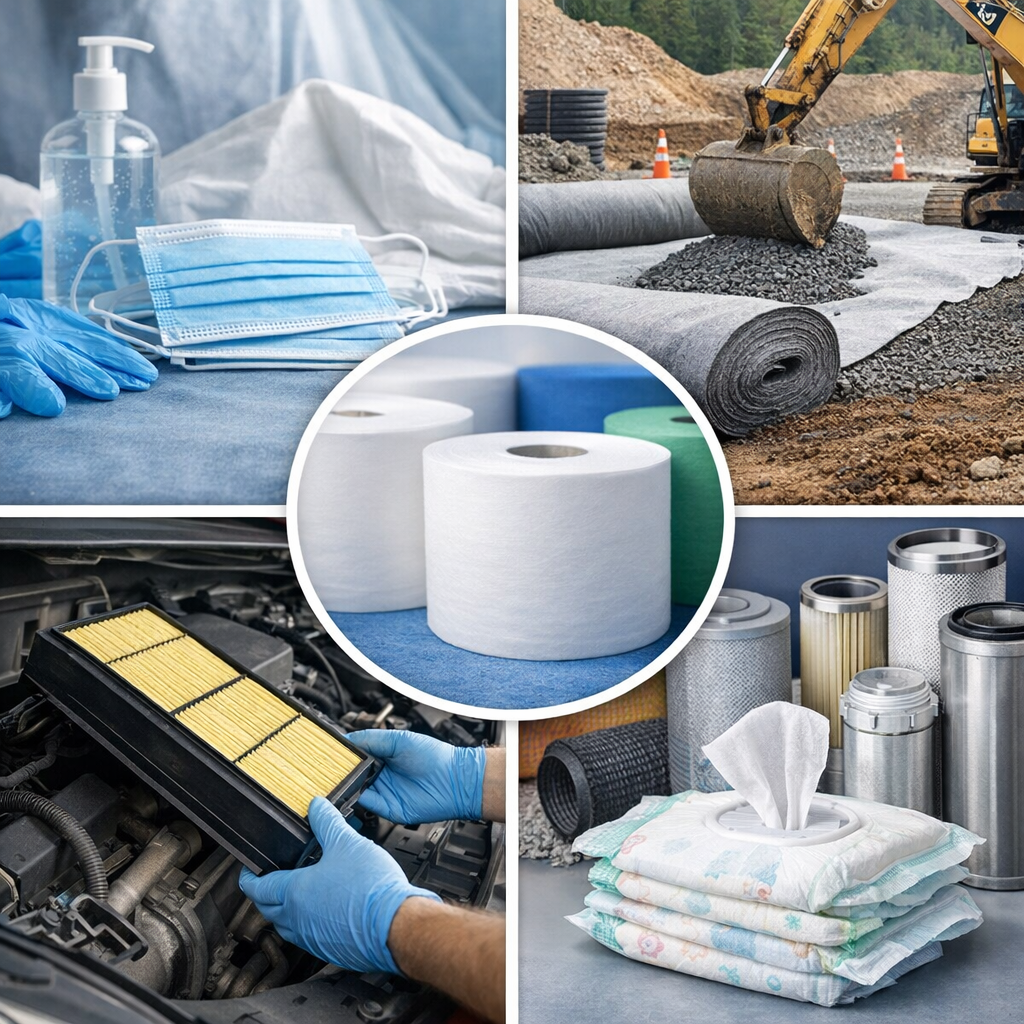


You use nonwoven fabrics every day, often without noticing them — in masks, wipes, filters, insulation, and packaging — because they combine light weight, strength, and cost-effectiveness for many jobs.
Nonwoven textiles let you pick the right balance of filtration, absorbency, durability, or biodegradability for each application, which is why industries from healthcare to construction rely on them.
If you want to understand which nonwoven type fits your need and why manufacturers choose specific materials and bonding methods, this article breaks down the key types, their practical properties, and real industry uses.
Expect clear examples and simple guidance so you can spot suitable nonwoven solutions for hygiene, filtration, automotive, agriculture, and specialty projects.
Key Takeaways
Fundamental Types and Properties of Non Woven Fabric
Nonwoven textiles combine specific manufacturing methods with targeted material choices to deliver porosity, strength, and absorbency for medical, hygiene, filtration, and industrial uses. You will see how production routes change fiber arrangement and how that affects comfort, barrier performance, and durability.
Nonwoven Fabric Manufacturing Methods
Nonwoven production forms a fiber web and bonds it without weaving or knitting.
Common methods include:
You should note bonding types—thermal bonding, chemical bonding, and mechanical entanglement—directly affect surface feel, stiffness, and recyclability.
Key Performance Properties: Breathability, Strength, and Absorbency
Breathability depends on pore size and fiber layout.
Meltblown and fine-spun webs give low air permeability for barriers, while spunbond and spunlace offer higher breathability and comfort for apparel and wipes.
Tensile strength and tear resistance hinge on fiber type and bonding.
Spunbond non-woven fabric and thermal-bonded composites provide good tensile strength and tear resistance for reusable bags and industrial panels.
Needle-punched non-wovens deliver high durability under shear and abrasion because fibers are physically entangled.
Absorbency varies by fiber chemistry and web structure.
Airlaid and wetlaid nonwoven fabrics with cellulose or natural fibers show high absorbency for hygiene products.
Spunlace fabrics combine softness and liquid handling for wet wipes.
You should balance absorbency with barrier needs—high absorbency often lowers liquid repellence.
Variants and Composites: Spunbond, Meltblown, Needle-Punched, and Spunlace
Spunbond non-woven fabric works well as a strong, low-cost outer layer.
You will find it in SMS (spunbond-meltblown-spunbond) composites where spunbond provides strength and meltblown supplies filtration.
Meltblown non-woven fabric forms the filtration core in respirators and liquid filters.
Its microfibers create small pores and high surface area, improving capture efficiency without much bulk.
Needle-punched non-woven uses mechanical needle-punching to make thick, rugged sheets with good tear resistance and insulation.
It suits automotive liners, geotextiles, and erosion control where durability matters.
Spunlace non-woven fabric yields soft, cloth-like sheets with good hand feel and moderate strength.
Hydroentangled spunlace is common in medical wipes and cosmetic pads.
Composite nonwovens combine these variants—thermal bonding or chemical bonding joins layers to tune barrier properties, comfort, and durability for your specific product.
Emerging Trends in Biodegradable and Sustainable Nonwovens
You will see rising use of biodegradable materials like PLA, kapok, hemp, and regenerated cellulose to reduce microplastic pollution and landfill life.
Manufacturers blend biodegradable fibers with recycled polyester to cut cost while improving eco-credentials.
Closed-loop water systems and energy-efficient processes (reduced thermal bonding cycles, recycled energy) lower the environmental footprint of spunlace and other hydroentangled lines.
Certifications such as OEKO-TEX® guide material choices for biobased and recycled inputs.
Designers also push for recyclable composite nonwovens and mono-material constructions to simplify end-of-life processing.
These moves affect porosity, barrier properties, and comfort, so you must evaluate trade-offs between biodegradability and performance for your application.
Crucial Industry Applications of Non Woven Fabrics
Non-woven fabrics provide targeted performance where strength, breathability, absorbency, and low cost matter most.
They appear in single-use and durable products that protect people, control fluids, and trap particles in many settings.
Healthcare and Medical Textile Solutions
You rely on non-woven medical textiles for infection control and sterile barriers in hospitals and clinics.
Spunbond and meltblown layers form multi-layer surgical gowns and medical masks that combine barrier properties with breathability.
Meltblown filter media in N95-style masks captures small particles while outer spunbond layers give tensile strength.
Nonwovens are used to make disposable medical supplies such as drapes, procedure kits, and wound dressings.
They reduce the risk of cross-contamination because items are single-use and sterile-packed.
Manufacturers tune basis weight and bonding to meet standards for fluid resistance, microbial barrier, and comfort.
When choosing fabrics for gowns and masks, focus on barrier level (viral/bacterial), breathability (airflow), and seam/closure construction.
You should also check regulatory claims and test data for splash resistance and particle filtration efficiency.
Personal Care and Hygiene Products
You see non-wovens in diapers, sanitary pads, and cosmetic pads because they balance absorbency and softness.
Airlaid and spunlace cores deliver fast liquid uptake and distribution in diapers and sanitary napkins.
Topsheets use soft spunlace or thermal-bonded layers for skin comfort and dryness.
Wet wipes and cosmetic pads use spunlace or spunbond blends to be soft yet strong when wet.
Manufacturers add functional treatments—antimicrobial agents, lotions, or pH-balanced cleansers—while maintaining consistent pore size and web structure for performance.
Key design points include liquid handling (absorbency and retention), skin-friendly surface (low lint, hypoallergenic), and disposability or biodegradability.
For disposable hygiene products, weigh cost, skin contact safety, and environmental impact.
Filtration and Air/Liquid Purification
Non-woven filter media control airborne particles and liquids in HVAC, clean rooms, and industrial systems.
Meltblown microfibers are the core for air filtration; they trap particles down to submicron size while keeping airflow reasonable.
Wetlaid and electrostatically charged media serve as liquid filters for oil, fuel, and water treatment.
You pick filter media based on particle size removal (e.g., 0.3 µm), pressure drop, and service life.
In applications tied to infection control or COVID-19 response, meltblown layers in masks must meet specific particle and bacterial filtration standards.
Maintenance and replacement schedules hinge on loading rate and filter efficiency.
For critical environments, combine pre-filters (spunbond) with fine meltblown stages to extend life and protect the fine media.
Disposable Wipes, Pads, and Cleaning Media
You use non-woven wipes and cleaning pads across households, healthcare, and industry for quick, single-use cleaning.
Spunlace and airlaid fabrics provide high absorbency and strength for spills, disinfecting tasks, and instrument wiping.
For grease or oil cleanup, meltblown oil-absorbent pads work well.
Design choices include fiber type (cellulose for absorbency, PET for strength), web formation (spunlace for softness), and added chemistries (disinfectants, solvents).
For medical or food environments, choose low-lint, sterile or pre-moistened wipes with validated microbial reduction.
Pay attention to wipe compatibility with surfaces and chemicals to avoid damage.
Also consider disposal rules: many wet wipes should not be flushed and may need proper waste handling or compostable alternatives.
Structural, Environmental, and Functional Uses Across Sectors
Non-woven textiles deliver targeted performance where strength, insulation, filtration, or moisture control matter.
You will find them inside vehicles, under buildings, on farms, and in homes—each use chosen for a specific property like sound dampening, drainage, or absorbency.
Automotive Interior Components and Insulation
You use non-wovens in car interiors for headliners, trunk liners, seat padding, and upholstery backing.
Needle-punched and thermal-bonded fabrics give tensile strength and dimensional stability for durable panels and carpets.
Spunbond and spunlace layers provide soft touch and tear resistance for seat covers and armrests.
Meltblown layers are common inside cabin air filters and some composite panels for fine particle filtration.
Sound insulation often relies on thick needle-punched felts and recycled polyester blends to reduce road and engine noise.
Thermal insulation uses low-density airlaid or thermal-bonded battings to trap air in HVAC ducts, door panels, and under-hood covers.
You benefit from lighter non-wovens because they cut vehicle weight and improve fuel efficiency while meeting flammability and durability standards.
Civil Engineering, Construction, and Geotextiles
You deploy geotextiles for soil stabilization, erosion control, drainage, and housewrap systems.
Needle-punched and spunbond fabrics act as separation layers between subgrade and aggregate, preventing mixing and prolonging road life.
Permeable wetlaid or spunbond fabrics provide filtration while allowing water to pass; that keeps drainage systems working and prevents clogging.
For slopes and shoreline protection, you use erosion-control blankets and biodegradable seed blankets to hold soil and seeds in place during vegetation establishment.
Housewraps and vapor-permeable membranes use spunbond polypropylene to block wind and water while letting moisture escape.
Civil engineers pick specific weights and needle densities to match load, drainage rates, and lifespan requirements for each project.
Agriculture and Crop Protection Solutions
You use non-woven crop covers, weed-control fabric, and seed blankets to boost yield and reduce inputs.
Spunbond and spunlace covers protect seedlings from frost, insects, and wind while letting light and water through.
Ground cover and weed-control fabrics suppress weeds and reduce herbicide use; they also allow percolation to maintain soil moisture.
Airlaid or spunbond moisture-retention mats under transplants help seedlings establish during dry spells.
Biodegradable options like PLA and natural fiber blends work well for single-season seed blankets and protective wraps.
Farmers select fabric porosity and UV-stabilization levels based on crop type, growth stage, and reusability needs.
Home Textiles, Furnishings, and Consumer Products
You find non-wovens in curtains, mattress components, upholstery padding, and disposable home products.
Thermal-bonded and needle-punched wadding serve as mattress cores, mattress covers, and quilting interlinings to add loft, thermal insulation, and cushioning.
Spunlace and airlaid wipes, disposable tablecloths, and cosmetic pads provide softness and absorbency.
For curtains and upholstery backing, lightweight spunbond layers add dimensional stability and hide seams while keeping fabric drape.
In furniture, non-woven padding and furniture interfacings improve comfort and extend the life of coverings.
Choose fabric type and weight to match desired breathability, thermal insulation, and expected wear.
Specialty and Emerging Applications of Non Woven Fabrics
Non-woven fabrics deliver high performance in targeted uses where weight, filtration, and cost matter.
They appear in safety gear, new fashion items, and durable reusable bags with specialized printing and coatings.
Protective Clothing and Barrier Materials
You rely on non-woven textiles for medical gowns, lab coats, and industrial coveralls that block fluids and particles.
Meltblown and spunbond layers combine in multilayer laminates to meet specific barrier ratings, like liquid penetration and particulate filtration.
Manufacturers add coatings or laminated films to achieve chemical resistance and meet standards for antivirus or hazardous-material protection.
Needle-punched and thermal-bonded non-wovens provide strength for reusable protective wraps and surgical drapes.
Choose products with specified gram weights (e.g., 25–100 g/m²) and tested barrier performance.
Look for certifications and data on viral/bacterial filtration, breathability, and seam durability when selecting protective clothing for your workplace.
Fashion, Shoes, and Apparel Innovations
You can find non-woven fabrics in shoe linings, felted panels, and lightweight insulation for outerwear.
Spunbond and needle-punched non-wovens offer structure without heavy weight, letting designers add stiffness to bags or shape to hats while reducing production cost.
Designers use spunlace and thermal-bonded non-wovens for soft-touch linings and removable insoles.
Blends with natural fibers like kapok or cotton improve comfort and biodegradability.
Non-woven felt replaces cut leather or thick textiles in some accessories, giving consistent thickness and easy dyeing.
When buying fashion items, check material composition for durability and care instructions, since some non-wovens are intended for limited-use garments while others are engineered for long-term wear.
Reusable Bags, Printing, and Coatings
You see spunbond non-woven fabric in reusable shopping bags because it balances strength, low cost, and printable surface area. Manufacturers apply solvent or UV-curable inks for vibrant branding that resists abrasion.
Coatings—such as PU, acrylic, or laminated films—add water resistance, grease protection, and higher tensile strength for heavy loads. Thermal-bonded constructions with reinforced handles extend bag life.
For printed or coated non-woven products, verify adhesion tests and washability. Look for bags rated for repeated use (e.g., carrying 10–20 kg) and coatings that meet food-contact or environmental standards if you use them for groceries or promotional distribution.
Frequently Asked Questions
This section answers practical questions about where non-woven fabrics are used, the functions they perform, and recent tech improvements. Expect clear examples and short explanations you can use when choosing materials or planning projects.
What are the common uses of non-woven fabrics in the medical industry?
You will find non-wovens in surgical masks, N95 filters, gowns, drapes, and sterile wraps. Meltblown layers provide filtration, spunbond layers give strength and breathability, and spunlace offers soft, skin-contact surfaces.
Non-wovens also appear in wound dressings and sanitary swabs. Their single-use options reduce cross-contamination and meet many healthcare sterility standards.
How are non-woven fabrics utilized in agricultural applications?
Farmers use spunbond covers and row covers to protect crops from pests and frost. These fabrics block UV and insects while letting air, water, and light pass through.
Non-wovens also serve as mulch mats and weed barriers to reduce herbicide use and conserve soil moisture. Their lightweight nature makes installation and removal easy.
What role do non-woven fabrics play in the construction sector?
You can use geotextiles for soil stabilization, erosion control, and drainage management. Needle-punched and thermal-bonded non-wovens provide strength and filtration in roadbeds and retaining walls.
Non-wovens also act as housewraps, insulation facing, and acoustic pads. They improve moisture control and reduce thermal bridging in building envelopes.
In what ways are non-woven materials employed in consumer goods?
Non-wovens appear in wipes, diapers, feminine hygiene products, and reusable shopping bags. Spunlace gives softness for wipes; airlaid cores give high absorbency in diapers.
You will also see non-wovens in furniture padding, mattress layers, and apparel insulation. They add cushioning, shape, and lightweight warmth while cutting production costs.
Can non-woven fabrics be considered environmentally friendly in packaging applications?
You can use recycled spunbond and biodegradable fibers like PLA or natural fibers to reduce packaging waste. Recycled polyester bags and wraps lower landfill input compared with single-use plastics.
However, synthetic non-wovens can release microplastics and persist in landfills. Look for certified recycled content or compostable materials if you need a truly lower-impact packaging option.
What advancements are being made in non-woven fabric technology for automotive use?
Automakers increasingly use needle-punched and thermal-bonded non-wovens for lightweight trim, headliners, and insulation. These parts reduce vehicle weight and improve fuel efficiency.
Researchers also develop recycled-fiber blends, acoustic-enhancing structures, and flame-retardant finishes that meet safety standards. More bio-based fibers and recycled content are expected in future automotive panels and underlayments.