


Contact us
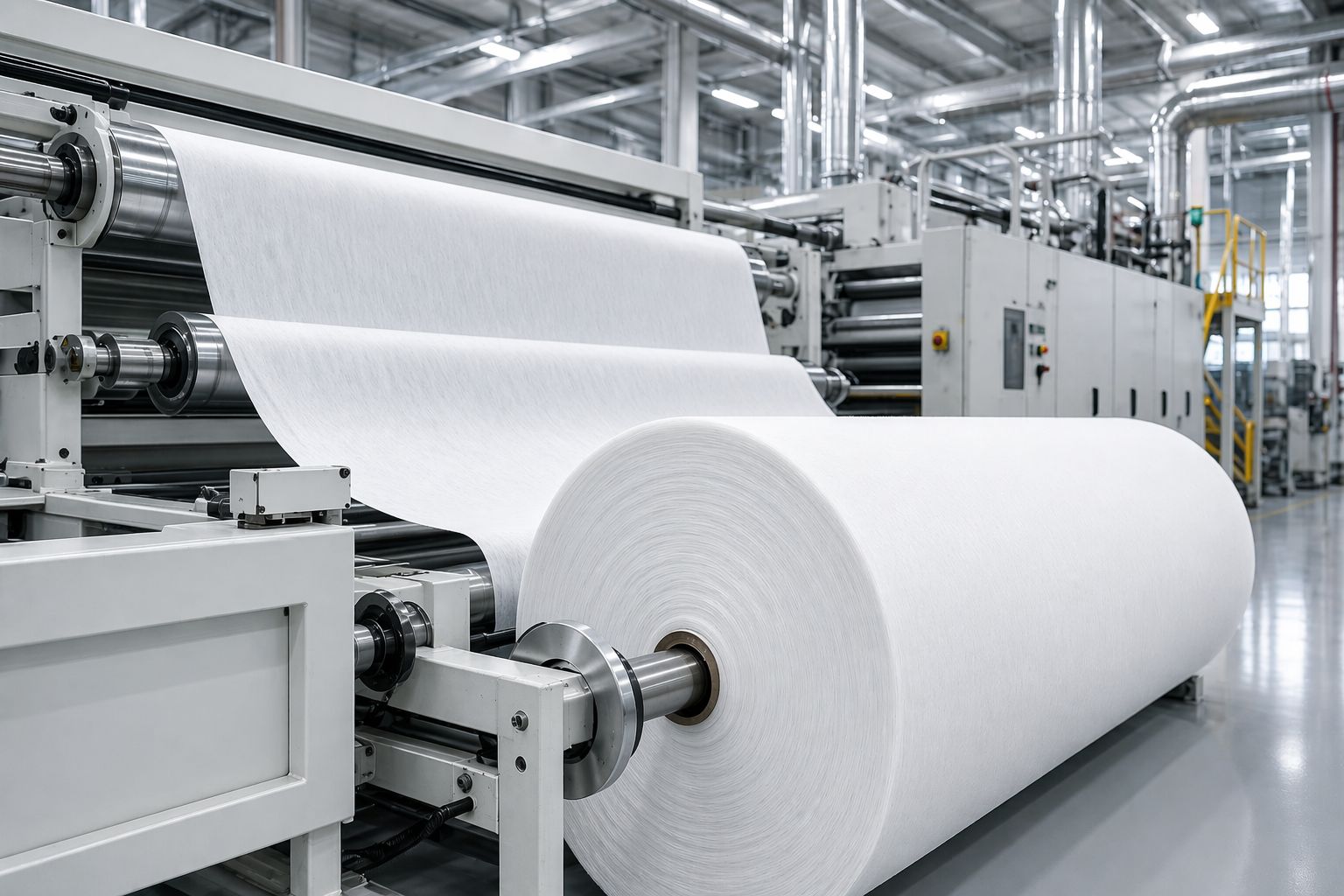
Non Woven Fabric Manufacturing Process: A Complete Guide to Methods, Materials, and Quality Control
Non woven fabric manufacturing begins with a simple decision: which fiber, which formation method, and which bonding technique will deliver the right balance of strength, softness, and cost? That single set of choices shapes everything, from a medical-grade wipe to an industrial geotextile. This guide walks through each stage of non woven fabric manufacturing clearly and practically. Whether you are sourcing materials, evaluating a supplier, or designing a new product, understanding the Non woven fabric manufacturing process helps you make sharper decisions.
-
Recent Post
-
Biodegradable Nonwoven Fabric: Materials, Benefits & Sustainability Impact
Sustainability has moved on from being a preference to a specification in nonwoven manufacturing. Bi
08.06.2026
Read Article -
Lint Free Wipes: What Makes Them Different?
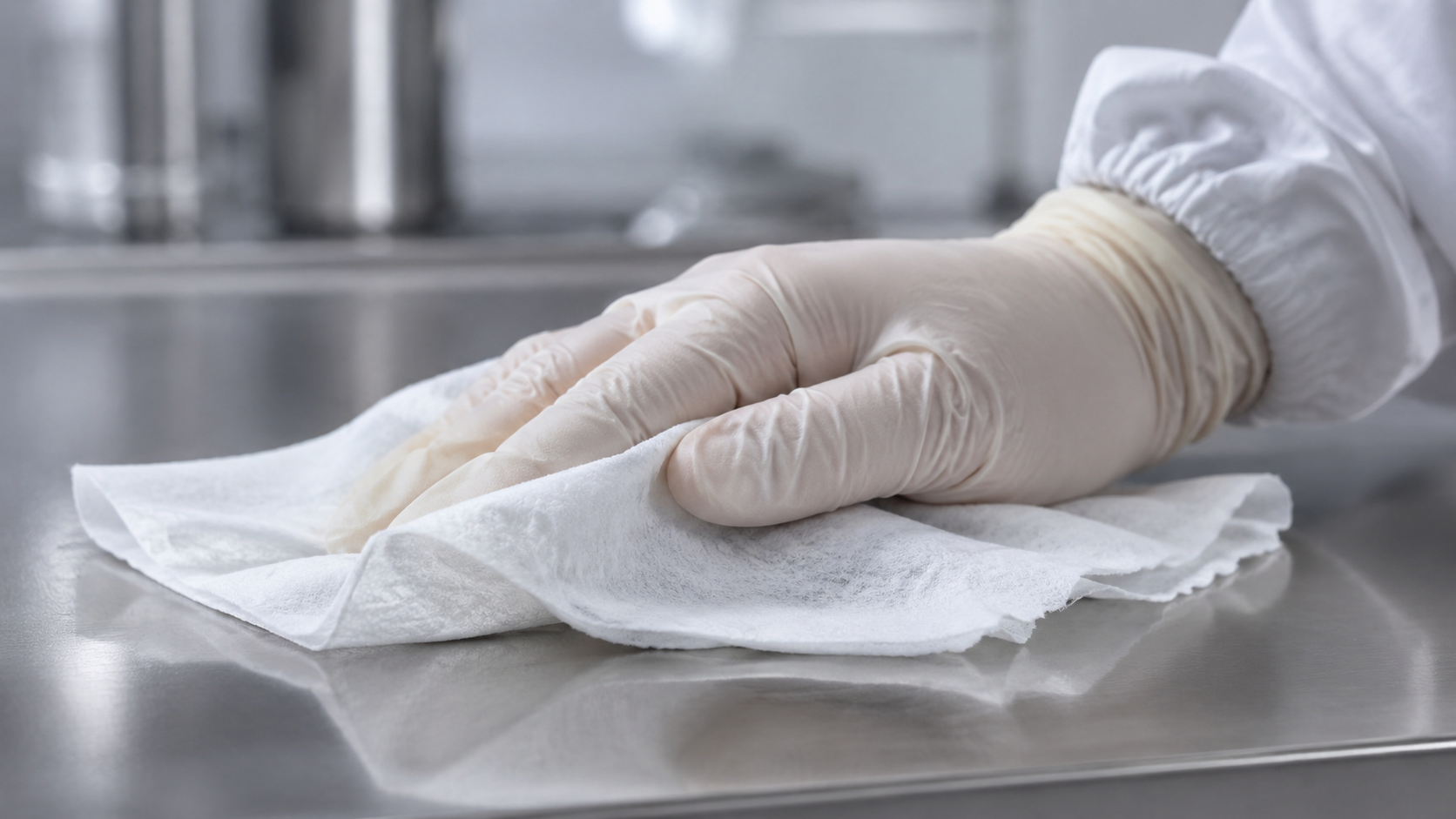
In precision cleaning, the wipe you choose can be as critical as the process itself. Lint free wipes
31.05.2026
Read Article -
Surface Cleaning Wipes: Material Guide and Applications
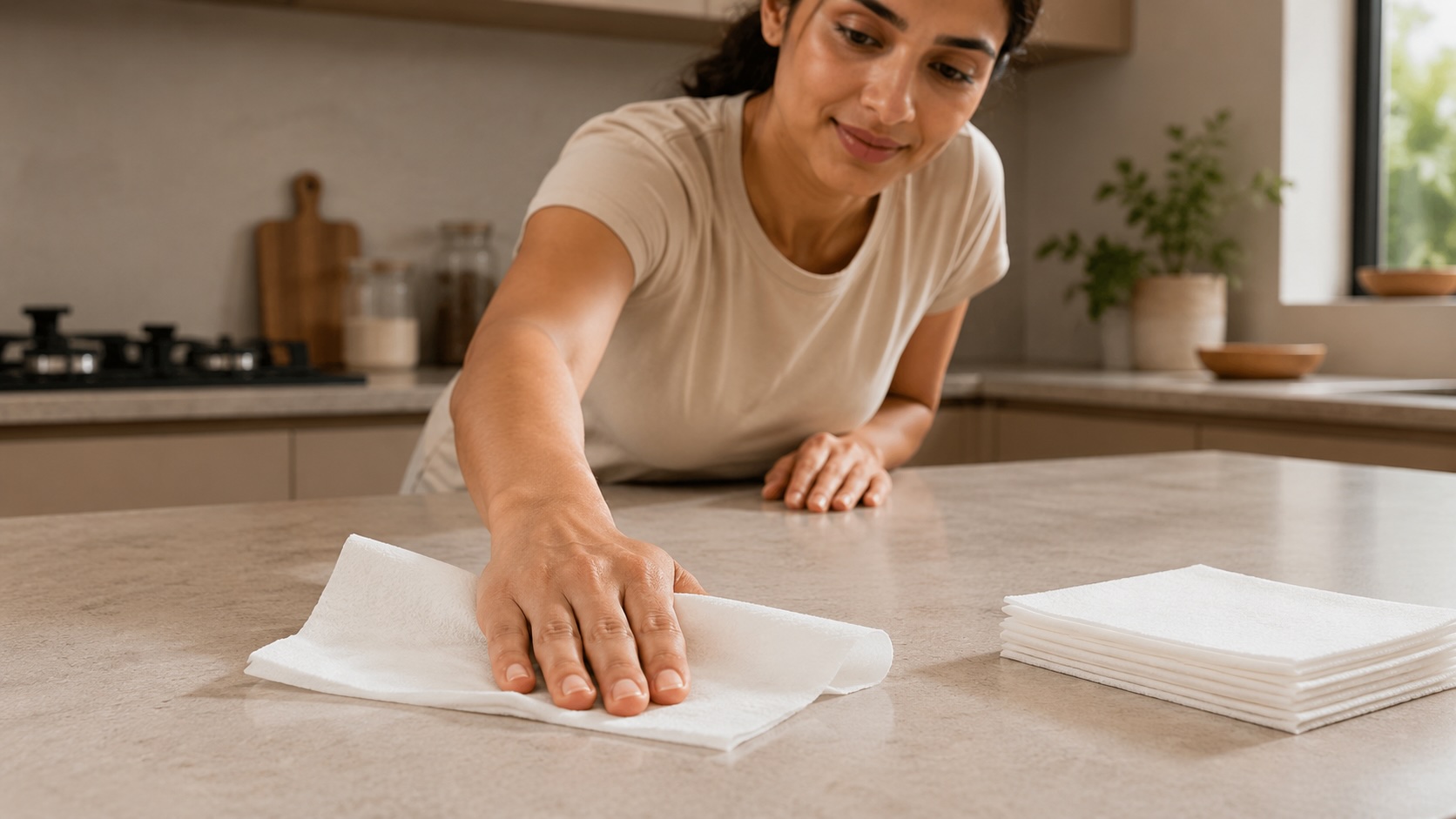
Surface cleaning wipes are a hygiene essential across household, healthcare, dental, and industrial
15.05.2026
Read Article -
INDEX 2026 Geneva: Everything You Need to Know About the World's Biggest Nonwovens Trade Show
INDEX 2026 is the world's largest nonwovens trade show, held every three years at Palexpo Geneva. Th
05.05.2026
Read Article -
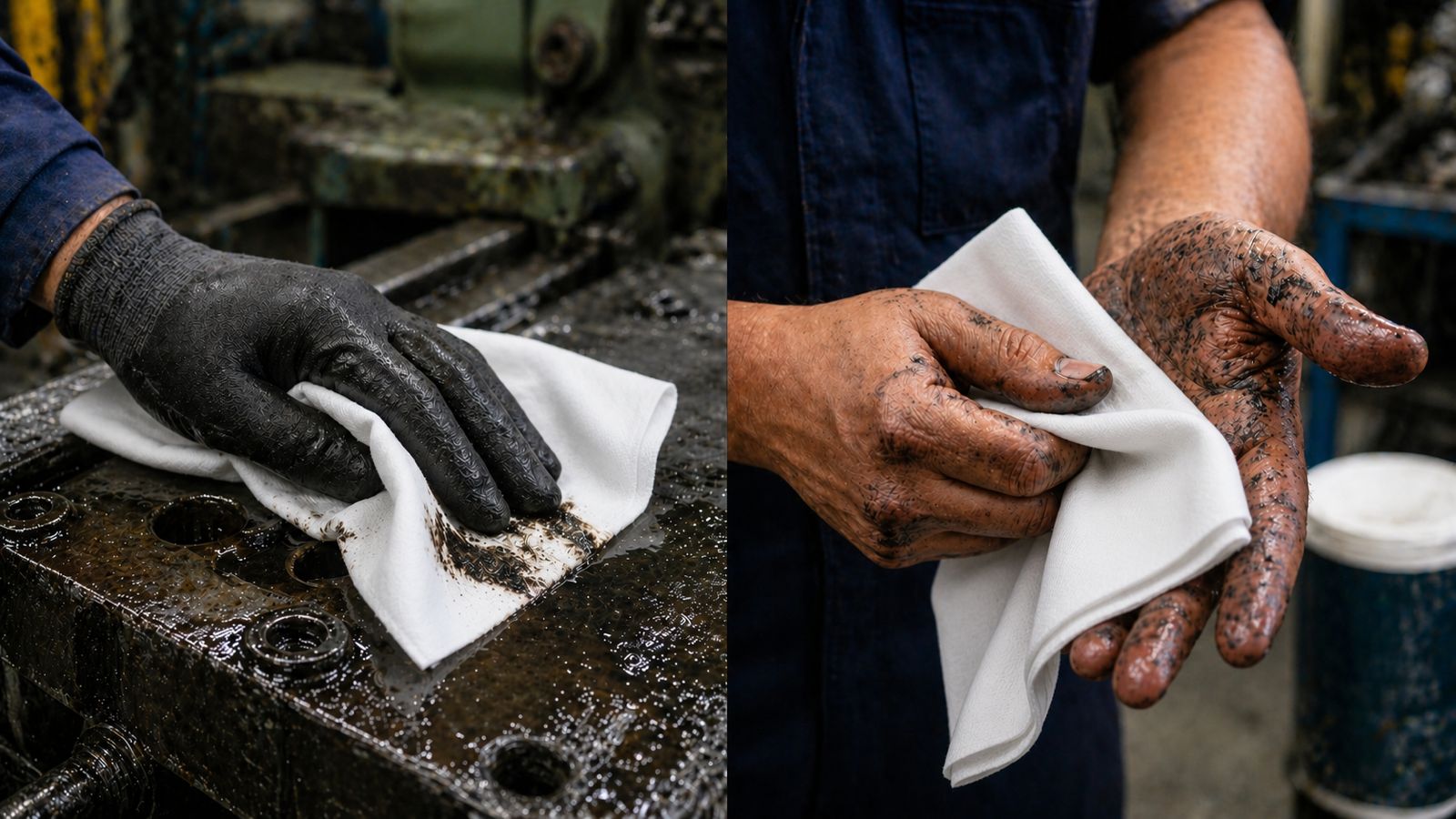
Industrial Wipes: Types and Key Benefits
Every factory floor, workshop, and cleanroom runs on something smaller than it looks: the right wipe
01.05.2026
Read Article -
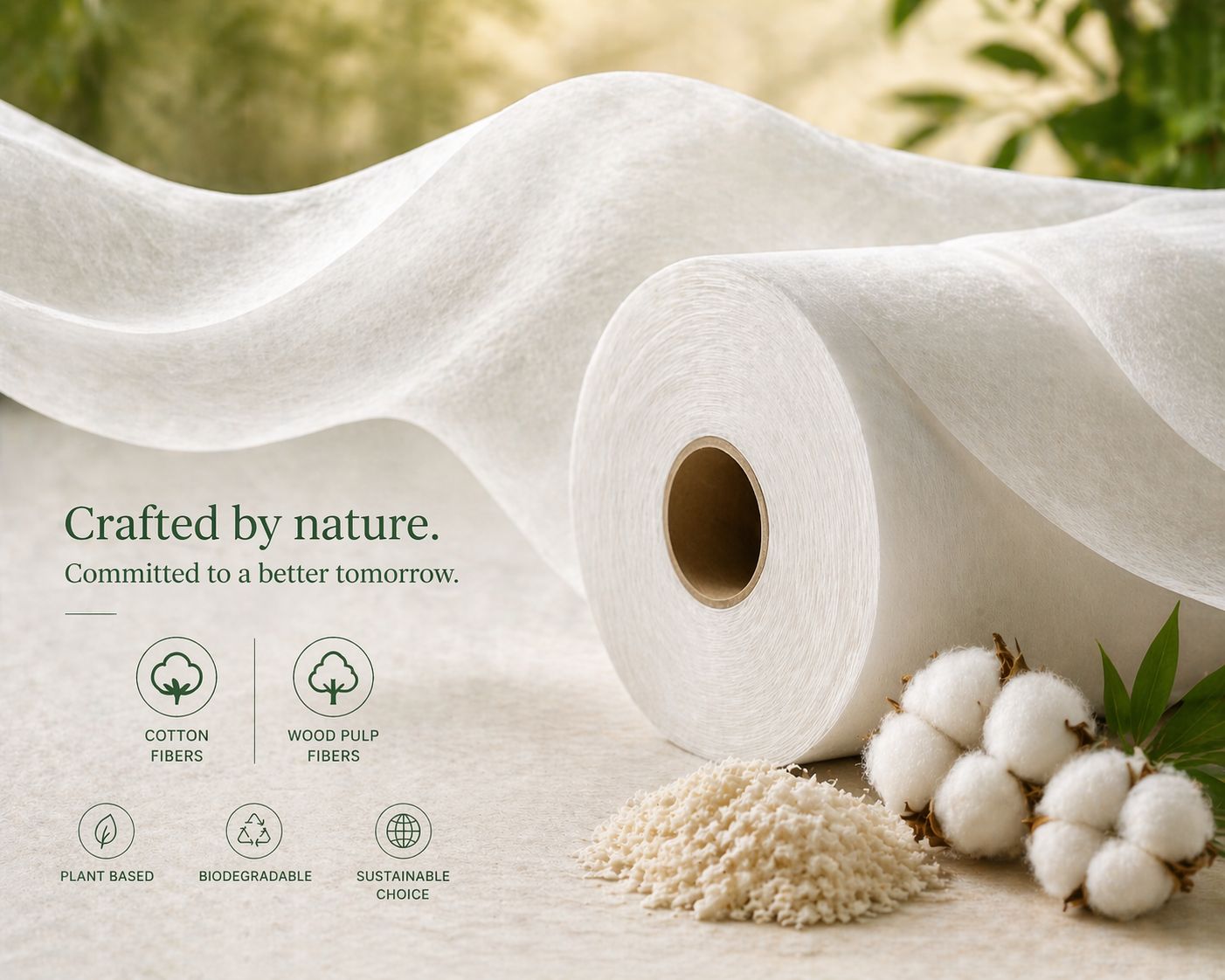
Spunlace Non Woven Fabric: Applications, Properties, and Performance Guide
There is a good chance you touched spunlace non woven fabric in a facial wipe, a baby care pad, or a
27.04.2026
Read Article -
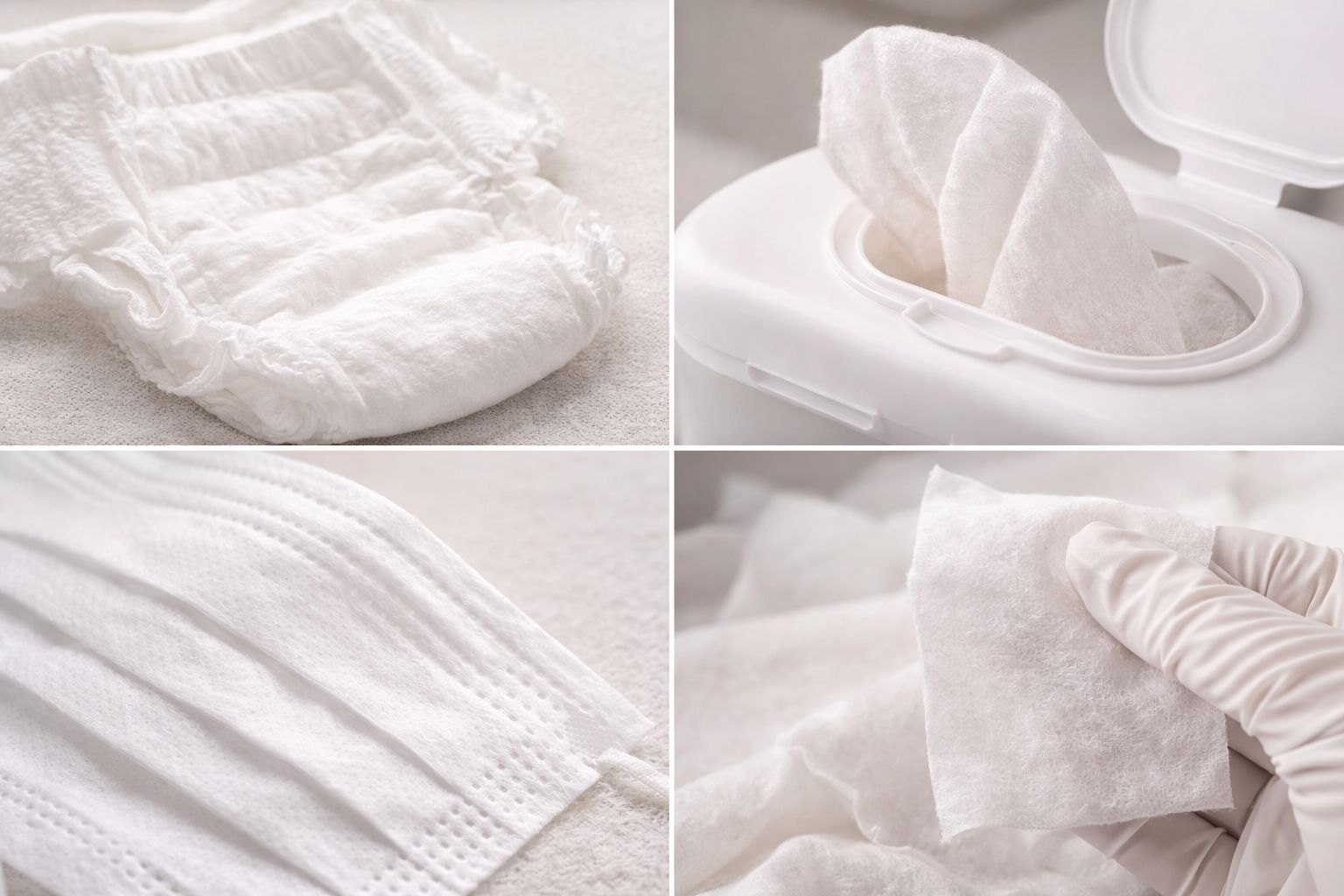
What Is Non woven Fabric? Types, Uses, and Key Benefits Explained
What is non woven fabric? This question is becoming increasingly relevant as industries move toward
28.04.2026
Read Article -
Built for the Planet: How Nonwovens Are Leading the Sustainable Manufacturing Revolution
On World Earth Day 2026, Elixrr explores how pulp-based spunlace nonwovens drive real environmental
25.04.2026
Read Article -
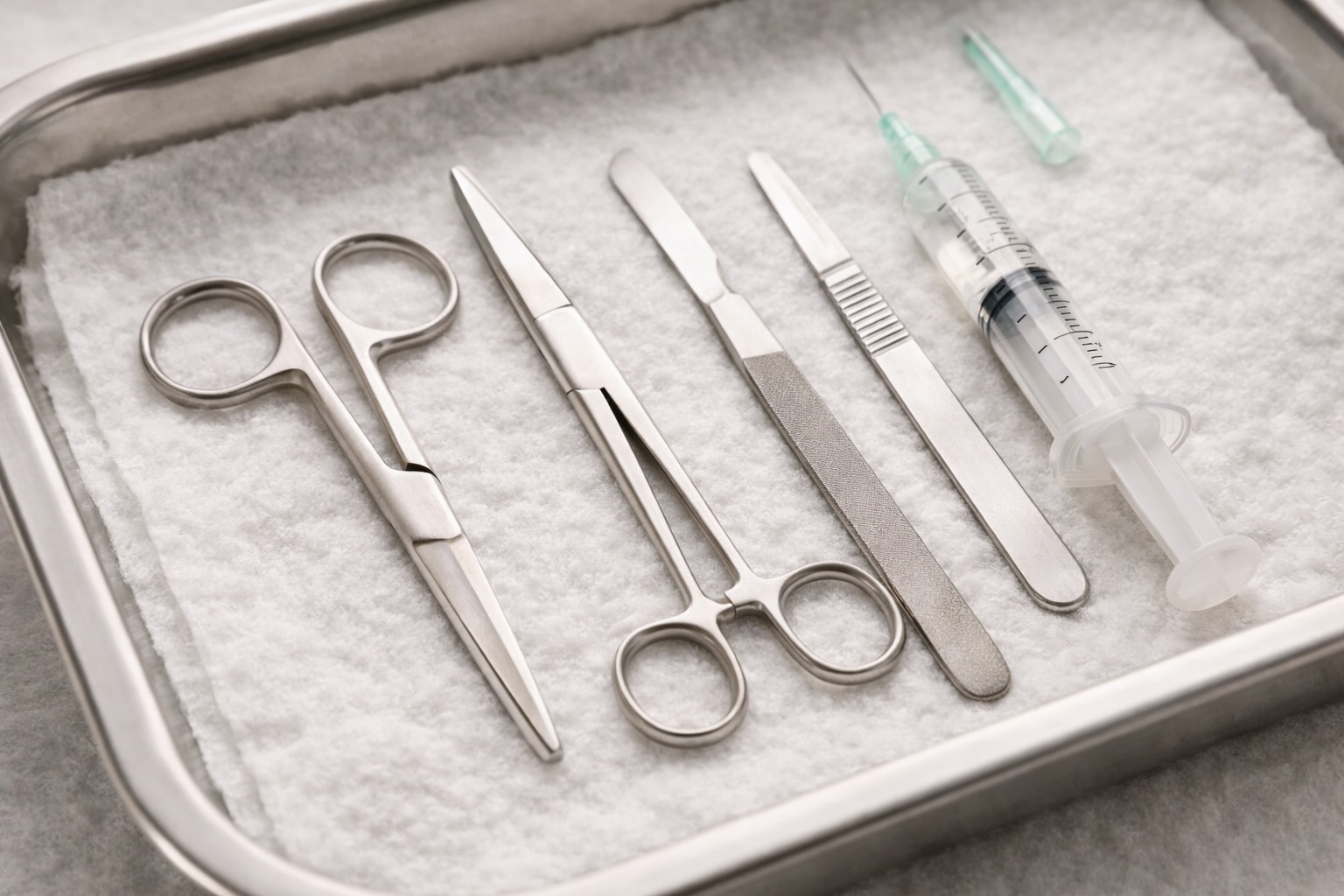
Medical Wipes: Types, Uses & Nonwoven Materials Guide
Medical wipes are specially designed cleaning products that remove germs, bacteria, and contaminants
10.04.2026
Read Article -
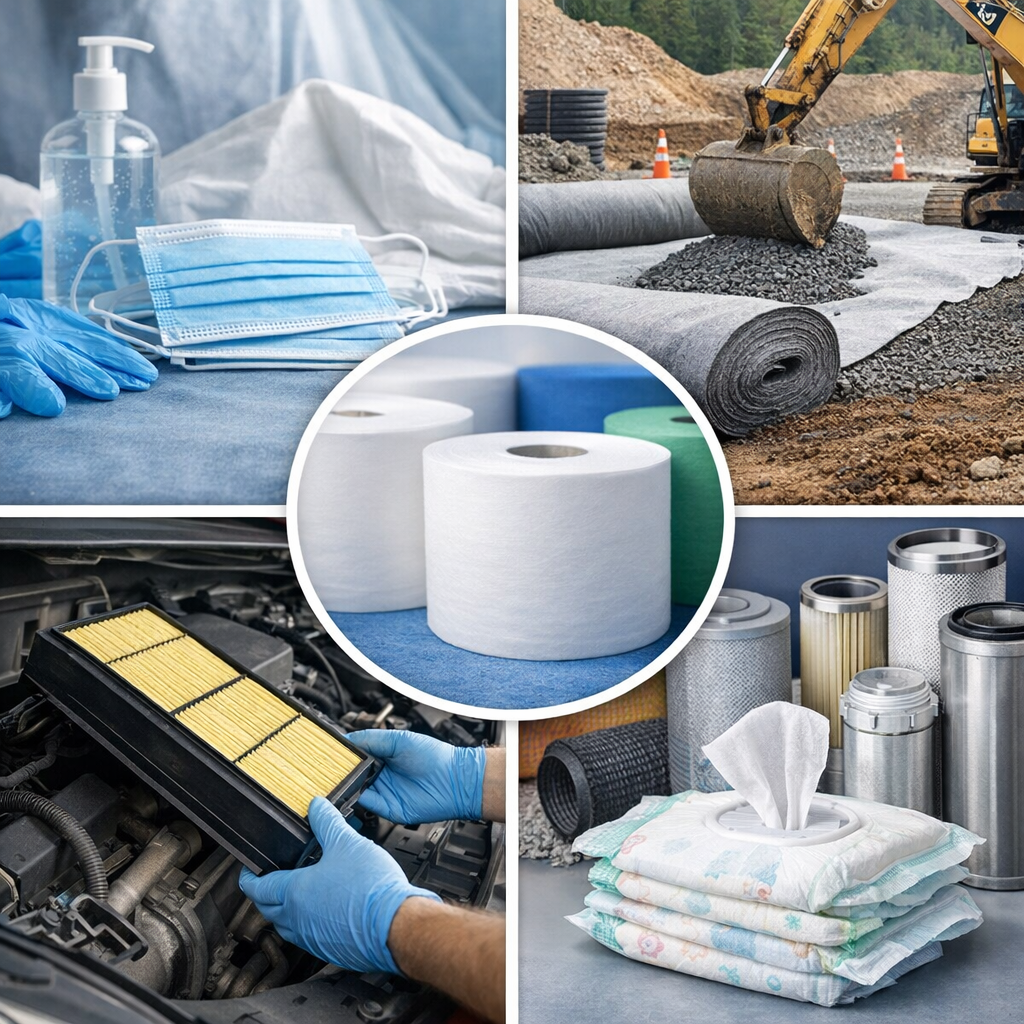
Non Woven Fabric Textile Applications Across Industries: Comprehensive Use Cases
Nonwoven fabrics are widely used across industries for their versatility, cost-effectiveness, and ta
25.03.2026
Read Article -
Global Nonwoven Market Trends and Growth Opportunities: 2026 Outlook
The global nonwoven market is expanding rapidly due to strong demand from hygiene, medical, filtrati
18.03.2026
Read Article -
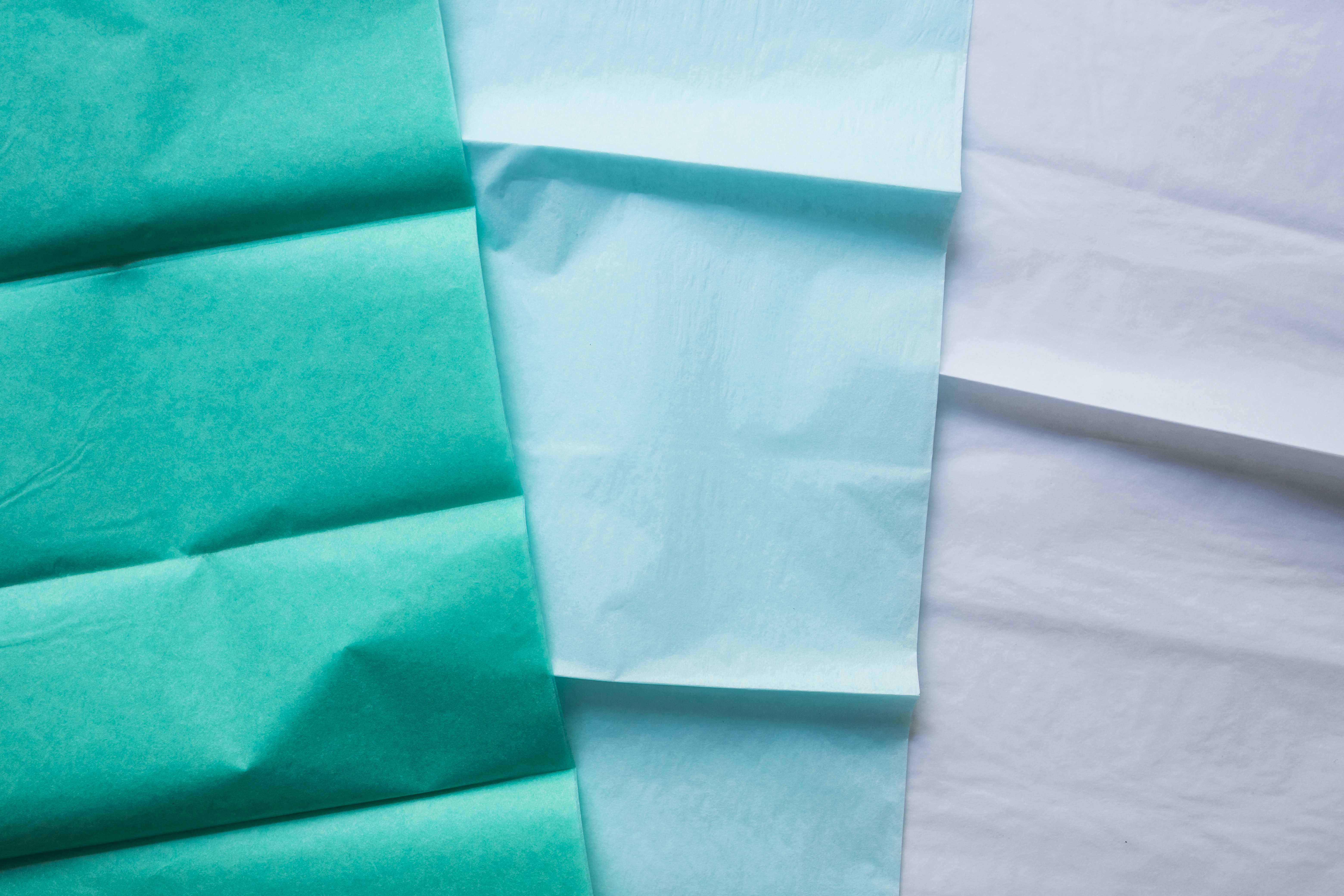
Difference Between Woven and Non-Woven Fabrics: Key Structural, Performance, and Application Differences
Woven and non-woven fabrics differ in how they are made, how they perform, and where they are used.
05.03.2026
Read Article -
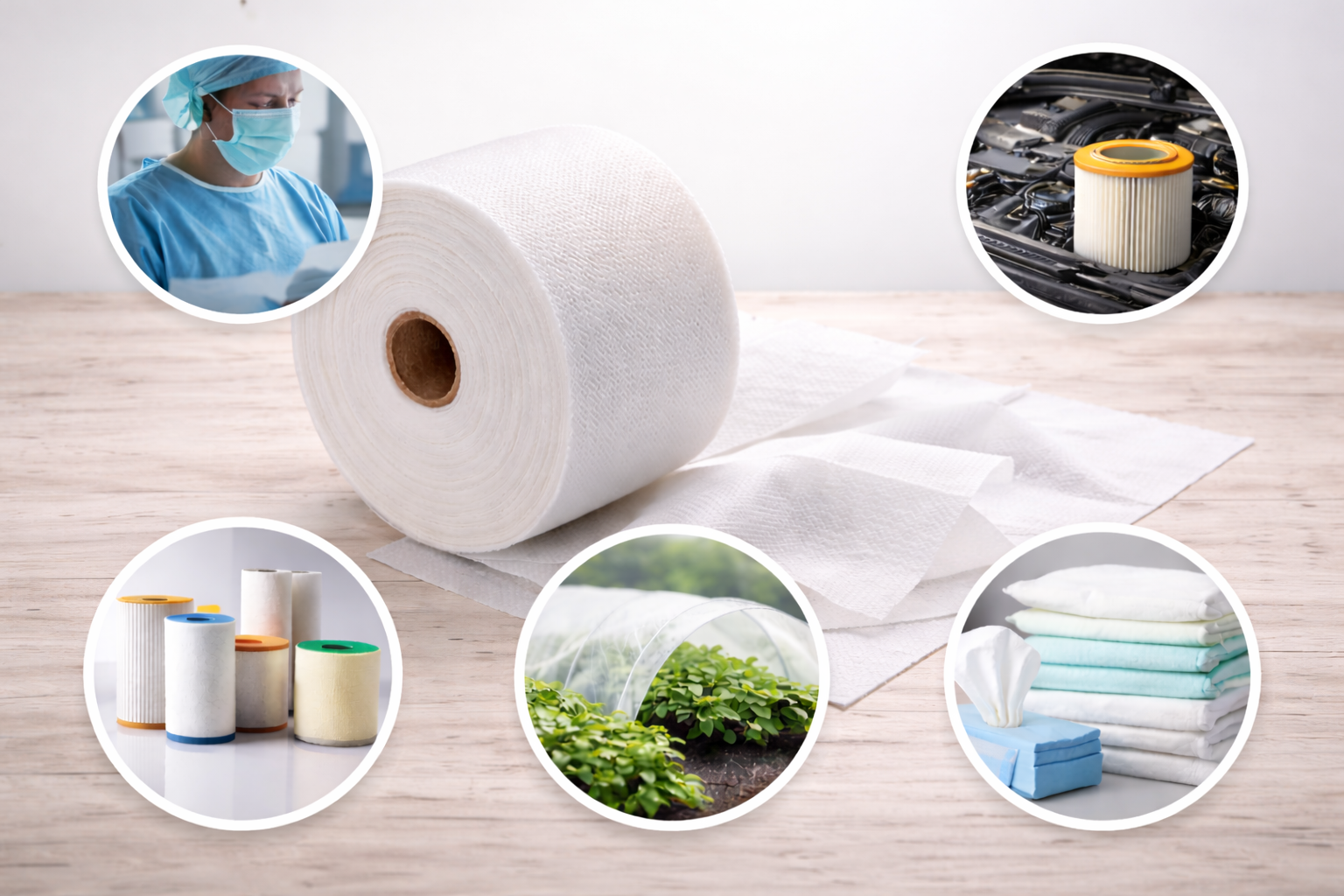
What Are the Uses of Nonwoven Fabric? Practical Applications and Industry Examples
Nonwoven fabrics are versatile materials used across healthcare, hygiene, filtration, automotive, ag
20.02.2026
Read Article -
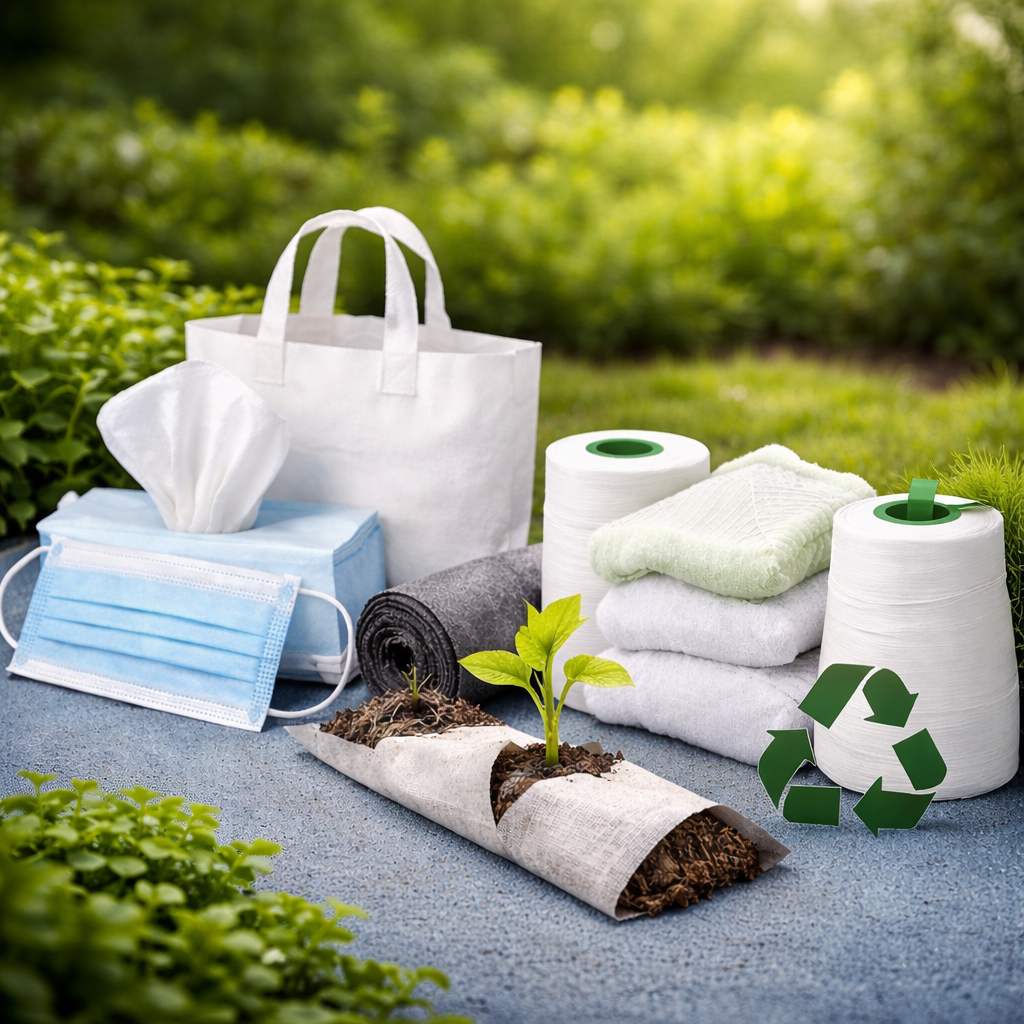
Types of Non-Woven and Their Uses: Applications, Manufacturing Methods, and Industry Examples
Nonwoven fabrics are engineered materials made by bonding fibres rather than weaving them together.
06.02.2026
Read Article -
What Are Biodegradable Materials and Why Do They Matter?
What biodegradable materials are, how they work, real-world examples, and why they are becoming non-
09.01.2026
Read Article -
What is Recyclable Nonwoven Fabric and Why is it Important?
That’s where recyclable nonwoven fabric comes in. It addresses a real problem. High-volume disposa
14.01.2026
Read Article -
Uses of Non Woven Fabric: 15 Practical Applications
Explore the top uses of non woven fabric across medical, hygiene, filtration, automotive, agricultur
11.12.2025
Read Article -
Why Use Nonwovens in Medical and Healthcare?
Nonwovens are used in medical and healthcare because they solve the real constraints of modern care:
15.12.2025
Read Article -
Dry Wipes Non Woven Fabric. Uses, Types and Benefits
Learn what dry wipes non woven fabric is, its types, materials, manufacturing process, applications,
25.12.2025
Read Article -
Non Woven Fabric Manufacturer | Top Suppliers & Uses Guide
Looking for a trusted non woven fabric manufacturer? Explore leading global suppliers, including Eli
24.12.2025
Read Article -
Top 10 Medical Nonwoven Fabric Exporters Trusted by Global Healthcare Brands
Discover the top medical nonwoven fabric exporters trusted worldwide. Explore quality, applications
16.12.2025
Read Article -
Cellulose Based Nonwoven Fabric | Eco Friendly Innovation
Explore the benefits of cellulose-based nonwoven fabric—biodegradable, soft, and sustainable. Idea
19.11.2025
Read Article -
Beautyworld Dubai: Discovering New Opportunities for Elixrr
Exploring innovative trends and partnerships at Beautyworld Dubai, uncovering exciting growth opport
07.11.2025
Read Article -
Green Nonwoven Technology: Sustainable Innovation in Nonwoven Fabrics
Learn how green nonwoven technology uses eco-friendly materials and energy-efficient manufacturing t
30.10.2025
Read Article -
Types of Nonwoven Fabric and Their Uses in 2025
Explore the 7 main types of nonwoven fabric—spunbond, meltblown, spunlace, and more. Learn how eac
28.10.2025
Read Article -

Biodegradable Nonwoven Fabric: The Future of Sustainable Textiles
Biodegradable nonwoven fabrics are reshaping industries with eco-friendly performance and natural de
28.10.2025
Read Article -
Best Non Woven Fabric Manufacturers in India (2025 Edition)
Discover the top 10 non woven fabric manufacturers in India. Explore eco-friendly, high-quality opti
28.10.2025
Read Article -
Top 10 Applications of Non-Woven Fabrics in 2025 — And Why the Market Is Booming
Top 10 Applications of Non-Woven Fabrics in 2025 — And Why the Market Is Booming
20.05.2025
Read Article -

Reinventing Wipes: How Sustainable Nonwovens Are Reshaping the Industry
Elixrr explores how next-generation sustainable nonwovens, from wet-laid spunlace to carded-pulp tec
21.10.2025
Read Article -
Woven Fabric Material Guide: Composition, Types & Common Applications
Explore woven fabric materials—learn their composition, major types, and everyday applications in
09.10.2025
Read Article -
Non Woven Polypropylene Fabric: Uses, Strengths & Comparison with Woven Fabric
Non woven polypropylene (PP) fabric has become one of the most widely used materials across industri
09.10.2025
Read Article -
What Is Knitted Woven Fabric? Types, Techniques & Benefits
Knitted woven fabric is a hybrid textile that blends the structural strength of woven fabrics with t
16.10.2025
Read Article -
Non Woven vs Woven Fabrics: Key Differences & When to Use Each
Non Woven vs Woven Fabrics: Key Differences & When to Use Each
18.09.2025
Read Article -
Non Woven Polypropylene Fabric: Uses, Strengths & Comparison with Woven Fabric
Non Woven Polypropylene Fabric: Uses, Strengths & Comparison with Woven Fabric
19.09.2025
Read Article -
Spunbond Non Woven Fabric: How It’s Made and Where It’s Used
Explore the manufacturing process and applications of spunbond non woven fabric. Learn why it’s wi
11.09.2025
Read Article -
Polyester Non Woven Fabric: Benefits, Properties & Industrial Uses
Discover the benefits and industrial uses of polyester non woven fabric. Learn about its properties,
03.09.2025
Read Article -

What Is Non Woven Fabric? Definition, Manufacturing & Applications
Explore what non woven fabric is, how it’s made, and where it’s used. Learn about its unique pro
04.09.2025
Read Article -

Types of Nonwoven Fabric – A Complete Guide to Nonwoven Fabric
Learn about different types of nonwoven fabrics, their properties, manufacturing methods, and indust
20.05.2025
Read Article -
Redefining the Future of Wipes: Insights from WOW 2025
Elixrr Nonwovens shares key takeaways from WOW 2025, highlighting sustainable innovations, energy-ef
29.07.2025
Read Article -

Sustainability is Elixrr’s Focus at Global Wipes Markets at Wow 2025
Visit the WOW conference and see our proprietary nonwoven wipes fabrics Enduraspun, Ecopun and Softs
03.07.2025
Read Article -

Inside Elixrr: A Conversation with Subir Barman on the Future of Nonwovens and Next-Gen Manufacturing
As the global demand for sustainable, high-performance materials accelerates, Elixrr Nonwovens conti
20.05.2025
Read Article -
Spunlace Nonwoven Fabrics: Explore Characteristics and Benefits
In a world where hygiene, safety, and softness intersect, material science has a quiet hero, spunlac
20.05.2025
Read Article -
PentaTech™ by Elixrr Nonwovens: Pioneering the Future of High-Performance and Sustainable Nonwovens
Innovation in nonwoven materials isn’t optional anymore. It’s what drives progress. As industrie
07.05.2025
Read Article -
Is Non-Woven Fabric Biodegradable? Exploring the Eco-Friendliness of Non-Wovens
Every business is searching for environmentally appropriate substitutes as the globe moves towards s
02.05.2025
Read Article -
What Are Non Woven Fabrics Used For? Key Examples & Features
In an era defined by performance, precision, and sustainability, materials are no longer just passiv
28.04.2025
Read Article -
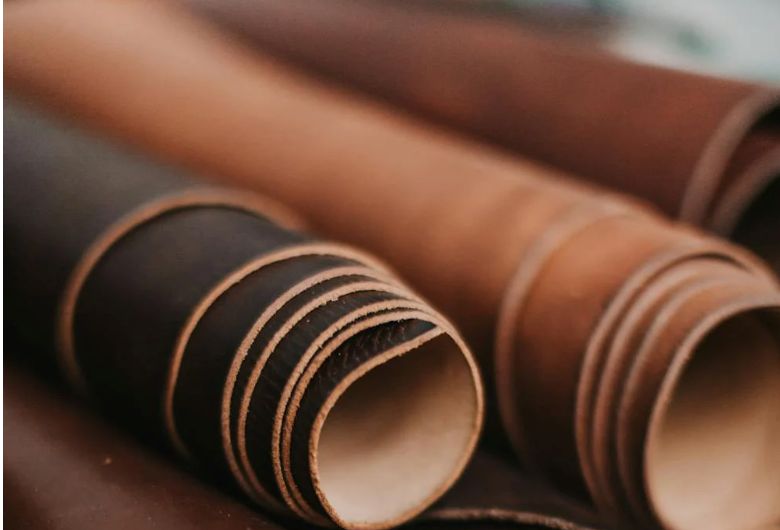
Is Leather a Non-Woven Fabric? Let’s Unravel the Truth!
Leather embodies luxury, durability, and style. However, in a society increasingly focused on novel
21.04.2025
Read Article -
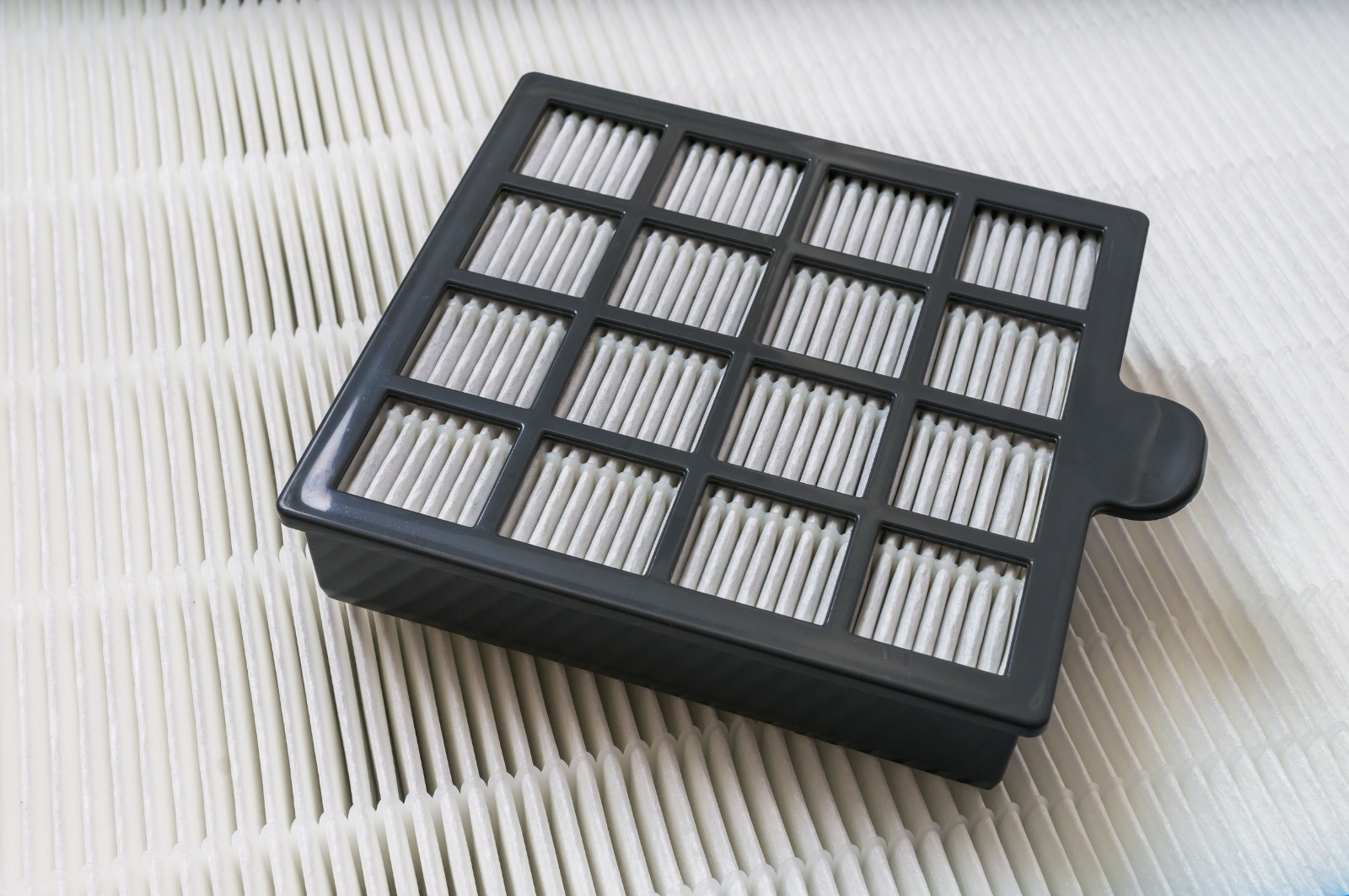
Can You Heat Press Non-Woven Fabric? A Complete Guide
The textile industry has embraced heat pressing. Adding colourful graphics to cloth banners or perso
18.04.2025
Read Article -
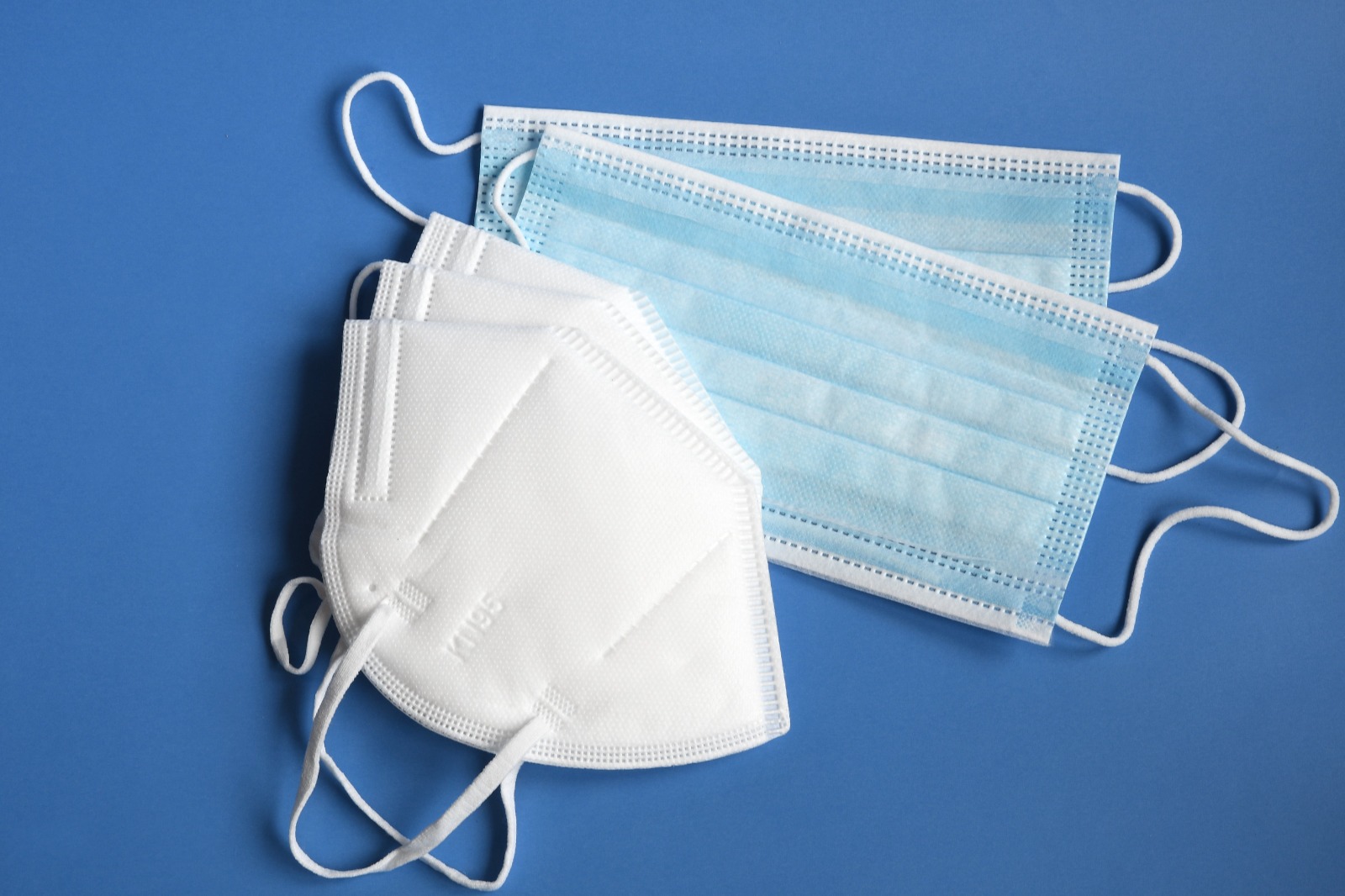
Can Non-Woven Fabric Be Washed? Let’s Unravel the Truth
Non-woven fabrics are used in a variety of applications, including medical masks, reusable shopping
14.04.2025
Read Article -
Non Woven Fabrics Vs Woven Fabrics: Choose the Right Fabric
If you have ever asked yourself why some materials are all about robustness while others are cutting
11.04.2025
Read Article -

Top 10 Non-Woven Fabric Manufacturers in Europe
The non-woven fabric industry has grown significantly in Europe, driven by the demand for high-quali
27.06.2025
Read Article -

Non-Woven Fabric: Moisture Absorption, Properties & Uses
When it comes to fabric selection, understanding the properties of different materials is essential,
04.04.2025
Read Article -

Types of Fabric: A Beginner Comprehensive Fabric Guide | 2025
Fabrics are the foundation of countless industries and everyday life, influencing everything from th
31.03.2025
Read Article -

What are Non-Woven fabrics?
India has always had a rich relationship with textiles. From the fine muslin that adorned royalty to
28.03.2025
Read Article
-
Explore Recent Blogs
Biodegradable Nonwoven Fabric: Materials, Benefits & Sustainability Impact
Sustainability has moved on from being a preference to a specification in nonwoven manufacturing. Bi
Read More
Lint Free Wipes: What Makes Them Different?
In precision cleaning, the wipe you choose can be as critical as the process itself. Lint free wipes
Read More
Surface Cleaning Wipes: Material Guide and Applications
Surface cleaning wipes are a hygiene essential across household, healthcare, dental, and industrial
Read More
INDEX 2026 Geneva: Everything You Need to Know About the World's Biggest Nonwovens Trade Show
INDEX 2026 is the world's largest nonwovens trade show, held every three years at Palexpo Geneva. Th
Read More

Weave Your Success with Our Revolutionary Fabrics
Power your business with Elixrr's cutting-edge nonwoven fabric solutions. Eco-friendly, customizable, and engineered for excellence—because innovation starts with the right foundation.

Non woven fabric manufacturing begins with a simple decision: which fiber, which formation method, and which bonding technique will deliver the right balance of strength, softness, and cost? That single set of choices shapes everything, from a medical-grade wipe to an industrial geotextile.
This guide walks through each stage of non woven fabric manufacturing clearly and practically. Whether you are sourcing materials, evaluating a supplier, or designing a new product, understanding the Non woven fabric manufacturing process helps you make sharper decisions.
Key Takeaways
What Is Nonwoven Fabric and Why Does the Process Matter?
A nonwoven fabric is a flat sheet of fibers held together by mechanical, thermal, or chemical means. It does not involve weaving or knitting yarn to make fabric. The result looks and functions like fabric but is engineered directly from fiber to finished material. This gives manufacturers precise control over properties.
Understanding the types of nonwoven fabric and their manufacturing routes matters because the process defines the product. Two fabrics made from identical fibers but bonded differently will behave very differently in use. For procurement teams and product developers, this knowledge reduces specification errors and supplier misalignment.
Raw Material Selection
Every non woven fabric manufacturing process starts with fiber selection. The main choices are:
Key parameters to evaluate involve checking the fiber denier or thickness, staple length for carded webs versus continuous filament for spunbond, and melt flow index for thermoplastics. Additives like flame retardants, antistatic agents, or hydrophilic finishes can be blended in to meet specific end-use requirements.
Consistent raw material quality directly affects performance and fabric uniformity. For more on how materials translate into specific uses, see applications of nonwoven fabric across industries.
Web Formation
Web formation lays fibers into a loose, uniform sheet before bonding. The method chosen here determines the fabric's structure and limits its final properties.
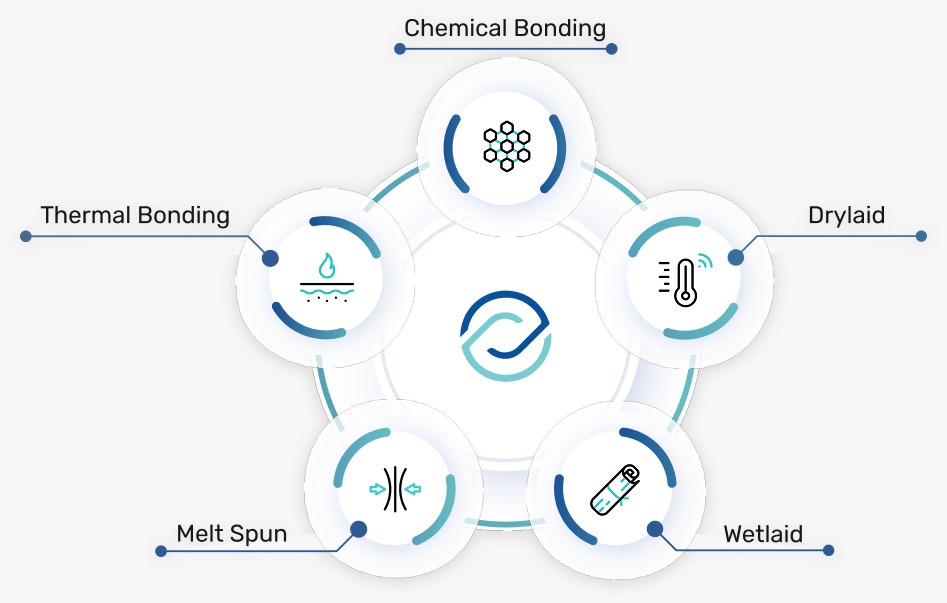
Like the Pentatech solution from Elixrr nonwovens, many technically advanced lines combine methods creating spunbond–meltblown–spunbond (SMS) composites. These are often used to balance barrier performance with structural strength in surgical applications.
Why Spunlace Material Stands Apart in Premium Nonwoven Applications
Among all bonding techniques in the non woven fabric manufacturing process, hydroentanglement, commonly called spunlace, deserves particular attention. It is the method that comes closest to giving nonwoven fabric a genuine textile feel.
In spunlace manufacturing, a carded or airlaid fiber web passes under arrays of ultra-fine, high-pressure water jets. The jets physically entangle the fibers without any heat, adhesive, or chemical binder. The result is a fabric that is soft, highly absorbent, strong in both directions, and breathable. These properties make it the preferred substrate for premium wipes, medical and healthcare nonwovens, and personal care products.
Jet pressure, line speed, and support screen pattern can be tuned to control fabric weight, texture, and porosity. This degree of customisation is why spunlace nonwovens command premium positioning across baby wipes, cosmetic pads, wound care, and surgical drapes.
From a sustainability perspective, spunlace has the upper hand over other non wovens. The process uses no chemical binders, which simplifies end-of-life composting or recycling of biodegradable fiber blends such as Lyocell or cotton.
Brands working toward recyclable and biodegradable nonwoven claims increasingly specify spunlace construction. For a deeper look at dry wipes and their nonwoven substrates, the construction method directly shapes performance claims.
Finishing, Quality Control, and Sustainability
After bonding, fabrics can be calendered, coated, printed, or treated with functional finishes. The most common finishes used are hydrophilic agents, antimicrobials, or flame retardants, depending on the application.
Quality control in non woven fabric manufacturing runs at every stage. Critical tests include basis weight, tensile strength (machine and cross direction), air permeability, and absorbency rate. ISO 9073 standards cover nonwoven testing methods and set the standards for most global buyers. Inline sampling, statistical process control (SPC) on key parameters, and full batch traceability are critical for manufacturers serving regulated sectors.
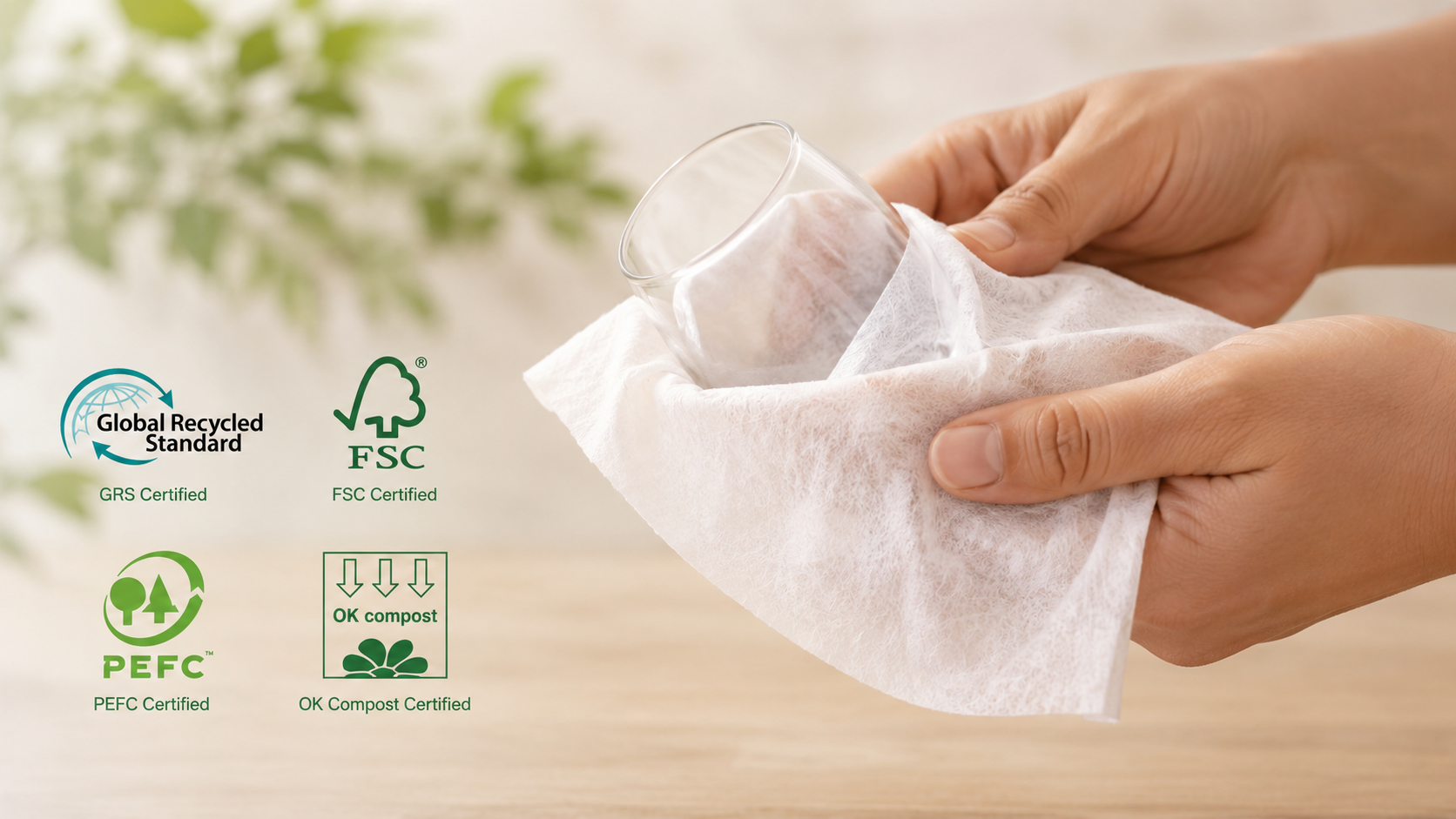
Sustainability is becoming an integral part of procurement conversations. Buyers in Europe and North America ask for energy consumption per kilogram, plastic reduction roadmaps, recycled content percentages, and certifications such as FSC, PEFC, or GRS.
According to Grand View Research, the global nonwoven fabric market is projected to grow steadily through 2030, driven by demand in hygiene, medical, and sustainable packaging. Manufacturers that can quantify these metrics are better positioned for long-term partnerships.
Conclusion
The non woven fabric manufacturing process is a sequence of decisions. You have to choose the fiber, formation, bonding, and finishing. Each decision shapes the next. Understanding these stages helps buyers ask the right questions and procure high-quality products from suppliers with confidence.
Among all manufacturing methods, spunlace nonwovens offer the clearest combination of softness, functionality, and sustainability credentials. As global demand for high-performance wipes, medical textiles, and skin-contact personal care materials continues to grow, hydroentanglement manufacturing will remain the benchmark for quality-led nonwoven production.
To understand how nonwovens compare to woven textiles from a performance perspective, read the difference between woven and nonwoven fabrics. For the current market context, explore the global nonwoven market trends and growth outlook.
Frequently Asked Questions
1. What is the non woven fabric manufacturing process?
The non woven fabric manufacturing process has four stages: fiber selection, web formation, bonding, and finishing. Fibers are formed into a loose web using methods like carding or spunbond extrusion, then bonded into fabric using mechanical, thermal, or chemical techniques. No weaving or knitting is involved. Properties like strength, softness, and porosity are engineered directly from fiber to finished material.
2. What is spunlace nonwoven fabric and how is it made?
Spunlace nonwoven fabric is made by directing high-pressure water jets onto a fiber web, physically entangling the fibers without heat or chemical binders. The result is a soft, strong, breathable fabric with a textile-like feel. It is the preferred construction for wet wipes, baby care, medical dressings, and cosmetic pads and is well-suited to biodegradable product formulations.
3. What is the difference between spunbond and spunlace nonwoven fabric?
Spunbond extrudes continuous filaments bonded by heat or pressure, producing strong, lightweight fabric for gowns, geotextiles, and agri covers. Spunlace uses high-pressure water jets to bond fibers, producing softer, more drapable fabric for wipes, personal care, and medical textiles. Spunbond prioritises strength and economy, while spunlace prioritises softness, absorbency, and skin-contact performance.
4. Which bonding method produces the softest nonwoven fabric?
Hydroentanglement (spunlace) produces the softest nonwoven fabrics. Using only water jets, without the use of heat or binders, fiber is converted into fabric that has a soft drape, high absorbency, and a hand feel closest to conventional textile. This makes spunlace the standard choice for baby wipes, facial masks, cosmetic pads, and wound care products where skin contact and comfort are non-negotiable.
5. How do raw materials affect the quality of nonwoven fabric?
The type of fiber used in non woven fabric manufacturing determines the type of non woven produced. Polypropylene offers strength and moisture resistance; cotton and viscose add softness and absorbency, while lyocell brings biodegradability. Fiber thickness controls texture and pore size, while fiber length affects web consistency. Also, small batch variations in raw materials can shift processing parameters and affect final fabric performance. That’s why incoming raw material testing is essential for quality-led manufacturers.