


Contact us
Surface Cleaning Wipes: Material Guide and Applications
Surface cleaning wipes are a hygiene essential across household, healthcare, dental, and industrial environments. The substrate you specify determines everything from cleaning performance to regulatory compliance. Spunlace nonwoven is the technically superior wipes material for premium and regulated applications: binder-free, chemically neutral, soft, and compatible with biodegradable fiber inputs. Multi surface cleaning wipes are the highest-volume format, but specification decisions within the category carry more consequence than unit price comparisons reveal. As the EU Single-Use Plastics Directive reshapes procurement requirements, biodegradable spunlace substrates are moving from premium option to baseline expectation.
-
Recent Post
-

INDEX 2026 Geneva: Everything You Need to Know About the World's Biggest Nonwovens Trade Show
INDEX 2026 is the world's largest nonwovens trade show, held every three years at Palexpo Geneva. Th
05.05.2026
Read Article -
Industrial Wipes: Types and Key Benefits
Every factory floor, workshop, and cleanroom runs on something smaller than it looks: the right wipe
01.05.2026
Read Article -
Non Woven Fabric Manufacturing Process: A Complete Guide to Methods, Materials, and Quality Control
Non woven fabric manufacturing begins with a simple decision: which fiber, which formation method, a
24.04.2026
Read Article -
Spunlace Non Woven Fabric: Applications, Properties, and Performance Guide
There is a good chance you touched spunlace non woven fabric in a facial wipe, a baby care pad, or a
27.04.2026
Read Article -
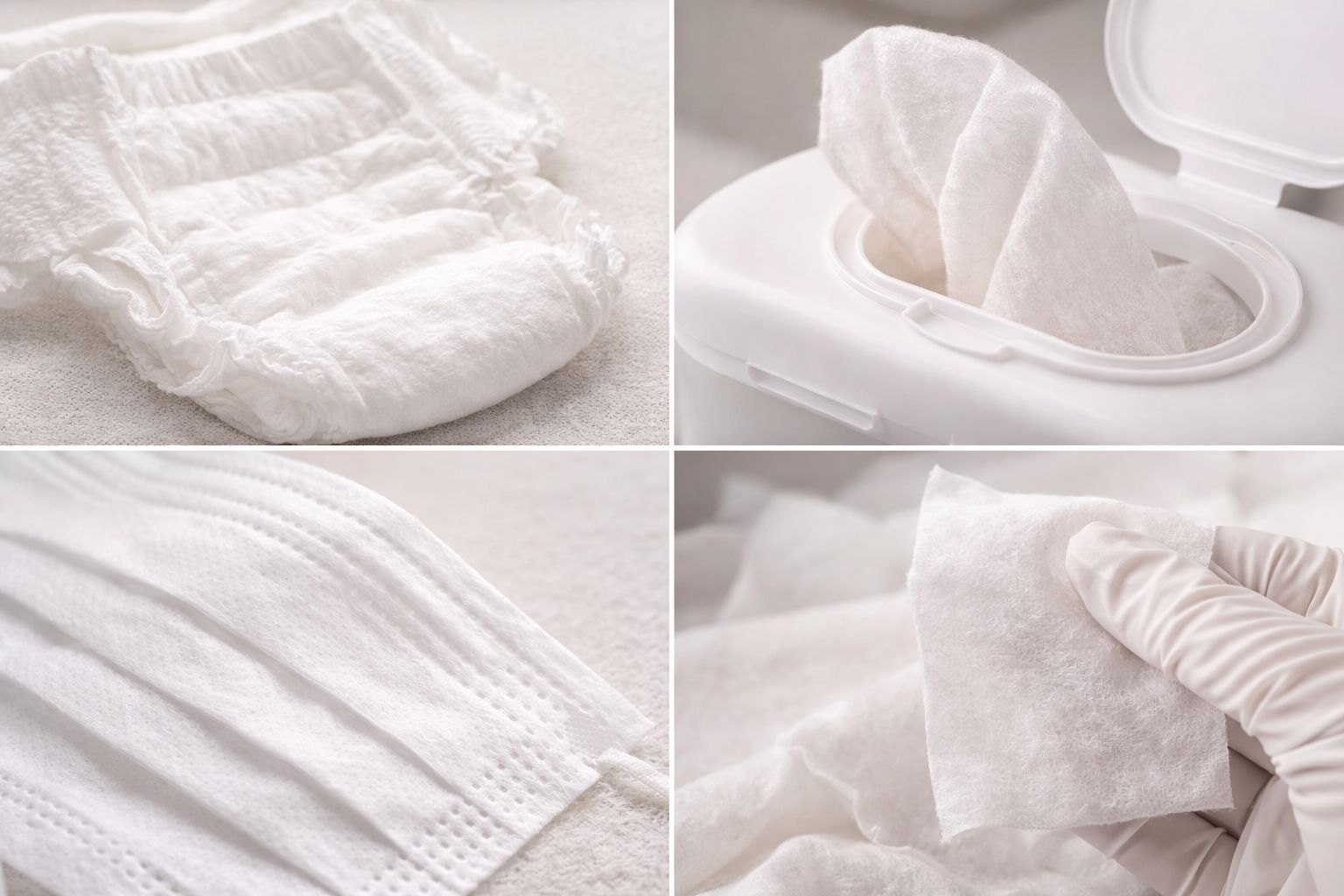
What Is Non woven Fabric? Types, Uses, and Key Benefits Explained
What is non woven fabric? This question is becoming increasingly relevant as industries move toward
28.04.2026
Read Article -
Built for the Planet: How Nonwovens Are Leading the Sustainable Manufacturing Revolution
On World Earth Day 2026, Elixrr explores how pulp-based spunlace nonwovens drive real environmental
25.04.2026
Read Article -
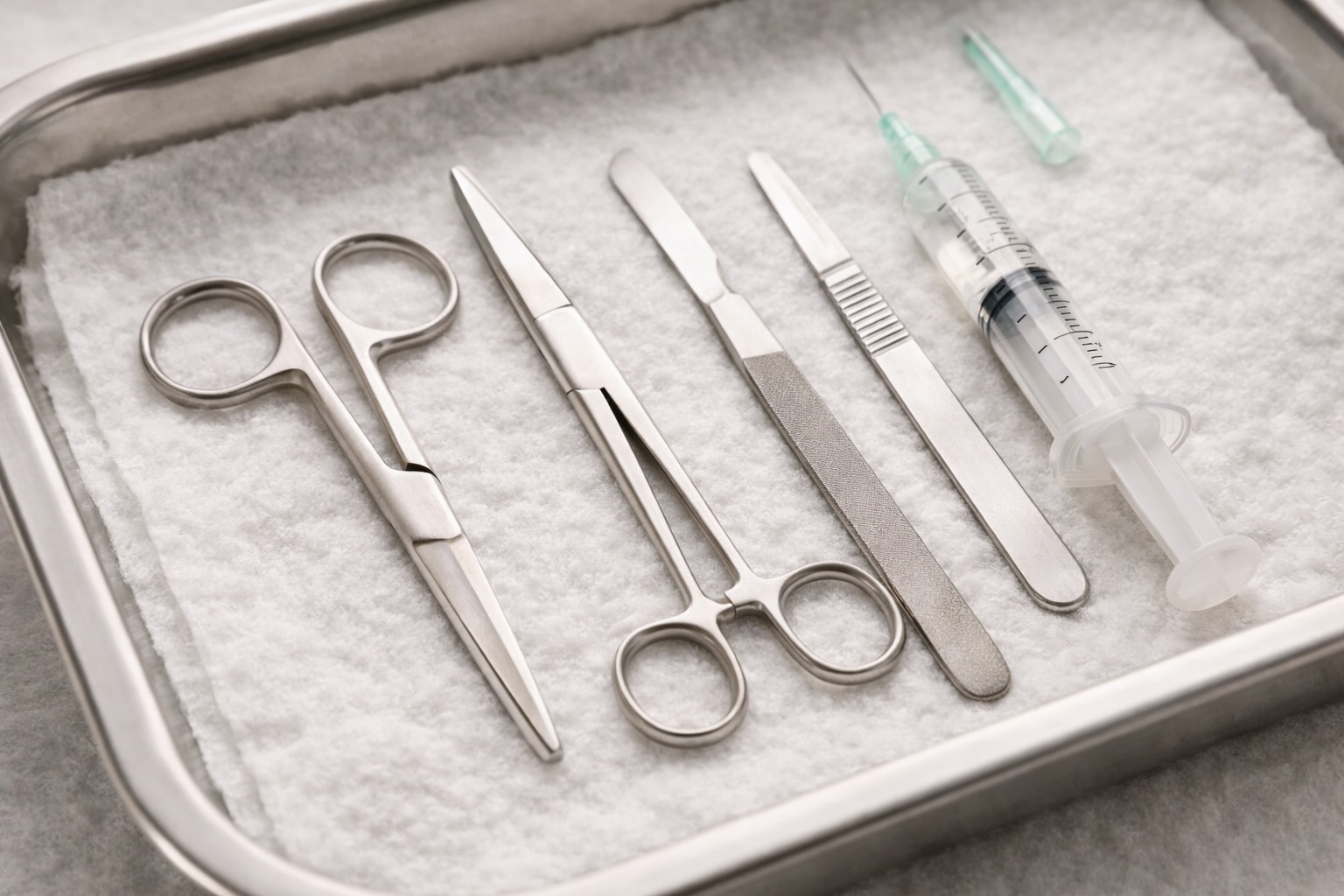
Medical Wipes: Types, Uses & Nonwoven Materials Guide
Medical wipes are specially designed cleaning products that remove germs, bacteria, and contaminants
10.04.2026
Read Article -
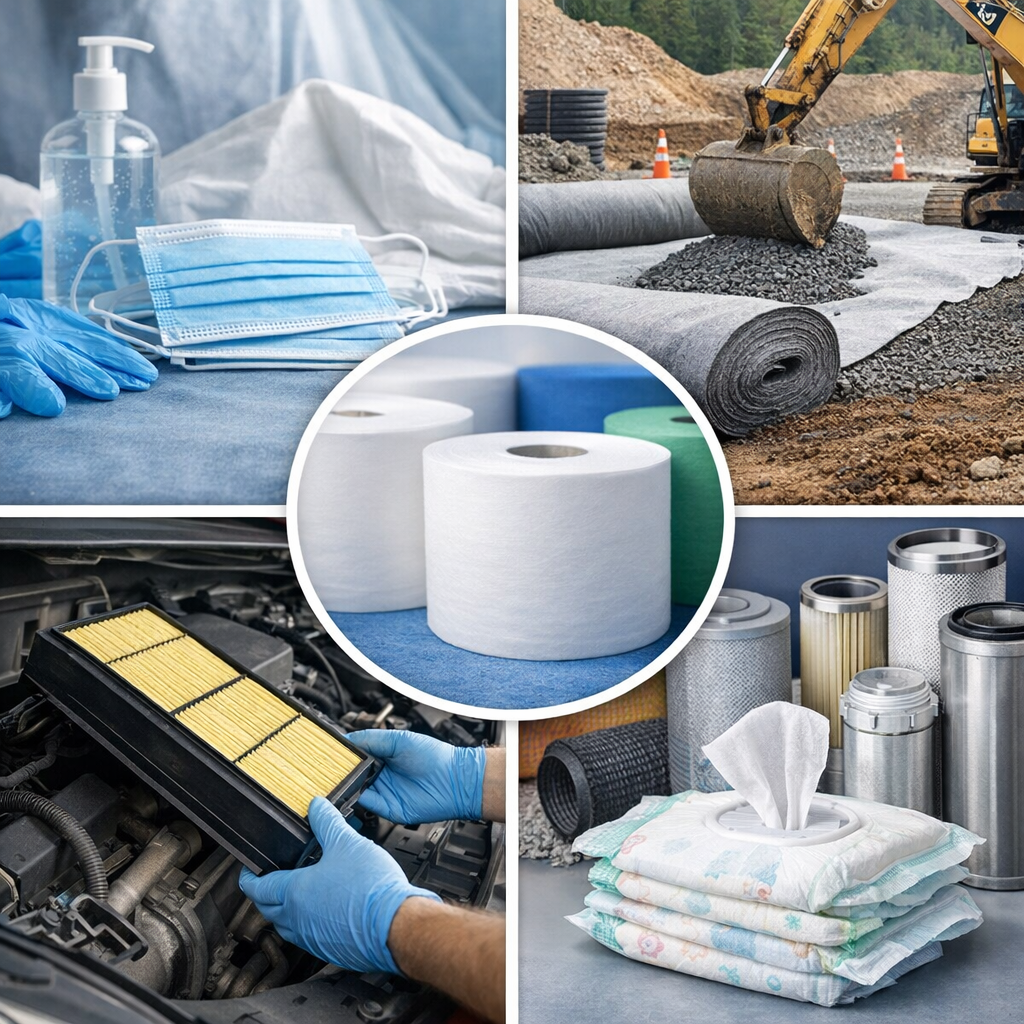
Non Woven Fabric Textile Applications Across Industries: Comprehensive Use Cases
Nonwoven fabrics are widely used across industries for their versatility, cost-effectiveness, and ta
25.03.2026
Read Article -
Global Nonwoven Market Trends and Growth Opportunities: 2026 Outlook
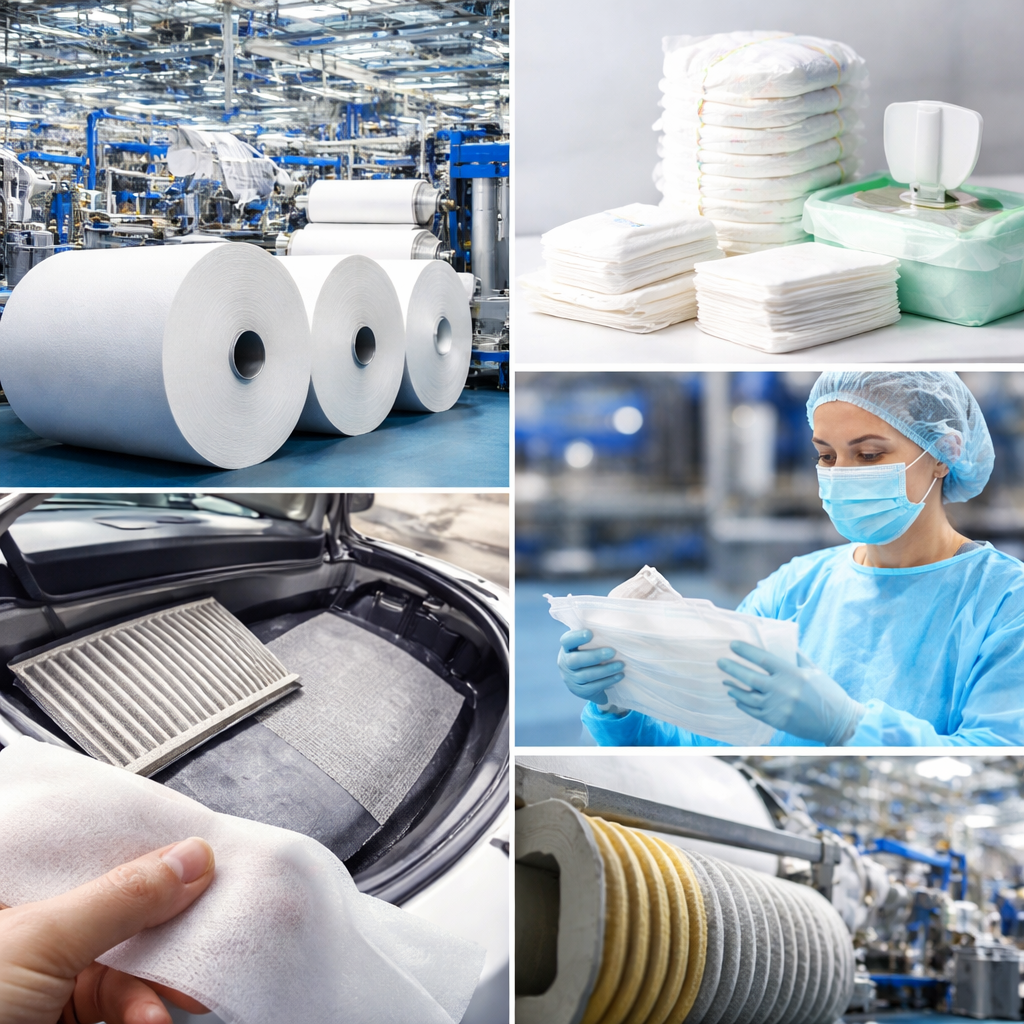
The global nonwoven market is expanding rapidly due to strong demand from hygiene, medical, filtrati
18.03.2026
Read Article -
Difference Between Woven and Non-Woven Fabrics: Key Structural, Performance, and Application Differences
Woven and non-woven fabrics differ in how they are made, how they perform, and where they are used.
05.03.2026
Read Article -
What Are the Uses of Nonwoven Fabric? Practical Applications and Industry Examples
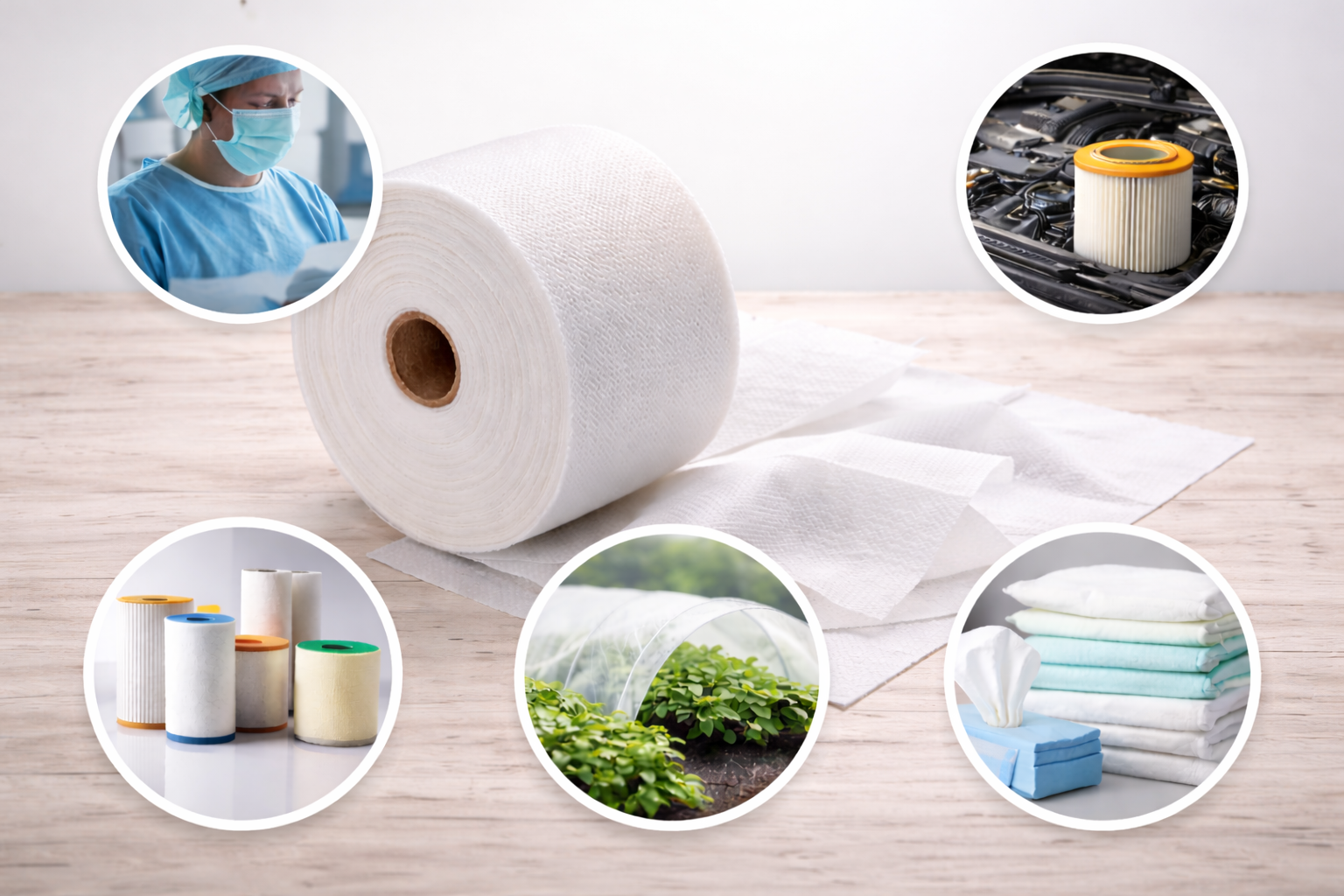
Nonwoven fabrics are versatile materials used across healthcare, hygiene, filtration, automotive, ag
20.02.2026
Read Article -
Types of Non-Woven and Their Uses: Applications, Manufacturing Methods, and Industry Examples
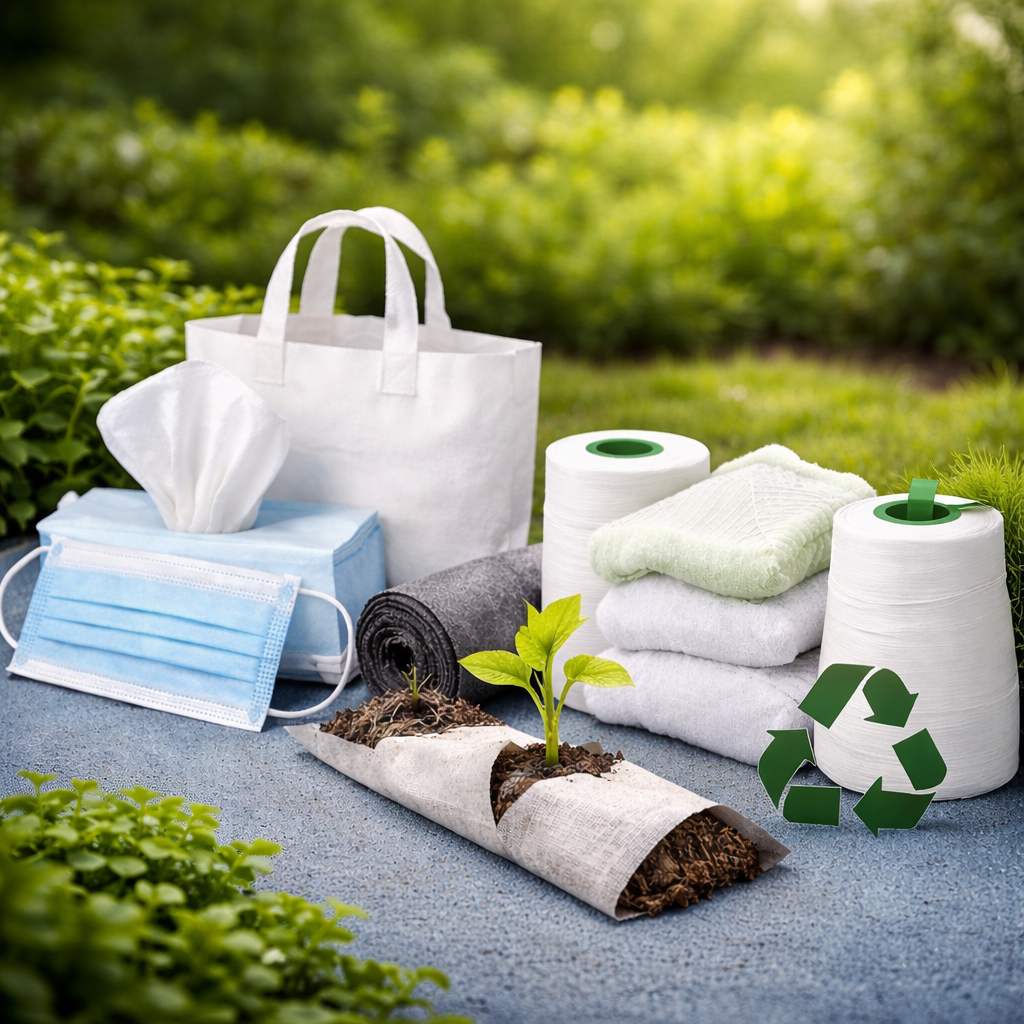
Nonwoven fabrics are engineered materials made by bonding fibres rather than weaving them together.
06.02.2026
Read Article -
What Are Biodegradable Materials and Why Do They Matter?
What biodegradable materials are, how they work, real-world examples, and why they are becoming non-
09.01.2026
Read Article -
What is Recyclable Nonwoven Fabric and Why is it Important?
That’s where recyclable nonwoven fabric comes in. It addresses a real problem. High-volume disposa
14.01.2026
Read Article -
Uses of Non Woven Fabric: 15 Practical Applications
Explore the top uses of non woven fabric across medical, hygiene, filtration, automotive, agricultur
11.12.2025
Read Article -
Why Use Nonwovens in Medical and Healthcare?
Nonwovens are used in medical and healthcare because they solve the real constraints of modern care:
15.12.2025
Read Article -
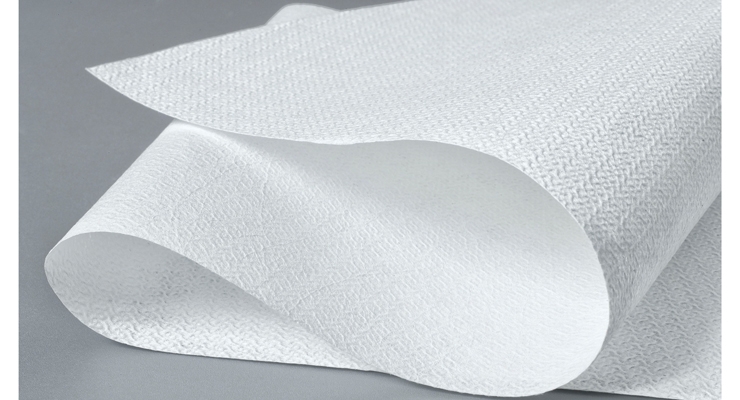
Dry Wipes Non Woven Fabric. Uses, Types and Benefits
Learn what dry wipes non woven fabric is, its types, materials, manufacturing process, applications,
25.12.2025
Read Article -
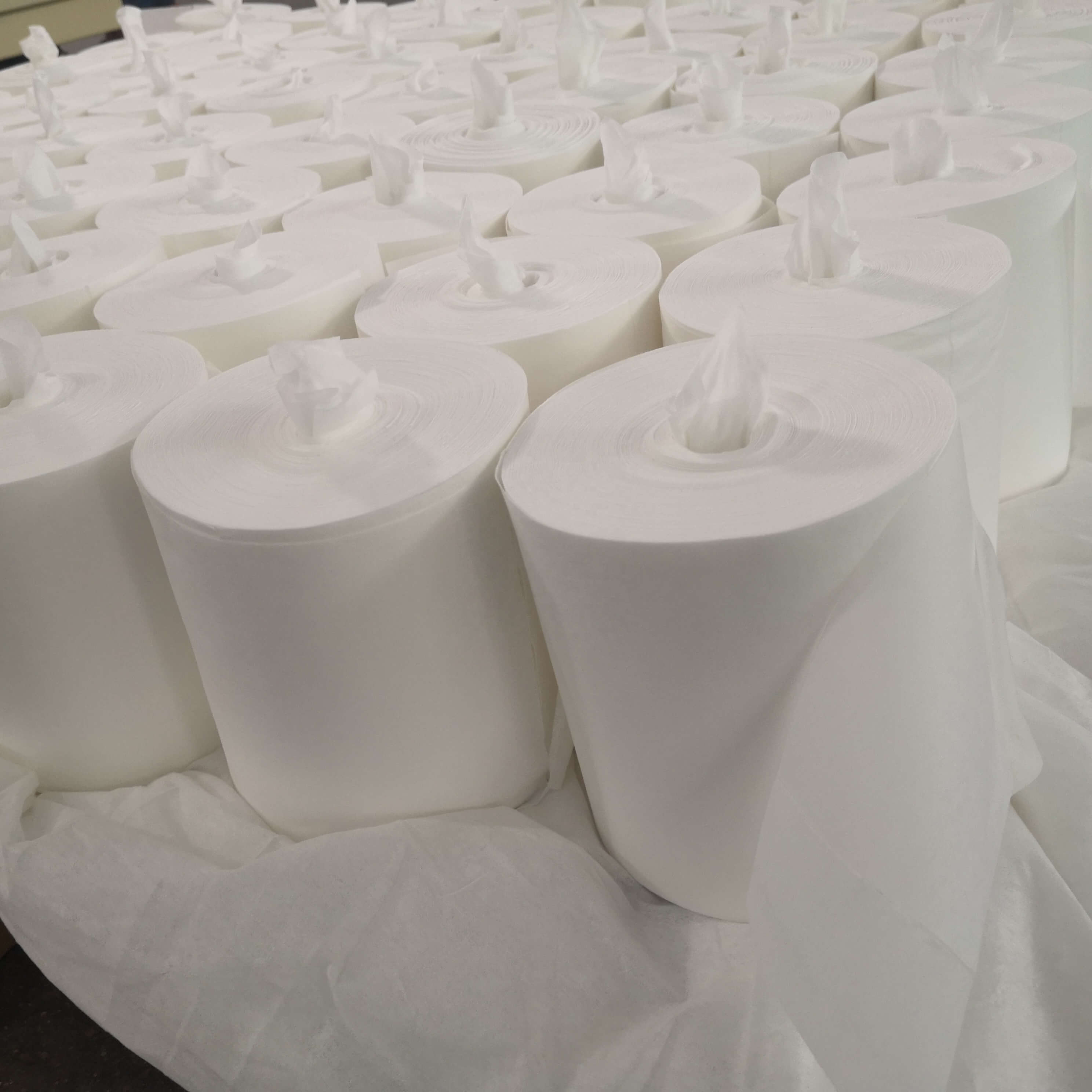
Non Woven Fabric Manufacturer | Top Suppliers & Uses Guide
Looking for a trusted non woven fabric manufacturer? Explore leading global suppliers, including Eli
24.12.2025
Read Article -
Top 10 Medical Nonwoven Fabric Exporters Trusted by Global Healthcare Brands
Discover the top medical nonwoven fabric exporters trusted worldwide. Explore quality, applications
16.12.2025
Read Article -
Cellulose Based Nonwoven Fabric | Eco Friendly Innovation
Explore the benefits of cellulose-based nonwoven fabric—biodegradable, soft, and sustainable. Idea
19.11.2025
Read Article -
Beautyworld Dubai: Discovering New Opportunities for Elixrr
Exploring innovative trends and partnerships at Beautyworld Dubai, uncovering exciting growth opport
07.11.2025
Read Article -
Green Nonwoven Technology: Sustainable Innovation in Nonwoven Fabrics
Learn how green nonwoven technology uses eco-friendly materials and energy-efficient manufacturing t
30.10.2025
Read Article -
Types of Nonwoven Fabric and Their Uses in 2025
Explore the 7 main types of nonwoven fabric—spunbond, meltblown, spunlace, and more. Learn how eac
28.10.2025
Read Article -

Biodegradable Nonwoven Fabric: The Future of Sustainable Textiles
Biodegradable nonwoven fabrics are reshaping industries with eco-friendly performance and natural de
28.10.2025
Read Article -
Best Non Woven Fabric Manufacturers in India (2025 Edition)
Discover the top 10 non woven fabric manufacturers in India. Explore eco-friendly, high-quality opti
28.10.2025
Read Article -
Top 10 Applications of Non-Woven Fabrics in 2025 — And Why the Market Is Booming
Top 10 Applications of Non-Woven Fabrics in 2025 — And Why the Market Is Booming
20.05.2025
Read Article -

Reinventing Wipes: How Sustainable Nonwovens Are Reshaping the Industry
Elixrr explores how next-generation sustainable nonwovens, from wet-laid spunlace to carded-pulp tec
21.10.2025
Read Article -
Woven Fabric Material Guide: Composition, Types & Common Applications
Explore woven fabric materials—learn their composition, major types, and everyday applications in
09.10.2025
Read Article -
Non Woven Polypropylene Fabric: Uses, Strengths & Comparison with Woven Fabric
Non woven polypropylene (PP) fabric has become one of the most widely used materials across industri
09.10.2025
Read Article -
What Is Knitted Woven Fabric? Types, Techniques & Benefits
Knitted woven fabric is a hybrid textile that blends the structural strength of woven fabrics with t
16.10.2025
Read Article -
Non Woven vs Woven Fabrics: Key Differences & When to Use Each
Non Woven vs Woven Fabrics: Key Differences & When to Use Each
18.09.2025
Read Article -
Non Woven Polypropylene Fabric: Uses, Strengths & Comparison with Woven Fabric
Non Woven Polypropylene Fabric: Uses, Strengths & Comparison with Woven Fabric
19.09.2025
Read Article -
Spunbond Non Woven Fabric: How It’s Made and Where It’s Used
Explore the manufacturing process and applications of spunbond non woven fabric. Learn why it’s wi
11.09.2025
Read Article -
Polyester Non Woven Fabric: Benefits, Properties & Industrial Uses
Discover the benefits and industrial uses of polyester non woven fabric. Learn about its properties,
03.09.2025
Read Article -

What Is Non Woven Fabric? Definition, Manufacturing & Applications
Explore what non woven fabric is, how it’s made, and where it’s used. Learn about its unique pro
04.09.2025
Read Article -

Types of Nonwoven Fabric – A Complete Guide to Nonwoven Fabric
Learn about different types of nonwoven fabrics, their properties, manufacturing methods, and indust
20.05.2025
Read Article -
Redefining the Future of Wipes: Insights from WOW 2025
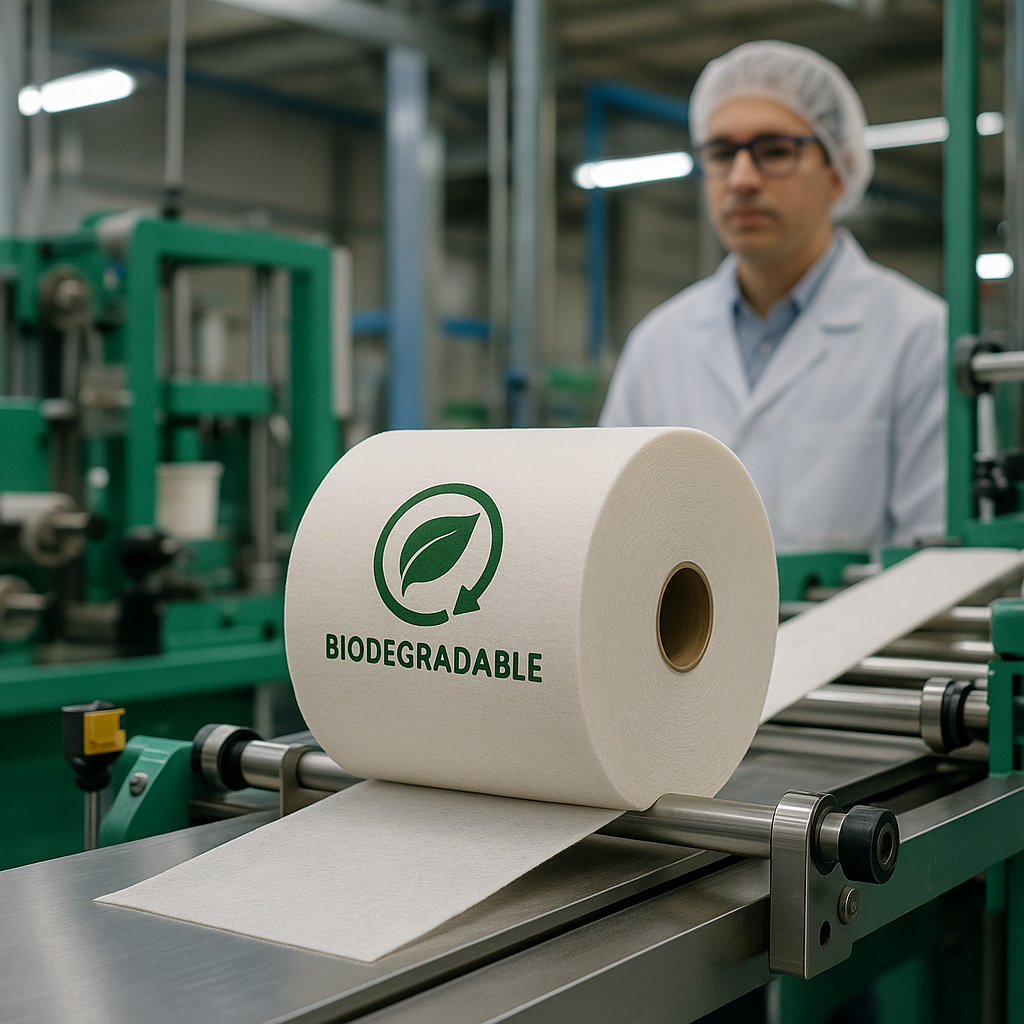
Elixrr Nonwovens shares key takeaways from WOW 2025, highlighting sustainable innovations, energy-ef
29.07.2025
Read Article -

Sustainability is Elixrr’s Focus at Global Wipes Markets at Wow 2025
Visit the WOW conference and see our proprietary nonwoven wipes fabrics Enduraspun, Ecopun and Softs
03.07.2025
Read Article -

Inside Elixrr: A Conversation with Subir Barman on the Future of Nonwovens and Next-Gen Manufacturing
As the global demand for sustainable, high-performance materials accelerates, Elixrr Nonwovens conti
20.05.2025
Read Article -
Spunlace Nonwoven Fabrics: Explore Characteristics and Benefits
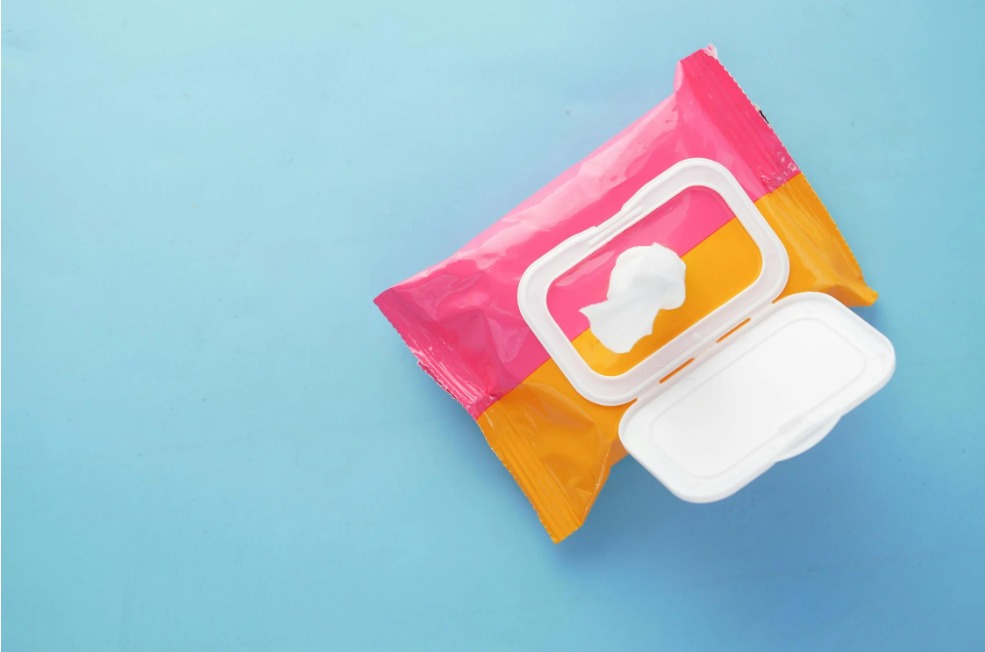
In a world where hygiene, safety, and softness intersect, material science has a quiet hero, spunlac
20.05.2025
Read Article -
PentaTech™ by Elixrr Nonwovens: Pioneering the Future of High-Performance and Sustainable Nonwovens
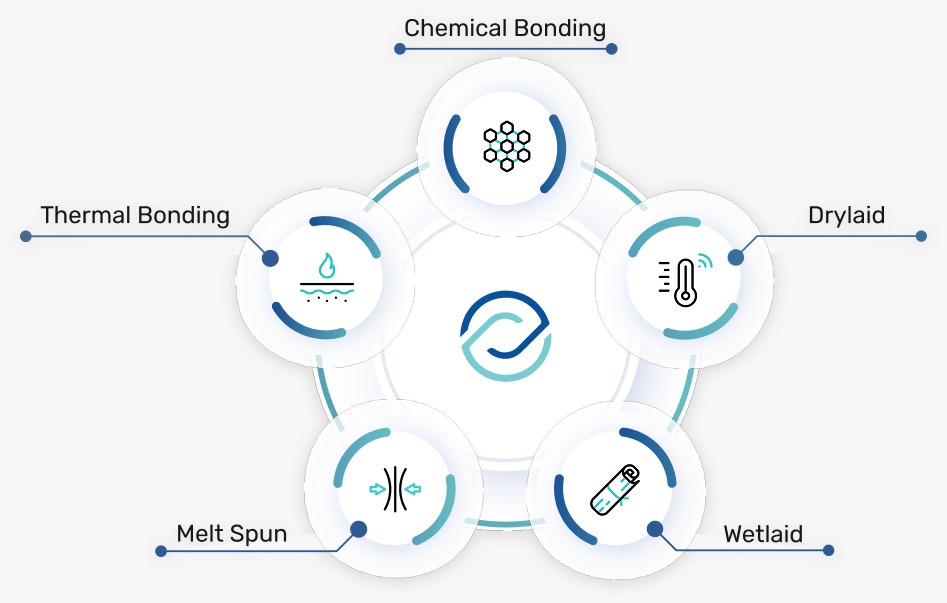
Innovation in nonwoven materials isn’t optional anymore. It’s what drives progress. As industrie
07.05.2025
Read Article -
Is Non-Woven Fabric Biodegradable? Exploring the Eco-Friendliness of Non-Wovens
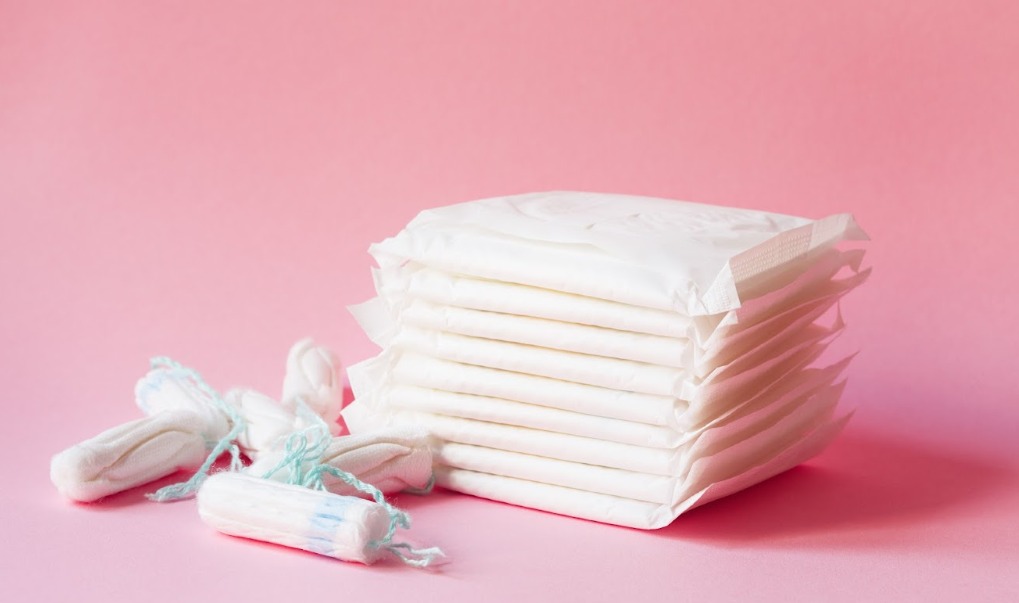
Every business is searching for environmentally appropriate substitutes as the globe moves towards s
02.05.2025
Read Article -
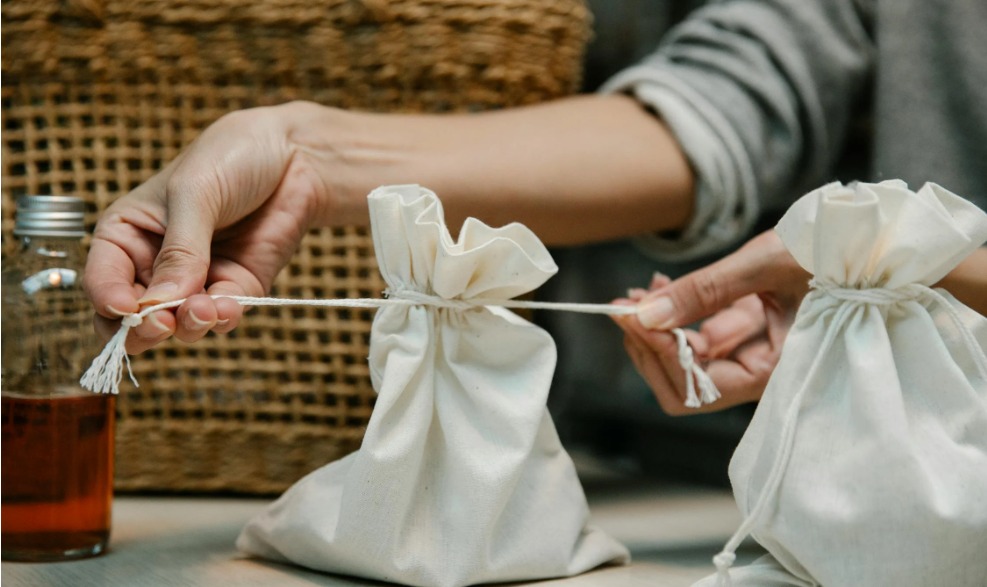
What Are Non Woven Fabrics Used For? Key Examples & Features
In an era defined by performance, precision, and sustainability, materials are no longer just passiv
28.04.2025
Read Article -
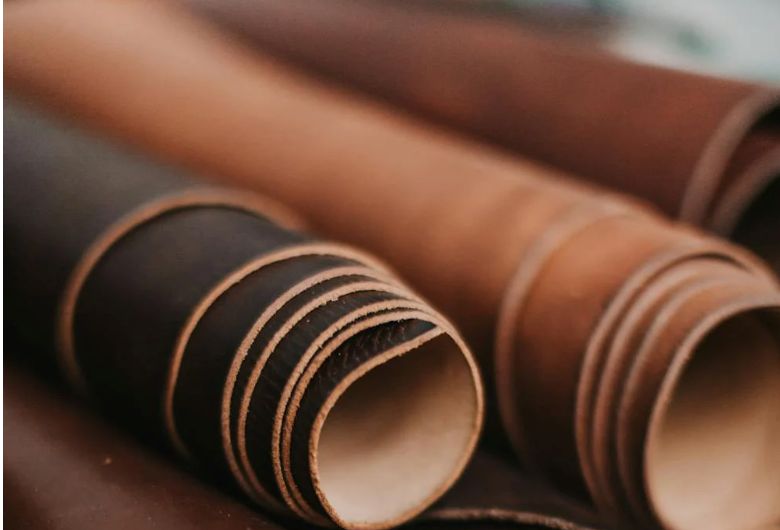
Is Leather a Non-Woven Fabric? Let’s Unravel the Truth!
Leather embodies luxury, durability, and style. However, in a society increasingly focused on novel
21.04.2025
Read Article -
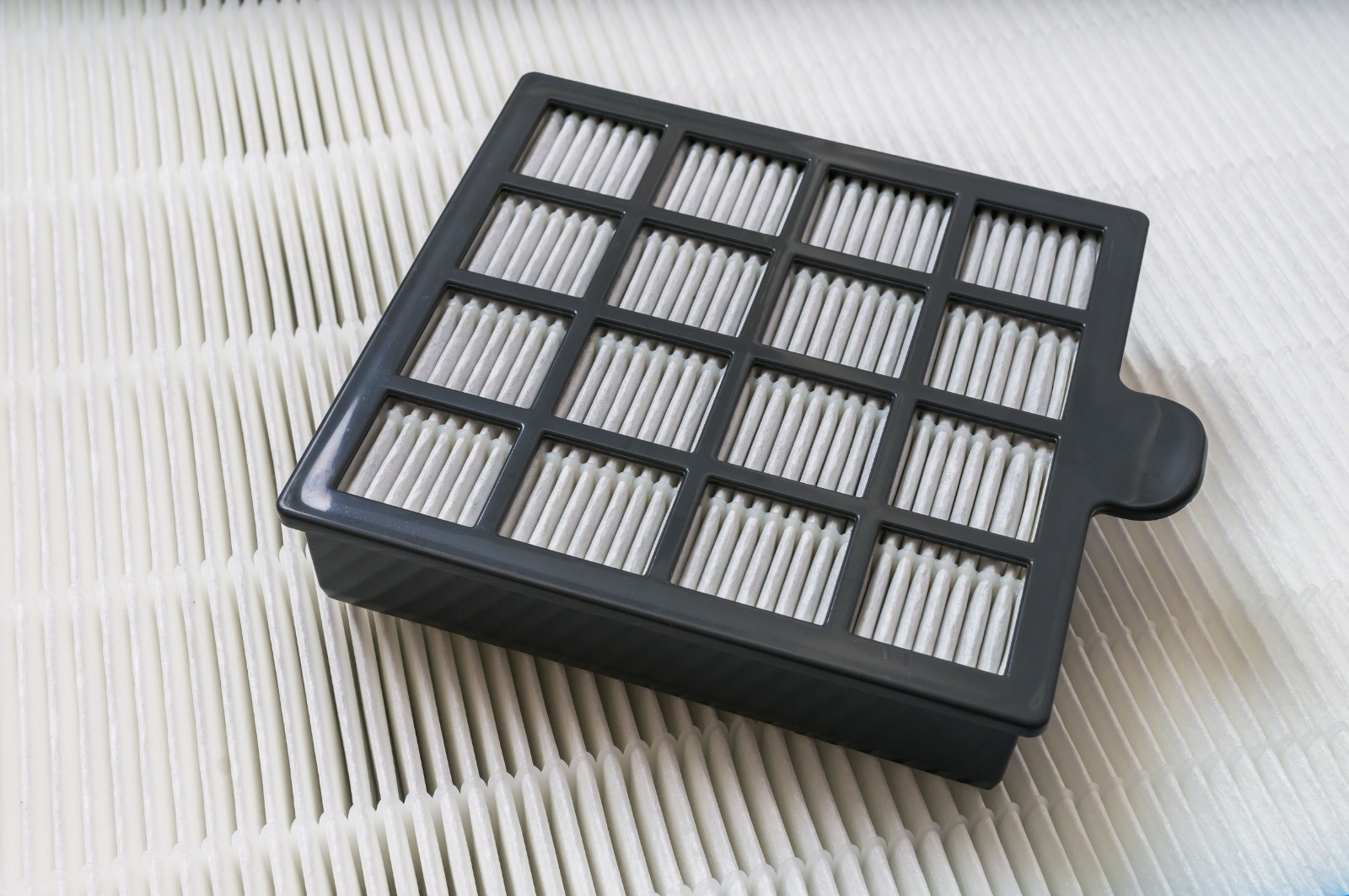
Can You Heat Press Non-Woven Fabric? A Complete Guide
The textile industry has embraced heat pressing. Adding colourful graphics to cloth banners or perso
18.04.2025
Read Article -
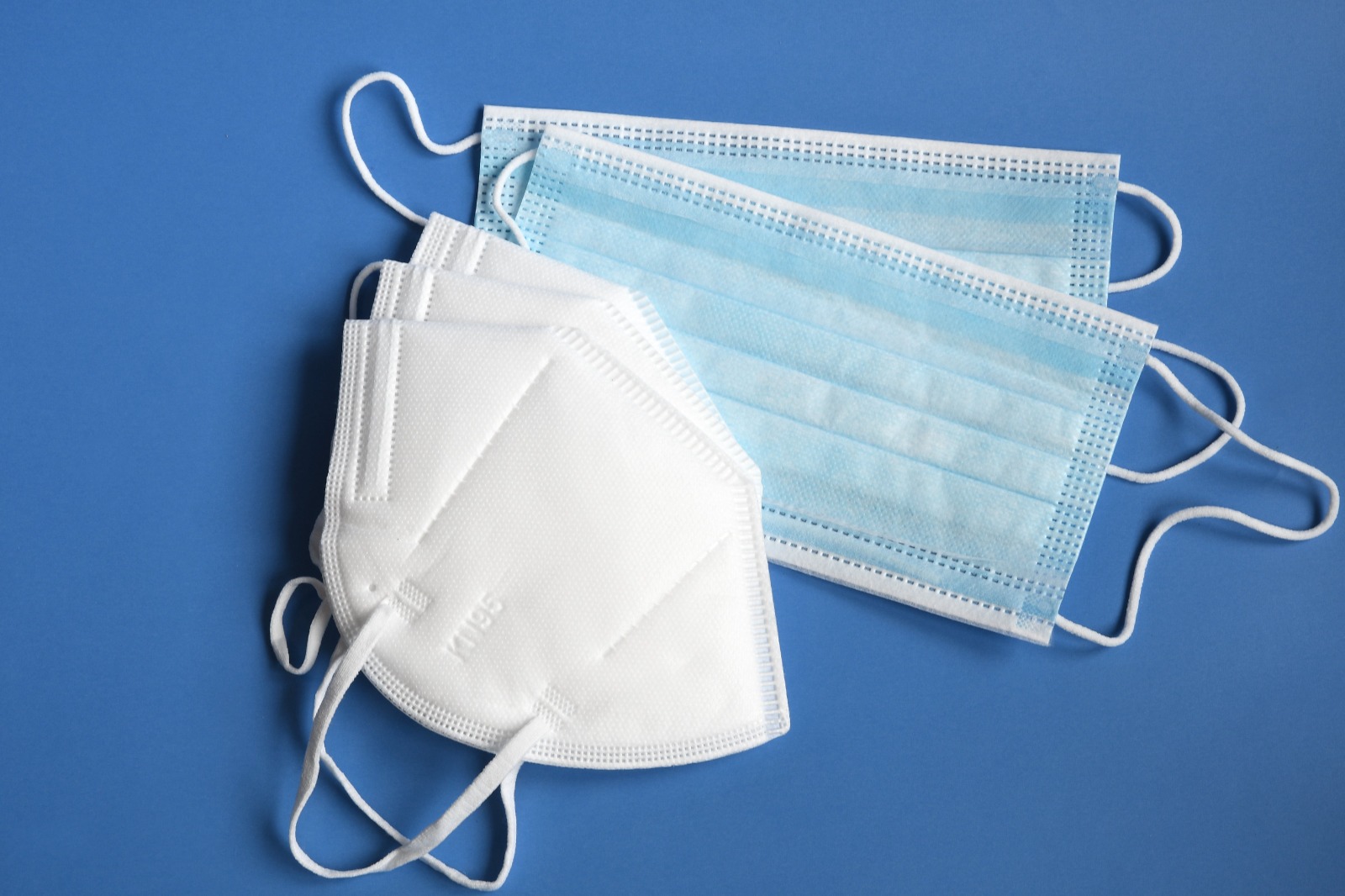
Can Non-Woven Fabric Be Washed? Let’s Unravel the Truth
Non-woven fabrics are used in a variety of applications, including medical masks, reusable shopping
14.04.2025
Read Article -
Non Woven Fabrics Vs Woven Fabrics: Choose the Right Fabric
If you have ever asked yourself why some materials are all about robustness while others are cutting
11.04.2025
Read Article -

Top 10 Non-Woven Fabric Manufacturers in Europe
The non-woven fabric industry has grown significantly in Europe, driven by the demand for high-quali
27.06.2025
Read Article -

Non-Woven Fabric: Moisture Absorption, Properties & Uses
When it comes to fabric selection, understanding the properties of different materials is essential,
04.04.2025
Read Article -

Types of Fabric: A Beginner Comprehensive Fabric Guide | 2025
Fabrics are the foundation of countless industries and everyday life, influencing everything from th
31.03.2025
Read Article -

What are Non-Woven fabrics?
India has always had a rich relationship with textiles. From the fine muslin that adorned royalty to
28.03.2025
Read Article
-
Explore Recent Blogs
Surface Cleaning Wipes: Material Guide and Applications
Surface cleaning wipes are a hygiene essential across household, healthcare, dental, and industrial
Read More
INDEX 2026 Geneva: Everything You Need to Know About the World's Biggest Nonwovens Trade Show
INDEX 2026 is the world's largest nonwovens trade show, held every three years at Palexpo Geneva. Th
Read More
Industrial Wipes: Types and Key Benefits
Every factory floor, workshop, and cleanroom runs on something smaller than it looks: the right wipe
Read More
Non Woven Fabric Manufacturing Process: A Complete Guide to Methods, Materials, and Quality Control
Non woven fabric manufacturing begins with a simple decision: which fiber, which formation method, a
Read More

Weave Your Success with Our Revolutionary Fabrics
Power your business with Elixrr's cutting-edge nonwoven fabric solutions. Eco-friendly, customizable, and engineered for excellence—because innovation starts with the right foundation.

Key Takeaways
What Are Surface Cleaning Wipes?
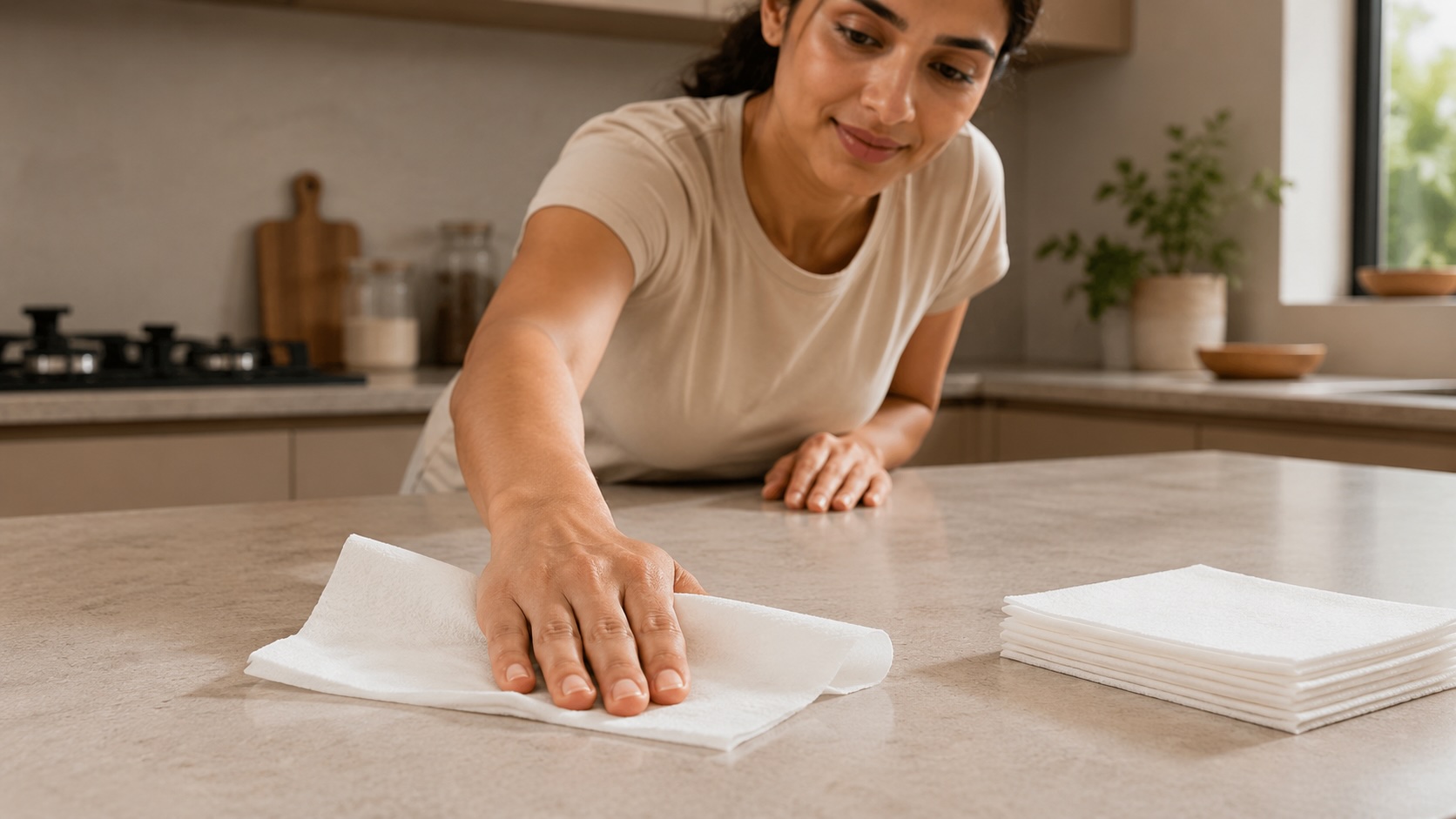
Surface cleaning wipes are pre-moistened or dry wipes designed to clean, sanitise, and disinfect a wide range of surfaces in a single, controlled action. From kitchen countertops and office desks to dental chairs and hospital procedure trolleys, they deliver a consistent and hygienic result without the dilution errors and cross-contamination risks that cloths and spray systems introduce.
Their importance has grown well beyond convenience. According to Grand View Research, the global medical disinfectant wipes market was valued at USD 4.57 billion in 2024 and is projected to grow at a CAGR of 12.9% through to 2030, reflecting how seriously regulated industries now treat surface hygiene.
For buyers and product developers working in this space, the surface cleaning wipe sits at the end of an entire supply chain, and it is the point at which everything either works or does not. The best surface cleaning wipes are the result of care in performance: care in choosing the right wipes material, care in the manufacturing process, and care in how the substrate interacts with the chemistry it carries.
Types of Surface Cleaning Wipes
Not every wipe suits every surface or setting. Understanding the types available helps you make the right choice for your application.
Multi surface cleaning wipes
They are the most widely used format, designed to perform across glass, metal, plastic, laminate, and hard countertops. For household and commercial buyers, they offer speed and versatility in a single product for a wide range of daily cleaning tasks.
At the specification level, however, the “multi-surface” claim requires the wipe material to perform consistently across chemically and physically diverse substrates.
Matching the substrate to the full range of target surfaces is where multi surface cleaning wipes specifications most commonly fall short.
Disinfected wipes
They carry an active biocidal agent such as quaternary ammonium compounds (QACs), sodium hypochlorite, hydrogen peroxide, or alcohol. They eliminate bacteria, viruses, and fungi from surfaces after contact. Disinfected wipes are the standard in healthcare, food processing, and any environment where pathogen control is a regulatory requirement.
The procurement consideration that distinguishes disinfected wipes from general surface cleaning wipes is substrate-chemistry compatibility. Chemically bonded nonwovens containing binder resins are vulnerable to certain QAC-based formulations, which can degrade binder integrity over time, increasing fiber shedding and reducing active agent availability.
The wipes material specification for disinfected wipes should always include validated compatibility data for the specific active agent at the intended concentration.
Dental surface cleaner wipes
These occupy a specialist position with the most demanding substrate requirements in UK surface cleaning applications. HTM 01-05, the Health Technical Memorandum governing decontamination in primary dental care, sets specific expectations for surface disinfection between patients.
Near-zero lint generation is not a preference but a clinical necessity. Fibers on instruments awaiting sterilisation represent a contamination pathway. Compatibility with chlorine-releasing agents, widely used in UK dental practice, further constrains substrate choice. Spunlace nonwoven, with its binder-free mechanical entanglement, consistently satisfies both requirements.
Disposable cleaning wipes
Disposable cleaning wipes remain the correct default in regulated and high-risk environments. Single-use formats eliminate the cross-contamination risk that reusable wipes carry, particularly in healthcare, food production, and any setting governed by COSHH or HACCP principles. Reusable formats have a role in low-risk household and commercial cleaning, but they require rigorous laundering protocols to maintain hygiene standards between uses.
Materials Used in Surface Cleaning Wipes
Non woven material. Almost all surface cleaning wipes are made from nonwoven fabrics. Nonwovens allow manufacturers to engineer specific combinations of absorbency, tensile strength, surface texture, and fiber shedding into a single material; properties that woven fabrics cannot match at commercial scale or cost. Within the nonwoven category, spunlace stands apart for premium and regulated applications.
Spunlace nonwoven is produced by directing high-pressure water jets onto a fiber web, mechanically entangling the fibres without chemical binders, heat, or adhesives. This binder-free construction has direct practical implications for cleaning wipes. It means the substrate remains chemically neutral throughout its shelf life, with no binder-active agent interaction that can degrade performance over time.
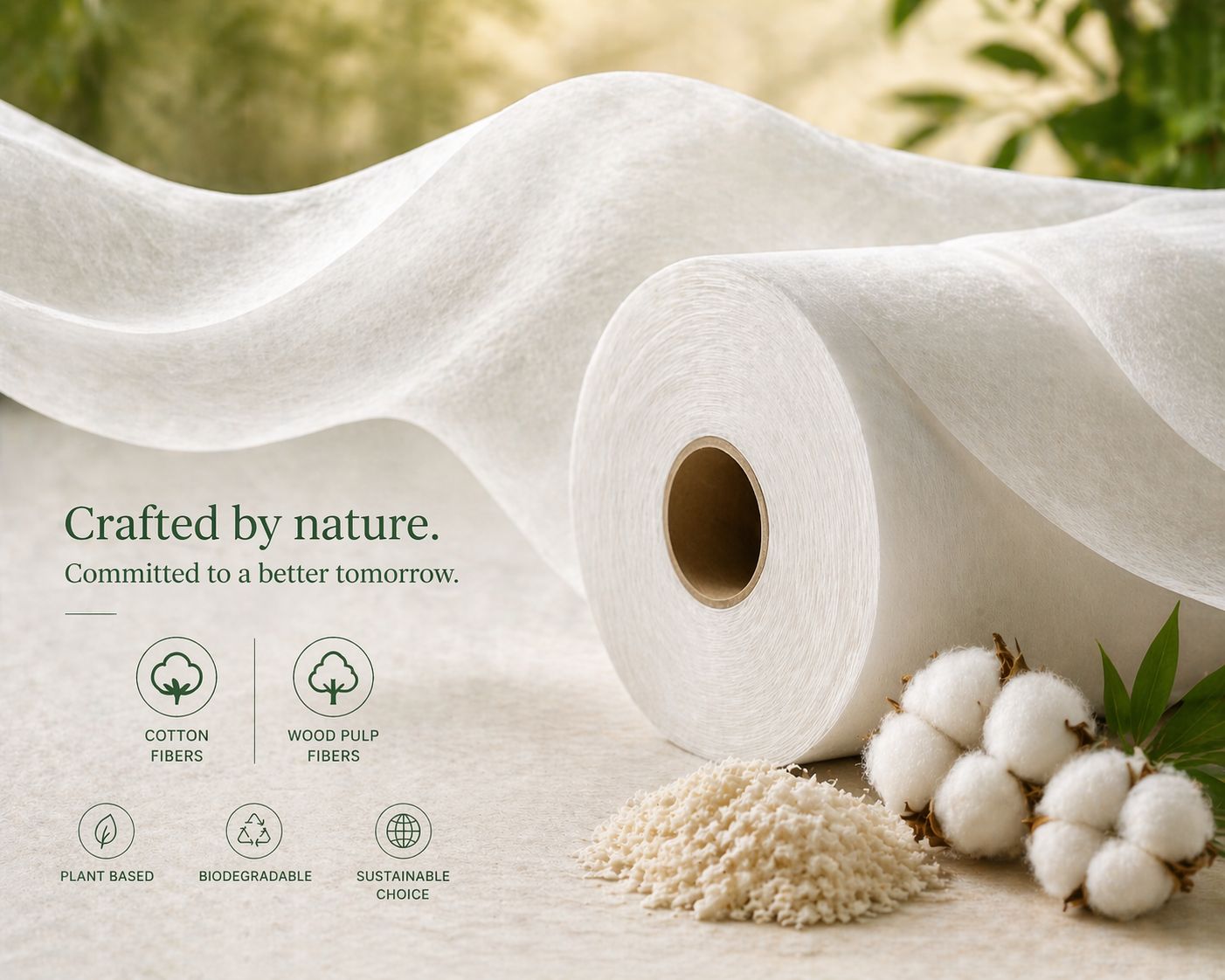
It means genuine compatibility with biodegradable fiber inputs like lyocell, cotton, and viscose, which behave predictably in a binder-free process. And it converts into better wet strength because of the fiber rather than the bonding process. You can read the full process and performance profile in our spunlace nonwoven fabric guide.
Basis weight. The GSM specification, or thickness, translates directly into application performance.
Specifying too light a substrate creates performance and compliance shortfalls; specifying too heavy creates unnecessary cost. Explore our product range to see how these specifications translate into finished substrates.
Fiber blend within spunlace is the final variable. Viscose-dominant blends maximise softness and absorbency but sacrifice some wet tensile strength at high saturation. Adding polyester restores tensile performance and abrasion resistance. For disinfected wipes applied under pressure in clinical environments, a viscose-polyester blend is typically the right specification. Where biodegradability certification is a procurement or labelling requirement, 100% lyocell or cotton spunlace delivers the necessary credentials without compromising performance.
Applications of Surface Cleaning Wipes
Household and commercial cleaning. Multi surface cleaning wipes are the format of choice for kitchens, bathrooms, appliances, and hard surfaces where speed and convenience matter. In commercial settings, they handle office environments, hospitality surfaces, and retail areas. Our nonwoven applications guide covers how these materials appear across everyday product categories.
Healthcare. In clinical environments, the failure mode to engineer against is not inadequate cleaning but inconsistent active agent delivery. A wipe with uneven saturation creates variability in disinfectant contact time. Under NHS infection prevention frameworks, that variability is a compliance risk. Specification teams should be running substrate uniformity data alongside kill-claim documentation. Read more in our guide to nonwovens in medical and healthcare.
Dental. HTM 01-05 creates specific procurement requirements that standard cleaning wipes cannot satisfy. Buyers specifying for dental practice need validated compatibility data and lint generation test results before committing to a substrate.
Food service. EU Regulation 10/2011 on plastic materials in food contact applies to cleaning wipes used on food preparation surfaces. Spunlace's binder-free construction is well positioned for food-contact compliance, but specification teams should always request migration testing data for their specific application.
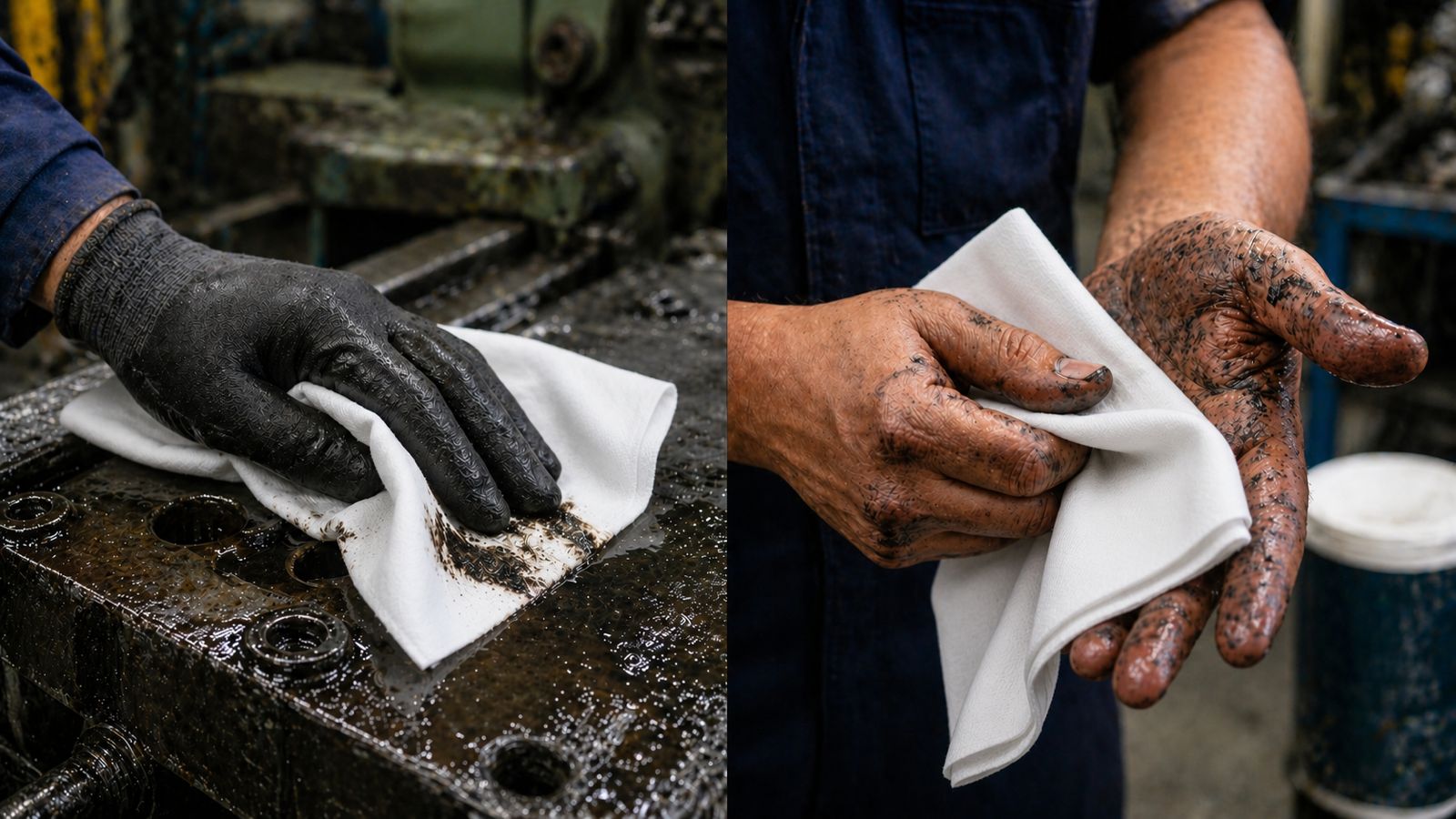
Industrial. Multi-pass durability and chemical resistance drive the specification here. Spunlace substrates outperform airlaid or thermally bonded alternatives in tensile retention over repeated use. It’s a factor that affects cost-per-clean more significantly than unit price when sourcing cleaning wipes at volume.
Benefits of Using Surface Cleaning Wipes
How to Choose the Right Surface Cleaning Wipes
Future Trends in Cleaning Wipes
Two shifts are reshaping the surface cleaning wipes market across UK and European markets with direct procurement implications.
The EU Single-Use Plastics Directive is progressively restricting the plastic content of disposable wipes and mandating compostability or biodegradability labelling. For buyers sourcing into European channels, substrate composition is now a compliance variable, not a marketing preference. Spunlace wipes made from lyocell or cotton satisfy the directive's requirements in most national implementations — but the substrate must carry certified evidence. Visit our sustainability page to see how Elixrr documents this.
Advanced disinfected wipes are also shifting towards plant-derived actives like citric acid, lactic acid, and botanical biocides. These lower-pH formulations interact differently with nonwoven substrates than traditional alcohol or QAC-based chemistries, and spunlace's binder-free construction handles this transition more predictably than chemically bonded alternatives. Buyers developing next-generation disinfected wipes should build substrate compatibility testing into reformulation programmes now, not at launch.
Conclusion
Surface cleaning wipes serve a wide spectrum of needs, from everyday household convenience to clinical decontamination protocols with serious regulatory consequences. Across all of them, the wipes material you choose determines whether the product performs as specified or creates problems downstream. Spunlace nonwoven delivers the absorbency, strength, low lint, chemical neutrality, and sustainability compatibility that the best surface cleaning wipes are built on. At Elixrr, care in performance is not a phrase; it is the reason every fiber choice, every process parameter, and every substrate specification is treated as a decision that matters.
Frequently Asked Questions
1. What are surface cleaning wipes used for?
Surface cleaning wipes are used to clean and disinfect surfaces across homes, healthcare facilities, dental clinics, food service environments, and commercial and industrial settings. In regulated contexts, the substrate specification directly affects active agent delivery, contamination risk, and compliance.
2. What are multi surface cleaning wipes?
Multi surface cleaning wipes are designed to perform across diverse surfaces — glass, wood, metal, and plastic. They are the most versatile format for everyday cleaning tasks, though proper substrate specification is essential to ensure consistent performance across all target surfaces.
3. What materials are used in cleaning wipes?
Cleaning wipes are made from nonwoven wipes material. Spunlace is the technically preferred substrate for disinfected and regulated applications. It’s binder-free, high in absorbency, and chemically neutral. Polypropylene suits lighter-weight applications where chemical resistance takes priority.
4. Are disinfected wipes safe for all surfaces?
Most disinfected wipes are safe for hard, non-porous surfaces and should be used according to manufacturer guidelines. For sensitive surfaces, always confirm wipes material compatibility with the active agent concentration, as certain substrates can degrade with specific chemistries over time.
5. What are dental surface cleaner wipes used for?
Dental surface cleaner wipes support HTM 01-05-compliant decontamination in primary dental care, such as disinfecting chairs, trays, bracket tables, and equipment between patients. Substrate requirements include near-zero lint and compatibility with chlorine-releasing disinfectants used in UK clinical practice.
6. Are surface cleaning wipes eco-friendly?
Some surface cleaning wipes are eco-friendly, particularly those made from biodegradable spunlace substrates using lyocell or cotton fibers, which can carry FSC, PEFC, and OK Compost certifications. Under the EU Single-Use Plastics Directive, certified evidence is required, not labelling claims alone.