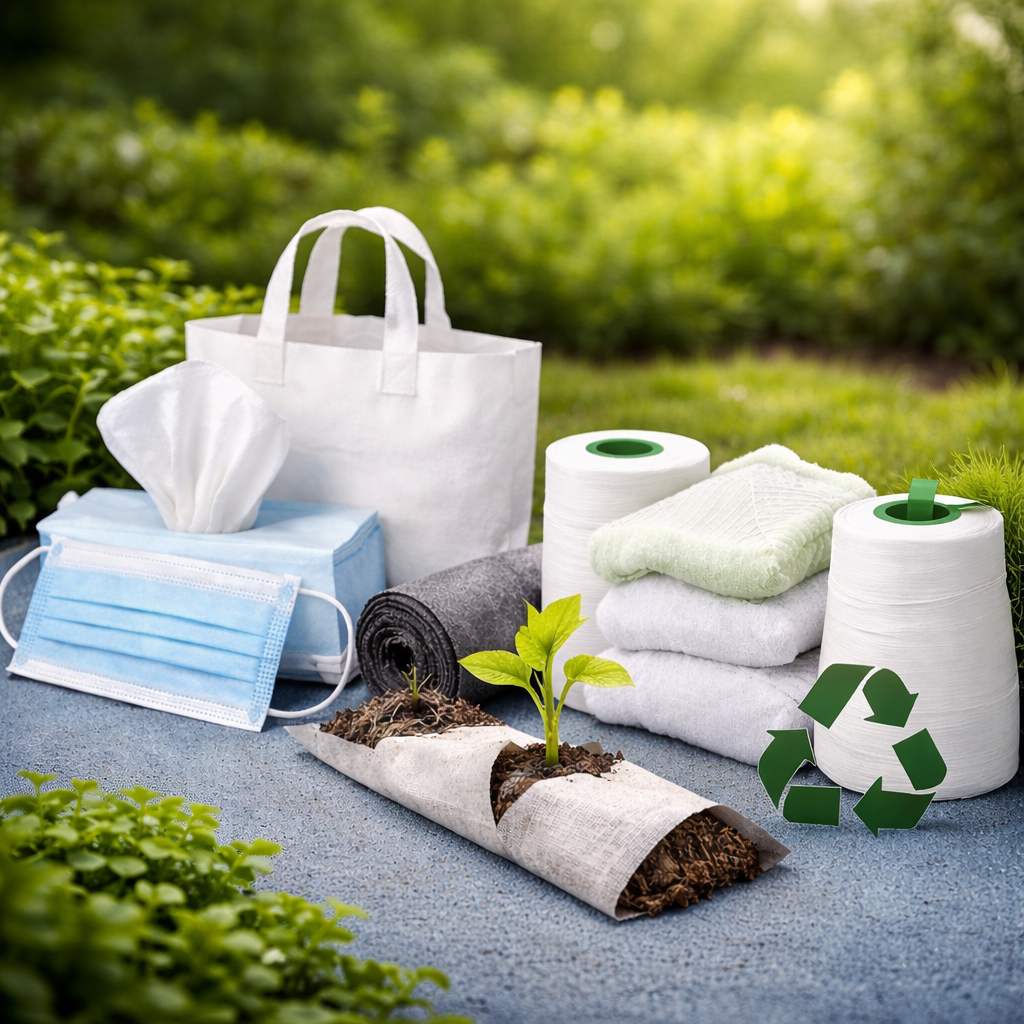
Fabrics are integral to daily life, though their presence often goes unnoticed. Nonwoven materials, produced by bonding fibres instead of weaving or knitting, are found in products such as masks, wipes, filters, and shopping bags. These materials are valued for their balance of cost-effectiveness, breathability, and strength.
Nonwovens are available in several types, including spunbond, meltblown, spunlace, and needlepunched varieties. Each type is engineered for specific applications, ranging from medical protection to industrial filtration. Recognizing these differences facilitates the selection of materials based on requirements such as durability, comfort, or single-use convenience.
Manufacturing choices directly influence the performance and sustainability of nonwovens. Advances in fibre blends, recycling techniques, and process improvements continue to expand the capabilities of these materials.
Key Takeaways
- Nonwoven fabrics are formed by bonding fibres rather than weaving.
- Different production methods give nonwovens distinct strengths and applications.
- Ongoing innovation is improving both performance and environmental impact.
Overview of Non-Woven Fabrics
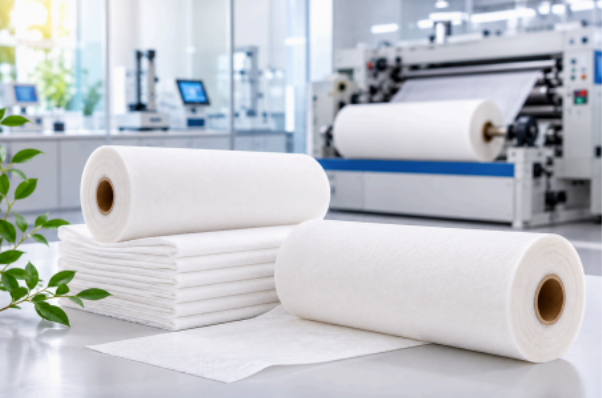
Nonwoven fabrics are sheets of fibres bonded together without weaving or knitting. These materials are present in products such as masks, wipes, filters, geotextiles, and medical gowns. Their widespread use is attributed to the ability to produce them in a variety of weights, thicknesses, and strength levels.
Definition and Characteristics
Nonwoven fabrics are created by bonding fibres rather than interlacing yarns. These fibres can be short-staple or continuous filaments. They are first laid into a web and then fixed using mechanical, chemical, thermal, or solvent bonding methods.
Key characteristics include:
- Structure: Fibres form a random or oriented web rather than a woven or knitted pattern.
- Versatility: Materials can be engineered for softness, strength, absorbency, or filtration.
- Range of use: Products can be disposable, such as wipes, or highly durable, such as geotextiles.
- Materials: Common fibres include polypropylene, polyester, viscose, cotton blends, and recycled fibres.
Selection of nonwoven fabrics is typically based on porosity, thickness, and cost requirements. Their low production cost and design flexibility contribute to their popularity across various industries.
Manufacturing Processes
Nonwoven manufacturing uses several core processes to convert fibres into fabric. Each process influences how the fabric feels, how strong it is, and how much it costs.
Main processes include:
- Drylaid: Staple fibres are carded into a web. This method is widely used for wipes and hygiene products.
- Spunbond: Molten polymer is extruded into continuous filaments, laid into a web, and bonded. This process is standard for medical gowns and shopping bags.
- Meltblown: Fine polymer fibres are blown by hot air to form a dense web. This method is critical for filtration layers in masks.
- Spunlace (hydroentanglement): High-pressure water jets entangle fibres to create a soft, cloth-like fabric. This is common in wet wipes and medical dressings.
- Needle punching: Barbed needles mechanically entangle fibres for heavy-duty applications such as carpets and geotextiles.
The appropriate manufacturing process is determined by the required balance of strength, softness, filtration efficiency, and cost. To help guide decision-making, consider these questions: "Need softness? Choose hydroentangled." Require high filtration efficiency? Opt for meltblown." "Seeking durability on a budget? Spunbond is ideal." This approach turns abstract trade-offs into actionable guidance.
Key Properties
Nonwoven fabrics exhibit a wide range of measurable properties that determine their performance in a given application.
Essential properties to evaluate include:
- Tensile and tear strength: Indicates durability, especially for bags and geotextiles.
- Basis weight (g/m²): A higher weight generally means a thicker, stronger fabric.
- Air and liquid permeability: Controls breathability, filtration, and absorbency.
- Filtration efficiency: Critical for surgical masks and HVAC filters. Meltblown layers perform exceptionally well here.
- Softness and drape: Important for comfort in wipes and medical apparel.
- Chemical and thermal resistance: Needed for industrial filters and protective clothing.
These properties can be adjusted by blending fibres, changing bonding methods, or adding treatments like water repellents or flame retardants.
Types of Non-Woven Fabrics
Nonwoven fabrics are distinguished by the methods used to form, bond, and finish their fibres. Each type provides specific advantages, such as enhanced durability, filtration, softness, or liquid management.
Spunbond Non Woven
Spunbond fabric is made from continuous filaments spun from polymers such as polypropylene. The filaments are laid into a web and bonded using heat or pressure.
This process produces a strong, lightweight fabric that resists tearing. Spunbond is commonly used in reusable bags, surgical gowns, and geotextiles. It withstands tensile loads effectively, maintaining its shape under stress. The tensile strength typically ranges from 20-40 N/5 cm, providing reliability in demanding applications.
Spunbond also provides moisture resistance, making it suitable for applications requiring basic barrier properties. It is easy to process and can be printed, laminated, or thermally bonded. For long-lasting, low-cost materials with reliable mechanical strength, spunbond is a dependable option.
Meltblown Non Woven
Meltblown fabric is produced by extruding a polymer through tiny nozzles while high-speed air stretches the fibres. This creates an ultrafine fibre web with small pore sizes and a large surface area.
Meltblown is primarily used for filtration and barrier layers, including medical masks, air filters, and liquid barrier liners. The fine fibres trap particles effectively while still allowing airflow.
Because meltblown fabric is more fragile than spunbond, it is often used in multilayer structures, such as spunbond/meltblown/spunbond. These combinations provide both strength and filtration. Careful handling during processing is essential to protect the delicate fibre network. A helpful practice is to avoid using sharp rollers when converting lines, which minimises the risk of damaging fibres. This approach ensures that fragility does not compromise the material's functionality.
Needle Punched Non-Woven
Mechanically entangling fibres with barbed needles creates needle-punched nonwovens. This produces a dense, durable fabric from fibres such as polyester, polypropylene, or natural blends.
These fabrics are well-suited for heavy-duty uses such as carpet backing, geotextiles, erosion control, and automotive liners. They offer good thickness, bulk, and dimensional stability.
Performance depends on fibre type, needling density, and finishing treatments. Increasing the level of needling improves strength and reduces elongation. A wide range of weights and thicknesses is available to meet load-bearing or cushioning requirements.
Hydroentangled (Spunlace) Non-Woven
Spunlace nonwovens are made by using high-pressure water jets to entangle fibres into a cohesive web. The resulting fabric feels soft and closely resembles traditional textiles.
Spunlace is used in wipes, medical dressings, and hygiene products where softness and absorbency are essential. It provides good tensile strength, excellent drape, and surface smoothness.
Spunlace materials readily accept dyes and additives, making them suitable for coloured or functional wipes. Adjustments in water pressure and fibre blends allow manufacturers to fine-tune strength, absorbency, and tactile properties. Spunlace is therefore a strong option for applications requiring cloth-like performance without weaving.
Common Uses of Non-Woven Materials
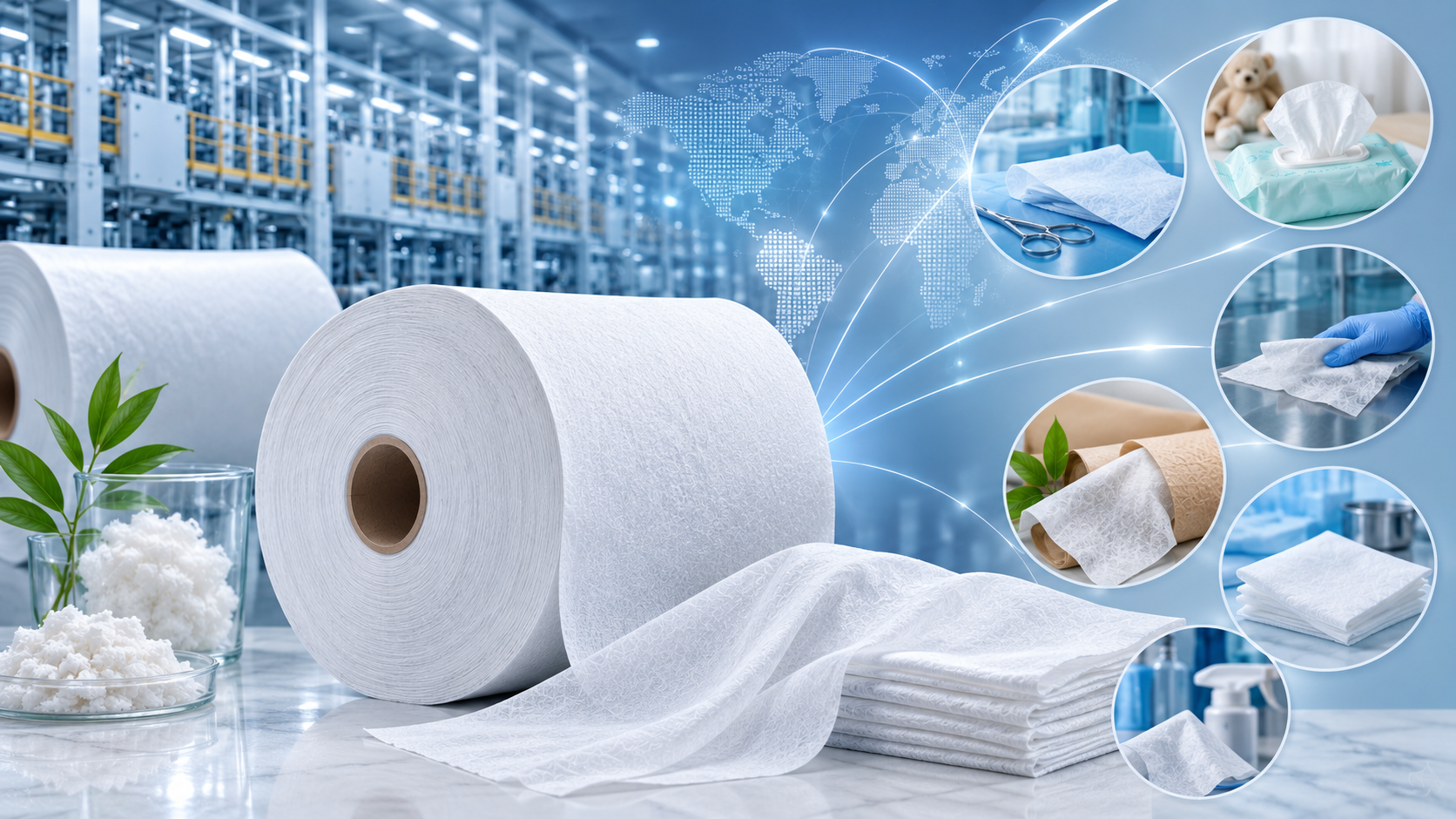
Nonwoven materials are used wherever strength, breathability, or low cost are key priorities. Typical applications include medical products, hygiene items, filtration systems, and geotextile solutions.
Medical and Healthcare Applications
Nonwoven fabrics are widely used in masks, surgical gowns, drapes, and wound dressings. They provide a barrier against fluids and microbes while maintaining breathability and comfort.
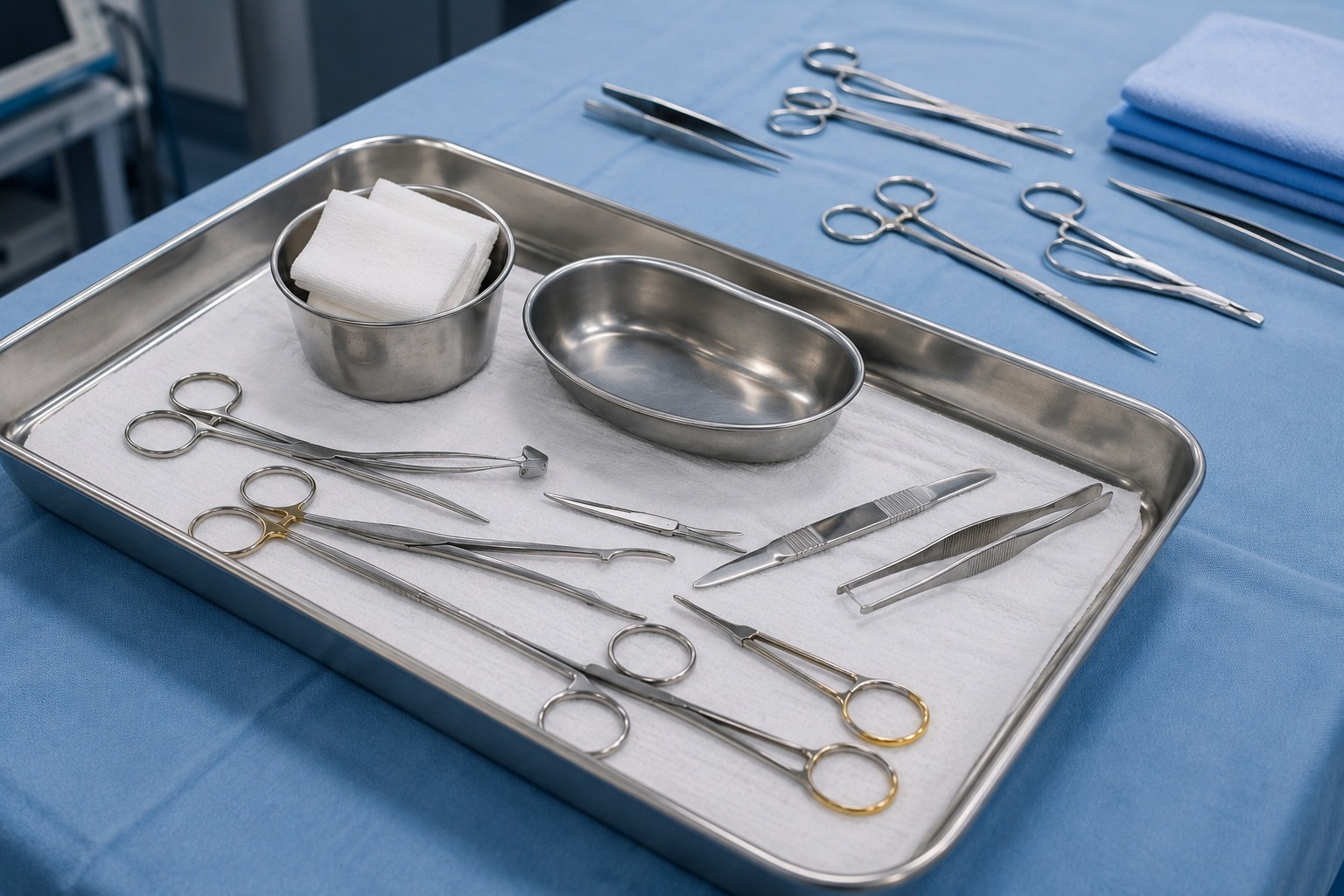
Many medical disposables rely on spunbond and meltblown layers for filtration and splash resistance. Hydroentangled wipes are preferred for cleaning skin and instruments because they are soft yet firm and lint-free.
Sterile wraps and implantable pads use carefully selected fibre blends and bonding methods to meet strict sterilisation and strength standards. Single-use products also help reduce cross-contamination and lower laundry costs in healthcare facilities.
Hygiene Products
Diapers, sanitary pads, and adult incontinence products rely heavily on nonwoven fabrics. A soft top layer improves skin comfort, while absorbent cores and distribution layers quickly move fluid away.
This design helps keep surfaces dry and reduces irritation. Wet wipes commonly use spunlace nonwovens because they stay strong even when wet.
In feminine hygiene products, nonwovens work alongside superabsorbent polymers to manage large fluid volumes without leakage. Designers focus on odour control, wicking performance, and skin pH to enhance safety and comfort.
Filtration
Nonwoven materials are essential for air and liquid filtration systems, including HVAC units, vacuum cleaners, and water treatment plants. Fibre diameter, thickness, and electrostatic charge can be adjusted to capture particles ranging from dust to submicron contaminants.
Meltblown fabrics often serve as delicate filtration layers, while needle-punched and thermally bonded nonwovens handle high flow rates and mechanical stress in industrial filtration.
Liquid filtration applications use depth filter nonwovens to trap particles while maintaining steady flow. When selecting filter media, pressure drop, efficiency, and service life are key considerations.
Agricultural and Geotextile Uses
In agriculture and civil engineering, nonwovens help protect soil, crops, and infrastructure. Spunbond row covers and weed mats shield plants from frost, insects, and weeds while still allowing air, light, and water through.
Geotextile applications rely on needle-punched nonwovens for separation, drainage, and reinforcement under roads, embankments, and retaining walls. These fabrics prevent soil mixing, improve water flow, and extend structural life.
Material selection depends on load conditions, permeability, UV exposure, and expected lifespan.
Emerging Trends and Innovations in Non-Woven
Nonwoven technology continues to evolve, emphasizing waste reduction, closing material loops, and advancing biodegradable fibers along with innovative functional materials. These developments are particularly significant for sectors like healthcare, filtration, hygiene, and the automotive industry, aligning with the circular economy narrative many stakeholders are keenly following. By integrating circularity frameworks, the nonwoven industry not only meets shifting consumer demands but also enhances sustainability and resilience across applications.
Sustainable Non-Woven Solutions
Manufacturers are increasingly using recycled polymers such as PET and recycled polypropylene. Post-consumer plastic and industrial scrap are now converted into spunbond and meltblown layers for hygiene and filtration products.
This approach reduces demand for virgin materials and can lower energy use when processes are optimised. Product labels often indicate recycled content percentages and certifications such as GRS or OEKO-TEX.
It is also essential to review lifecycle data and end-of-life options, as recycling multilayer products can be complex.
Biodegradable Materials
Biodegradable nonwovens are gaining attention for single-use products that must break down after disposal. Materials under development include polylactic acid, cellulose from wood pulp, and blends with natural fibres like cotton or kapok.
These materials are used in compostable wipes, agricultural mats, and certain medical disposables. However, many biodegradable polymers require specific composting conditions and may not degrade quickly in landfills.
Certified compostability and realistic performance testing are essential when evaluating these options.
Smart Non-Woven Textiles
Smart nonwovens add functionality beyond passive barriers. Manufacturers embed conductive elements, printed sensors, or phase-change materials into needle-punched or laminated structures.
Applications include disposable medical sensors, heated insulation pads, and humidity-responsive filtration media. These products can add value but may increase cost and require tighter manufacturing controls.





Fabrics are integral to daily life, though their presence often goes unnoticed. Nonwoven materials, produced by bonding fibres instead of weaving or knitting, are found in products such as masks, wipes, filters, and shopping bags. These materials are valued for their balance of cost-effectiveness, breathability, and strength.
Nonwovens are available in several types, including spunbond, meltblown, spunlace, and needlepunched varieties. Each type is engineered for specific applications, ranging from medical protection to industrial filtration. Recognizing these differences facilitates the selection of materials based on requirements such as durability, comfort, or single-use convenience.
Manufacturing choices directly influence the performance and sustainability of nonwovens. Advances in fibre blends, recycling techniques, and process improvements continue to expand the capabilities of these materials.
Key Takeaways
Overview of Non-Woven Fabrics
Nonwoven fabrics are sheets of fibres bonded together without weaving or knitting. These materials are present in products such as masks, wipes, filters, geotextiles, and medical gowns. Their widespread use is attributed to the ability to produce them in a variety of weights, thicknesses, and strength levels.
Definition and Characteristics
Nonwoven fabrics are created by bonding fibres rather than interlacing yarns. These fibres can be short-staple or continuous filaments. They are first laid into a web and then fixed using mechanical, chemical, thermal, or solvent bonding methods.
Key characteristics include:
Selection of nonwoven fabrics is typically based on porosity, thickness, and cost requirements. Their low production cost and design flexibility contribute to their popularity across various industries.
Manufacturing Processes
Nonwoven manufacturing uses several core processes to convert fibres into fabric. Each process influences how the fabric feels, how strong it is, and how much it costs.
Main processes include:
The appropriate manufacturing process is determined by the required balance of strength, softness, filtration efficiency, and cost. To help guide decision-making, consider these questions: "Need softness? Choose hydroentangled." Require high filtration efficiency? Opt for meltblown." "Seeking durability on a budget? Spunbond is ideal." This approach turns abstract trade-offs into actionable guidance.
Key Properties
Nonwoven fabrics exhibit a wide range of measurable properties that determine their performance in a given application.
Essential properties to evaluate include:
These properties can be adjusted by blending fibres, changing bonding methods, or adding treatments like water repellents or flame retardants.
Types of Non-Woven Fabrics
Nonwoven fabrics are distinguished by the methods used to form, bond, and finish their fibres. Each type provides specific advantages, such as enhanced durability, filtration, softness, or liquid management.
Spunbond Non Woven
Spunbond fabric is made from continuous filaments spun from polymers such as polypropylene. The filaments are laid into a web and bonded using heat or pressure.
This process produces a strong, lightweight fabric that resists tearing. Spunbond is commonly used in reusable bags, surgical gowns, and geotextiles. It withstands tensile loads effectively, maintaining its shape under stress. The tensile strength typically ranges from 20-40 N/5 cm, providing reliability in demanding applications.
Spunbond also provides moisture resistance, making it suitable for applications requiring basic barrier properties. It is easy to process and can be printed, laminated, or thermally bonded. For long-lasting, low-cost materials with reliable mechanical strength, spunbond is a dependable option.
Meltblown Non Woven
Meltblown fabric is produced by extruding a polymer through tiny nozzles while high-speed air stretches the fibres. This creates an ultrafine fibre web with small pore sizes and a large surface area.
Meltblown is primarily used for filtration and barrier layers, including medical masks, air filters, and liquid barrier liners. The fine fibres trap particles effectively while still allowing airflow.
Because meltblown fabric is more fragile than spunbond, it is often used in multilayer structures, such as spunbond/meltblown/spunbond. These combinations provide both strength and filtration. Careful handling during processing is essential to protect the delicate fibre network. A helpful practice is to avoid using sharp rollers when converting lines, which minimises the risk of damaging fibres. This approach ensures that fragility does not compromise the material's functionality.
Needle Punched Non-Woven
Mechanically entangling fibres with barbed needles creates needle-punched nonwovens. This produces a dense, durable fabric from fibres such as polyester, polypropylene, or natural blends.
These fabrics are well-suited for heavy-duty uses such as carpet backing, geotextiles, erosion control, and automotive liners. They offer good thickness, bulk, and dimensional stability.
Performance depends on fibre type, needling density, and finishing treatments. Increasing the level of needling improves strength and reduces elongation. A wide range of weights and thicknesses is available to meet load-bearing or cushioning requirements.
Hydroentangled (Spunlace) Non-Woven
Spunlace nonwovens are made by using high-pressure water jets to entangle fibres into a cohesive web. The resulting fabric feels soft and closely resembles traditional textiles.
Spunlace is used in wipes, medical dressings, and hygiene products where softness and absorbency are essential. It provides good tensile strength, excellent drape, and surface smoothness.
Spunlace materials readily accept dyes and additives, making them suitable for coloured or functional wipes. Adjustments in water pressure and fibre blends allow manufacturers to fine-tune strength, absorbency, and tactile properties. Spunlace is therefore a strong option for applications requiring cloth-like performance without weaving.
Common Uses of Non-Woven Materials
Nonwoven materials are used wherever strength, breathability, or low cost are key priorities. Typical applications include medical products, hygiene items, filtration systems, and geotextile solutions.
Medical and Healthcare Applications
Nonwoven fabrics are widely used in masks, surgical gowns, drapes, and wound dressings. They provide a barrier against fluids and microbes while maintaining breathability and comfort.
Many medical disposables rely on spunbond and meltblown layers for filtration and splash resistance. Hydroentangled wipes are preferred for cleaning skin and instruments because they are soft yet firm and lint-free.
Sterile wraps and implantable pads use carefully selected fibre blends and bonding methods to meet strict sterilisation and strength standards. Single-use products also help reduce cross-contamination and lower laundry costs in healthcare facilities.
Hygiene Products
Diapers, sanitary pads, and adult incontinence products rely heavily on nonwoven fabrics. A soft top layer improves skin comfort, while absorbent cores and distribution layers quickly move fluid away.
This design helps keep surfaces dry and reduces irritation. Wet wipes commonly use spunlace nonwovens because they stay strong even when wet.
In feminine hygiene products, nonwovens work alongside superabsorbent polymers to manage large fluid volumes without leakage. Designers focus on odour control, wicking performance, and skin pH to enhance safety and comfort.
Filtration
Nonwoven materials are essential for air and liquid filtration systems, including HVAC units, vacuum cleaners, and water treatment plants. Fibre diameter, thickness, and electrostatic charge can be adjusted to capture particles ranging from dust to submicron contaminants.
Meltblown fabrics often serve as delicate filtration layers, while needle-punched and thermally bonded nonwovens handle high flow rates and mechanical stress in industrial filtration.
Liquid filtration applications use depth filter nonwovens to trap particles while maintaining steady flow. When selecting filter media, pressure drop, efficiency, and service life are key considerations.
Agricultural and Geotextile Uses
In agriculture and civil engineering, nonwovens help protect soil, crops, and infrastructure. Spunbond row covers and weed mats shield plants from frost, insects, and weeds while still allowing air, light, and water through.
Geotextile applications rely on needle-punched nonwovens for separation, drainage, and reinforcement under roads, embankments, and retaining walls. These fabrics prevent soil mixing, improve water flow, and extend structural life.
Material selection depends on load conditions, permeability, UV exposure, and expected lifespan.
Emerging Trends and Innovations in Non-Woven
Nonwoven technology continues to evolve, emphasizing waste reduction, closing material loops, and advancing biodegradable fibers along with innovative functional materials. These developments are particularly significant for sectors like healthcare, filtration, hygiene, and the automotive industry, aligning with the circular economy narrative many stakeholders are keenly following. By integrating circularity frameworks, the nonwoven industry not only meets shifting consumer demands but also enhances sustainability and resilience across applications.
Sustainable Non-Woven Solutions
Manufacturers are increasingly using recycled polymers such as PET and recycled polypropylene. Post-consumer plastic and industrial scrap are now converted into spunbond and meltblown layers for hygiene and filtration products.
This approach reduces demand for virgin materials and can lower energy use when processes are optimised. Product labels often indicate recycled content percentages and certifications such as GRS or OEKO-TEX.
It is also essential to review lifecycle data and end-of-life options, as recycling multilayer products can be complex.
Biodegradable Materials
Biodegradable nonwovens are gaining attention for single-use products that must break down after disposal. Materials under development include polylactic acid, cellulose from wood pulp, and blends with natural fibres like cotton or kapok.
These materials are used in compostable wipes, agricultural mats, and certain medical disposables. However, many biodegradable polymers require specific composting conditions and may not degrade quickly in landfills.
Certified compostability and realistic performance testing are essential when evaluating these options.
Smart Non-Woven Textiles
Smart nonwovens add functionality beyond passive barriers. Manufacturers embed conductive elements, printed sensors, or phase-change materials into needle-punched or laminated structures.
Applications include disposable medical sensors, heated insulation pads, and humidity-responsive filtration media. These products can add value but may increase cost and require tighter manufacturing controls.