Hospitals are built around one promise. Keep patients and staff safe while delivering care quickly, consistently, and at scale. Nonwoven materials quietly make that possible.
From surgical gowns and drapes to masks, sterilization wraps, wound dressings, wipes, and filtration media, nonwovens are used because they deliver the specific mix healthcare needs: reliable barrier protection, low contamination risk, comfort, and predictable performance in high volumes.
Below is a practical, procurement friendly breakdown of why nonwovens win in medical settings, where they fit best, and how to choose the right nonwoven construction for each use case.
Nonwovens are used in medical and healthcare because they enable strong infection control through reliable fluid and particle barriers, support sterility with low lint and single use options, improve comfort and breathability, and deliver consistent performance at scale. Common medical nonwovens include spunbond, meltblown, SMS, and spunlace, chosen based on required barrier level, durability, and intended use. Gown and drape protection is often aligned to ANSI AAMI PB70 barrier levels, while regulatory expectations for medical gowns vary by intended use.
What are nonwovens in healthcare, in plain terms?
Nonwovens are engineered fabrics made by bonding fibres together without weaving or knitting. That matters because manufacturers can “design in” performance such as fluid resistance, filtration efficiency, softness, stretch, absorbency, and low linting.
In medical products, the most common families you will see include:
- Spunbond polypropylene: strong, breathable support layers
- Meltblown polypropylene: very fine fibres for filtration and barrier layers
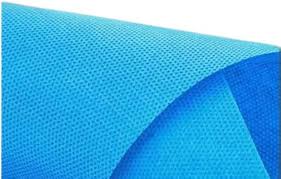
- SMS (spunbond meltblown spunbond): combines strength plus barrier in one composite sheet
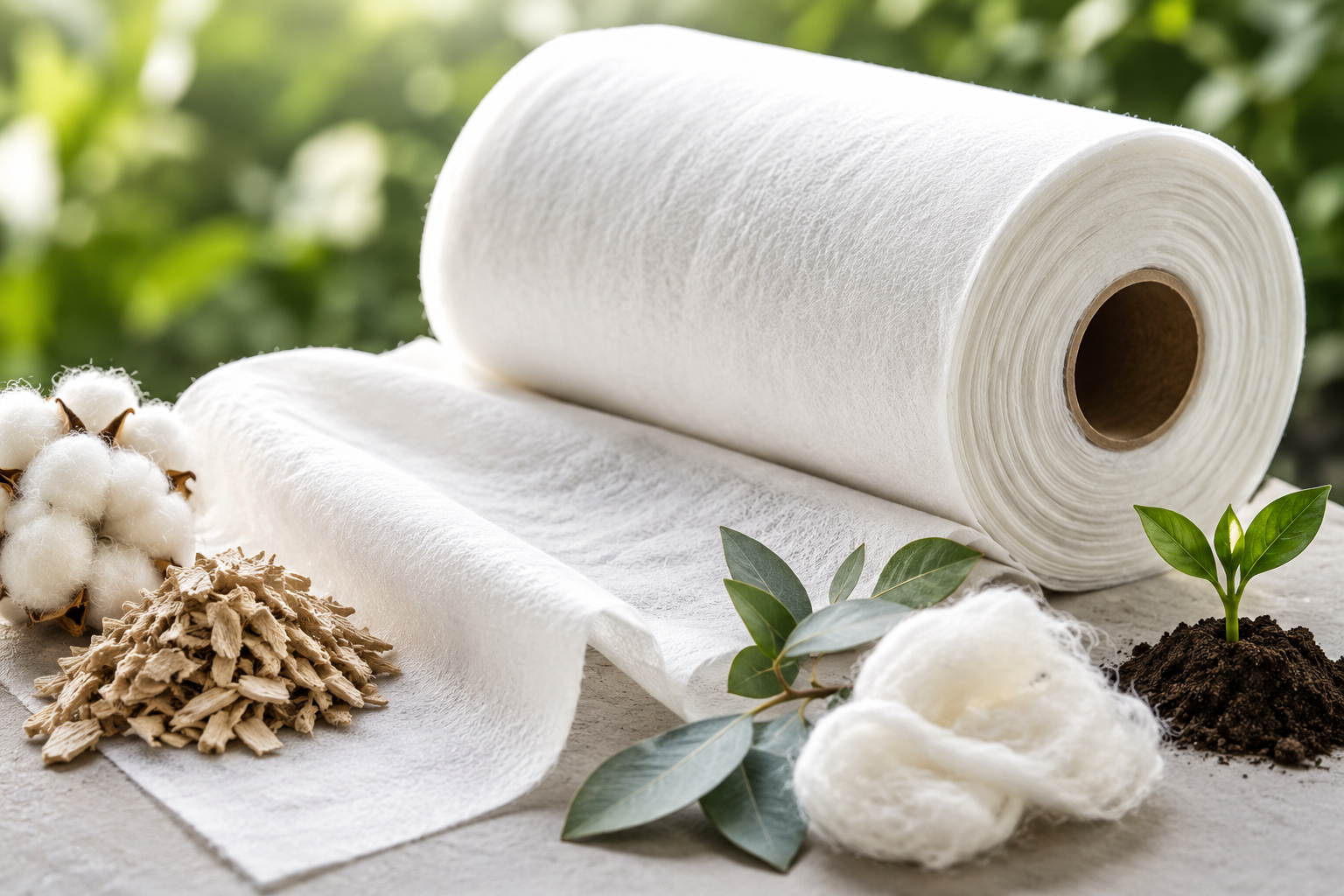
- Spunlace or hydroentangled: soft, cloth like feel, common for wipes and some dressings
- Needlepunched and thermal bonded variants: used where bulk or specific mechanical properties are needed
1. Infection control is the number one reason
Infection control is not a slogan. It is a materials problem.
Healthcare environments need textiles that reduce cross contamination risk. Nonwovens do this in three ways:
Better barriers against fluids and microorganisms
Medical nonwovens can be engineered to resist fluid penetration and block particles and microbes, which is critical in gowns, drapes, and masks.
Single use reduces reprocessing risk
Single use nonwovens cut the chain of contamination that can happen during collection, transport, laundering, and handling of reusable textiles. They also reduce variables like wash degradation over time.
Low lint helps maintain sterile fields
Lint is not just messy. Loose fibres can carry contaminants and interfere with sterile zones. Many medical nonwovens are designed to be low linting for exactly this reason.
2. Barrier performance can be standardised and specified
A big reason nonwovens dominate medical PPE and surgical textiles is that performance can be tested, classified, and purchased to a known protection level.
ANSI AAMI PB70 barrier levels
For isolation gowns, surgical gowns, and drapes, the ANSI AAMI PB70 standard defines four barrier performance levels based on standard test methods, with Level 1 lowest and Level 4 highest.
What this means in real buying terms:
- You can match the procedure risk to a measured barrier level
- You can standardise SKUs across sites
- You can reduce “looks thick enough” purchasing decisions
3. Comfort and compliance improve when PPE is wearable
Protection that people hate wearing leads to bad compliance. Nonwovens help here because you can tune them for:
- Breathability without giving up the barrier layer (common in SMS composites)
- Softness for long shift comfort (common in spunlace and softer spunbond constructions)
- Lightweight coverage that reduces heat stress and fatigue
This is underrated. In the real world, comfort is a safety feature because it increases correct usage.
4. Nonwovens deliver consistent, repeatable performance at scale
Healthcare procurement cares about repeatability. A gown cannot be “great this batch, mediocre next batch.”
Nonwovens are manufactured on controlled lines where fibre diameter, basis weight (GSM), bonding method, and finishes can be dialled in and monitored. That makes it easier to hold a spec across millions of units, which is exactly what hospitals, distributors, and government tenders require.
5. They are versatile across a huge range of medical products
Nonwovens are not only PPE. They show up across patient care, hygiene, and hospital operations.
Common medical and healthcare uses
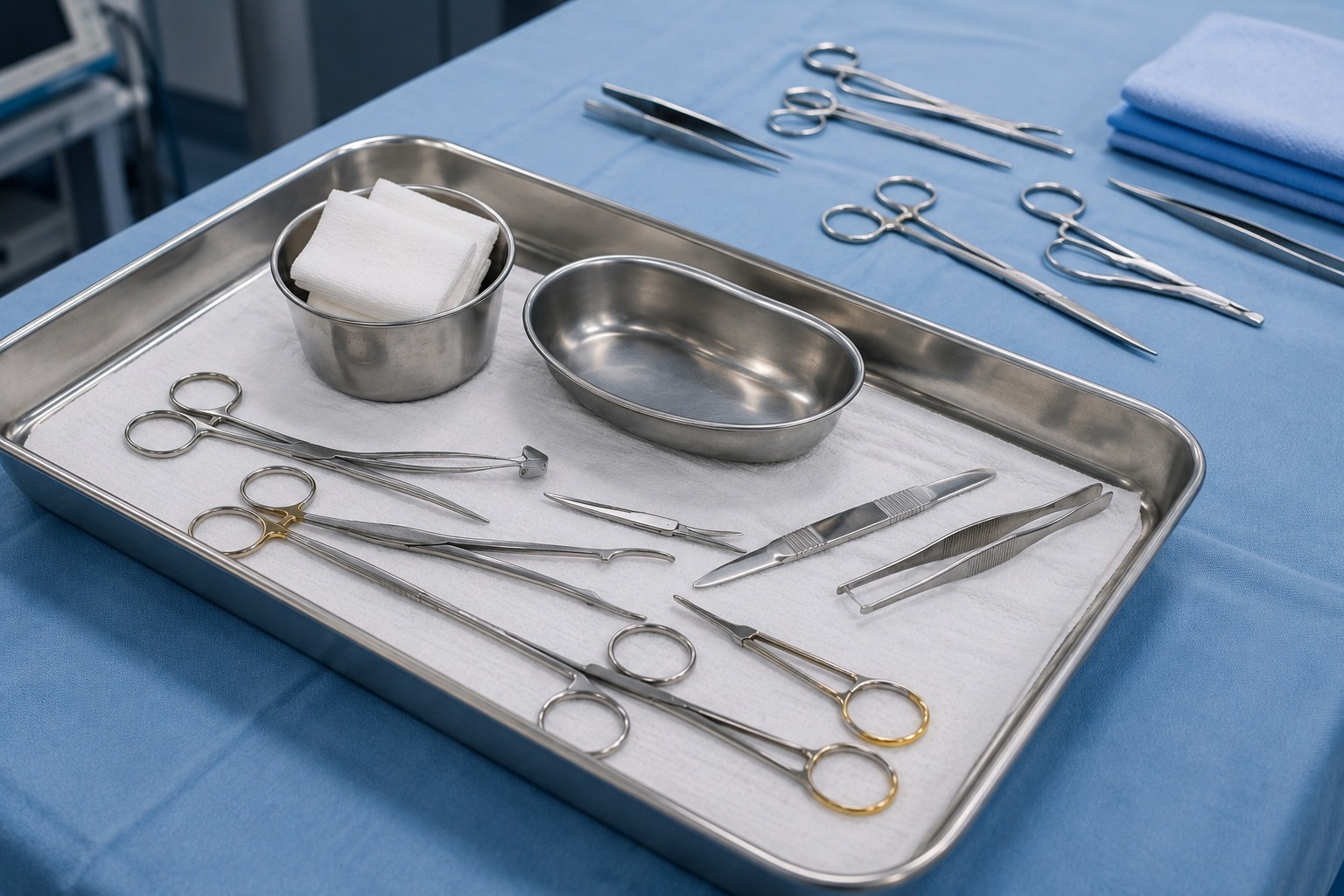
- Surgical gowns and drapes
- Isolation gowns
- Caps, shoe covers, patient drapes
- Sterilization wraps and packaging layers
- Face masks and respirator components (filtration layers often use meltblown)
- Wipes (patient care, surface disinfection formats)
- Wound dressings and absorbent pads
- Underpads and incontinence products
- Medical filtration media in clinical and lab environments
The key point: one material category supports multiple departments, which simplifies vendor management and inventory.
6. You can engineer “exactly enough” performance, which controls cost
Nonwovens make it possible to pay for the protection you actually need.
Example:
- A low risk visitor gown does not need the same barrier as an OR gown.
- A drape’s critical zone needs higher barrier than non critical areas.
Standards like AAMI PB70 also define “critical zones” where barrier performance matters most, which helps you avoid over speccing everything.
7. Regulatory and clinical expectations align with nonwoven product categories
Medical gowns are regulated based on intended use and claims. In the US, certain medical gowns are regulated by the FDA as medical devices, with requirements depending on the category and risk.
What this means practically:
- Nonwovens are already the default material platform used to meet these expectations
- Suppliers often have established test data, lab reports, and compliance documentation tied to specific nonwoven constructions
8. Better workflow efficiency in busy clinical settings
Time and motion matter in hospitals. Nonwovens support faster workflows because:
- Ready to use and individually packaged options reduce prep time
- Disposables reduce reprocessing logistics
- Predictable performance reduces “changeouts” mid procedure
- Lightweight packs simplify storage and movement across wards
These are not just operational wins. They reduce delays in care delivery.
Nonwoven Types and Applications
When you need high barrier plus strength
- Look at SMS composites, because spunbond provides strength while meltblown provides barrier.
When you need filtration performance
- Look at meltblown layers because the fine fibre structure supports filtration and barrier properties.
When you need softness and absorbency
- Look at spunlace or hydroentangled nonwovens, often used in wipes and patient care textiles.
When you need basic coverage at low cost
- Spunbond is often used as a breathable, economical layer, sometimes in combination with other layers.
A quick buying checklist for hospitals and distributors
Use this to choose nonwovens without guesswork.
Step 1: Define the clinical risk
- What fluids are expected?
- Is there spray, splatter, or pooling?
- Is the product used in a sterile field?
Step 2: Match to a measurable barrier standard where applicable
- For gowns and drapes, align to ANSI AAMI PB70 Level 1 to 4 based on use case.
Step 3: Confirm the comfort requirements
- Wear time per shift
- Heat stress risk
- Mobility and noise (rustle can matter in the OR)
Step 4: Specify construction, not just GSM
GSM alone does not tell you barrier performance. Construction matters.
- Spunbond vs meltblown vs SMS vs spunlace
- Coatings or laminations (if used)
- Seam strength, closures, and cuff design for gowns
Step 5: Demand documentation
- Lab test reports for barrier claims
- Biocompatibility claims if relevant for skin contact products
- Regulatory status aligned to your market
FAQs
Are nonwovens always better than woven or knitted medical textiles?
Not always. Reusables can make sense for certain low contamination risk settings and where laundering infrastructure is strong. But for high risk, sterile, or high throughput contexts, nonwovens often win because barrier performance, contamination control, and standardisation are easier to maintain.
What makes SMS so common in gowns and drapes?
Because it combines strength and barrier performance by layering spunbond and meltblown into a single material system.
How do I choose the right protection level for an isolation gown?
Use the procedure risk and expected exposure to fluids to pick an ANSI AAMI PB70 level. Higher level means higher barrier performance, especially in critical zones.
Are medical gowns regulated?
In the US, certain medical gowns are regulated as medical devices depending on intended use and claims. Always match product type to applicable regulations for your market.
Why are nonwovens used in wipes and dressings?
Because they can be engineered for softness, absorbency, and controlled strength, and they can be produced consistently at high volumes.



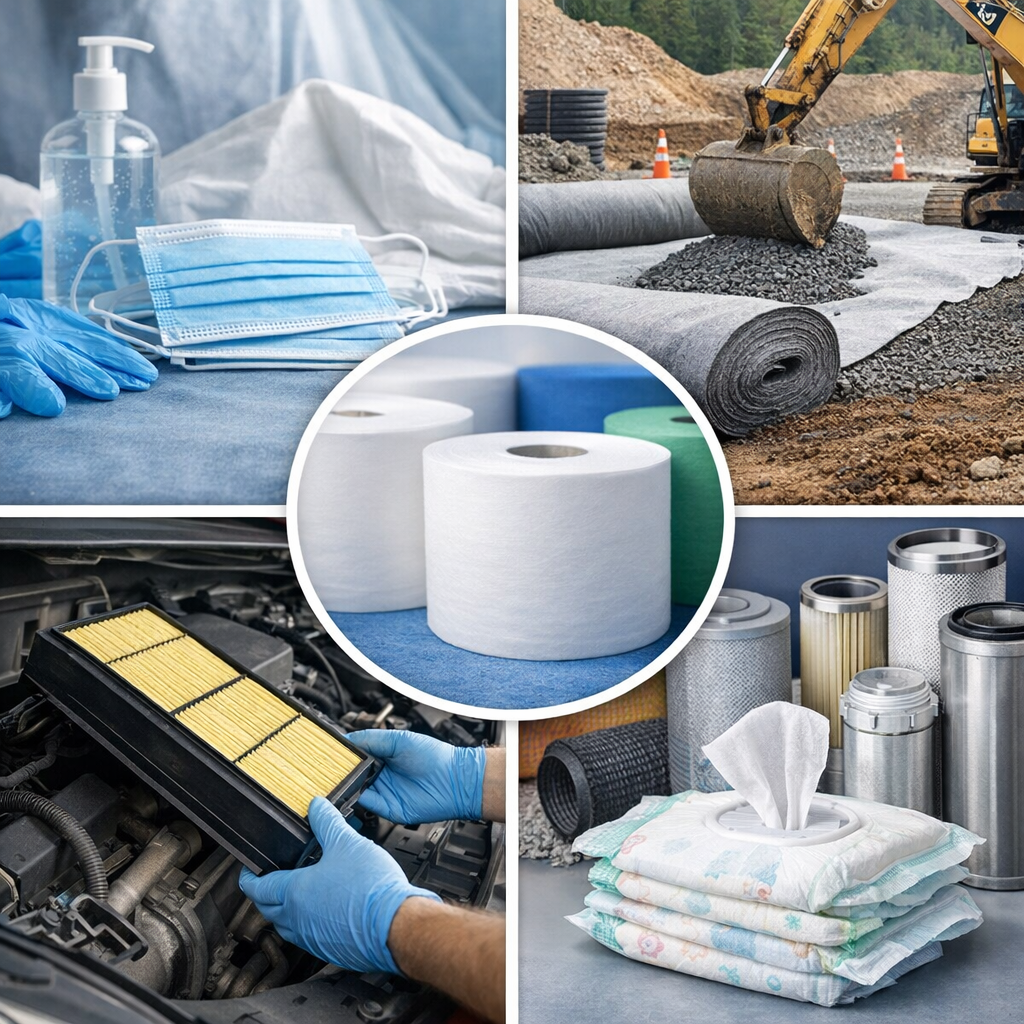



Hospitals are built around one promise. Keep patients and staff safe while delivering care quickly, consistently, and at scale. Nonwoven materials quietly make that possible.
From surgical gowns and drapes to masks, sterilization wraps, wound dressings, wipes, and filtration media, nonwovens are used because they deliver the specific mix healthcare needs: reliable barrier protection, low contamination risk, comfort, and predictable performance in high volumes.
Below is a practical, procurement friendly breakdown of why nonwovens win in medical settings, where they fit best, and how to choose the right nonwoven construction for each use case.
Nonwovens are used in medical and healthcare because they enable strong infection control through reliable fluid and particle barriers, support sterility with low lint and single use options, improve comfort and breathability, and deliver consistent performance at scale. Common medical nonwovens include spunbond, meltblown, SMS, and spunlace, chosen based on required barrier level, durability, and intended use. Gown and drape protection is often aligned to ANSI AAMI PB70 barrier levels, while regulatory expectations for medical gowns vary by intended use.
What are nonwovens in healthcare, in plain terms?
Nonwovens are engineered fabrics made by bonding fibres together without weaving or knitting. That matters because manufacturers can “design in” performance such as fluid resistance, filtration efficiency, softness, stretch, absorbency, and low linting.
In medical products, the most common families you will see include:
1. Infection control is the number one reason
Infection control is not a slogan. It is a materials problem.
Healthcare environments need textiles that reduce cross contamination risk. Nonwovens do this in three ways:
Better barriers against fluids and microorganisms
Medical nonwovens can be engineered to resist fluid penetration and block particles and microbes, which is critical in gowns, drapes, and masks.
Single use reduces reprocessing risk
Single use nonwovens cut the chain of contamination that can happen during collection, transport, laundering, and handling of reusable textiles. They also reduce variables like wash degradation over time.
Low lint helps maintain sterile fields
Lint is not just messy. Loose fibres can carry contaminants and interfere with sterile zones. Many medical nonwovens are designed to be low linting for exactly this reason.
2. Barrier performance can be standardised and specified
A big reason nonwovens dominate medical PPE and surgical textiles is that performance can be tested, classified, and purchased to a known protection level.
ANSI AAMI PB70 barrier levels
For isolation gowns, surgical gowns, and drapes, the ANSI AAMI PB70 standard defines four barrier performance levels based on standard test methods, with Level 1 lowest and Level 4 highest.
What this means in real buying terms:
3. Comfort and compliance improve when PPE is wearable
Protection that people hate wearing leads to bad compliance. Nonwovens help here because you can tune them for:
This is underrated. In the real world, comfort is a safety feature because it increases correct usage.
4. Nonwovens deliver consistent, repeatable performance at scale
Healthcare procurement cares about repeatability. A gown cannot be “great this batch, mediocre next batch.”
Nonwovens are manufactured on controlled lines where fibre diameter, basis weight (GSM), bonding method, and finishes can be dialled in and monitored. That makes it easier to hold a spec across millions of units, which is exactly what hospitals, distributors, and government tenders require.
5. They are versatile across a huge range of medical products
Nonwovens are not only PPE. They show up across patient care, hygiene, and hospital operations.
Common medical and healthcare uses
The key point: one material category supports multiple departments, which simplifies vendor management and inventory.
6. You can engineer “exactly enough” performance, which controls cost
Nonwovens make it possible to pay for the protection you actually need.
Example:
Standards like AAMI PB70 also define “critical zones” where barrier performance matters most, which helps you avoid over speccing everything.
7. Regulatory and clinical expectations align with nonwoven product categories
Medical gowns are regulated based on intended use and claims. In the US, certain medical gowns are regulated by the FDA as medical devices, with requirements depending on the category and risk.
What this means practically:
8. Better workflow efficiency in busy clinical settings
Time and motion matter in hospitals. Nonwovens support faster workflows because:
These are not just operational wins. They reduce delays in care delivery.
Nonwoven Types and Applications
When you need high barrier plus strength
When you need filtration performance
When you need softness and absorbency
When you need basic coverage at low cost
A quick buying checklist for hospitals and distributors
Use this to choose nonwovens without guesswork.
Step 1: Define the clinical risk
Step 2: Match to a measurable barrier standard where applicable
Step 3: Confirm the comfort requirements
Step 4: Specify construction, not just GSM
GSM alone does not tell you barrier performance. Construction matters.
Step 5: Demand documentation
FAQs
Are nonwovens always better than woven or knitted medical textiles?
Not always. Reusables can make sense for certain low contamination risk settings and where laundering infrastructure is strong. But for high risk, sterile, or high throughput contexts, nonwovens often win because barrier performance, contamination control, and standardisation are easier to maintain.
What makes SMS so common in gowns and drapes?
Because it combines strength and barrier performance by layering spunbond and meltblown into a single material system.
How do I choose the right protection level for an isolation gown?
Use the procedure risk and expected exposure to fluids to pick an ANSI AAMI PB70 level. Higher level means higher barrier performance, especially in critical zones.
Are medical gowns regulated?
In the US, certain medical gowns are regulated as medical devices depending on intended use and claims. Always match product type to applicable regulations for your market.
Why are nonwovens used in wipes and dressings?
Because they can be engineered for softness, absorbency, and controlled strength, and they can be produced consistently at high volumes.