


Contact us
Industrial Wipes: Types and Key Benefits
Every factory floor, workshop, and cleanroom runs on something smaller than it looks: the right wipe, used at the right moment. Industrial wipes don't make headlines the way big equipment does, but anyone who has tried to clean a precision surface with the wrong cloth already knows how much rides on this small choice. Performance in an industrial setting is never accidental. It is the result of care taken at every step, starting with the material in your hand. This guide covers what industrial wipes are, the types that matter, where they perform, and how to pick the right one for the job.
-
Recent Post
-
Biodegradable Nonwoven Fabric: Materials, Benefits & Sustainability Impact
Sustainability has moved on from being a preference to a specification in nonwoven manufacturing. Bi
08.06.2026
Read Article -
Lint Free Wipes: What Makes Them Different?
In precision cleaning, the wipe you choose can be as critical as the process itself. Lint free wipes
31.05.2026
Read Article -
Surface Cleaning Wipes: Material Guide and Applications
Surface cleaning wipes are a hygiene essential across household, healthcare, dental, and industrial
15.05.2026
Read Article -

INDEX 2026 Geneva: Everything You Need to Know About the World's Biggest Nonwovens Trade Show
INDEX 2026 is the world's largest nonwovens trade show, held every three years at Palexpo Geneva. Th
05.05.2026
Read Article -
Non Woven Fabric Manufacturing Process: A Complete Guide to Methods, Materials, and Quality Control
Non woven fabric manufacturing begins with a simple decision: which fiber, which formation method, a
24.04.2026
Read Article -
Spunlace Non Woven Fabric: Applications, Properties, and Performance Guide
There is a good chance you touched spunlace non woven fabric in a facial wipe, a baby care pad, or a
27.04.2026
Read Article -
What Is Non woven Fabric? Types, Uses, and Key Benefits Explained
What is non woven fabric? This question is becoming increasingly relevant as industries move toward
28.04.2026
Read Article -
Built for the Planet: How Nonwovens Are Leading the Sustainable Manufacturing Revolution
On World Earth Day 2026, Elixrr explores how pulp-based spunlace nonwovens drive real environmental
25.04.2026
Read Article -
Medical Wipes: Types, Uses & Nonwoven Materials Guide
Medical wipes are specially designed cleaning products that remove germs, bacteria, and contaminants
10.04.2026
Read Article -
Non Woven Fabric Textile Applications Across Industries: Comprehensive Use Cases
Nonwoven fabrics are widely used across industries for their versatility, cost-effectiveness, and ta
25.03.2026
Read Article -
Global Nonwoven Market Trends and Growth Opportunities: 2026 Outlook
The global nonwoven market is expanding rapidly due to strong demand from hygiene, medical, filtrati
18.03.2026
Read Article -
Difference Between Woven and Non-Woven Fabrics: Key Structural, Performance, and Application Differences
Woven and non-woven fabrics differ in how they are made, how they perform, and where they are used.
05.03.2026
Read Article -
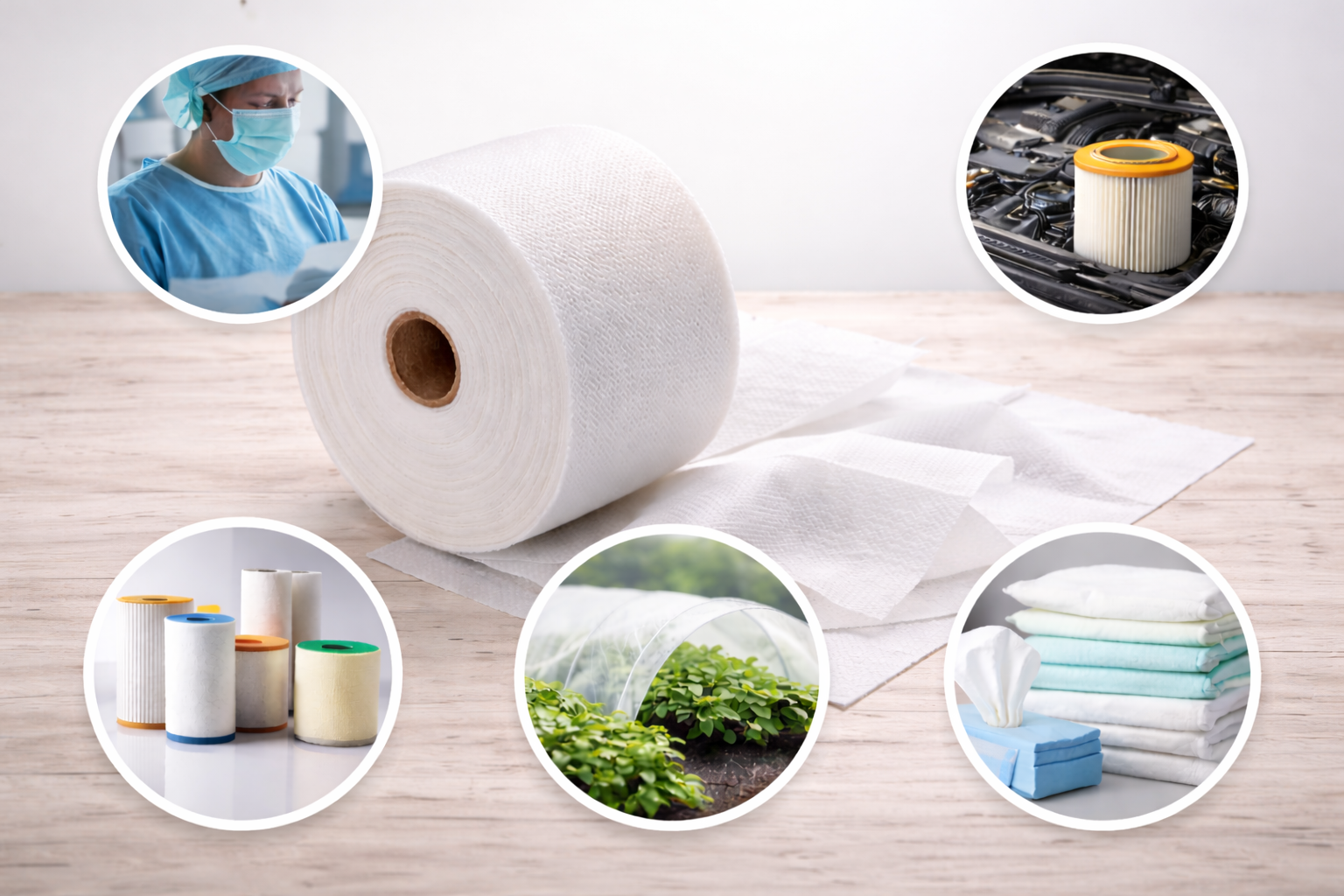
What Are the Uses of Nonwoven Fabric? Practical Applications and Industry Examples
Nonwoven fabrics are versatile materials used across healthcare, hygiene, filtration, automotive, ag
20.02.2026
Read Article -

Types of Non-Woven and Their Uses: Applications, Manufacturing Methods, and Industry Examples
Nonwoven fabrics are engineered materials made by bonding fibres rather than weaving them together.
06.02.2026
Read Article -

What Are Biodegradable Materials and Why Do They Matter?
What biodegradable materials are, how they work, real-world examples, and why they are becoming non-
09.01.2026
Read Article -
What is Recyclable Nonwoven Fabric and Why is it Important?
That’s where recyclable nonwoven fabric comes in. It addresses a real problem. High-volume disposa
14.01.2026
Read Article -
Uses of Non Woven Fabric: 15 Practical Applications
Explore the top uses of non woven fabric across medical, hygiene, filtration, automotive, agricultur
11.12.2025
Read Article -
Why Use Nonwovens in Medical and Healthcare?
Nonwovens are used in medical and healthcare because they solve the real constraints of modern care:
15.12.2025
Read Article -
Dry Wipes Non Woven Fabric. Uses, Types and Benefits
Learn what dry wipes non woven fabric is, its types, materials, manufacturing process, applications,
25.12.2025
Read Article -
Non Woven Fabric Manufacturer | Top Suppliers & Uses Guide
Looking for a trusted non woven fabric manufacturer? Explore leading global suppliers, including Eli
24.12.2025
Read Article -
Top 10 Medical Nonwoven Fabric Exporters Trusted by Global Healthcare Brands
Discover the top medical nonwoven fabric exporters trusted worldwide. Explore quality, applications
16.12.2025
Read Article -
Cellulose Based Nonwoven Fabric | Eco Friendly Innovation
Explore the benefits of cellulose-based nonwoven fabric—biodegradable, soft, and sustainable. Idea
19.11.2025
Read Article -
Beautyworld Dubai: Discovering New Opportunities for Elixrr
Exploring innovative trends and partnerships at Beautyworld Dubai, uncovering exciting growth opport
07.11.2025
Read Article -
Green Nonwoven Technology: Sustainable Innovation in Nonwoven Fabrics
Learn how green nonwoven technology uses eco-friendly materials and energy-efficient manufacturing t
30.10.2025
Read Article -
Types of Nonwoven Fabric and Their Uses in 2025
Explore the 7 main types of nonwoven fabric—spunbond, meltblown, spunlace, and more. Learn how eac
28.10.2025
Read Article -

Biodegradable Nonwoven Fabric: The Future of Sustainable Textiles
Biodegradable nonwoven fabrics are reshaping industries with eco-friendly performance and natural de
28.10.2025
Read Article -
Best Non Woven Fabric Manufacturers in India (2025 Edition)
Discover the top 10 non woven fabric manufacturers in India. Explore eco-friendly, high-quality opti
28.10.2025
Read Article -
Top 10 Applications of Non-Woven Fabrics in 2025 — And Why the Market Is Booming
Top 10 Applications of Non-Woven Fabrics in 2025 — And Why the Market Is Booming
20.05.2025
Read Article -

Reinventing Wipes: How Sustainable Nonwovens Are Reshaping the Industry
Elixrr explores how next-generation sustainable nonwovens, from wet-laid spunlace to carded-pulp tec
21.10.2025
Read Article -
Woven Fabric Material Guide: Composition, Types & Common Applications
Explore woven fabric materials—learn their composition, major types, and everyday applications in
09.10.2025
Read Article -
Non Woven Polypropylene Fabric: Uses, Strengths & Comparison with Woven Fabric
Non woven polypropylene (PP) fabric has become one of the most widely used materials across industri
09.10.2025
Read Article -
What Is Knitted Woven Fabric? Types, Techniques & Benefits
Knitted woven fabric is a hybrid textile that blends the structural strength of woven fabrics with t
16.10.2025
Read Article -
Non Woven vs Woven Fabrics: Key Differences & When to Use Each
Non Woven vs Woven Fabrics: Key Differences & When to Use Each
18.09.2025
Read Article -
Non Woven Polypropylene Fabric: Uses, Strengths & Comparison with Woven Fabric
Non Woven Polypropylene Fabric: Uses, Strengths & Comparison with Woven Fabric
19.09.2025
Read Article -
Spunbond Non Woven Fabric: How It’s Made and Where It’s Used
Explore the manufacturing process and applications of spunbond non woven fabric. Learn why it’s wi
11.09.2025
Read Article -
Polyester Non Woven Fabric: Benefits, Properties & Industrial Uses
Discover the benefits and industrial uses of polyester non woven fabric. Learn about its properties,
03.09.2025
Read Article -

What Is Non Woven Fabric? Definition, Manufacturing & Applications
Explore what non woven fabric is, how it’s made, and where it’s used. Learn about its unique pro
04.09.2025
Read Article -

Types of Nonwoven Fabric – A Complete Guide to Nonwoven Fabric
Learn about different types of nonwoven fabrics, their properties, manufacturing methods, and indust
20.05.2025
Read Article -
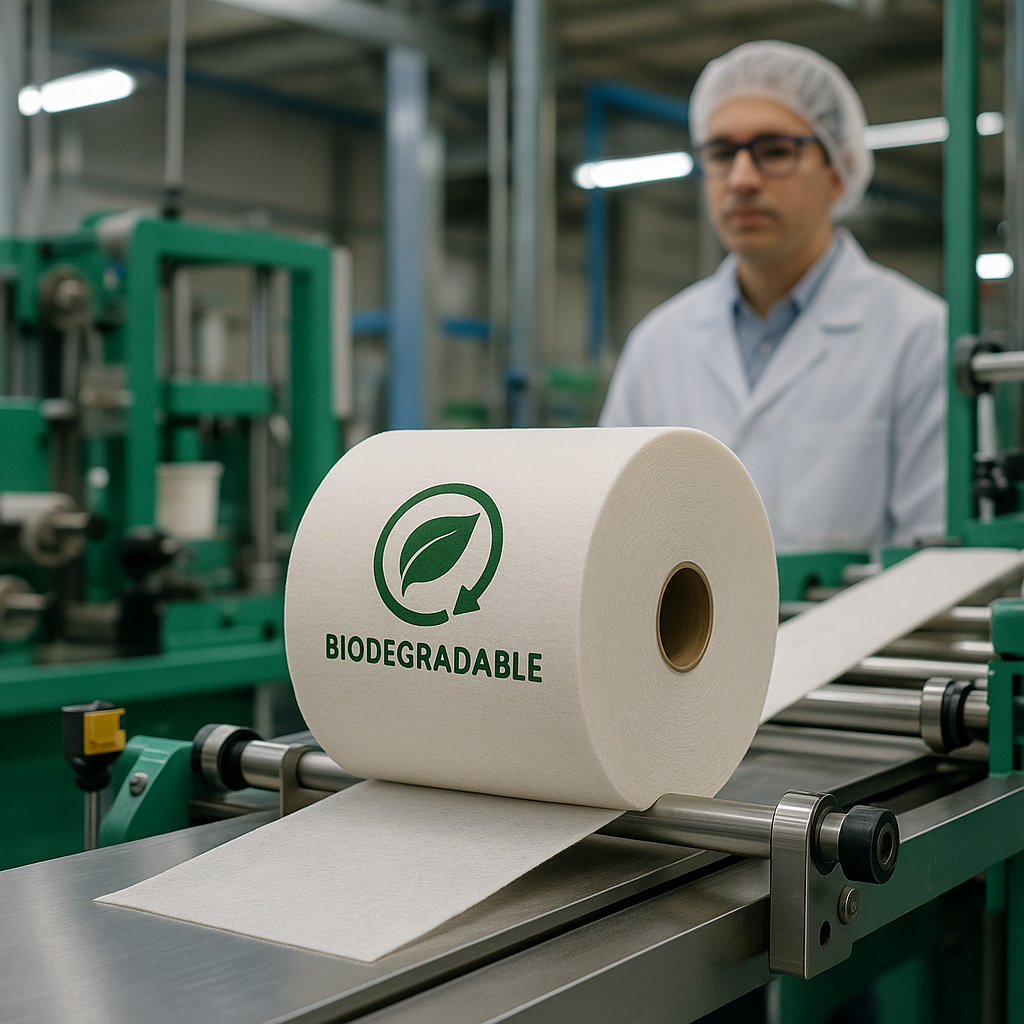
Redefining the Future of Wipes: Insights from WOW 2025
Elixrr Nonwovens shares key takeaways from WOW 2025, highlighting sustainable innovations, energy-ef
29.07.2025
Read Article -

Sustainability is Elixrr’s Focus at Global Wipes Markets at Wow 2025
Visit the WOW conference and see our proprietary nonwoven wipes fabrics Enduraspun, Ecopun and Softs
03.07.2025
Read Article -

Inside Elixrr: A Conversation with Subir Barman on the Future of Nonwovens and Next-Gen Manufacturing
As the global demand for sustainable, high-performance materials accelerates, Elixrr Nonwovens conti
20.05.2025
Read Article -
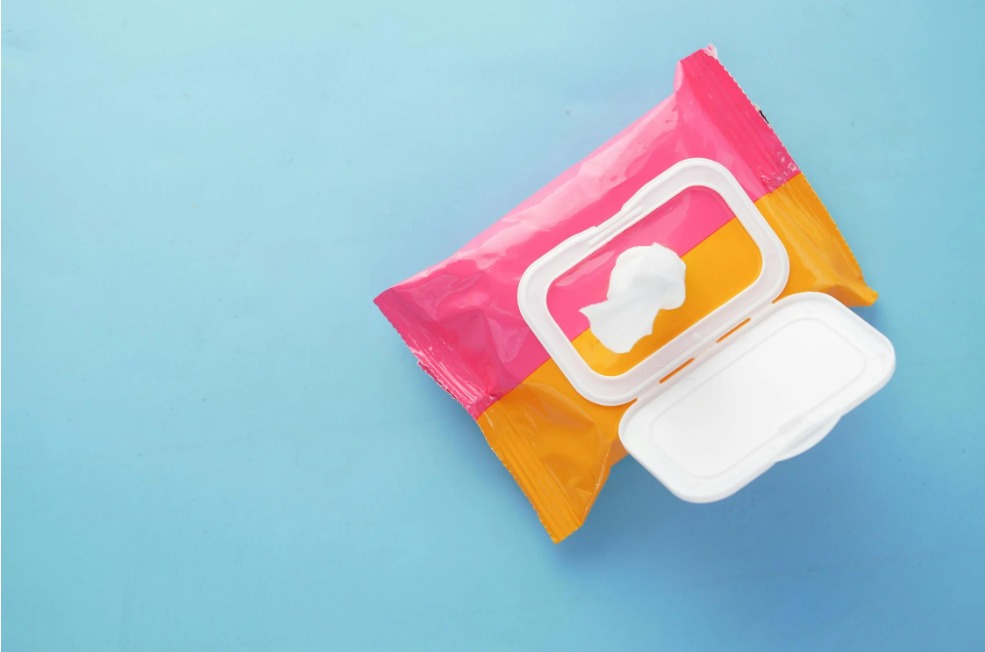
Spunlace Nonwoven Fabrics: Explore Characteristics and Benefits
In a world where hygiene, safety, and softness intersect, material science has a quiet hero, spunlac
20.05.2025
Read Article -
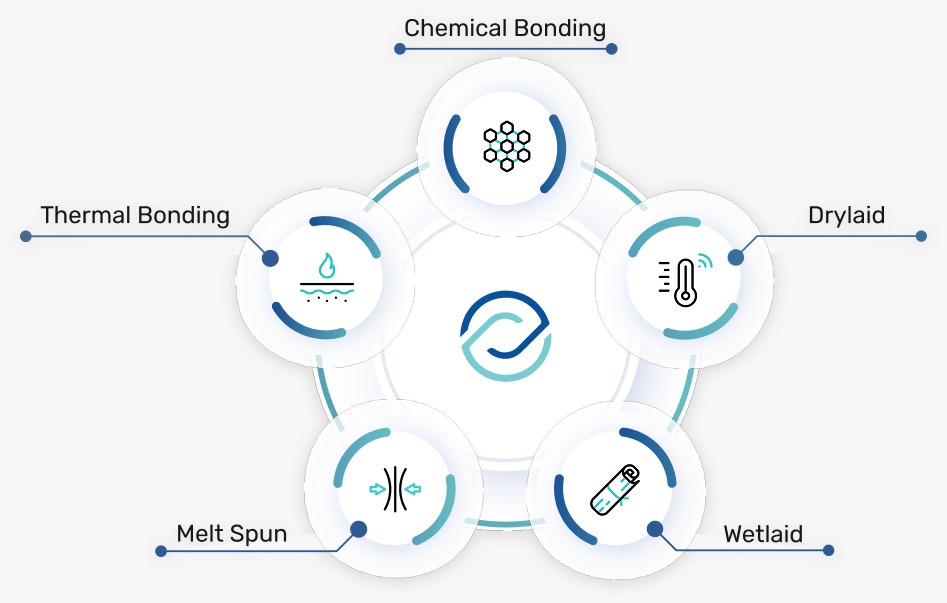
PentaTech™ by Elixrr Nonwovens: Pioneering the Future of High-Performance and Sustainable Nonwovens
Innovation in nonwoven materials isn’t optional anymore. It’s what drives progress. As industrie
07.05.2025
Read Article -
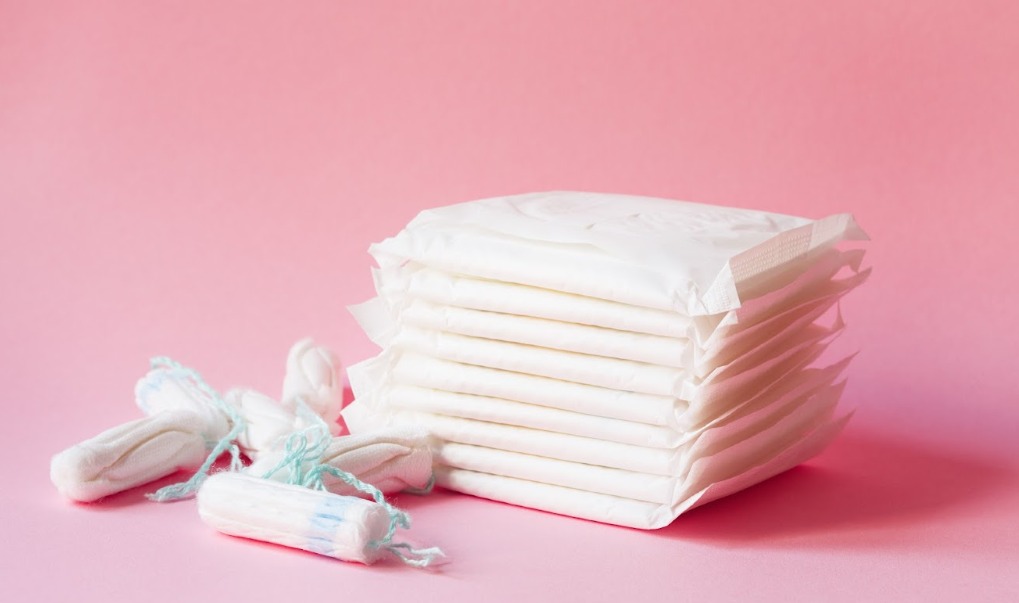
Is Non-Woven Fabric Biodegradable? Exploring the Eco-Friendliness of Non-Wovens
Every business is searching for environmentally appropriate substitutes as the globe moves towards s
02.05.2025
Read Article -
What Are Non Woven Fabrics Used For? Key Examples & Features
In an era defined by performance, precision, and sustainability, materials are no longer just passiv
28.04.2025
Read Article -
Is Leather a Non-Woven Fabric? Let’s Unravel the Truth!
Leather embodies luxury, durability, and style. However, in a society increasingly focused on novel
21.04.2025
Read Article -
Can You Heat Press Non-Woven Fabric? A Complete Guide
The textile industry has embraced heat pressing. Adding colourful graphics to cloth banners or perso
18.04.2025
Read Article -
Can Non-Woven Fabric Be Washed? Let’s Unravel the Truth
Non-woven fabrics are used in a variety of applications, including medical masks, reusable shopping
14.04.2025
Read Article -

Non Woven Fabrics Vs Woven Fabrics: Choose the Right Fabric
If you have ever asked yourself why some materials are all about robustness while others are cutting
11.04.2025
Read Article -

Top 10 Non-Woven Fabric Manufacturers in Europe
The non-woven fabric industry has grown significantly in Europe, driven by the demand for high-quali
27.06.2025
Read Article -

Non-Woven Fabric: Moisture Absorption, Properties & Uses
When it comes to fabric selection, understanding the properties of different materials is essential,
04.04.2025
Read Article -

Types of Fabric: A Beginner Comprehensive Fabric Guide | 2025
Fabrics are the foundation of countless industries and everyday life, influencing everything from th
31.03.2025
Read Article -

What are Non-Woven fabrics?
India has always had a rich relationship with textiles. From the fine muslin that adorned royalty to
28.03.2025
Read Article
-
Explore Recent Blogs
Biodegradable Nonwoven Fabric: Materials, Benefits & Sustainability Impact
Sustainability has moved on from being a preference to a specification in nonwoven manufacturing. Bi
Read More
Lint Free Wipes: What Makes Them Different?
In precision cleaning, the wipe you choose can be as critical as the process itself. Lint free wipes
Read More
Surface Cleaning Wipes: Material Guide and Applications
Surface cleaning wipes are a hygiene essential across household, healthcare, dental, and industrial
Read More
INDEX 2026 Geneva: Everything You Need to Know About the World's Biggest Nonwovens Trade Show
INDEX 2026 is the world's largest nonwovens trade show, held every three years at Palexpo Geneva. Th
Read More

Weave Your Success with Our Revolutionary Fabrics
Power your business with Elixrr's cutting-edge nonwoven fabric solutions. Eco-friendly, customizable, and engineered for excellence—because innovation starts with the right foundation.

Industrial Wipes: Types and Key Benefits
Every factory floor, workshop, and cleanroom runs on something smaller than it looks: the right wipe, used at the right moment. Industrial wipes don't make headlines the way big equipment does, but anyone who has tried to clean a precision surface with the wrong cloth already knows how much rides on this small choice. Performance in an industrial setting is never accidental. It is the result of care taken at every step, starting with the material in your hand.
This guide covers what industrial wipes are, the types that matter, where they perform, and how to pick the right one for the job.
Key Takeaways
● Different industrial environments require specific wipe types, from heavy-duty wipes for machinery to lint-free cleanroom wipes for sensitive settings.
● Material choice, absorbency, and chemical compatibility are the most important factors when selecting industrial wipes for your facility.
● The market is shifting towards biodegradable and sustainable nonwoven materials, making eco-conscious procurement increasingly viable.
What Are Industrial Wipes?
Industrial wipes are purpose-built cleaning cloths designed for work that ordinary paper towels and household cleaning wipes were never meant to handle. These include heavy grease removal, chemical cleanup, machinery maintenance, precision surface prep, and contamination control in regulated environments.
What sets them apart is the combination of properties they carry in a single material: tensile strength, absorbency, and low lint output, holding up wet or dry, and tolerating solvents without shredding. That is a demanding brief, which is why industrial wipes are almost always engineered from nonwoven fabrics rather than woven textile.
As noted in research on nonwoven industrial wipes, industrial wipes account for approximately 15% of fabricated nonwovens, reflecting their significant and growing role in professional cleaning.
Why They Matter
In an industrial cleaning operation, the wipe is the last contact point between your process and the surface. A wipe that sheds fibers in a semiconductor fab can cost a production batch. One that shreds under solvent costs time. The small but important choice of which industrial wipes to specify compounds across thousands of uses a month.
Types of Industrial Wipes
Not every industrial wipe suits every job. The category breaks down into five practical types.
Heavy Duty Wipes
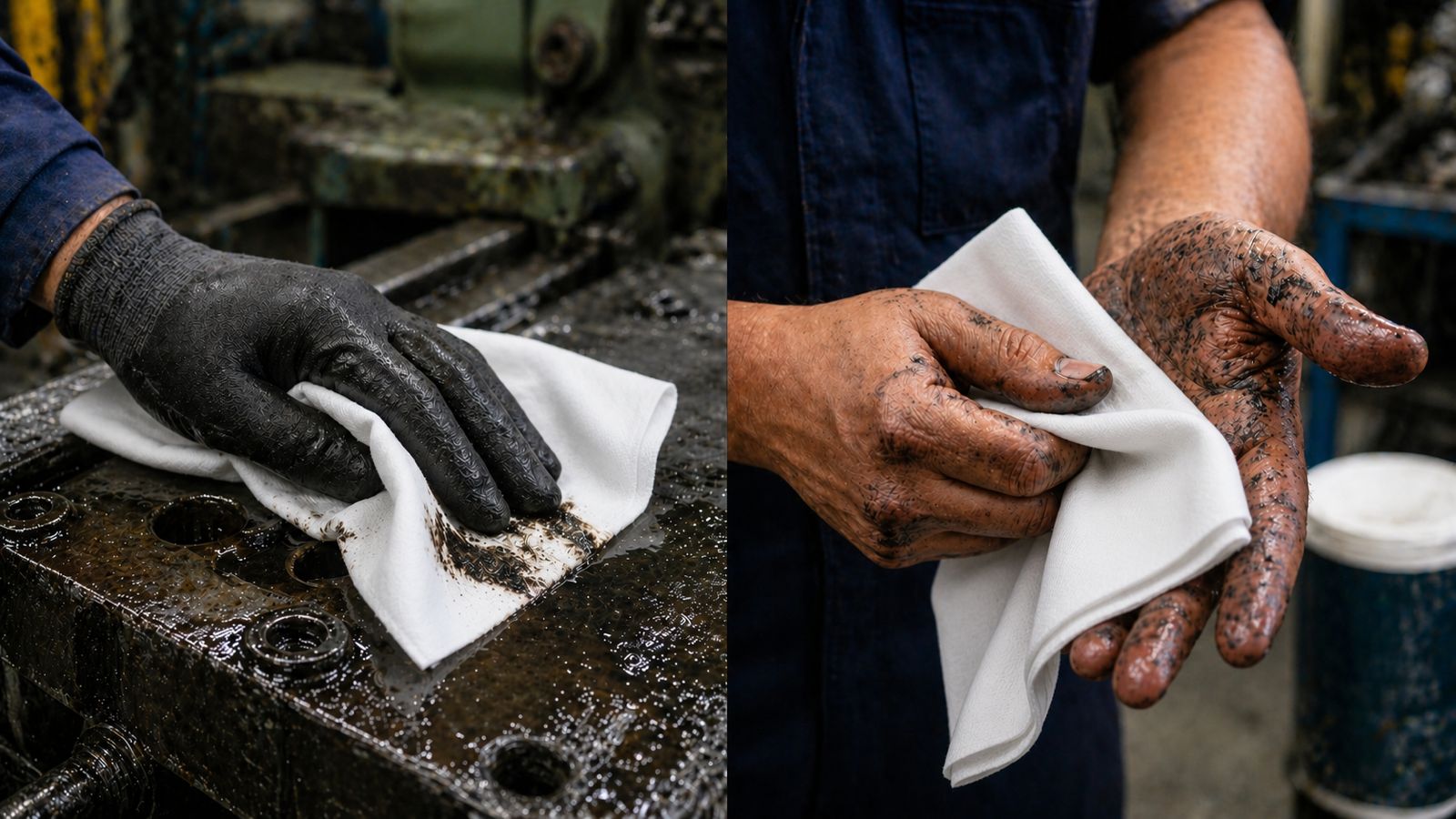
Heavy duty wipes are the workhorses. They are built for oil removal, solvent application, paint prep, and engineering cleaning. Thicker, stronger, and more absorbent than standard cleaning wipes, they must tolerate aggressive use without falling apart. Spunlace nonwoven construction consistently outperforms alternatives here. Industrial hand wipes pre-saturated with degreasers fall in this category and are widely used in automotive workshops.
Industrial Cleaning Wipes
Industrial cleaning wipes is part of the broader category and range from lightweight single-use sheets to heavier perforated rolls. It also includes industrial wet wipes pre-saturated with detergents or solvents, a format growing rapidly across UK and European markets for its speed and consistency.
Clean Room Wipes
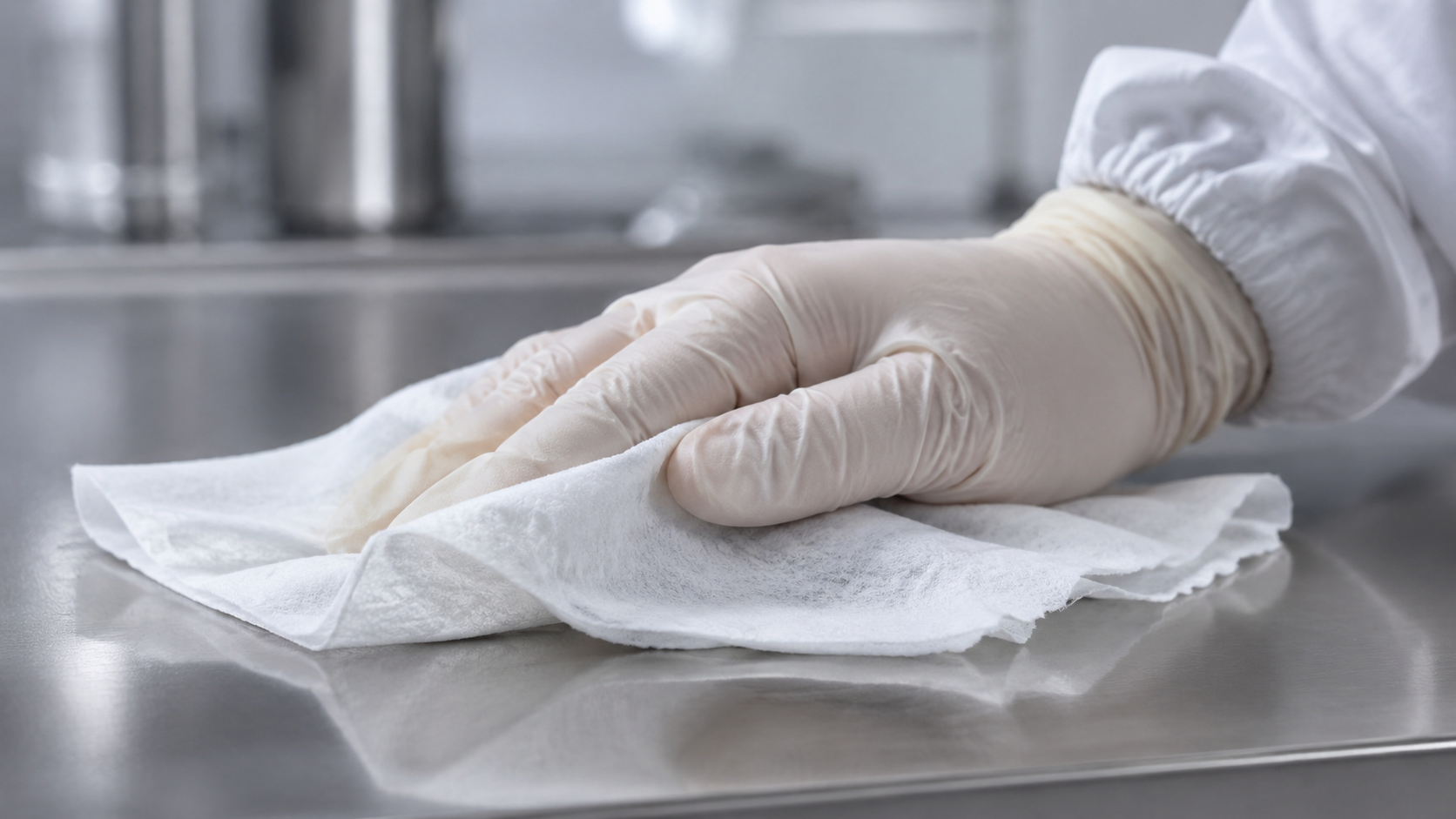
Clean room wipes operate by different rules. In semiconductor manufacturing, pharmaceutical production, and medical device assembly, contamination from the wipe itself is the risk. Clean room wipes are manufactured in controlled environments and engineered for near-zero particle shedding. Spunlace is almost universally chosen here because its binder-free construction does not leach anything onto the surface being cleaned.
Surface Cleaning Wipes
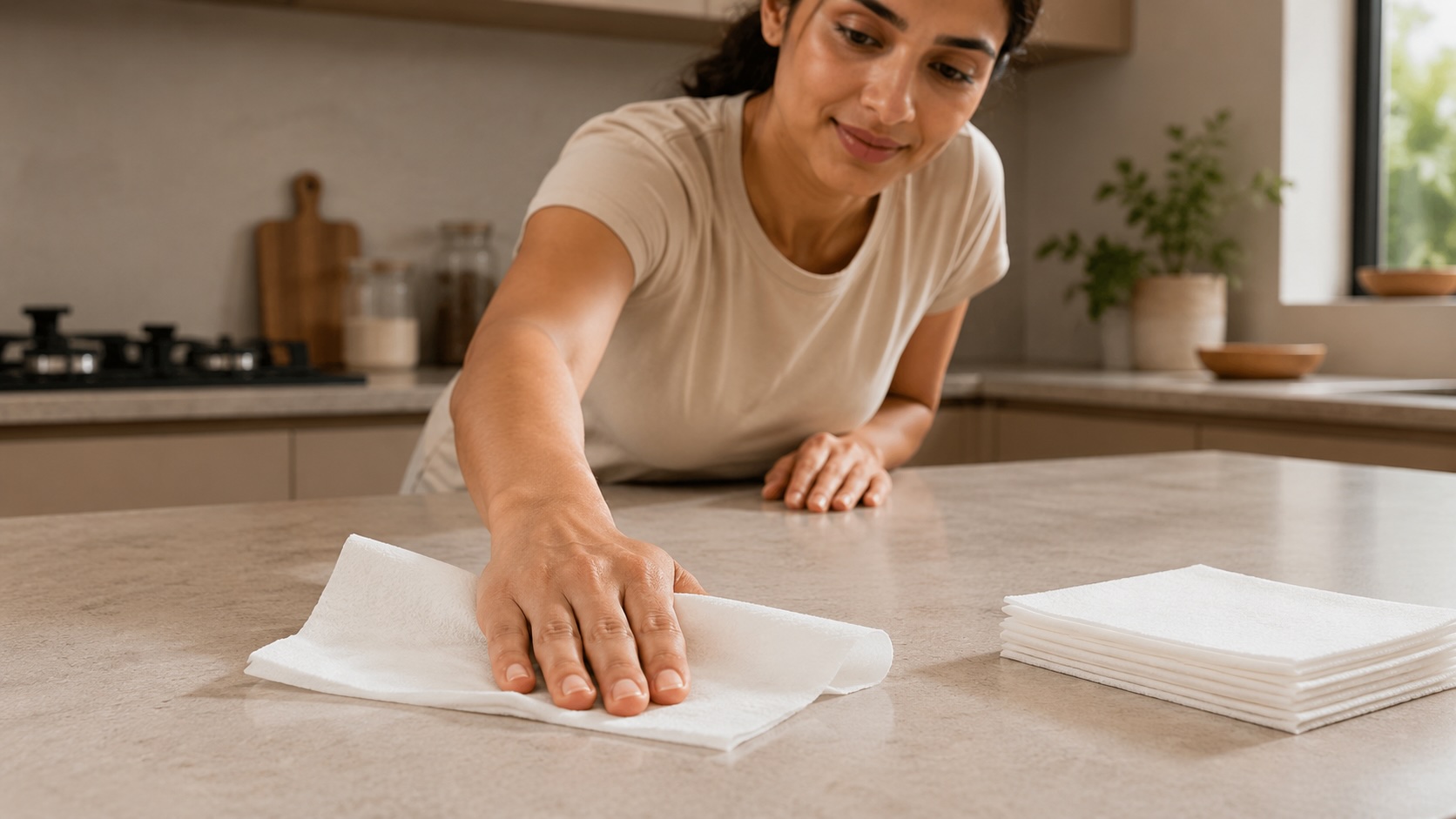
Surface cleaning wipes sit between household and industrial specs. They are suited for counters, panels, tools, and equipment surfaces that need to be clean but not sterile. Industrial facilities use surface cleaning wipes daily across admin areas and light maintenance, where lighter-weight nonwovens offer the right balance of performance and economy. Most facilities choose surface cleaning wipes in dispenser format for ease of use.
Disposable vs Reusable
Most industrial wipes are disposable, as reusing wipes across contaminated surfaces defeats the point. Reusable wipes have a place in polishing and surface prep, but for hygiene and regulatory compliance, single-use remains the default.
Disposable and reusable wipes differ across several key factors:
● Hygiene: Disposable wipes are single-use, preventing cross-contamination, while reusable wipes carry contamination risks if not properly laundered.
● Cost: Disposable wipes have a higher per-unit cost, whereas reusable wipes offer lower long-term material costs.
● Convenience: Disposable wipes are ready to use with no washing required, while reusable wipes need laundering and storage.
● Best use: Disposable wipes are ideal for sterile and precision environments, whereas reusable wipes are better suited for general industrial cleaning tasks.
Key Applications Of Industrial Wipes
Manufacturing and machinery: Production lines generate oil, coolant, swarf, and adhesives that need to be removed quickly. Wipes handle changeovers, spot cleaning, and end-of-shift maintenance.
Automotive and engineering: Brake cleaners, fuel residue, gasket adhesives, bearing grease, among others, are regulars at automotive workshops, demanding heavy-duty wipes rated for solvent compatibility.
Cleanroom environments: Semiconductor fabs, pharmaceutical lines, and medical device production require clean room wipes validated for particle generation.
Food processing: Food plants need wipes that handle protein soil, fats, and sanitising chemicals without shedding. Colour-coded HACCP-compatible wipes dominate these applications. You can explore the range of uses of nonwoven applications across industries.
Benefits of Using Industrial Wipes
Durability: A good industrial wipe stays intact through aggressive use. Tear strength and wet strength are not negotiable.
Cleaning performance: The right wipe does more with less. It uses less solvent, less time, and fewer passes to hit the same surface result.
Lint-free operation: In cleanroom and food applications, fiber shedding is a contamination risk. Spunlace generates almost no lint, which is why it is the default in regulated environments.
Cost effectiveness: Cost per clean, which includes the time, solvent, and rework the wipe saves, is where purpose-built industrial wipes prove their value over paper towels or repurposed rags. See our guide to dry wipes and their benefits.
Materials Used in Industrial Wipes
Industrial wipes are almost entirely made from nonwoven fabrics, because nonwovens let manufacturers engineer precise combinations of absorbency, strength, and surface feel into a single material. Within the category, one construction stands apart.
Spunlace: The Material That Carries the Category
Spunlace nonwoven is produced by directing high-pressure water jets onto a fiber web, mechanically entangling fibers without chemical binders, heat, or adhesives. The result combines textile-like softness, high absorbency, excellent wet strength, and very low lint generation. This is exactly the profile an industrial wipe needs.
As spunlace is binder-free, it releases no chemicals onto the surface it cleans. It can be engineered from viscose, cotton, lyocell, or polyester blends, and tuned to specific chemical and absorbency targets. Moreover, it holds integrity when saturated, and so, it’s the go-to for wet industrial cleaning wipes, cleanroom wipes, and disinfectant applications.
Elixrr's EnduraSpun™ is built on this foundation. It is a spunlace wipe engineered for industrial machinery cleaning, automotive workshops, and commercial facility hygiene.
Other Materials
Polypropylene and polyester appear in lighter-weight wipes where chemical resistance outweighs softness. Pulp-blended fabrics serve absorbency-first formats. Each has its place, but across industrial use cases, spunlace carries the category.
How to Choose the Right Industrial Wipes
Four questions get you to the answer faster than a product catalogue.
What are you cleaning? Oil and grease need absorbency and tear strength. Precision surfaces need lint control. Food zones need hygiene certification.
What solvents are used? Not every nonwoven handles every chemistry. Confirm compatibility before committing to volume.
How critical is lint? For cleanroom wipes and precision work, this is the whole game. For general workshop use, less so.
What format fits your operation? Rolls, sheets, perforated packs, and interfolded dispensers. Surface cleaning wipes are often better dispensed from pop-up canisters than loose packs.
Explore Elixrr's industrial application range to see how this plays out across sectors.
Future Trends in Industrial Cleaning Wipes
The industrial wipes market is projected to grow from approximately USD 6.2 billion in 2025 to USD 9.5 billion by 2034 at a compound annual growth rate of 4.8%, according to recent market analysis. The market is shifting in three directions at once, and buyers looking at cleaning wipes industrial-grade and beyond will see these themes surface across sourcing decisions.
Sustainability
Buyers want biodegradable fibers and reduced plastic content. Spunlace made from lyocell or cotton already delivers this. See our sustainability approach.
Performance
Finer fibers, engineered surface textures, and functional finishes like antimicrobial, hydrophilic, static-dissipative are raising what a single wipe can do.
Traceability
FSC, PEFC, GRS, and ISO 9001 have moved from differentiators to procurement baselines. Buyers want the documentation.
These themes will be on display at INDEX™26, the world's leading nonwovens exhibition in Geneva, 19–22 May 2026. Elixrr exhibits at Booth 1332. Industry context is also tracked by EDANA.
Conclusion
Industrial wipes look simple until you use the wrong one. The right wipe saves time, reduces waste, protects regulated environments, and lowers the real cost of clean. Spunlace nonwoven has become the dominant material for premium industrial wipes because it delivers exactly what the work demands: absorbency, strength, low lint, and chemical compatibility, in a single material.
At Elixrr, we build industrial wipes around a simple idea: care in performance. Care at the fiber, care at the process, care in every roll that leaves the plant. Start with the material, and the rest follows.
Frequently Asked Questions
1. What are industrial wipes used for?
Industrial wipes are used for cleaning machinery, surfaces, tools, and equipment in manufacturing, automotive, cleanroom, and industrial environments where paper towels or household cleaning wipes fail.
2. What are heavy duty wipes?
Heavy duty wipes are strong, durable cleaning wipes built to handle grease, oil, solvents, and tough industrial soil without tearing or shedding.
3. What is the difference between industrial wipes and cleaning wipes?
Industrial wipes are engineered for heavy-duty applications; cleaning wipes are designed for lighter household or office use.
4. What are clean room wipes used for?
Clean room wipes clean sensitive equipment in controlled environments like semiconductor fabs and pharmaceutical plants without introducing lint or contamination.
5. Are industrial wipes reusable?
Some cleaning wipes for industrial use are reusable for polishing, but most are single-use for hygiene and regulatory compliance.
6. What materials are used in industrial cleaning wipes?
Industrial cleaning wipes are typically made from nonwoven fabrics. Spunlace is preferred for absorbency, strength, and low lint, with polypropylene and polyester for chemical-resistance applications.