


Biodegradable Nonwoven Fabric: The Future of Sustainable Textiles
Biodegradable nonwoven fabrics are reshaping industries with eco-friendly performance and natural decomposition. Made from plant-based fibers like PLA and bamboo, they’re ideal for hygiene, medical, and packaging applications. Explore how Elixrr Nonwovens is driving sustainability with biodegradable solutions.
-
Recent Post
-
Why Fibre Ratio Can Change Nonwoven Performance Even When GSM Remains Constant
A buyer lines up two spunlace samples. Both are 50 GSM and the price per square metre is close.A buy
20.06.2026
Read Article -
What Should Be Validated Before Moving From a Nonwoven Trial to Commercial Production?
A trial run that performs well doesn't automatically mean you're ready to commit commercial volume.
14.10.2026
Read Article -
Best GSM For Wet Wipes A Procurement Guide for Choosing the Right Spunlace Fabric
Getting the GSM wrong is one of the most common and most expensive mistakes in wet wipes sourcing.
20.06.2026
Read Article -
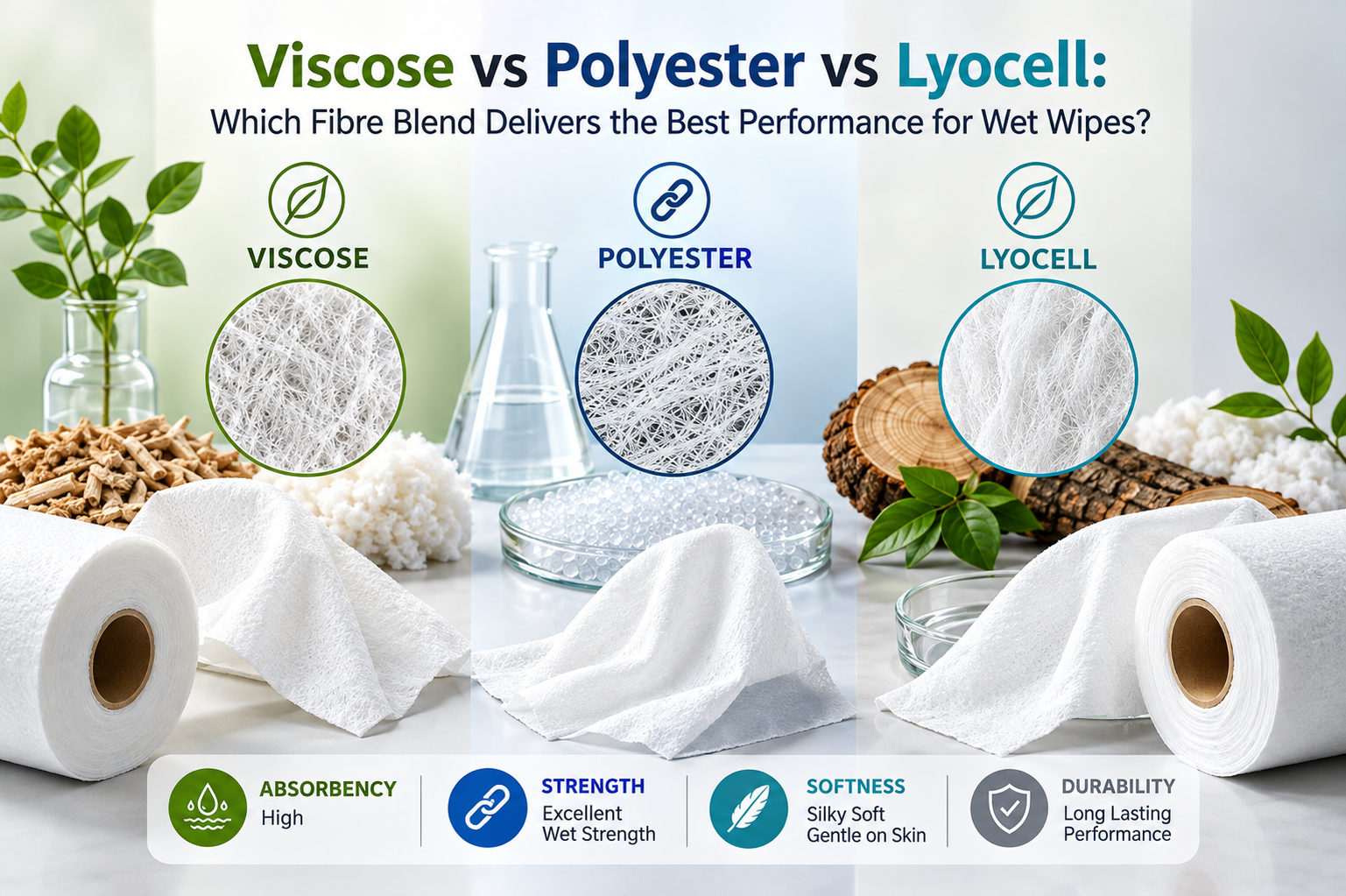
Viscose vs Polyester vs Lyocell: Which Fibre Blend Delivers the Best Performance for Wet Wipes?
Choosing between viscose, polyester, and Lyocell isn't really about picking a "best" fibre. It's abo
22.06.2026
Read Article -
How to Choose the Right Spunlace Nonwoven Fabric Manufacturer for Your Business
Sourcing decisions in the nonwoven category rarely fail because of price. They fail because a buyer
15.09.2026
Read Article -
How Global Wet Wipe Brands Evaluate Nonwoven Fabric Suppliers Before Signing a Contract
Multinational wet wipe brands don't sign with a nonwoven fabric supplier off a single sample and a g
08.09.2026
Read Article - View All Blogs
-
Need nonwoven solutions for your application?
Talk to our team about custom fabrics, sustainability, and product development tailored to your industry.
Explore Recent Blogs
Why Fibre Ratio Can Change Nonwoven Performance Even When GSM Remains Constant
A buyer lines up two spunlace samples. Both are 50 GSM and the price per square metre is close.A buy
Read More
What Should Be Validated Before Moving From a Nonwoven Trial to Commercial Production?
A trial run that performs well doesn't automatically mean you're ready to commit commercial volume.
Read More
Best GSM For Wet Wipes A Procurement Guide for Choosing the Right Spunlace Fabric
Getting the GSM wrong is one of the most common and most expensive mistakes in wet wipes sourcing.
Read More
Viscose vs Polyester vs Lyocell: Which Fibre Blend Delivers the Best Performance for Wet Wipes?
Choosing between viscose, polyester, and Lyocell isn't really about picking a "best" fibre. It's abo
Read More

Weave Your Success with Our Revolutionary Fabrics
Power your business with Elixrr's cutting-edge nonwoven fabric solutions. Eco-friendly, customizable, and engineered for excellence—because innovation starts with the right foundation.

In recent years, the textile and packaging industries have undergone a major transformation — shifting from plastic-based materials to eco-friendly, biodegradable nonwoven fabrics. These innovative materials combine durability, softness, and strength with sustainability, making them ideal for applications in medical, hygiene, agriculture, packaging, and fashion sectors.
With the global movement toward reducing plastic pollution, biodegradable nonwovens are fast becoming the backbone of sustainable manufacturing in 2025 and beyond.
What Is Biodegradable Nonwoven Fabric?
Biodegradable nonwoven fabric is a type of material made from natural or compostable fibers that decompose naturally in soil or water without leaving harmful residues. Unlike traditional polypropylene-based nonwovens, biodegradable ones break down into carbon dioxide, water, and biomass, helping reduce landfill waste and environmental pollution.
Common biodegradable fibers include:
These fibers are bonded together through mechanical, thermal, or chemical processes, creating a durable, breathable, and sustainable fabric.
How Is Biodegradable Nonwoven Fabric Made?
The production process follows these key steps:
Key Benefits of Biodegradable Nonwoven Fabric
1. Environmentally Friendly
These fabrics decompose naturally without releasing microplastics or toxic chemicals — reducing environmental burden.
2. Renewable and Sustainable
Made from plant-based raw materials such as corn, sugarcane, or bamboo, they support a circular economy and reduce dependence on fossil fuels.
3. Safe and Non-Toxic
Ideal for hygiene, baby care, and medical applications as they are skin-friendly and hypoallergenic.
4. High Strength and Durability
Despite being biodegradable, these fabrics retain excellent mechanical properties and dimensional stability.
5. Versatile Applications
Their flexibility, lightweight structure, and absorbent nature make them suitable for multiple industries.
Why the Market for Biodegradable Nonwoven Fabric Is Booming
The global biodegradable nonwoven fabric market is witnessing unprecedented growth due to:
According to recent reports, the market is expected to grow at a CAGR of over 15% from 2024 to 2030, driven by Asia-Pacific and European manufacturers investing in green production lines.
Future of Biodegradable Nonwovens
With technology advancing rapidly, next-gen biodegradable nonwovens will be:
Conclusion
The transition from plastic to biodegradable nonwoven fabric represents more than just a material shift — it’s a commitment to the planet’s future. For manufacturers, adopting these fabrics isn’t just good ethics; it’s also good business in a market where sustainability drives brand preference.
At Elixrr Nonwovens, we’re pioneering the development of high-quality, eco-friendly, and biodegradable nonwoven solutions designed for industries that care about performance and the planet.