


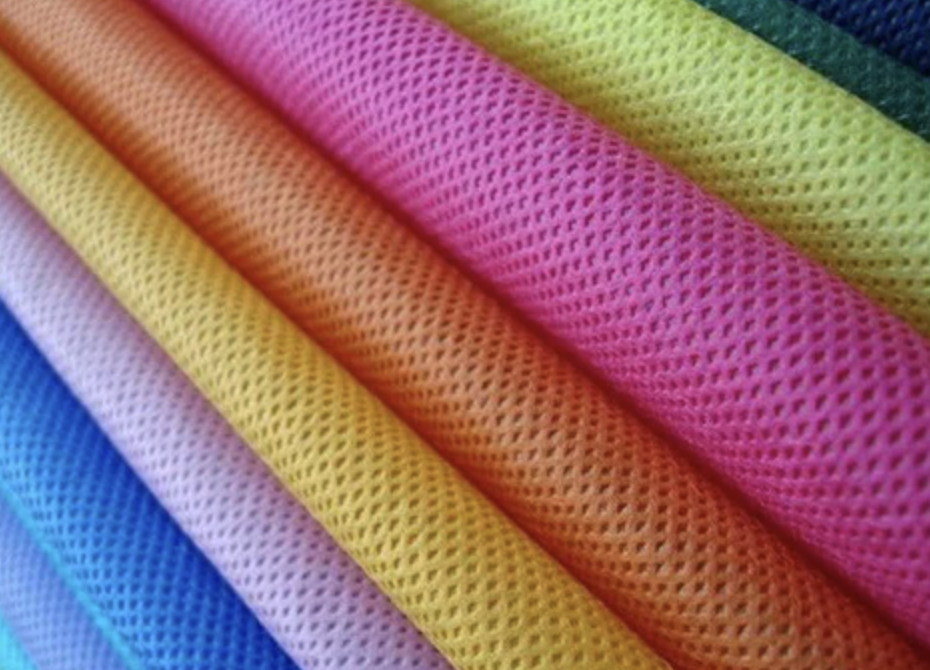
Spunbond Non Woven Fabric: How It’s Made and Where It’s Used
Explore the manufacturing process and applications of spunbond non woven fabric. Learn why it’s widely used in hygiene, agriculture, packaging, and more.
-
Recent Post
-
How to Choose the Right Spunlace Nonwoven Fabric Manufacturer for Your Business
Sourcing decisions in the nonwoven category rarely fail because of price. They fail because a buyer
15.09.2026
Read Article -
How Global Wet Wipe Brands Evaluate Nonwoven Fabric Suppliers Before Signing a Contract
Multinational wet wipe brands don't sign with a nonwoven fabric supplier off a single sample and a g
08.09.2026
Read Article -
100 Percent Plastic Free Nonwovens: What Global Buyers Need to Know in 2026
Learn how plastic-free nonwoven materials are helping brands meet evolving EU and US sustainability
14.08.2026
Read Article -
Why Multi-Application Nonwoven Manufacturing Matters to Global Buyers
Discover why global buyers are choosing multi-application nonwoven manufacturers to simplify procure
07.08.2026
Read Article -
What European Buyers Often Get Wrong About Sourcing Nonwovens from India
Sourcing nonwovens from India is no longer driven by cost alone. This blog explains why European buy
29.07.2026
Read Article -
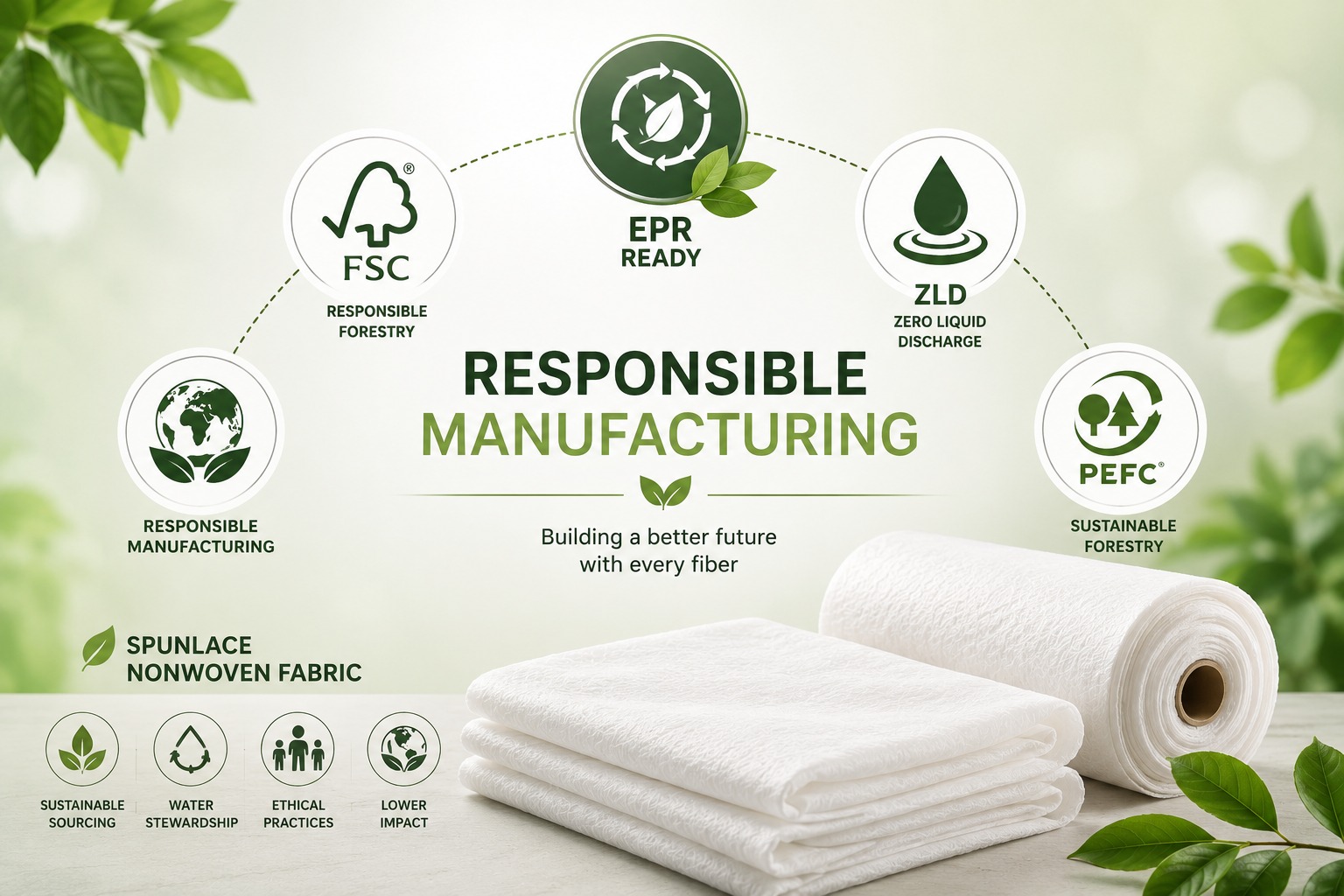
Beyond the Material: What Global Buyers Should Know About Responsible Nonwoven Manufacturing
Responsible nonwoven manufacturing enables global buyers to meet ESG goals through ZLD, FSC and PEFC
22.07.2026
Read Article - View All Blogs
-
Need nonwoven solutions for your application?
Talk to our team about custom fabrics, sustainability, and product development tailored to your industry.
Explore Recent Blogs
How to Choose the Right Spunlace Nonwoven Fabric Manufacturer for Your Business
Sourcing decisions in the nonwoven category rarely fail because of price. They fail because a buyer
Read More
How Global Wet Wipe Brands Evaluate Nonwoven Fabric Suppliers Before Signing a Contract
Multinational wet wipe brands don't sign with a nonwoven fabric supplier off a single sample and a g
Read More
100 Percent Plastic Free Nonwovens: What Global Buyers Need to Know in 2026
Learn how plastic-free nonwoven materials are helping brands meet evolving EU and US sustainability
Read More
Why Multi-Application Nonwoven Manufacturing Matters to Global Buyers
Discover why global buyers are choosing multi-application nonwoven manufacturers to simplify procure
Read More

Weave Your Success with Our Revolutionary Fabrics
Power your business with Elixrr's cutting-edge nonwoven fabric solutions. Eco-friendly, customizable, and engineered for excellence—because innovation starts with the right foundation.

Spunbond non woven fabric has become one of the most versatile materials in modern industries. From surgical masks and crop covers to shopping bags and insulation layers, its presence is everywhere. Known for its lightweight yet durable structure, spunbond fabric is a cost-effective alternative to traditional textiles, providing strength, breathability, and wide usability.
What Is Spunbond Non Woven Fabric?
Spunbond non woven fabric is a nonwoven textile made from polypropylene (PP) granules, which are spun into continuous filaments, laid into a web, and then bonded together. Unlike woven or knitted fabrics, spunbond doesn’t require weaving yarns or knitting loops.
The material has a layered web structure that provides uniform strength, air permeability, and resistance to wear. Compared to other nonwovens like meltblown fabric, spunbond is generally stronger and more durable, while meltblown is finer and used for filtration.
Key Properties of Spunbond Fabric
Spunbond fabric is valued for its combination of unique properties:
How Is Spunbond Fabric Made?
The spunbond manufacturing process is a highly efficient method of converting raw polymers into finished fabric. It involves the following steps:
Polymer Feeding
Polypropylene granules are fed into the extruder. Sometimes additives like UV stabilizers or colorants are mixed to enhance properties.
Extrusion and Filament Spinning
The polymer is melted and pushed through spinnerets, forming continuous filaments. These fine threads are cooled rapidly to solidify.
Web Formation
The filaments are laid randomly on a moving conveyor belt to create a web structure, ensuring uniform thickness and strength.
Thermal Bonding
Hot rollers apply heat and pressure to bond the fibers together. This step transforms the loose web into a durable fabric sheet.
Finishing and Winding
The fabric is treated with finishing processes such as hydrophilicity, softness, or printing before being rolled for distribution.
Where Is Spunbond Non Woven Fabric Used?
Spunbond non woven fabric has widespread applications across industries:
Advantages of Spunbond Over Other Nonwovens
When compared with other fabrics, spunbond offers distinct benefits:
This makes spunbond an attractive choice where performance, affordability, and adaptability are needed.
FAQs
1. What is the difference between spunbond and meltblown fabric?
Spunbond fabric is stronger and used for structural applications, while meltblown has finer fibers ideal for filtration (e.g., N95 masks).
2. Is spunbond fabric waterproof?
Spunbond fabric is water-resistant but not fully waterproof. With coatings or laminations, it can achieve waterproof properties.
3. Can spunbond be used for medical applications?
Yes, it is widely used in disposable medical products like masks, gowns, and drapes due to its hygiene and breathability.
4. Is spunbond fabric biodegradable?
Traditional polypropylene spunbond is not biodegradable, but newer eco-friendly and biodegradable options are available.
5. What GSM is ideal for agricultural applications?
Agricultural uses typically range from 15 GSM to 60 GSM, depending on the crop and climate conditions.