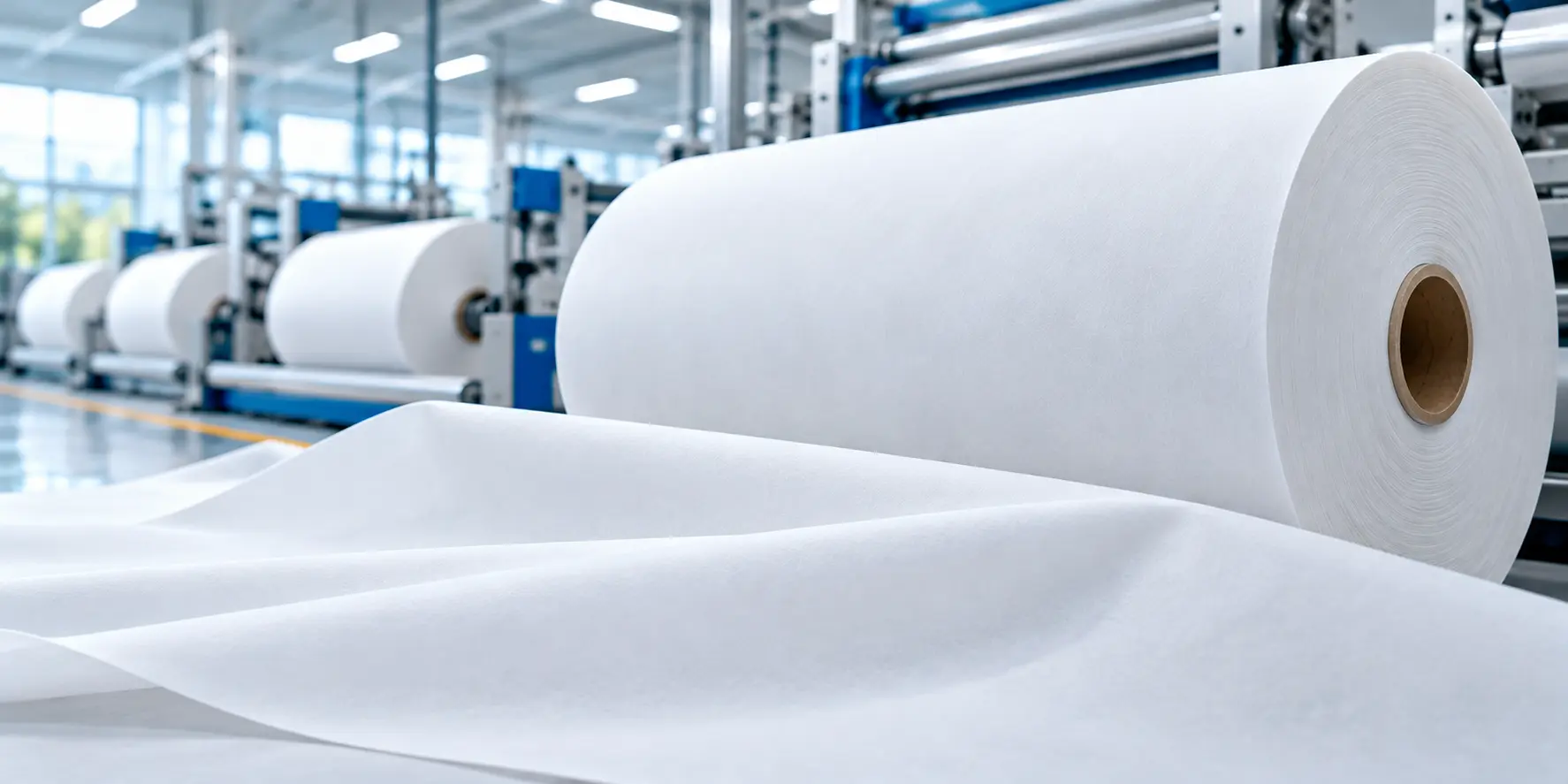
Nonwoven fabric is an engineered textile material made by forming fibres or filaments into a web and bonding or entangling them through mechanical, thermal, or chemical processes rather than conventional weaving or knitting. Its composition, manufacturing method and bonding technique determine properties such as strength, softness, absorbency, porosity and durability.
The main types of nonwoven fabric include spunbond, spunlace, meltblown, needle-punched, airlaid and wet-laid materials. Each type offers different characteristics for applications across hygiene, healthcare, filtration, agriculture, and industrial manufacturing.
Choosing the right nonwoven material depends on the intended application, required performance, fibre composition, and production process. Elixrr Nonwovens offers spunlace nonwoven fabric solutions for relevant applications. Explore the available options to identify materials suited to your requirements.
What Is Nonwoven Fabric?
Nonwoven fabric is a sheet or web of fibres or filaments that are assembled and bonded without the conventional weaving or knitting of yarns. Depending on the manufacturing process, the fibres may be mechanically entangled, bonded using heat, or joined with chemical binders.
In simple terms, woven fabrics are made by interlacing yarns, knitted fabrics are made by forming interlocking loops, and nonwoven fabrics are produced by forming and bonding a fibre web.
Nonwoven vs. Woven vs. Knitted Fabric
- Nonwoven fabric: Fibres or filaments are formed into a web and bonded using suitable manufacturing techniques.
- Woven fabric: Yarns are interlaced in a structured pattern, typically using warp and weft yarns.
- Knitted fabric: Yarns are formed into interconnected loops.
These construction methods produce different performance characteristics. The best choice depends on the required strength, flexibility, absorbency, breathability, durability and end use.
Key Characteristics of Nonwoven Fabrics
Nonwoven materials can be engineered to meet a wide range of performance requirements. Their characteristics depend on the raw materials, web formation, bonding method and finishing treatments.
Common characteristics include:
- Lightweight construction: Many nonwoven materials provide useful performance without adding excessive weight.
- Adjustable strength: Fibre selection and bonding methods influence tensile strength and resistance to tearing.
- Porosity and breathability: Web structure can be designed to support airflow or fluid passage where required.
- Softness and absorbency: Fibre composition and manufacturing methods influence surface feel and liquid-handling properties.
- Customisable thickness: Production parameters can be adjusted to achieve different thicknesses, densities and textures.
- Application-specific resistance: Coatings, laminations and other treatments can improve resistance to moisture, chemicals or other environmental conditions where appropriate.
Not every nonwoven fabric has all these characteristics. Material selection should be based on the specifications required for the intended application.
How Is Nonwoven Fabric Manufactured?
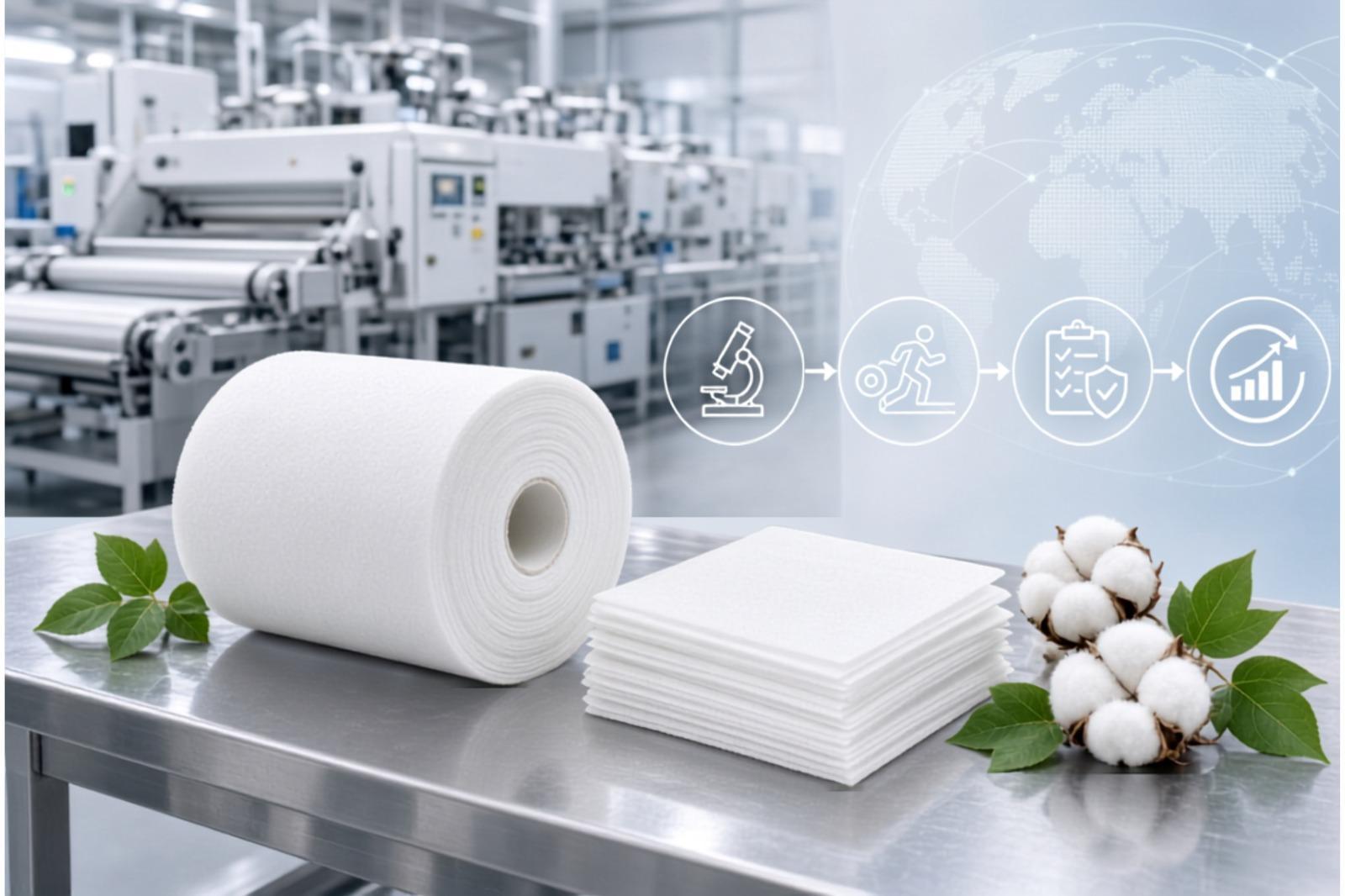
Nonwoven manufacturing generally involves three stages: web formation, web bonding, and finishing. The exact sequence and processes depend on the type of fabric being produced.
1. Web Formation
During web formation, fibres or filaments are arranged into a sheet or web.
- Dry-laid: Fibres are opened, blended, and distributed to form a web.
- Wet-laid: Fibres are dispersed in a liquid, usually water, and deposited onto a forming surface.
- Airlaid: Fibres are dispersed through air and collected to create a web.
- Spunbond web formation: Continuous filaments are produced from a polymer melt, drawn and laid into a web.
2. Web Bonding
The web is bonded to provide the required integrity and performance.
- Mechanical bonding: Fibres are physically entangled through processes such as needlepunching or hydroentanglement.
- Thermal bonding: Heat bonds suitable thermoplastic fibres or components within the web.
- Chemical bonding: Binders are applied to join fibres and stabilise the structure.
Different combinations of web formation and bonding techniques produce distinct nonwoven materials.
3. Finishing Techniques
Finishing treatments can modify the surface or functional properties of the fabric.
Common techniques include coating, lamination, printing, embossing, and other application-specific treatments. The selected treatment depends on the desired performance, appearance, and end use.
What Are the Main Types of Nonwoven Fabric?
Different nonwoven processes produce materials with different structures and performance characteristics.
1. Spunbond Nonwoven Fabric
Spunbond nonwovens are produced by forming continuous polymer filaments into a web and bonding them together. The process is commonly used to manufacture lightweight materials with useful strength and consistency.
Typical applications include hygiene products, agricultural covers, packaging, and selected medical or industrial products, depending on material specifications.
2. Spunlace Nonwoven Fabric
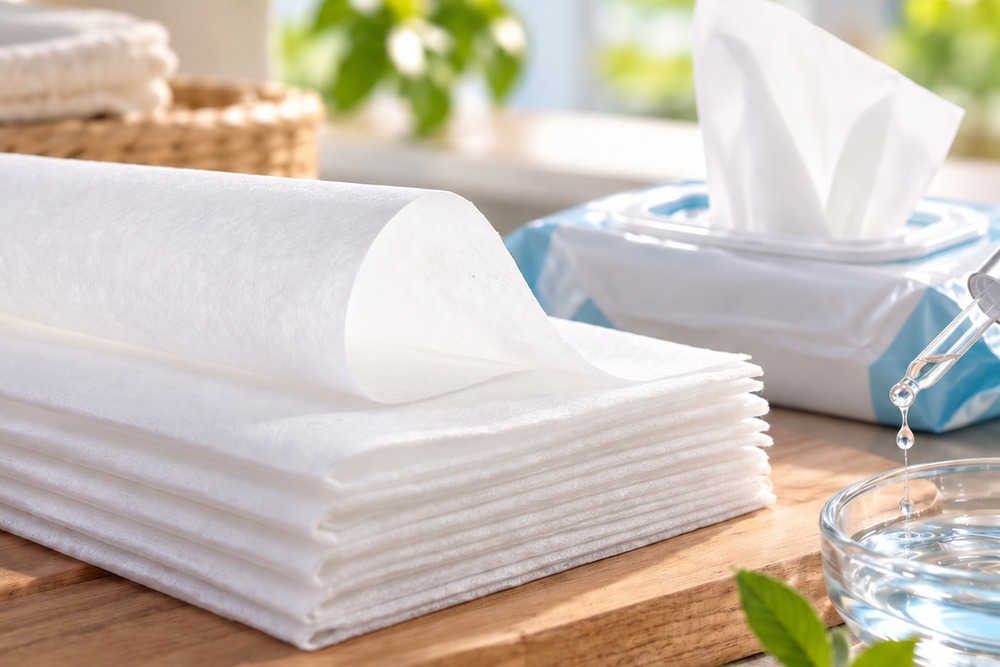
Spunlace, also called hydroentangled nonwoven fabric, is manufactured by entangling fibres using high-pressure water jets. The process can produce soft, flexible materials suitable for applications requiring a textile-like feel.
Common applications include wipes, personal care products and selected healthcare or industrial cleaning products, depending on fibre composition and product requirements.
Explore Elixrr's spunlace nonwoven fabric solutions to learn more about relevant material options.
3. Meltblown Nonwoven Fabric
Meltblown materials are produced by attenuating a polymer melt into fine fibres using high-velocity air. The resulting web can provide fine filtration performance when designed for the relevant particle sizes, airflow, and operating conditions.
Applications include filtration media and selected protective or hygiene products. Performance depends on the material construction and testing requirements.
4. Needle-Punched Nonwoven Fabric
Needle-punched nonwovens are produced by mechanically entangling fibres with barbed needles. This process can create robust materials for applications requiring bulk, dimensional stability or resistance to mechanical stress.
Typical applications include geotextiles, automotive components, carpets and industrial materials.
5. Airlaid Nonwoven Fabric
Airlaid materials are formed by dispersing fibres through air and collecting them into a web. Depending on fibre selection and bonding method, airlaid nonwovens can offer useful absorbency and bulk.
Applications include selected absorbent hygiene products, wipes and specialty materials.
6. Wet-Laid Nonwoven Fabric
Wet-laid nonwovens are produced by dispersing fibres in a liquid and depositing them onto a forming surface. The method can help distribute suitable short fibres uniformly across a web.
Applications include selected filtration media, specialty papers and technical nonwoven products.
7. SMS Nonwoven Fabric
SMS stands for spunbond-meltblown-spunbond. It is a multilayer structure that combines spunbond layers with a meltblown layer to achieve a balance of mechanical integrity and barrier or filtration properties.
SMS materials are used in selected hygiene, medical, and protective applications. Suitability depends on the product design and applicable performance testing.
Applications of Nonwoven Fabric
Nonwoven materials are used across multiple industries because their properties can be tailored to different functional requirements.
Medical and Healthcare
Applications include selected surgical gowns, drapes, caps, masks, and other medical products. Materials intended for clinical use must meet the relevant performance and regulatory requirements.
Hygiene and Personal Care
Nonwovens are used in diapers, sanitary products, adult incontinence products, wipes and other hygiene applications. Fibre composition, softness, absorbency and fluid-handling performance are important selection factors.
Agriculture
Selected nonwoven materials are used in crop covers, weed-control barriers and other agricultural applications. Required durability, permeability and exposure conditions influence material selection.
Filtration
Nonwoven media can be used in air, liquid and industrial filtration. Fibre diameter, pore structure, filtration efficiency and pressure drop are important performance considerations.
Construction and Geotextiles
Applications include selected insulation components, roofing products and geotextiles used for separation, filtration, drainage or soil stabilisation.
Automotive and Transportation
Nonwovens are used in selected interior components, acoustic insulation, trunk liners and filtration products. Requirements vary according to mechanical, thermal and acoustic performance needs.
Packaging
Certain nonwoven materials are used in reusable bags, protective packaging, and specialty packaging products. Suitability depends on the required strength, finish, durability, and environmental considerations.
Advantages of Nonwoven Fabric
Nonwoven fabrics offer several potential advantages depending on their construction and intended use.
- Manufacturing flexibility: Different processes support a broad range of material structures.
- Tailored performance: Fibre selection and bonding techniques can be adjusted to meet specific requirements.
- Lightweight design: Many nonwovens offer useful functional performance at relatively low weight.
- Application versatility: Materials are available for hygiene, healthcare, filtration, agriculture, and industrial uses.
- Production efficiency: Certain nonwoven processes can manufacture webs directly from fibres or polymer filaments without conventional yarn weaving or knitting.
Environmental performance should be evaluated separately. Recyclability, biodegradability, and overall environmental impact depend on the material composition, additives, product design, available waste-management infrastructure, and disposal conditions.
For more information, explore our article on biodegradable nonwoven fabric.
Frequently Asked Questions About Nonwoven Fabric
What raw materials are used in nonwoven fabric?
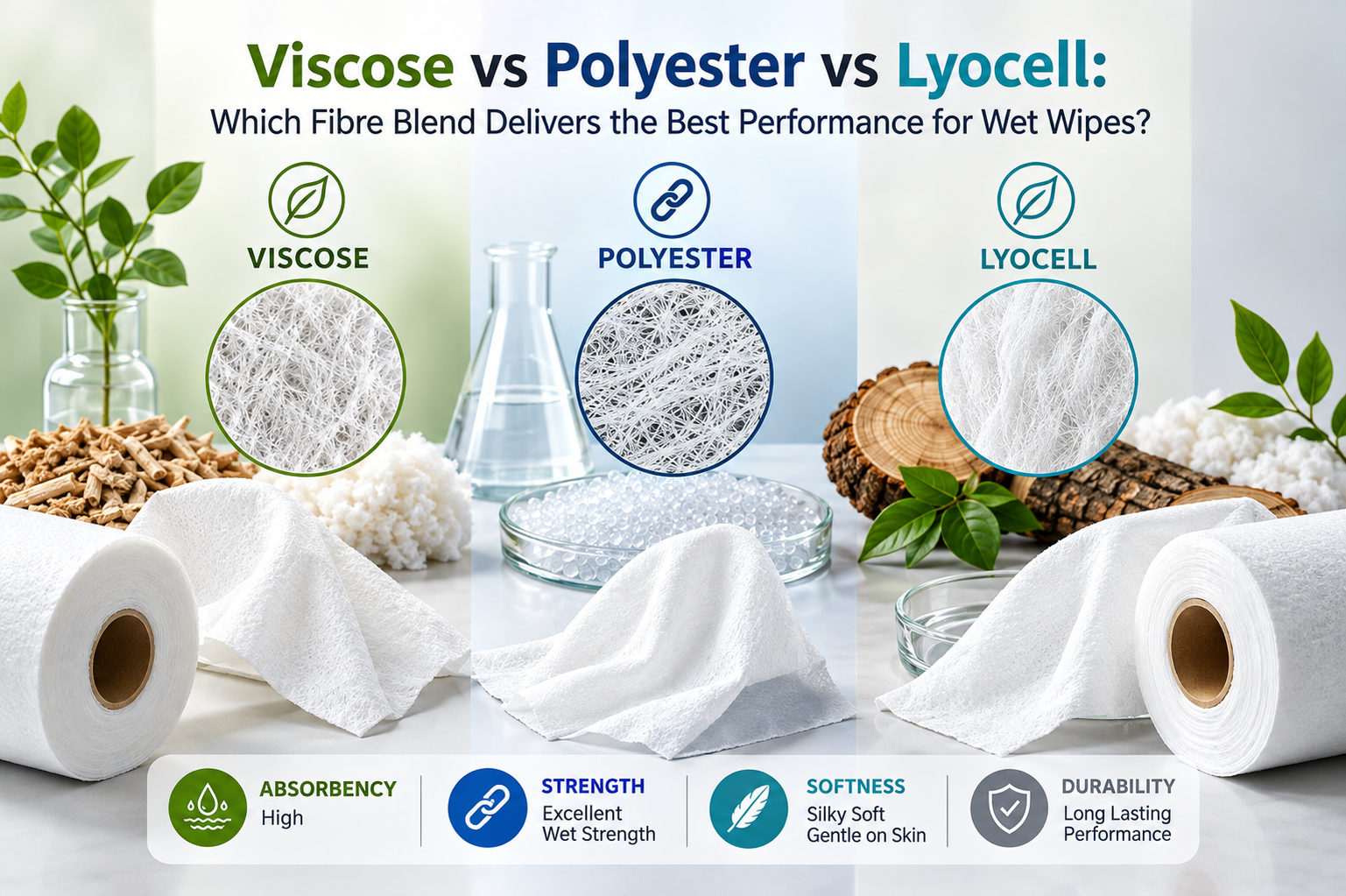
Common raw materials include polypropylene (PP), polyester (PET), viscose and other regenerated cellulose fibres. Cotton and other natural fibres may also be used in suitable processes. The choice depends on the required properties, manufacturing method and intended application.
Learn more about nonwoven polypropylene fabric.
Is nonwoven fabric waterproof?
Not necessarily. Many nonwoven fabrics are porous and allow air or liquids to pass through. Water resistance or waterproof performance may be achieved through suitable coatings, laminations or material constructions, but the result depends on the product design and testing.
Is nonwoven fabric environmentally friendly?
The environmental impact of nonwoven fabrics depends on their raw materials, manufacturing processes, product lifespan and disposal method. Some nonwovens may be recyclable or designed for biodegradation under specific conditions, but these properties cannot be assumed from natural or bio-based fibre content alone. Material composition and relevant testing should be assessed before making environmental claims.
What are the disadvantages of nonwoven fabric?
Potential limitations include application-dependent tensile strength, abrasion resistance, dimensional stability, or durability. Some products are designed for single use, while others are made for longer service life. The limitations depend on the material and manufacturing process.
Can nonwoven fabric be recycled?
Some nonwoven fabrics can be recycled when their material composition, construction, and local recycling infrastructure permit it. Mixed fibres, binders, coatings and contamination may complicate recycling.
Read more about recyclable nonwoven fabric.
What is the difference between spunbond and spunlace fabric?
Spunbond fabric is made by forming continuous polymer filaments into a web and bonding them. Spunlace fabric is made by entangling fibres with high-pressure water jets. The two processes produce different material structures and are selected according to the required properties and application.
Explore Nonwoven Fabric Solutions from Elixrr
Selecting the right nonwoven material starts with understanding the intended application, performance requirements, and available material options.
Explore Elixrr's spunlace nonwoven fabric range or contact our team to discuss your material requirements and identify suitable solutions.





Nonwoven fabric is an engineered textile material made by forming fibres or filaments into a web and bonding or entangling them through mechanical, thermal, or chemical processes rather than conventional weaving or knitting. Its composition, manufacturing method and bonding technique determine properties such as strength, softness, absorbency, porosity and durability.
The main types of nonwoven fabric include spunbond, spunlace, meltblown, needle-punched, airlaid and wet-laid materials. Each type offers different characteristics for applications across hygiene, healthcare, filtration, agriculture, and industrial manufacturing.
Choosing the right nonwoven material depends on the intended application, required performance, fibre composition, and production process. Elixrr Nonwovens offers spunlace nonwoven fabric solutions for relevant applications. Explore the available options to identify materials suited to your requirements.
What Is Nonwoven Fabric?
Nonwoven fabric is a sheet or web of fibres or filaments that are assembled and bonded without the conventional weaving or knitting of yarns. Depending on the manufacturing process, the fibres may be mechanically entangled, bonded using heat, or joined with chemical binders.
In simple terms, woven fabrics are made by interlacing yarns, knitted fabrics are made by forming interlocking loops, and nonwoven fabrics are produced by forming and bonding a fibre web.
Nonwoven vs. Woven vs. Knitted Fabric
These construction methods produce different performance characteristics. The best choice depends on the required strength, flexibility, absorbency, breathability, durability and end use.
Key Characteristics of Nonwoven Fabrics
Nonwoven materials can be engineered to meet a wide range of performance requirements. Their characteristics depend on the raw materials, web formation, bonding method and finishing treatments.
Common characteristics include:
Not every nonwoven fabric has all these characteristics. Material selection should be based on the specifications required for the intended application.
How Is Nonwoven Fabric Manufactured?
Nonwoven manufacturing generally involves three stages: web formation, web bonding, and finishing. The exact sequence and processes depend on the type of fabric being produced.
1. Web Formation
During web formation, fibres or filaments are arranged into a sheet or web.
2. Web Bonding
The web is bonded to provide the required integrity and performance.
Different combinations of web formation and bonding techniques produce distinct nonwoven materials.
3. Finishing Techniques
Finishing treatments can modify the surface or functional properties of the fabric.
Common techniques include coating, lamination, printing, embossing, and other application-specific treatments. The selected treatment depends on the desired performance, appearance, and end use.
What Are the Main Types of Nonwoven Fabric?
Different nonwoven processes produce materials with different structures and performance characteristics.
1. Spunbond Nonwoven Fabric
Spunbond nonwovens are produced by forming continuous polymer filaments into a web and bonding them together. The process is commonly used to manufacture lightweight materials with useful strength and consistency.
Typical applications include hygiene products, agricultural covers, packaging, and selected medical or industrial products, depending on material specifications.
2. Spunlace Nonwoven Fabric
Spunlace, also called hydroentangled nonwoven fabric, is manufactured by entangling fibres using high-pressure water jets. The process can produce soft, flexible materials suitable for applications requiring a textile-like feel.
Common applications include wipes, personal care products and selected healthcare or industrial cleaning products, depending on fibre composition and product requirements.
Explore Elixrr's spunlace nonwoven fabric solutions to learn more about relevant material options.
3. Meltblown Nonwoven Fabric
Meltblown materials are produced by attenuating a polymer melt into fine fibres using high-velocity air. The resulting web can provide fine filtration performance when designed for the relevant particle sizes, airflow, and operating conditions.
Applications include filtration media and selected protective or hygiene products. Performance depends on the material construction and testing requirements.
4. Needle-Punched Nonwoven Fabric
Needle-punched nonwovens are produced by mechanically entangling fibres with barbed needles. This process can create robust materials for applications requiring bulk, dimensional stability or resistance to mechanical stress.
Typical applications include geotextiles, automotive components, carpets and industrial materials.
5. Airlaid Nonwoven Fabric
Airlaid materials are formed by dispersing fibres through air and collecting them into a web. Depending on fibre selection and bonding method, airlaid nonwovens can offer useful absorbency and bulk.
Applications include selected absorbent hygiene products, wipes and specialty materials.
6. Wet-Laid Nonwoven Fabric
Wet-laid nonwovens are produced by dispersing fibres in a liquid and depositing them onto a forming surface. The method can help distribute suitable short fibres uniformly across a web.
Applications include selected filtration media, specialty papers and technical nonwoven products.
7. SMS Nonwoven Fabric
SMS stands for spunbond-meltblown-spunbond. It is a multilayer structure that combines spunbond layers with a meltblown layer to achieve a balance of mechanical integrity and barrier or filtration properties.
SMS materials are used in selected hygiene, medical, and protective applications. Suitability depends on the product design and applicable performance testing.
Applications of Nonwoven Fabric
Nonwoven materials are used across multiple industries because their properties can be tailored to different functional requirements.
Medical and Healthcare
Applications include selected surgical gowns, drapes, caps, masks, and other medical products. Materials intended for clinical use must meet the relevant performance and regulatory requirements.
Hygiene and Personal Care
Nonwovens are used in diapers, sanitary products, adult incontinence products, wipes and other hygiene applications. Fibre composition, softness, absorbency and fluid-handling performance are important selection factors.
Agriculture
Selected nonwoven materials are used in crop covers, weed-control barriers and other agricultural applications. Required durability, permeability and exposure conditions influence material selection.
Filtration
Nonwoven media can be used in air, liquid and industrial filtration. Fibre diameter, pore structure, filtration efficiency and pressure drop are important performance considerations.
Construction and Geotextiles
Applications include selected insulation components, roofing products and geotextiles used for separation, filtration, drainage or soil stabilisation.
Automotive and Transportation
Nonwovens are used in selected interior components, acoustic insulation, trunk liners and filtration products. Requirements vary according to mechanical, thermal and acoustic performance needs.
Packaging
Certain nonwoven materials are used in reusable bags, protective packaging, and specialty packaging products. Suitability depends on the required strength, finish, durability, and environmental considerations.
Advantages of Nonwoven Fabric
Nonwoven fabrics offer several potential advantages depending on their construction and intended use.
Environmental performance should be evaluated separately. Recyclability, biodegradability, and overall environmental impact depend on the material composition, additives, product design, available waste-management infrastructure, and disposal conditions.
For more information, explore our article on biodegradable nonwoven fabric.
Frequently Asked Questions About Nonwoven Fabric
What raw materials are used in nonwoven fabric?
Common raw materials include polypropylene (PP), polyester (PET), viscose and other regenerated cellulose fibres. Cotton and other natural fibres may also be used in suitable processes. The choice depends on the required properties, manufacturing method and intended application.
Learn more about nonwoven polypropylene fabric.
Is nonwoven fabric waterproof?
Not necessarily. Many nonwoven fabrics are porous and allow air or liquids to pass through. Water resistance or waterproof performance may be achieved through suitable coatings, laminations or material constructions, but the result depends on the product design and testing.
Is nonwoven fabric environmentally friendly?
The environmental impact of nonwoven fabrics depends on their raw materials, manufacturing processes, product lifespan and disposal method. Some nonwovens may be recyclable or designed for biodegradation under specific conditions, but these properties cannot be assumed from natural or bio-based fibre content alone. Material composition and relevant testing should be assessed before making environmental claims.
What are the disadvantages of nonwoven fabric?
Potential limitations include application-dependent tensile strength, abrasion resistance, dimensional stability, or durability. Some products are designed for single use, while others are made for longer service life. The limitations depend on the material and manufacturing process.
Can nonwoven fabric be recycled?
Some nonwoven fabrics can be recycled when their material composition, construction, and local recycling infrastructure permit it. Mixed fibres, binders, coatings and contamination may complicate recycling.
Read more about recyclable nonwoven fabric.
What is the difference between spunbond and spunlace fabric?
Spunbond fabric is made by forming continuous polymer filaments into a web and bonding them. Spunlace fabric is made by entangling fibres with high-pressure water jets. The two processes produce different material structures and are selected according to the required properties and application.
Explore Nonwoven Fabric Solutions from Elixrr
Selecting the right nonwoven material starts with understanding the intended application, performance requirements, and available material options.
Explore Elixrr's spunlace nonwoven fabric range or contact our team to discuss your material requirements and identify suitable solutions.