Are Nonwoven Fabrics Eco-Friendly? Sustainable Nonwoven Fabric Explained
Sustainable nonwoven fabric is becoming one of the most important materials in the global shift toward environmentally responsible manufacturing. Every World Environment Day, the question of what makes a material genuinely sustainable gets harder to answer, and easier to get wrong. Non woven fabric is no exception. It powers much of modern hygiene, healthcare, and packaging. It is also the focal point of an important debate: is it eco-friendly, or is it part of the problem? The honest answer is that it depends. It depends on several things, like the fibre, the process, and what happens after use. Today, materials like pulp-based nonwovens are a commercially viable alternative to walk the biodegradability path.
Key Takeaways
- Sustainable nonwoven fabric is not just a material. It reflects choices made at every stage of production, from fibre input to end-of-life.
- Conventional polypropylene and polyester nonwovens are not biodegradable and present real end-of-life challenges. Bio-based alternatives are genuine.
- Spunlace made from lyocell, cotton, or viscose is biodegradable, binder-free, and certifiable. It is the closest the nonwoven category comes to a truly eco-friendly fabric. Pulp-based spunlace is emerging as the hero in biodegradability.
- Single-fibre nonwoven fabric, particularly PP, can be recycled, but blended or multi-layer constructions cannot.
- Reusable nonwoven bags are among the most environmentally efficient formats in the category, but only when they replace single-use alternatives at scale.
Why Sustainability Matters for Nonwovens
Nonwoven materials are gaining popularity across multiple industries for their light weight and ability to protect against microorganisms, but sustainability concerns have arisen due to their disposable nature and potential for environmental pollution. That tension is building the sustainability conversation for this material category.
Nonwovens account for a significant share of single-use product markets for hygiene, medical, wipes, and packaging. Valued at approximately $52.56 billion in 2023, the global nonwoven fabrics market is expected to reach around $75.74 billion by 2030. That growth brings both opportunity and responsibility.
UNEP, the United Nations Environment Programme that hosts World Environment Day, identifies plastic pollution and unsustainable materials consumption as two of the most pressing global environmental challenges, both of which converge directly in the disposable nonwovens market.
The sustainability myth around nonwoven fabric is that it is automatically problematic because much of it is disposable. The reality is more nuanced. This category contains some of the least sustainable disposable substrates available, and some of the most credibly eco-friendly options, such as pulp-based nonwovens, in modern textile manufacturing.
Is Nonwoven Fabric Eco-Friendly?
The phrase “eco-friendly fabric” is not a material property. It is a claim that has to be proved across three dimensions: production impact, performance efficiency, and end-of-life.
- Production: Nonwoven fabric has real advantages over woven alternatives, as it uses less water and energy per unit area and produces less material waste than most conventional woven textile processes. Lightweight construction means lower transport emissions.
- Performance efficiency: Nonwoven fabric delivers more with less in many applications: thinner, lighter wipes that achieve the same cleaning performance as heavier cloth; lightweight packaging that protects as well as denser alternatives. This material efficiency is a genuine sustainability contribution, though it is rarely framed as such.
- End-of-life: Conventional polypropylene (PP) and polyester (PET) nonwovens, which make up the majority of the market, are not biodegradable and present real disposal challenges at scale. This is where the eco-friendly claim most often breaks down. A sustainable nonwoven fabric, such as a pulp-based spunlace product, must address end-of-life issues, not only production efficiency.
Is Sustainable Nonwoven Fabric Biodegradable?
Not all of it. But it is important to understand the distinction.
Conventional PP and PET nonwoven fabric will persist in the environment for decades after disposal. They are not a biodegradable fabric, regardless of their production efficiency.
Bio-based alternatives are different. PLA (polylactic acid) nonwovens, made from fermented plant starch, are compostable under industrial conditions, but require specific composting infrastructure and will not break down in landfills or natural environments. They are a step forward, but not a complete solution.
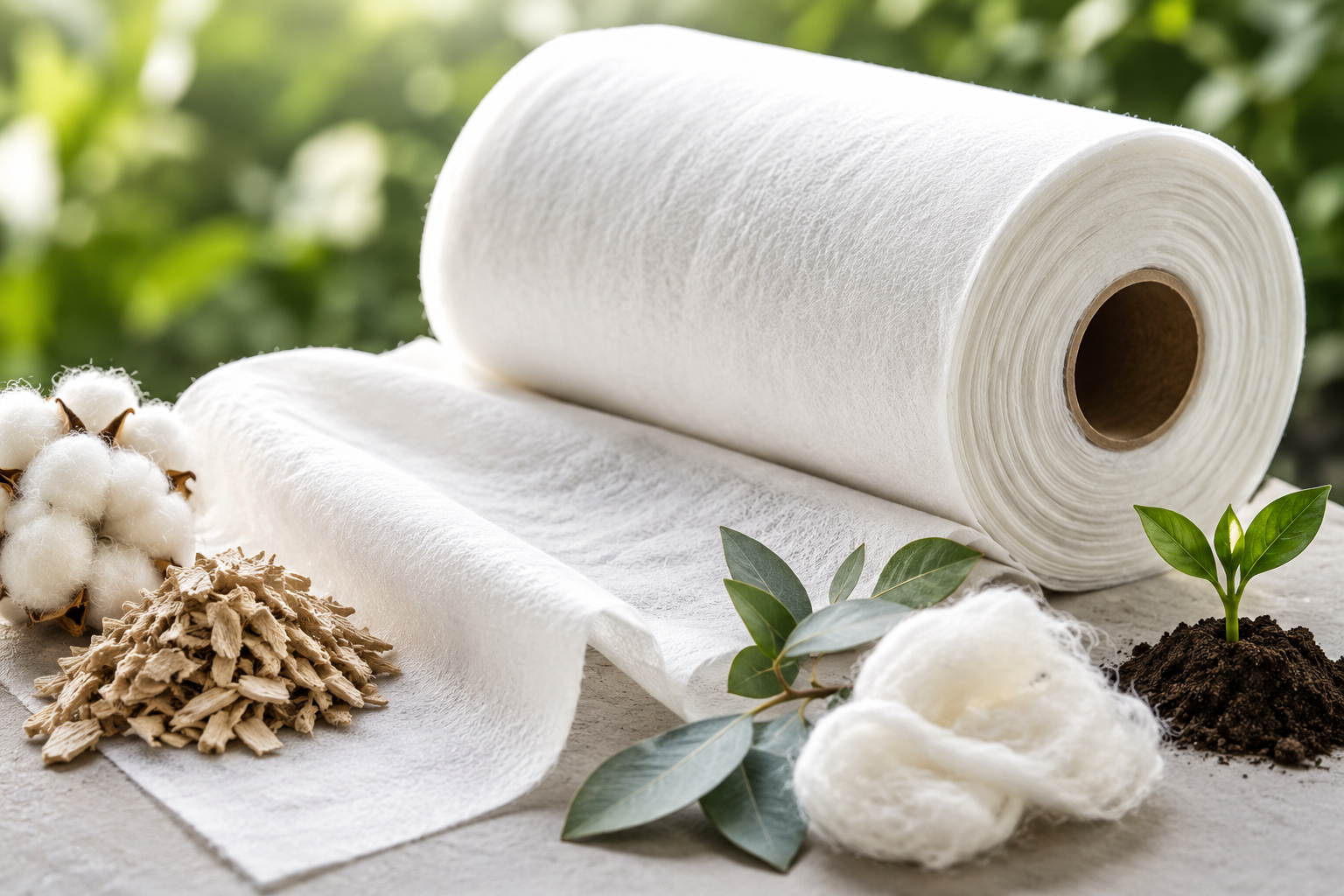
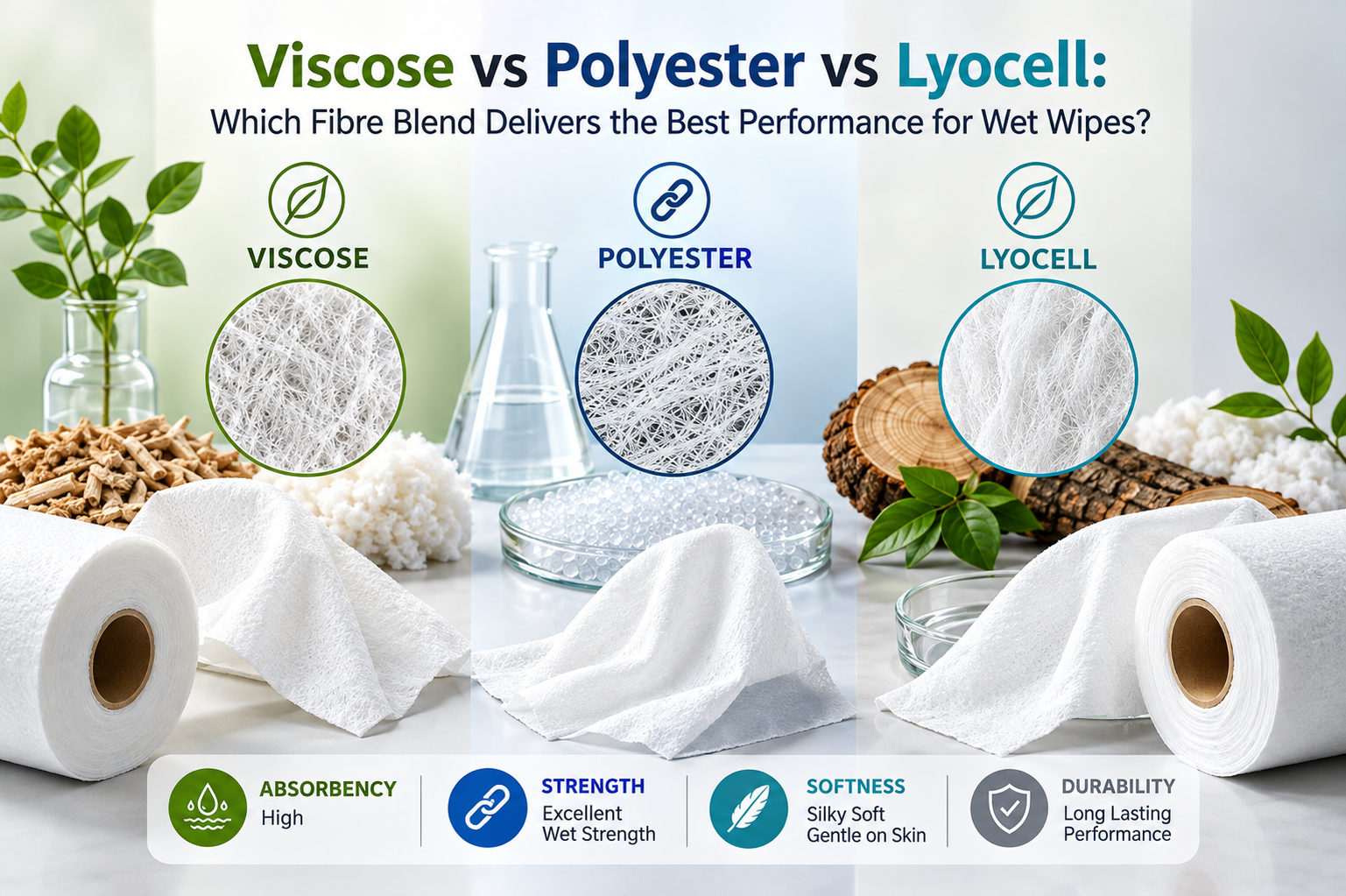
The most commercially credible biodegradable fabric in the nonwoven category is spunlace made from lyocell, cotton, or viscose. Pulp-based spunlace nonwoven sits at the top of this list of biodegradable materials. It is produced through hydroentanglement: high-pressure water jets entangle fibres without any chemical binders. This makes spunlace inherently biodegradable when made from natural fibre inputs. No binders means no synthetic residue. The fabric can carry GRS, FSC, PEFC, and OK Compost certifications, and breaks down in certified composting conditions without leaving microplastic contamination.
As of April 2025, OEKO-TEX has expanded its ECO PASSPORT standard to include biodegradability verification for chemical inputs across the textile supply chain, reinforcing biodegradable performance as an independently verifiable product attribute, not a self-declared claim.
Biodegradability requires two things: a substrate that actually decomposes, and an end-of-life pathway that enables it. A nonwoven fabric, such as pulp-based spunlace, that claims biodegradability has both. Our biodegradable nonwoven fabric guide covers the material science and certification requirements in full.
Is Nonwoven Fabric Recyclable?
Some of it is, and the rules are specific.
PP nonwovens are technically recyclable. Polypropylene is a single polymer and can be mechanically recycled into lower-grade PP products, such as automotive components, industrial textiles, packaging, and other applications that accept flexible plastics. Spunbond PP shopping bags, agricultural films, and some geotextiles can enter recycling streams where collection infrastructure exists.
PET nonwovens are similarly recyclable as a single polymer. However, collection rates for nonwoven PET remain low compared to rigid PET packaging.
The recycling barrier is blends. Multi-layer composites, chemically bonded fabrics with synthetic binders, and SMS (spunbond-meltblown-spunbond) structures that combine different polymer types are effectively non-recyclable through conventional mechanical recycling. Most end up in landfills or incineration.
Sustainable nonwoven fabric design for the circular economy requires specifying single-polymer constructions, minimising adhesive and binder content, and choosing natural fibre inputs processed without chemical bonding.
Reusable Nonwovens: The Underrated Sustainability Win
The nonwoven bag has had a complicated reputation in sustainability discussions, but the data is clear: a reusable nonwoven bag used consistently over its lifetime has a significantly lower environmental impact than the single-use plastic bags it replaces.
A nonwoven bag that replaces 50 single-use plastic bags across its life has a clear net environmental benefit. The same logic applies to reusable industrial cloths, washable healthcare textiles, and durable geotextiles designed for long service lives. Reusability is a sustainability strategy, not a product category, and nonwoven fabric is well positioned to support it.
The Future of Sustainable Textiles and Nonwovens
The sustainable textiles market is moving toward rewarding material honesty. The greatest challenge will be cutting the carbon footprint of nonwovens by switching to organic feedstocks.
- Bio-based fibres, such as next-generation lyocell, hemp, and seaweed-derived inputs, are entering commercial production. Pulp-based spunlace made from FSC-certified raw materials has demonstrated that bio-based fibers can be commercially viable.
- Recycled content is becoming a procurement baseline, not a premium option.
- Circular economy design, in which end-of-life is specified alongside fibre composition, is emerging as the standard for leading sustainable nonwoven manufacturers.
The impact extends beyond apparel and hygiene into eco-friendly packaging. UK WRAP, the UK’s leading authority on waste prevention and packaging sustainability, has set clear recyclability benchmarks for flexible plastics, including nonwoven packaging and bags, as part of the UK Plastics Pact.
Meanwhile, Textile Exchange, which manages the Global Recycled Standard relied upon across the nonwovens supply chain, published its Materials Matter Standard in December 2025. It directly connects material certification to measurable outcomes for climate, nature, and people.
The future of eco-friendly packaging, eco-friendly fabrics, and sustainable nonwoven materials is not a separate category. It is the same category, made with better inputs and designed for better outcomes.
Elixrr’s Commitment to Sustainable Nonwoven Fabric
At Elixrr, sustainable nonwoven fabric is a manufacturing commitment. Our spunlace substrates in lyocell, cotton, and viscose are produced through binder-free hydroentanglement and carry GRS, FSC, PEFC, and ISO certifications.
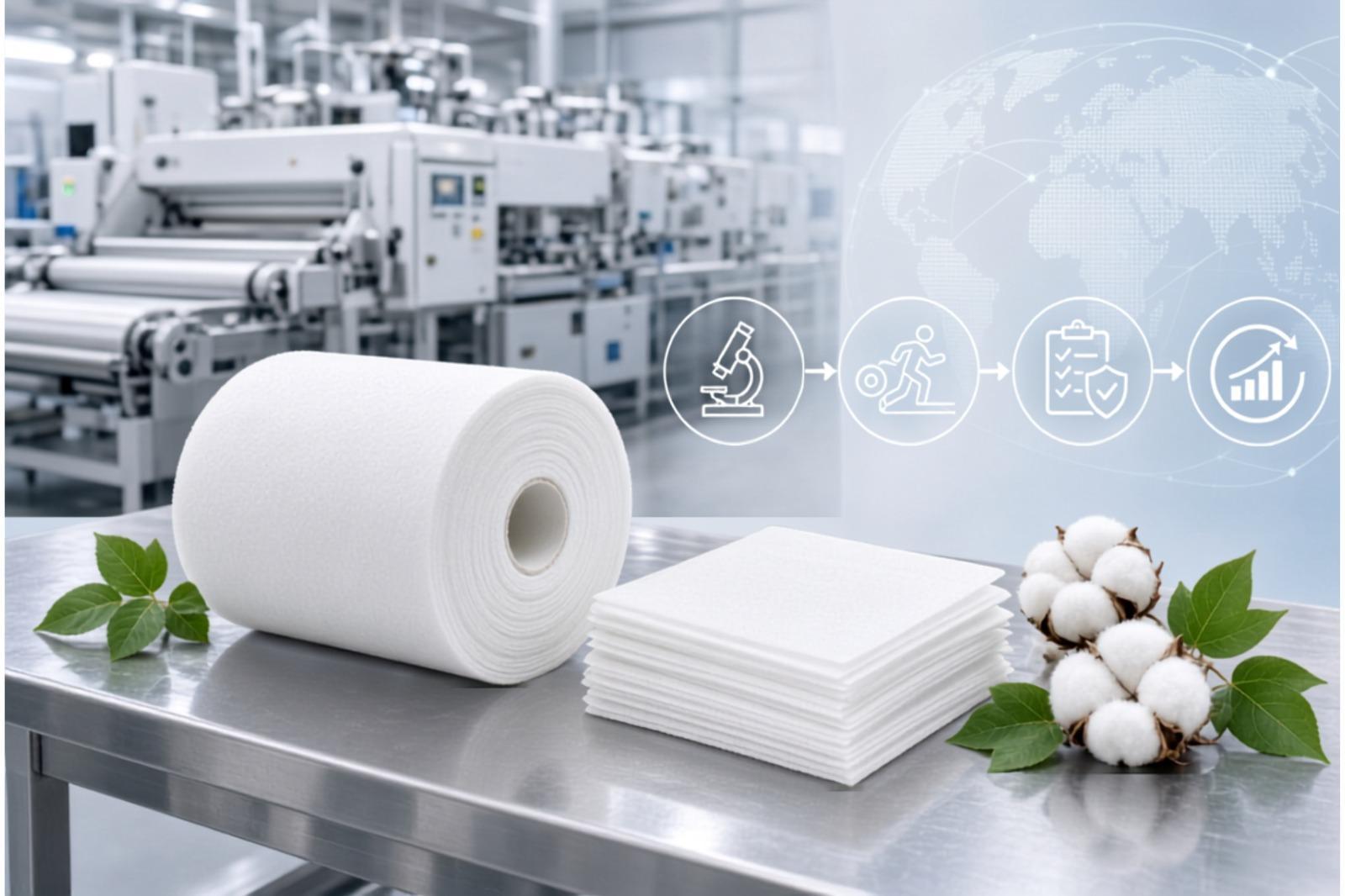
Our manufacturing processes use heat recovery systems and closed-loop water management to reduce energy and resource consumption per kilogram of fabric produced. Every sustainable substrate we produce, such as the pulp-based spunlace products, is built to substantiate the claims it carries. If you are sourcing eco-friendly fabric for hygiene, medical, personal care, or packaging applications, our sustainability page details our credentials and our development pipeline.
Final Thoughts: Choosing Sustainable Nonwoven Fabric Responsibly
This World Environment Day, the question worth asking is not “are nonwovens eco-friendly?” It is “which nonwoven has specs to back that claim?”
Nonwoven fabric is not inherently eco-friendly. It is not inherently harmful either. It is a material category with a wide sustainability range. At Elixrr, care in performance means that sustainability is built into every substrate decision from the fibre up, because the only honest claim is one the material can substantiate.





Are Nonwoven Fabrics Eco-Friendly? Sustainable Nonwoven Fabric Explained
Sustainable nonwoven fabric is becoming one of the most important materials in the global shift toward environmentally responsible manufacturing. Every World Environment Day, the question of what makes a material genuinely sustainable gets harder to answer, and easier to get wrong. Non woven fabric is no exception. It powers much of modern hygiene, healthcare, and packaging. It is also the focal point of an important debate: is it eco-friendly, or is it part of the problem? The honest answer is that it depends. It depends on several things, like the fibre, the process, and what happens after use. Today, materials like pulp-based nonwovens are a commercially viable alternative to walk the biodegradability path.
Key Takeaways
Why Sustainability Matters for Nonwovens
Nonwoven materials are gaining popularity across multiple industries for their light weight and ability to protect against microorganisms, but sustainability concerns have arisen due to their disposable nature and potential for environmental pollution. That tension is building the sustainability conversation for this material category.
Nonwovens account for a significant share of single-use product markets for hygiene, medical, wipes, and packaging. Valued at approximately $52.56 billion in 2023, the global nonwoven fabrics market is expected to reach around $75.74 billion by 2030. That growth brings both opportunity and responsibility.
UNEP, the United Nations Environment Programme that hosts World Environment Day, identifies plastic pollution and unsustainable materials consumption as two of the most pressing global environmental challenges, both of which converge directly in the disposable nonwovens market.
The sustainability myth around nonwoven fabric is that it is automatically problematic because much of it is disposable. The reality is more nuanced. This category contains some of the least sustainable disposable substrates available, and some of the most credibly eco-friendly options, such as pulp-based nonwovens, in modern textile manufacturing.
Is Nonwoven Fabric Eco-Friendly?
The phrase “eco-friendly fabric” is not a material property. It is a claim that has to be proved across three dimensions: production impact, performance efficiency, and end-of-life.
Is Sustainable Nonwoven Fabric Biodegradable?
Not all of it. But it is important to understand the distinction.
Conventional PP and PET nonwoven fabric will persist in the environment for decades after disposal. They are not a biodegradable fabric, regardless of their production efficiency.
Bio-based alternatives are different. PLA (polylactic acid) nonwovens, made from fermented plant starch, are compostable under industrial conditions, but require specific composting infrastructure and will not break down in landfills or natural environments. They are a step forward, but not a complete solution.
The most commercially credible biodegradable fabric in the nonwoven category is spunlace made from lyocell, cotton, or viscose. Pulp-based spunlace nonwoven sits at the top of this list of biodegradable materials. It is produced through hydroentanglement: high-pressure water jets entangle fibres without any chemical binders. This makes spunlace inherently biodegradable when made from natural fibre inputs. No binders means no synthetic residue. The fabric can carry GRS, FSC, PEFC, and OK Compost certifications, and breaks down in certified composting conditions without leaving microplastic contamination.
As of April 2025, OEKO-TEX has expanded its ECO PASSPORT standard to include biodegradability verification for chemical inputs across the textile supply chain, reinforcing biodegradable performance as an independently verifiable product attribute, not a self-declared claim.
Biodegradability requires two things: a substrate that actually decomposes, and an end-of-life pathway that enables it. A nonwoven fabric, such as pulp-based spunlace, that claims biodegradability has both. Our biodegradable nonwoven fabric guide covers the material science and certification requirements in full.
Is Nonwoven Fabric Recyclable?
Some of it is, and the rules are specific.
PP nonwovens are technically recyclable. Polypropylene is a single polymer and can be mechanically recycled into lower-grade PP products, such as automotive components, industrial textiles, packaging, and other applications that accept flexible plastics. Spunbond PP shopping bags, agricultural films, and some geotextiles can enter recycling streams where collection infrastructure exists.
PET nonwovens are similarly recyclable as a single polymer. However, collection rates for nonwoven PET remain low compared to rigid PET packaging.
The recycling barrier is blends. Multi-layer composites, chemically bonded fabrics with synthetic binders, and SMS (spunbond-meltblown-spunbond) structures that combine different polymer types are effectively non-recyclable through conventional mechanical recycling. Most end up in landfills or incineration.
Sustainable nonwoven fabric design for the circular economy requires specifying single-polymer constructions, minimising adhesive and binder content, and choosing natural fibre inputs processed without chemical bonding.
Reusable Nonwovens: The Underrated Sustainability Win
The nonwoven bag has had a complicated reputation in sustainability discussions, but the data is clear: a reusable nonwoven bag used consistently over its lifetime has a significantly lower environmental impact than the single-use plastic bags it replaces.
A nonwoven bag that replaces 50 single-use plastic bags across its life has a clear net environmental benefit. The same logic applies to reusable industrial cloths, washable healthcare textiles, and durable geotextiles designed for long service lives. Reusability is a sustainability strategy, not a product category, and nonwoven fabric is well positioned to support it.
The Future of Sustainable Textiles and Nonwovens
The sustainable textiles market is moving toward rewarding material honesty. The greatest challenge will be cutting the carbon footprint of nonwovens by switching to organic feedstocks.
The impact extends beyond apparel and hygiene into eco-friendly packaging. UK WRAP, the UK’s leading authority on waste prevention and packaging sustainability, has set clear recyclability benchmarks for flexible plastics, including nonwoven packaging and bags, as part of the UK Plastics Pact.
Meanwhile, Textile Exchange, which manages the Global Recycled Standard relied upon across the nonwovens supply chain, published its Materials Matter Standard in December 2025. It directly connects material certification to measurable outcomes for climate, nature, and people.
The future of eco-friendly packaging, eco-friendly fabrics, and sustainable nonwoven materials is not a separate category. It is the same category, made with better inputs and designed for better outcomes.
Elixrr’s Commitment to Sustainable Nonwoven Fabric
At Elixrr, sustainable nonwoven fabric is a manufacturing commitment. Our spunlace substrates in lyocell, cotton, and viscose are produced through binder-free hydroentanglement and carry GRS, FSC, PEFC, and ISO certifications.
Our manufacturing processes use heat recovery systems and closed-loop water management to reduce energy and resource consumption per kilogram of fabric produced. Every sustainable substrate we produce, such as the pulp-based spunlace products, is built to substantiate the claims it carries. If you are sourcing eco-friendly fabric for hygiene, medical, personal care, or packaging applications, our sustainability page details our credentials and our development pipeline.
Final Thoughts: Choosing Sustainable Nonwoven Fabric Responsibly
This World Environment Day, the question worth asking is not “are nonwovens eco-friendly?” It is “which nonwoven has specs to back that claim?”
Nonwoven fabric is not inherently eco-friendly. It is not inherently harmful either. It is a material category with a wide sustainability range. At Elixrr, care in performance means that sustainability is built into every substrate decision from the fibre up, because the only honest claim is one the material can substantiate.