


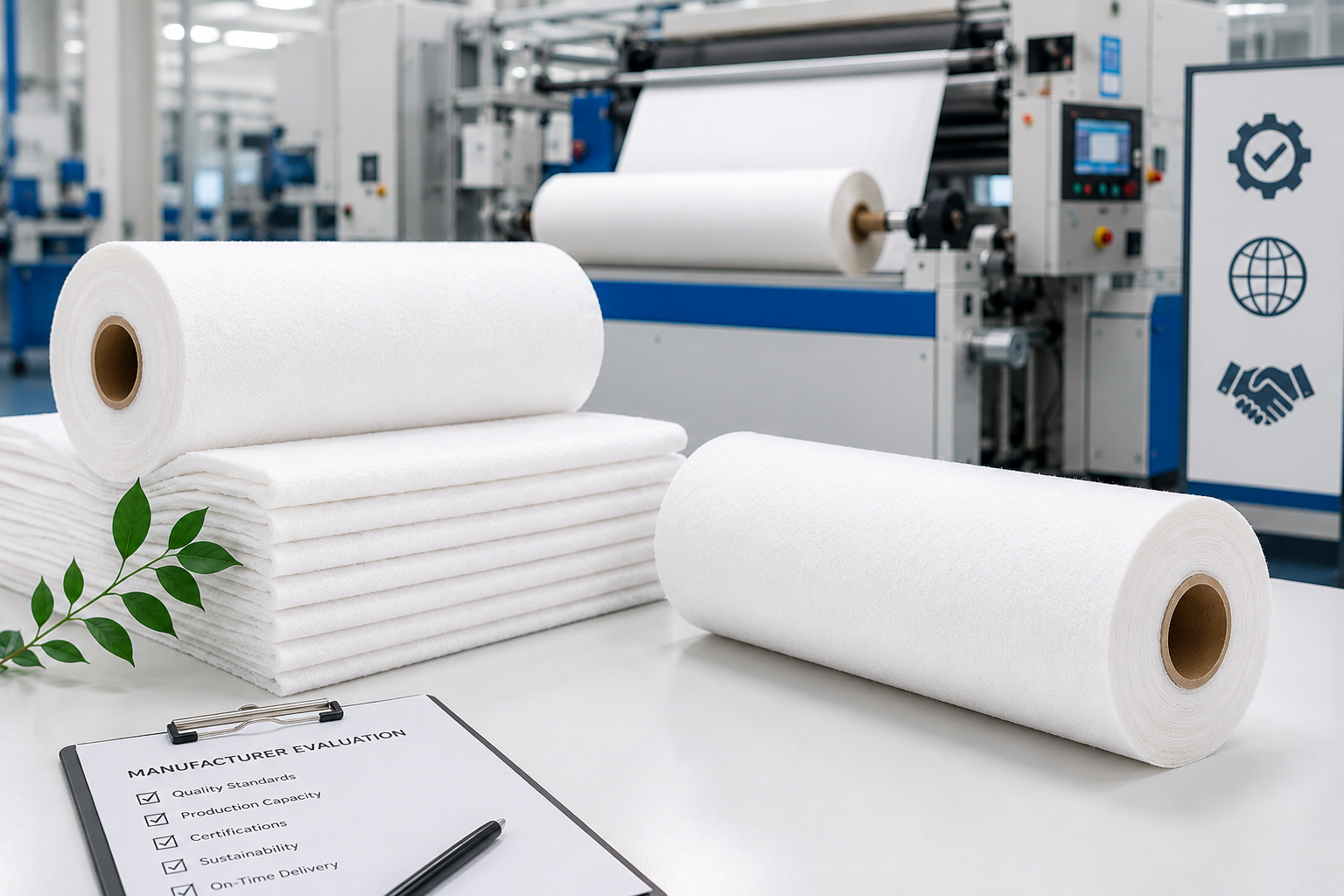
How to Choose the Right Spunlace Nonwoven Fabric Manufacturer for Your Business
Sourcing decisions in the nonwoven category rarely fail because of price. They fail because a buyer picked a Spunlace Nonwoven Fabric Manufacturer on brochure claims and found out three containers in that capacity, compliance, or consistency didn't hold up. That mistake is expensive: reformulated SKUs, delayed retail listings, or a compliance flag at customs. This guide walks through what to actually evaluate before you commit volume to a spunlace nonwoven fabric supplier or any nonwoven manufacturing company you're considering as a long-term partner.
-
Recent Post
-
How Global Wet Wipe Brands Evaluate Nonwoven Fabric Suppliers Before Signing a Contract
Multinational wet wipe brands don't sign with a nonwoven fabric supplier off a single sample and a g
08.09.2026
Read Article -
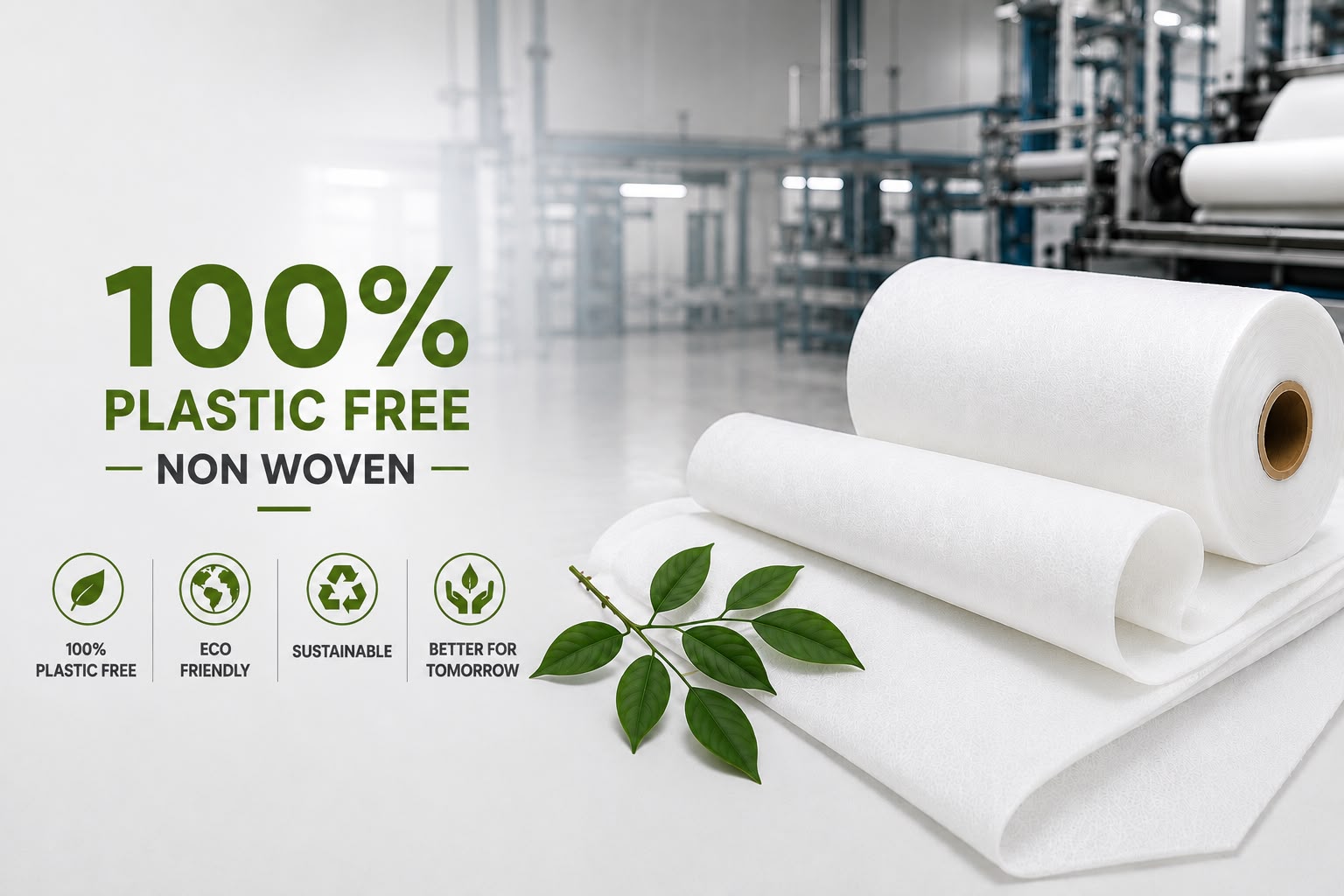
100 Percent Plastic Free Nonwovens: What Global Buyers Need to Know in 2026
Learn how plastic-free nonwoven materials are helping brands meet evolving EU and US sustainability
14.08.2026
Read Article -
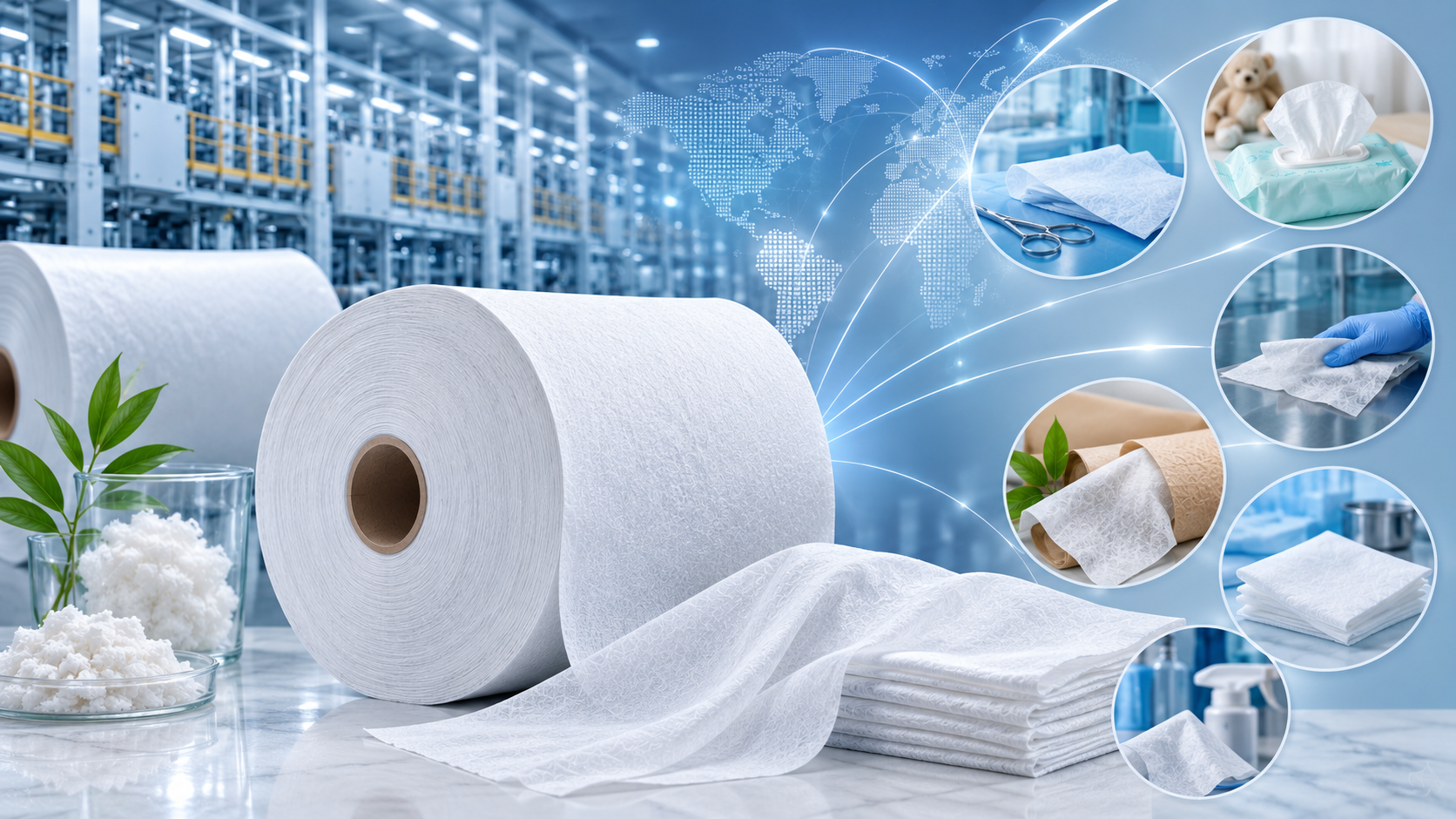
Why Multi-Application Nonwoven Manufacturing Matters to Global Buyers
Discover why global buyers are choosing multi-application nonwoven manufacturers to simplify procure
07.08.2026
Read Article -
What European Buyers Often Get Wrong About Sourcing Nonwovens from India
Sourcing nonwovens from India is no longer driven by cost alone. This blog explains why European buy
29.07.2026
Read Article -
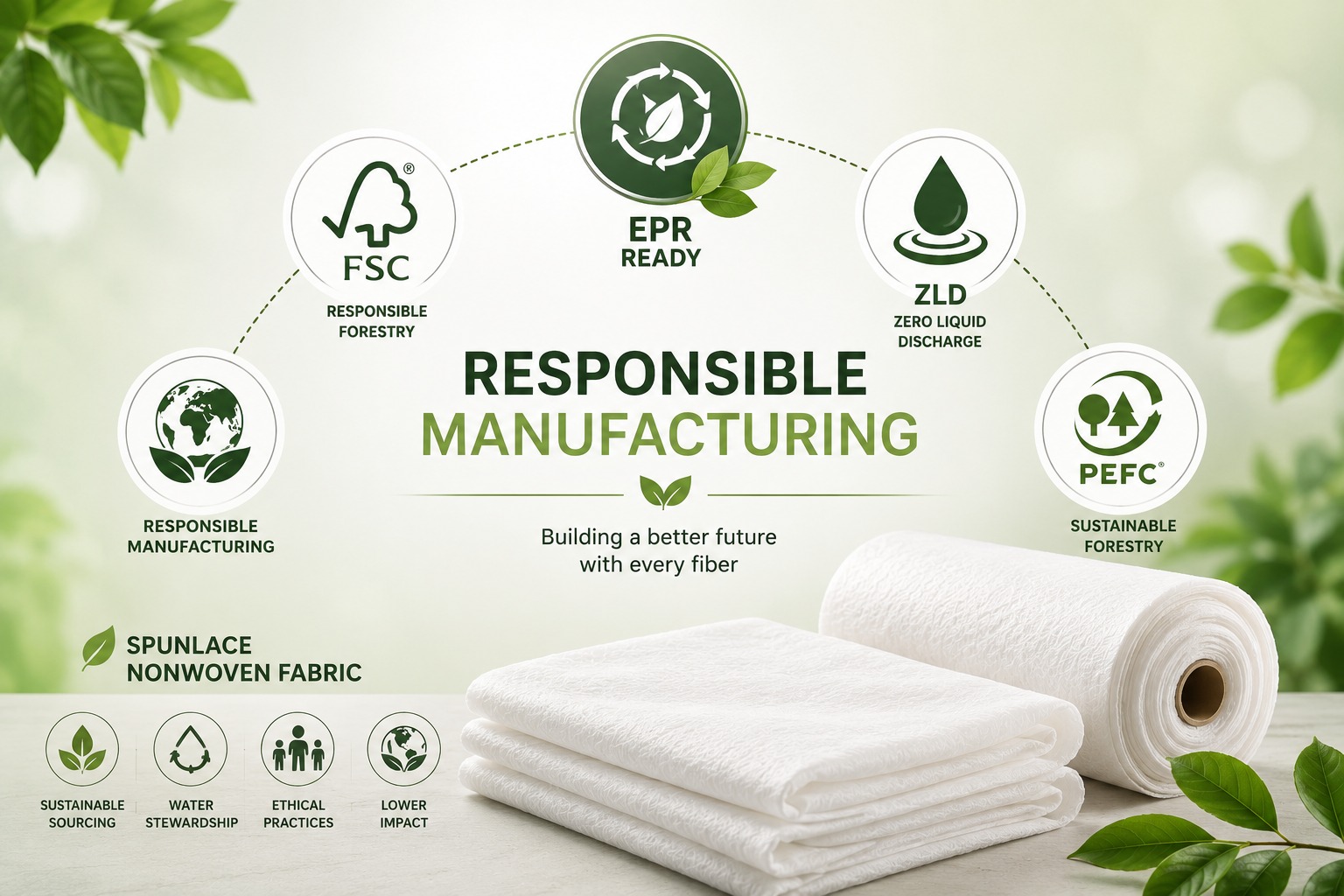
Beyond the Material: What Global Buyers Should Know About Responsible Nonwoven Manufacturing
Responsible nonwoven manufacturing enables global buyers to meet ESG goals through ZLD, FSC and PEFC
22.07.2026
Read Article -
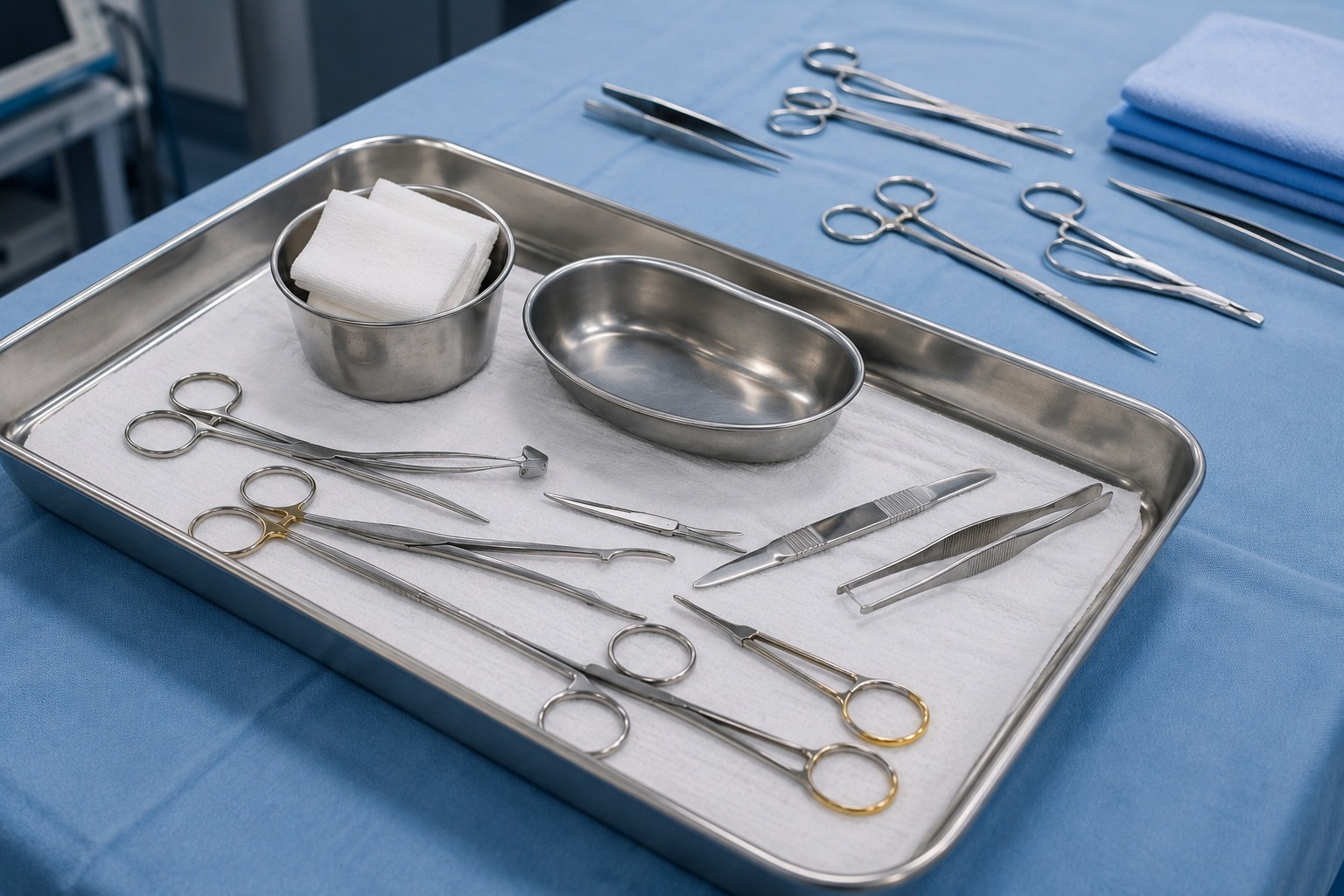
Medical Nonwovens in 2026: What Global Healthcare Buyers Should Prioritise
Learn what global healthcare buyers should prioritise when sourcing medical spunlace nonwovens in 20
15.07.2026
Read Article - View All Blogs
-
Need nonwoven solutions for your application?
Talk to our team about custom fabrics, sustainability, and product development tailored to your industry.
Frequently Asked Questions
Know everything — be it our products, our process, or why nonwovens are so cool.
How do I choose a Spunlace nonwoven fabric manufacturer?
Look at production technology, certifications, OEM flexibility and documented lead times, not marketing hype. Obtain certification documentation and a sample before placing a large order.
What certifications should a manufacturer have?
At minimum, ISO 9001 and ISO 14001, FSC® and PEFC™ matter for sustainability-driven or plastic-free positioning; medical-grade applications may need additional certification.
What's the difference between a manufacturer and a supplier?
The line is owned by a manufacturer. A supplier or trader may sell or convert fabric from elsewhere, with less control over spec and lead time.
Which countries import the most spunlace nonwoven fabrics?
The USA, Germany, UK, and Poland are key import markets, supported by demand for wipes, medical and hygiene products, and increasing sustainability regulations in each region.
How do I request product samples?
Contact the manufacturer's technical team directly, specifying your application and target spec.
Explore Recent Blogs
How to Choose the Right Spunlace Nonwoven Fabric Manufacturer for Your Business
Sourcing decisions in the nonwoven category rarely fail because of price. They fail because a buyer
Read More
How Global Wet Wipe Brands Evaluate Nonwoven Fabric Suppliers Before Signing a Contract
Multinational wet wipe brands don't sign with a nonwoven fabric supplier off a single sample and a g
Read More
100 Percent Plastic Free Nonwovens: What Global Buyers Need to Know in 2026
Learn how plastic-free nonwoven materials are helping brands meet evolving EU and US sustainability
Read More
Why Multi-Application Nonwoven Manufacturing Matters to Global Buyers
Discover why global buyers are choosing multi-application nonwoven manufacturers to simplify procure
Read More

Weave Your Success with Our Revolutionary Fabrics
Power your business with Elixrr's cutting-edge nonwoven fabric solutions. Eco-friendly, customizable, and engineered for excellence—because innovation starts with the right foundation.

What Is a Spunlace Nonwoven Fabric Manufacturer?
A Spunlace Nonwoven Fabric Manufacturer makes nonwoven fabrics by using high-pressure water jets to bond fibers like pulp, viscose, polyester, or their mixtures, without using any chemicals. The result is a soft, absorbent, strong fabric used across wet wipes, medical dressings, filtration media, and industrial wiping.
Not every "supplier" is a manufacturer. Many are traders or converters buying jumbo rolls from a mill and reselling or slitting them, which matters more than most buyers realize, since it directly affects how much control you have over spec, customization, and lead time as a hydroentangled fabric manufacturer's direct client versus an intermediary's.
What Procurement Managers Should Evaluate
1. Production Capability
Ask specifically what technology the line runs on (carding, hydroentanglement, drying), not just "spunlace capable." Some manufacturers focus on standard poly-viscose spunlace; others specialize in pulp-based, plastic-free formulations, which matters more if you're supplying a market where retailers push hard on plastic-free packaging claims.
2. OEM and Private Label Options
If you're launching a private label nonwoven manufacturer relationship for a wipe or hygiene line, ask whether the supplier supports custom basis weight, width, embossing, and packaging-ready roll specs, or only stock SKUs. OEM nonwoven manufacturing flexibility is often the real differentiator between a fabric mill and a strategic supply partner.
3. Certifications and Compliance
This is where regional context matters most, and where a global nonwoven supplier needs to show, not just claim, its paperwork. At minimum, confirm:
Certification
What It Verifies
Why It Matters
ISO 9001
Quality management systems
Baseline for consistent batch-to-batch quality
ISO 14001
Environmental management systems
Increasingly required by retail ESG policies
FSC®
Responsibly sourced pulp/fiber
Supports plastic-free/sustainable claims
PEFC™
Sustainable forestry chain of custody
Alternative to FSC for pulp sourcing
Don't take certification logos at face value; ask for actual certificate numbers and verify independently.
Regional Considerations That Shape Sourcing Decisions
Regulatory requirements specific to the market: Buyers in the USA typically work through FDA-adjacent hygiene standards, alongside general product safety and labeling requirements for wipe and nonwoven imports. In the UK, post-Brexit UKCA and REACH-equivalent chemical rules run as a separate regime from EU REACH, so a supplier compliant for the EU isn't automatically cleared for UK shipments. Within the EU, both Germany and Poland fall under REACH, but German retailers in particular often layer on ESG and packaging disclosure requirements that go beyond the regulatory minimum. None of this changes the fabric itself, but it changes the documentation a nonwoven fabric exporter needs to hand over before a shipment clears customs in any of these markets.
If you're specifically weighing India as a sourcing base against European suppliers, this is worth a closer look: What European Buyers Often Get Wrong About Sourcing Nonwovens from India.
4. Lead Times, MOQ, and Supply Reliability
Get written lead times, not verbal ranges, and ask what happens to your order if a line goes down. Manufacturers with multiple lines and flexible scheduling absorb this risk better.
5. Long-Term Partnership Fit
A manufacturer that treats your account as a one-off PO shows it in small ways: slow response on quality queries, no flexibility on seasonal demand, and no interest in co-development. For wet wipes, fabric manufacturer relationships and medical nonwoven supplier accounts, where formulation consistency matters, this depth reduces reformulation risk over time. Manufacturers running dedicated medical-grade lines, such as AbsorvSpun™, a high-absorbency, lint-free spunlace built for wound care and surgical disposables, tend to have tighter batch consistency controls than general-purpose lines.
Questions to Ask Before Requesting Samples
Evaluating spunlace suppliers for wipes, medical, or industrial applications? Explore Elixrr's spunlace nonwoven fabric range or request a sample.
Further reading: EDANA (European Disposables and Nonwovens Association) · INDA (Association of the Nonwoven Fabrics Industry)