


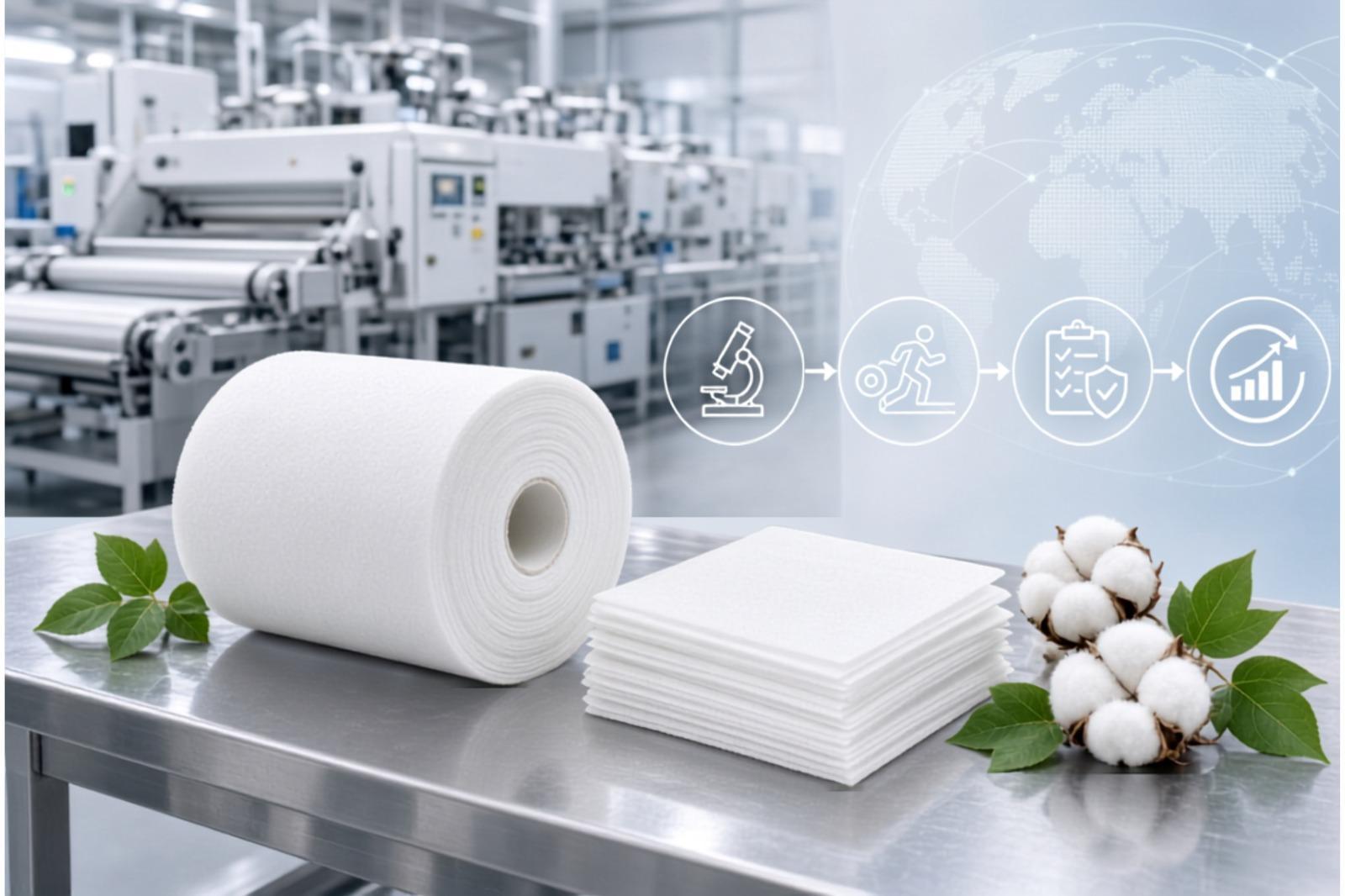
What Should Be Validated Before Moving From a Nonwoven Trial to Commercial Production?
A trial run that performs well doesn't automatically mean you're ready to commit commercial volume. Trials are run in controlled conditions, on limited quantities, often with extra attention from the supplier's technical team. Commercial production runs at speed, at scale, and without anyone watching every meter of fabric come off the line. The gap between the two is where most buyer regret happens, and it's almost always avoidable with the right validation steps in between.
-
Recent Post
-

Best GSM For Wet Wipes A Procurement Guide for Choosing the Right Spunlace Fabric
Getting the GSM wrong is one of the most common and most expensive mistakes in wet wipes sourcing.
20.06.2026
Read Article -
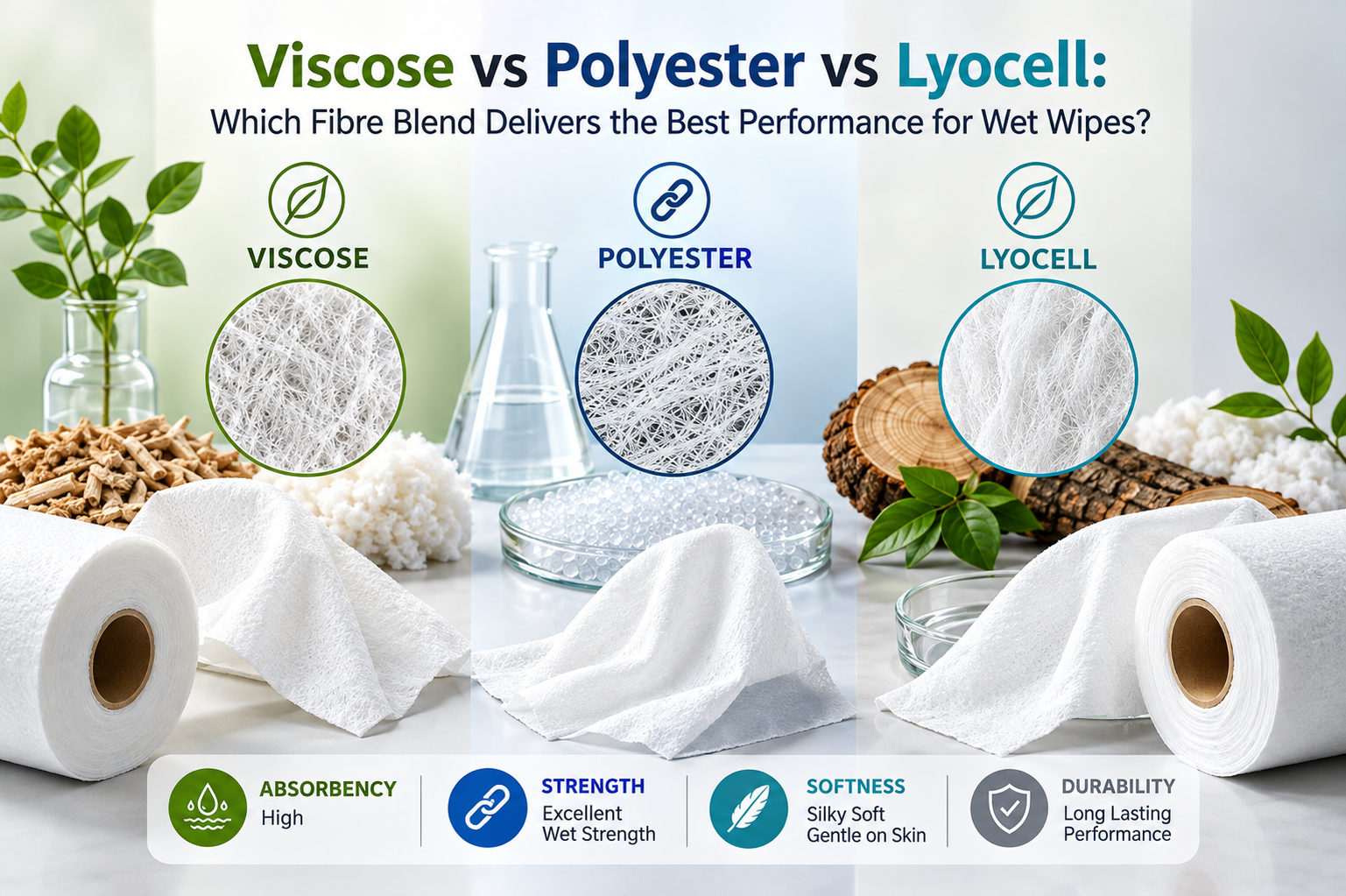
Viscose vs Polyester vs Lyocell: Which Fibre Blend Delivers the Best Performance for Wet Wipes?
Choosing between viscose, polyester, and Lyocell isn't really about picking a "best" fibre. It's abo
22.06.2026
Read Article -
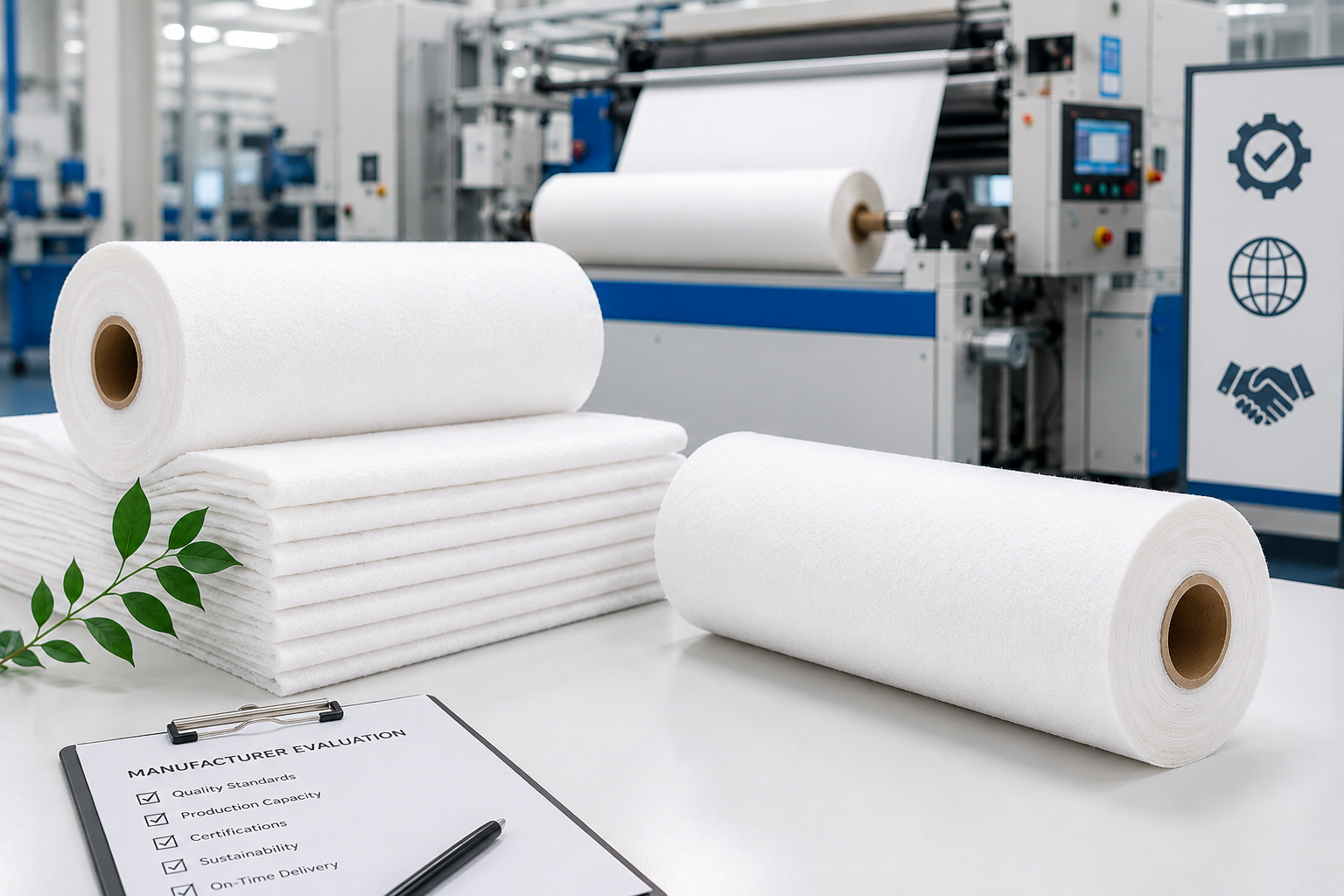
How to Choose the Right Spunlace Nonwoven Fabric Manufacturer for Your Business
Sourcing decisions in the nonwoven category rarely fail because of price. They fail because a buyer
15.09.2026
Read Article -
How Global Wet Wipe Brands Evaluate Nonwoven Fabric Suppliers Before Signing a Contract
Multinational wet wipe brands don't sign with a nonwoven fabric supplier off a single sample and a g
08.09.2026
Read Article -
100 Percent Plastic Free Nonwovens: What Global Buyers Need to Know in 2026
Learn how plastic-free nonwoven materials are helping brands meet evolving EU and US sustainability
14.08.2026
Read Article -

Why Multi-Application Nonwoven Manufacturing Matters to Global Buyers
Discover why global buyers are choosing multi-application nonwoven manufacturers to simplify procure
07.08.2026
Read Article - View All Blogs
-
Need nonwoven solutions for your application?
Talk to our team about custom fabrics, sustainability, and product development tailored to your industry.
Frequently Asked Questions
Know everything — be it our products, our process, or why nonwovens are so cool.
How long should a trial run last before scaling to commercial production?
There's no fixed timeline, but most buyers validate across two to three separate trial batches before committing commercial volume, rather than scaling after a single successful run.
What sample size is needed to properly validate a batch?
Enough fabric to run independent lab testing, basis weight, tensile strength, absorbency, and a real production trial on your own converting line, not just enough for a hand-feel evaluation.
Does trial-batch consistency guarantee commercial-batch consistency?
No. Trial batches are often produced under closer supervision and smaller volume than commercial runs, so consistency needs to be re-validated once volume scales.
Should you use the same supplier for both trial and commercial production?
Usually yes, since re-validating a new supplier at commercial volume reintroduces the same risk you were trying to eliminate by trialing in the first place. Switching only makes sense with strong documented reasons.
What documentation should you request after a successful trial?
Batch test reports, a written commercial quote and lead time, and confirmation of which production line will supply commercial volume.
Ready to validate a trial batch before committing to commercial volume?
Explore Elixrr's spunlace nonwoven fabric range, check technical specifications, or get in touch with our team.
Explore Recent Blogs
What Should Be Validated Before Moving From a Nonwoven Trial to Commercial Production?
A trial run that performs well doesn't automatically mean you're ready to commit commercial volume.
Read More
Best GSM For Wet Wipes A Procurement Guide for Choosing the Right Spunlace Fabric
Getting the GSM wrong is one of the most common and most expensive mistakes in wet wipes sourcing.
Read More
Viscose vs Polyester vs Lyocell: Which Fibre Blend Delivers the Best Performance for Wet Wipes?
Choosing between viscose, polyester, and Lyocell isn't really about picking a "best" fibre. It's abo
Read More
How to Choose the Right Spunlace Nonwoven Fabric Manufacturer for Your Business
Sourcing decisions in the nonwoven category rarely fail because of price. They fail because a buyer
Read More

Weave Your Success with Our Revolutionary Fabrics
Power your business with Elixrr's cutting-edge nonwoven fabric solutions. Eco-friendly, customizable, and engineered for excellence—because innovation starts with the right foundation.

Why a Good Trial Isn't the Same as a Good Commercial Run
A trial batch is usually produced under near-ideal conditions: a smaller run, closer machine supervision, and often the supplier's best operators on shift. None of that is dishonest; it's simply how trials work, and most suppliers aren't trying to mislead anyone by putting their best foot forward on a trial order.
The risk isn't the trial itself. The risk is treating trial performance as a guarantee of commercial performance rather than as one data point in a larger decision that still needs validating before volume gets committed.
What to Validate Before Scaling
1. Batch-to-Batch Consistency
Ask for two or three trial batches, not one, produced on different days if possible, and ideally from different raw-material lots. A single great batch tells you the fabric can perform well under the conditions it was made in. Multiple consistent batches tell you it will perform well under the conditions you'll actually be buying in.
2. Converting-Line Compatibility
A fabric that tests well in the lab can still behave differently on your specific converting or packaging line. Tension settings, roll hardness, and unwind speed can all expose issues a static sample never would. These issues rarely show up until the fabric is running through equipment at your facility rather than being evaluated by hand.
Run at least one trial batch through your actual production line before committing volume, not just through the supplier's lab testing.
3. Cost at Commercial Volume, Not Trial Pricing
Trial-quantity pricing and commercial-volume pricing are rarely the same, and neither are the freight and duty economics once you're shipping containers instead of pallets.
Get a written commercial quote before scaling, not a verbal estimate based on the trial invoice, since the gap between the two can be significant enough to change the economics of the whole programme.
4. Supply Chain Reliability
A trial batch proves the supplier can make the fabric once. It doesn't prove they can make it repeatedly, on schedule, at your required volume, month after month.
Ask what capacity is actually available for your account versus the supplier's total installed capacity, since installed capacity and available capacity for a new buyer are often two very different numbers.
5. Regulatory and Compliance Readiness
Confirm that the certifications and compliance documentation that applied to your trial sample also apply to the commercial-scale product for your specific target market.
Trial samples are sometimes produced on a different line, or even at a different facility, than commercial volume. This can genuinely change the compliance picture even though the fabric itself looks identical.
How Many Trial Runs Are Enough?
There's no universal number, and the right answer depends partly on the risk profile of your product and your market. But a single trial batch is rarely sufficient for a commitment above a certain volume threshold.
Two to three batches, ideally spanning different production days or even different raw-material lots, give a much more reliable picture of what commercial consistency will actually look like than one strong batch does.
For higher-risk categories, such as medical products, infant care, or anything with tight regulatory scrutiny, more validation batches are worth the extra time before committing.
What a Strong Validation Process Looks Like in Practice
A strong validation process doesn't end when the trial sample passes lab testing. It continues through a second and third batch, a run on your own converting line, a written commercial quote compared line by line against the trial pricing, and a direct conversation about available capacity for your specific order size.
A weak validation process stops at the first successful lab report and treats everything after that as a formality. The difference between the two isn't extra bureaucracy; it's the difference between finding a problem now, while it's cheap to fix, and finding it three months into commercial production, when it isn't.
Questions to Ask Before Scaling
Before moving from a nonwoven trial to commercial production, ask your supplier:
These questions help establish whether a successful trial can translate into a reliable commercial supply arrangement.
Common Mistakes When Moving From Trial to Commercial
Scaling off a single trial batch instead of multiple runs is the most common shortcut, usually taken under time pressure to get a programme launched.
Never testing the fabric on your own converting line before committing volume is a close second, since lab performance and line performance aren't always the same thing.
Assuming trial pricing will hold at commercial volume causes real budget surprises later. Not confirming whether commercial fabric comes off the same production line as the trial sample can quietly change both performance and compliance status.
Finally, skipping a written contract in favour of a verbal understanding based on trial-stage goodwill leaves both sides with no clear recourse if something goes wrong at scale.
Ready to Validate a Trial Batch Before Committing to Commercial Volume?
Explore Elixrr's nonwoven fabric range, review available technical resources and product documentation, or contact our team to discuss your requirements.
For buyers evaluating spunlace nonwoven fabric, validating material consistency, converting-line compatibility and commercial-scale supply readiness can help make the transition from trial to production more predictable.