


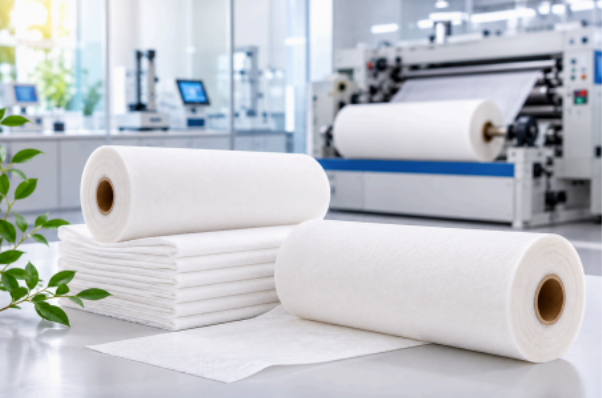
How Global Wet Wipe Brands Evaluate Nonwoven Fabric Suppliers Before Signing a Contract
Multinational wet wipe brands don't sign with a nonwoven fabric supplier off a single sample and a good price quote. By the time a contract gets signed, the supplier has usually cleared a multi-stage evaluation that most smaller or newer buyers skip and later regret skipping. Here's what that process typically looks like, so you can borrow the same discipline regardless of your order size.
-
Recent Post
-
Why Fibre Ratio Can Change Nonwoven Performance Even When GSM Remains Constant
A buyer lines up two spunlace samples. Both are 50 GSM and the price per square metre is close.A buy
20.06.2026
Read Article -
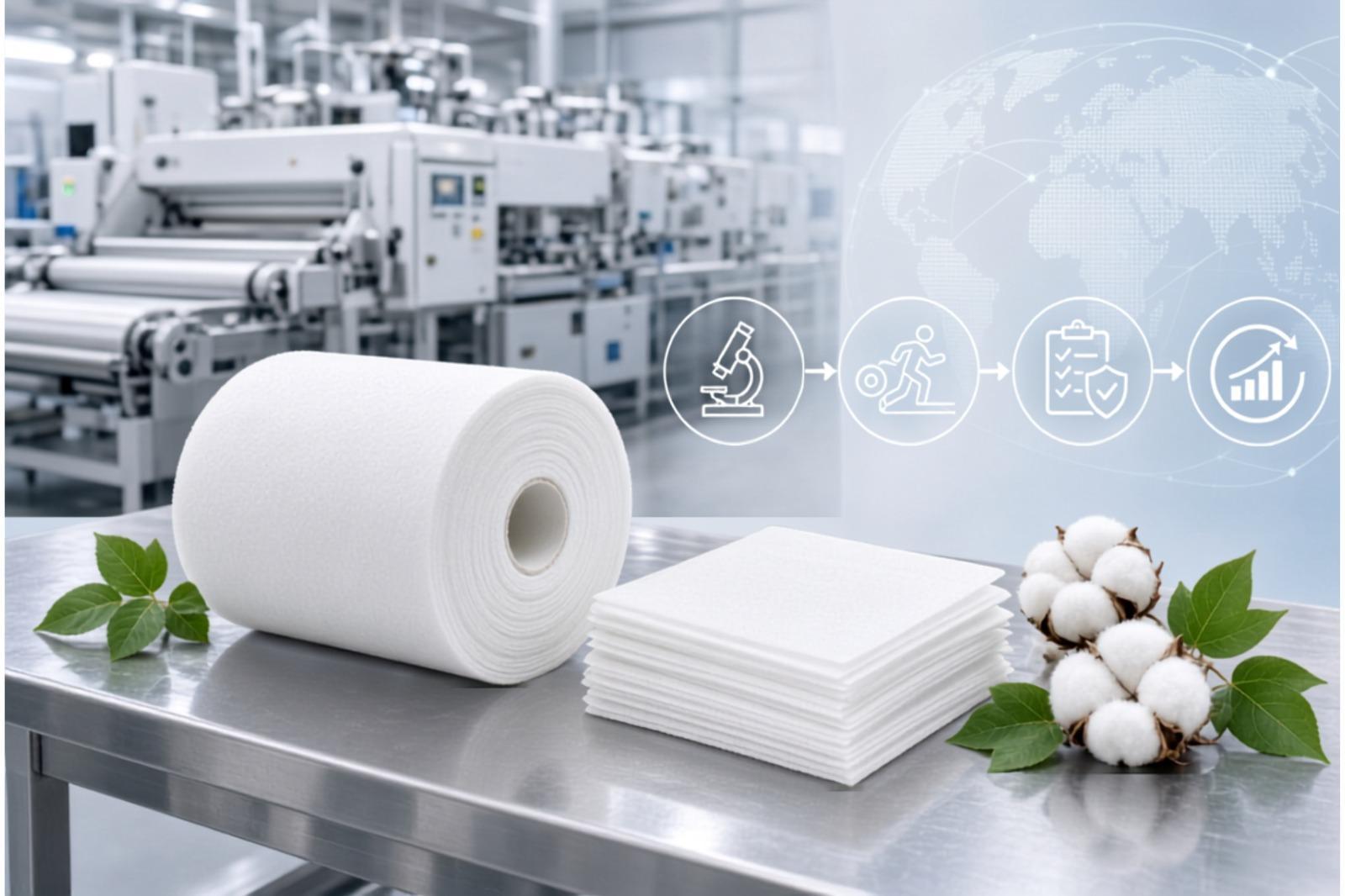
What Should Be Validated Before Moving From a Nonwoven Trial to Commercial Production?
A trial run that performs well doesn't automatically mean you're ready to commit commercial volume.
14.10.2026
Read Article -
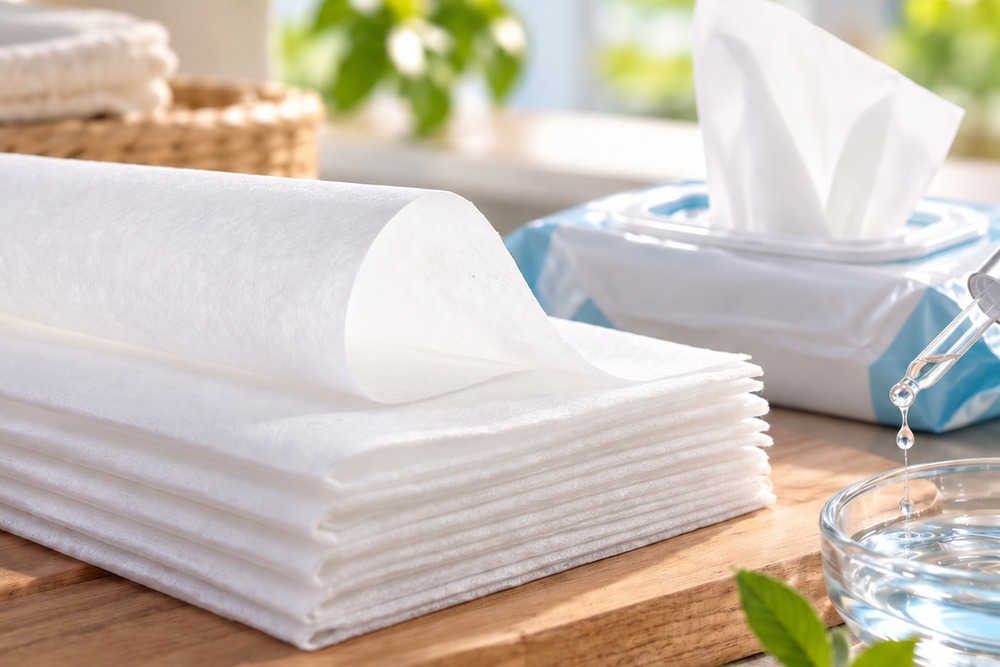
Best GSM For Wet Wipes A Procurement Guide for Choosing the Right Spunlace Fabric
Getting the GSM wrong is one of the most common and most expensive mistakes in wet wipes sourcing.
20.06.2026
Read Article -
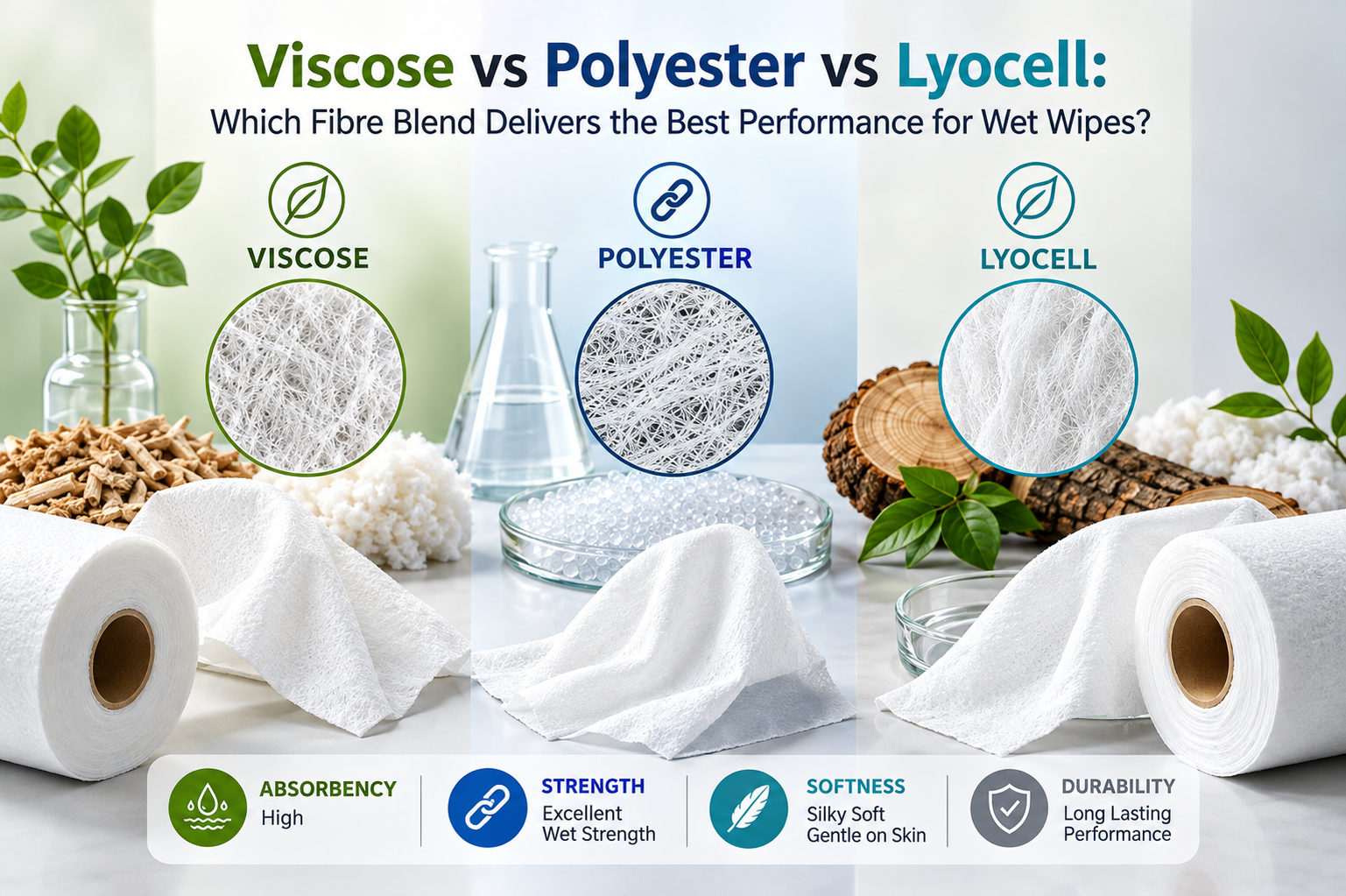
Viscose vs Polyester vs Lyocell: Which Fibre Blend Delivers the Best Performance for Wet Wipes?
Choosing between viscose, polyester, and Lyocell isn't really about picking a "best" fibre. It's abo
22.06.2026
Read Article -
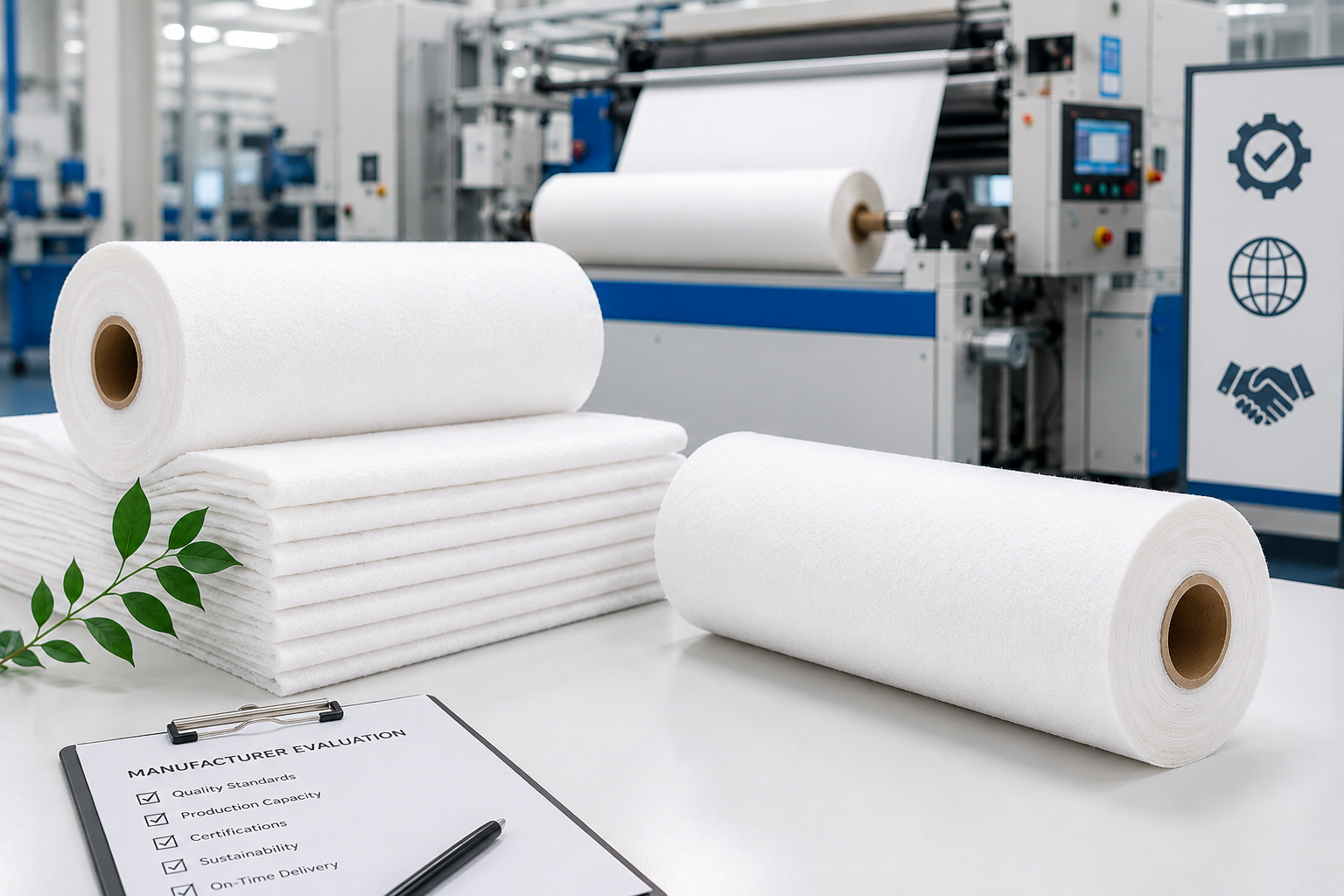
How to Choose the Right Spunlace Nonwoven Fabric Manufacturer for Your Business
Sourcing decisions in the nonwoven category rarely fail because of price. They fail because a buyer
15.09.2026
Read Article -
100 Percent Plastic Free Nonwovens: What Global Buyers Need to Know in 2026
Learn how plastic-free nonwoven materials are helping brands meet evolving EU and US sustainability
14.08.2026
Read Article - View All Blogs
-
Need nonwoven solutions for your application?
Talk to our team about custom fabrics, sustainability, and product development tailored to your industry.
Frequently Asked Questions
Know everything — be it our products, our process, or why nonwovens are so cool.
What should buyers ask suppliers?
Ask for installed capacity versus current utilization, certification documents with verifiable numbers, references from comparable clients, and written (not verbal) lead times.
What certifications matter?
ISO 9001 and ISO 14001 as a baseline, with FSC and PEFC relevant for sustainability or plastic-free positioning and additional product specific certification for medical or infant-care applications.
How are suppliers evaluated?
A mix of factory audits, independent lab testing of samples, review of compliance documentation and reference checks. Usually scored against a list of criteria, with assigned weights (internal).
What testing reports should be requested?
Basis weight consistency, tensile strength, absorbency rate and compatibility testing with the intended lotion or solution formulation (wet wipes only)
How important is export experience?
Important for global brands A nonwoven exporter who has experience in your target markets already knows the documentation and customs process, thus reducing the risk of shipment delays.
Explore Recent Blogs
Why Fibre Ratio Can Change Nonwoven Performance Even When GSM Remains Constant
A buyer lines up two spunlace samples. Both are 50 GSM and the price per square metre is close.A buy
Read More
What Should Be Validated Before Moving From a Nonwoven Trial to Commercial Production?
A trial run that performs well doesn't automatically mean you're ready to commit commercial volume.
Read More
Best GSM For Wet Wipes A Procurement Guide for Choosing the Right Spunlace Fabric
Getting the GSM wrong is one of the most common and most expensive mistakes in wet wipes sourcing.
Read More
Viscose vs Polyester vs Lyocell: Which Fibre Blend Delivers the Best Performance for Wet Wipes?
Choosing between viscose, polyester, and Lyocell isn't really about picking a "best" fibre. It's abo
Read More

Weave Your Success with Our Revolutionary Fabrics
Power your business with Elixrr's cutting-edge nonwoven fabric solutions. Eco-friendly, customizable, and engineered for excellence—because innovation starts with the right foundation.

How Multinational Brands Shortlist Suppliers
Large wet wipe brands rarely start with a Google search. Shortlisting usually begins with trade show contacts, industry association directories (INDA member listings are a common starting point), or referrals from existing supply chain partners. From there, a supplier typically needs to clear three gates before a factory audit is even scheduled: documented certifications, a technical data sheet matching the buyer's spec, and a reference check with at least one existing client in a comparable category.
The Quality Evaluation Process
Factory audits. For any serious wet wipes fabric supplier relationship, an in-person or third-party factory audit is close to non-negotiable for brands sourcing above a certain volume. The auditors will review production hygiene, machine maintenance records, raw material traceability and whether the certifications on paper match what is happening on the floor.
Product testing. Before committing, buyers typically send samples to an independent lab for basis weight consistency, tensile strength, absorbency rate, and, for OEM wet wipes material, compatibility with their specific lotion or solution formulation. A fabric that performs well dry can behave differently once saturated, which is why this step gets treated as mandatory rather than optional.
Compliance Requirements
Compliance expectations aren't uniform. A private-label wipes manufacturer supplying baby care products faces tighter scrutiny than one supplying industrial wipes. At minimum, buyers usually ask for REACH compliance documentation (EU/UK), safety data sheets, and chemical restriction test reports. For a spunlace supplier specifically, buyers increasingly ask for FSC or PEFC chain-of-custody proof if the fabric is marketed as sustainable or plastic-free, since an unverified sustainability claim is now a bigger red flag than no claim at all.
Lead Times and Supply Chain Reliability
Brands running continuous retail programs care less about your fastest possible lead time and more about your most consistent one. A nonwoven exporter that quotes four weeks but regularly ships in six has a bigger problem than one that quotes six weeks honestly. Buyers typically request evidence of on-time delivery history, not just a stated capability, and ask what contingency exists if a production line goes down mid-order.
Sustainability Expectations
This has shifted from a nice-to-have to a scored criterion in most formal supplier evaluations. Buyers now ask about water treatment and discharge practices (Zero Liquid Discharge systems are increasingly requested), energy sourcing (solar or renewable input is a genuine differentiator), and whether the facility itself carries environmental certification such as LEED, alongside the standard FSC/PEFC fiber-sourcing paperwork.
Red Flags Buyers Should Avoid
Formal procurement teams typically score prospective suppliers across five to seven weighted categories: quality consistency, compliance documentation, lead time reliability, sustainability practices, pricing, communication responsiveness, and scalability. Weighting shifts by category. A medical-adjacent hygiene brand weighs compliance heavier; a fast-fashion-adjacent brand weighs lead time heavier. Building even a simple scorecard turns supplier evaluation from a gut call into something repeatable across your procurement team.
Procurement Best Practices
Run parallel evaluations on two or three suppliers rather than negotiating with one at a time. Request certification documents before requesting a quote, not after. Treat the first order as a trial regardless of how strong the shortlisting process was. And keep the evaluation criteria
the same for every supplier you assess, since an evaluation process that changes case-by-case is difficult to defend internally and easy to get wrong.
Looking for wet wipe fabric sources or assessing a hygiene nonwoven supplier for your next
program? Explore Elixrr's wet wipes fabric range or request a sample.
Further reading: INDA (Association of the Nonwoven Fabrics Industry) Suggested Anchor Text Mapping