


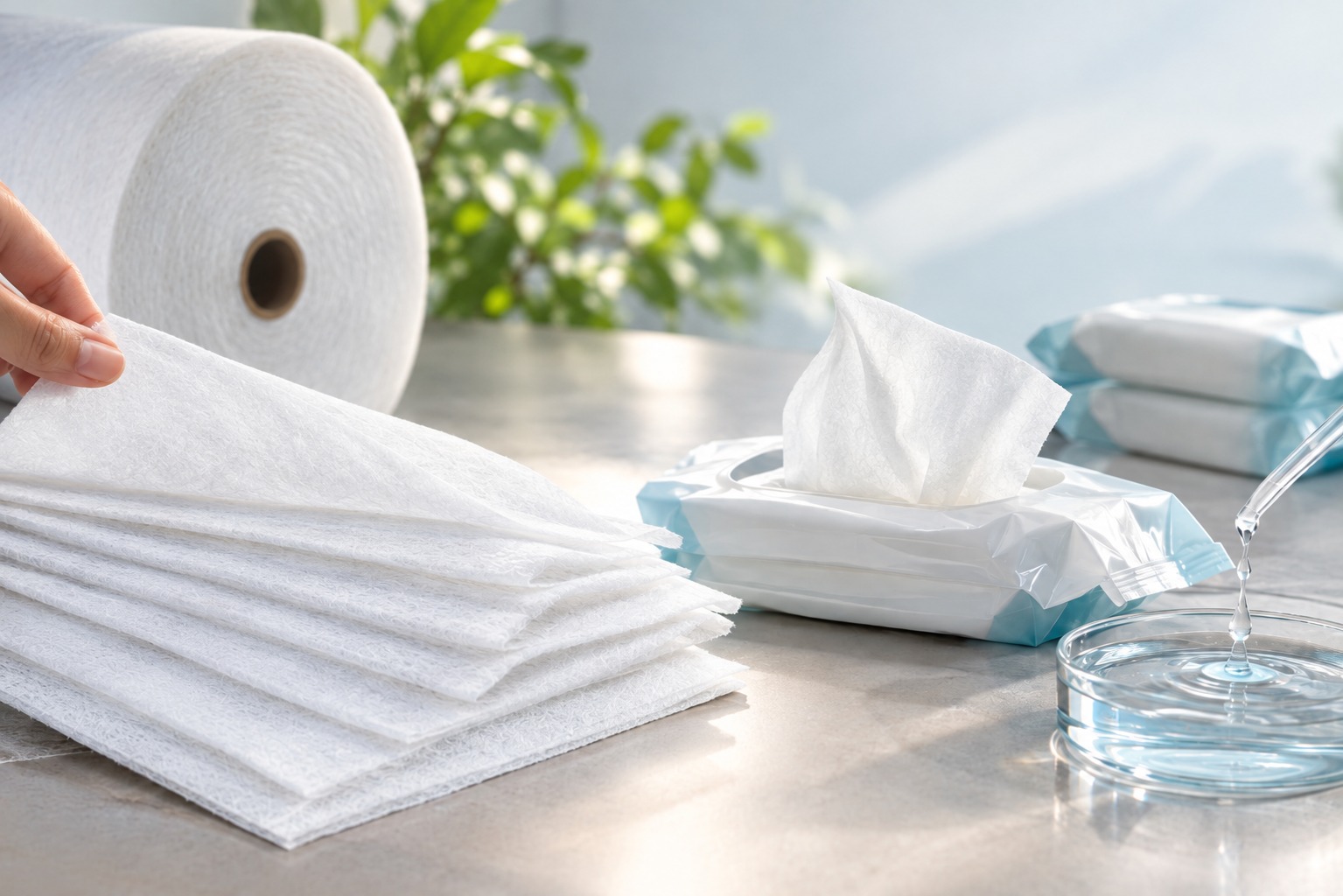
Best GSM For Wet Wipes A Procurement Guide for Choosing the Right Spunlace Fabric
Getting the GSM wrong is one of the most common and most expensive mistakes in wet wipes sourcing. Order too light and the wipe tears mid-use; order too heavy and you're paying for durability nobody asked for. Here's how to actually think about GSM in Spunlace Nonwoven Fabric before you lock in a spec.
-
Recent Post
-
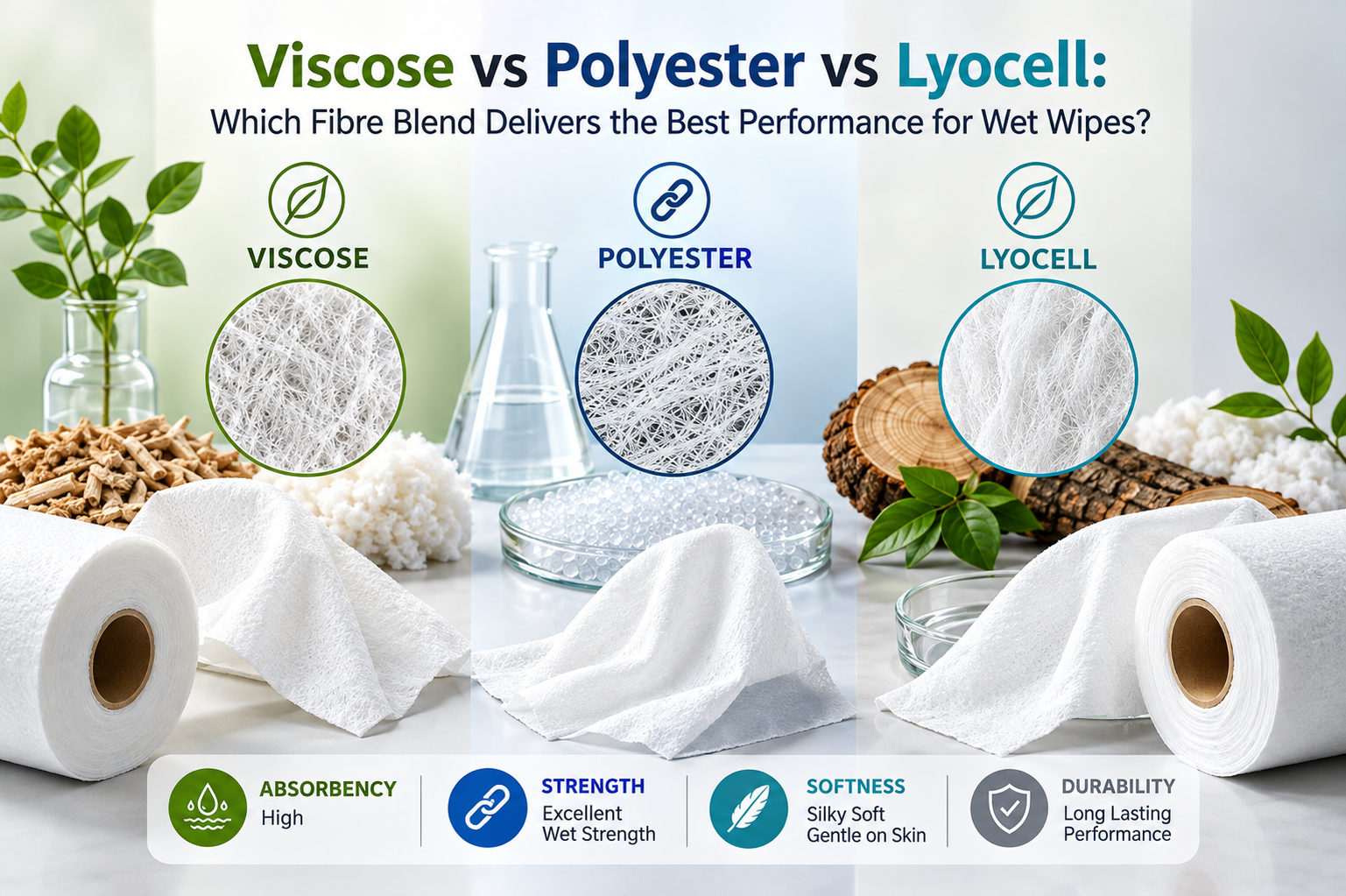
Viscose vs Polyester vs Lyocell: Which Fibre Blend Delivers the Best Performance for Wet Wipes?
Choosing between viscose, polyester, and Lyocell isn't really about picking a "best" fibre. It's abo
22.06.2026
Read Article -
How to Choose the Right Spunlace Nonwoven Fabric Manufacturer for Your Business
Sourcing decisions in the nonwoven category rarely fail because of price. They fail because a buyer
15.09.2026
Read Article -
How Global Wet Wipe Brands Evaluate Nonwoven Fabric Suppliers Before Signing a Contract
Multinational wet wipe brands don't sign with a nonwoven fabric supplier off a single sample and a g
08.09.2026
Read Article -
100 Percent Plastic Free Nonwovens: What Global Buyers Need to Know in 2026
Learn how plastic-free nonwoven materials are helping brands meet evolving EU and US sustainability
14.08.2026
Read Article -

Why Multi-Application Nonwoven Manufacturing Matters to Global Buyers
Discover why global buyers are choosing multi-application nonwoven manufacturers to simplify procure
07.08.2026
Read Article -
What European Buyers Often Get Wrong About Sourcing Nonwovens from India
Sourcing nonwovens from India is no longer driven by cost alone. This blog explains why European buy
29.07.2026
Read Article - View All Blogs
-
Need nonwoven solutions for your application?
Talk to our team about custom fabrics, sustainability, and product development tailored to your industry.
Frequently Asked Questions
Know everything — be it our products, our process, or why nonwovens are so cool.
What GSM is suitable for baby wipes?
Typically 40-50 GSM Balancing softness for sensitive skin with sufficient wet strength to cope with clean-up without tearing.
What GSM is suitable for industrial wipes?
Usually 80-120+gsm. Focus on tensile strength and absorbency for degreaser, automotive and heavy-duty surface cleaning.
Does higher GSM mean better quality?
No. Higher GSM means a thicker, generally stronger fabric, but "better" depends entirely on matching the weight to the application. Overweighting a facial wipe just adds cost without benefit.
How is GSM measured?
Using test procedures jointly maintained by EDANA and INDA to ensure that results are comparable across suppliers, by weighing a test specimen of fixed area under standard conditions.
Which GSM is recommended for cosmetic wipes?
Usually 30-45 GSM for lightweight, breathable cosmetic and facial use, though brands
prioritizing a more substantial feel sometimes move toward 50 GSM.
Explore Recent Blogs
Best GSM For Wet Wipes A Procurement Guide for Choosing the Right Spunlace Fabric
Getting the GSM wrong is one of the most common and most expensive mistakes in wet wipes sourcing.
Read More
Viscose vs Polyester vs Lyocell: Which Fibre Blend Delivers the Best Performance for Wet Wipes?
Choosing between viscose, polyester, and Lyocell isn't really about picking a "best" fibre. It's abo
Read More
How to Choose the Right Spunlace Nonwoven Fabric Manufacturer for Your Business
Sourcing decisions in the nonwoven category rarely fail because of price. They fail because a buyer
Read More
How Global Wet Wipe Brands Evaluate Nonwoven Fabric Suppliers Before Signing a Contract
Multinational wet wipe brands don't sign with a nonwoven fabric supplier off a single sample and a g
Read More

Weave Your Success with Our Revolutionary Fabrics
Power your business with Elixrr's cutting-edge nonwoven fabric solutions. Eco-friendly, customizable, and engineered for excellence—because innovation starts with the right foundation.

What GSM Means
GSM stands for grams per square meter, the standard measure of fabric weight used across
the nonwoven industry. It's tested according to standard procedures jointly maintained by
EDANA and INDA, which means a 50 GSM fabric from one supplier should be genuinely
comparable to a 50 GSM fabric from another, provided both are tested to the same method.
In practice, GSM is the single number that tells you the most about a spunlace fabric's
thickness, weight, and general durability before you even touch a sample.
Why GSM Affects Product Performance
GSM isn't just about how thick the wipe feels. It directly influences absorbency (more fibre
mass generally means more liquid retention capacity), tensile strength (heavier fabrics
resist tearing better, especially wet), cost (fabric weight is a major cost driver at scale), and
user experience (a wipe that's too heavy for its category can feel stiff or wasteful, while one
that's too light feels flimsy or falls apart mid-use).
Performance Comparison
Within any given GSM band, the real performance differences usually come from fibre
composition and bonding density rather than weight alone. A well-engineered 45 GSM fabric
with a tight hydroentanglement pattern can outperform a poorly bonded 55 GSM fabric on
wet tensile strength. This is why GSM should be treated as one input in a spec, not the
entire spec.
Procurement Considerations
When you're finalizing a GSM spec, weigh it against your converting line's tolerance (some
machines run more reliably within certain weight ranges), your cost-per-unit target, the
moisture load your solution formulation will add, and your regulatory or retail category's
minimum durability expectations. A slightly heavier GSM than the theoretical minimum is
often cheap insurance against returns and complaints.
Common Buyer Mistakes
● Assuming higher GSM automatically means higher quality. It doesn't. A 90 GSM facial wipe would just feel stiff and wasteful; matching GSM to application matters more than maximizing it.
● Specifying GSM without specifying fibre blend. Two fabrics at the same GSM can perform completely differently depending on composition.
● Not accounting for wet GSM behavior. Some fabrics change in perceived weight and feel once saturated with solution, which matters for the finished product experience.
● Copying a competitor's GSM without testing for your own formulation and converting line. What works for one brand's solution and machinery doesn't automatically transfer.
How to Choose the Right GSM for Your Application
Start with the end use, not the spec sheet. Define what the wipe needs to survive (a single
gentle pass versus repeated scrubbing), who's using it (sensitive baby skin versus an
industrial technician), and what your solution formulation adds in terms of moisture load.
Then test two or three GSM options within the relevant range against real-world use, rather
than defaulting to whatever a competitor or a generic supplier catalog lists as standard.
Need help matching GSM to your wipe formulation and converting line? Explore Elixrr's spunlace nonwoven fabricrange for wet wipes material, check technical specifications, or get in touch with our team.
Further reading: EDANA (technical terminology and nonwoven standards)