


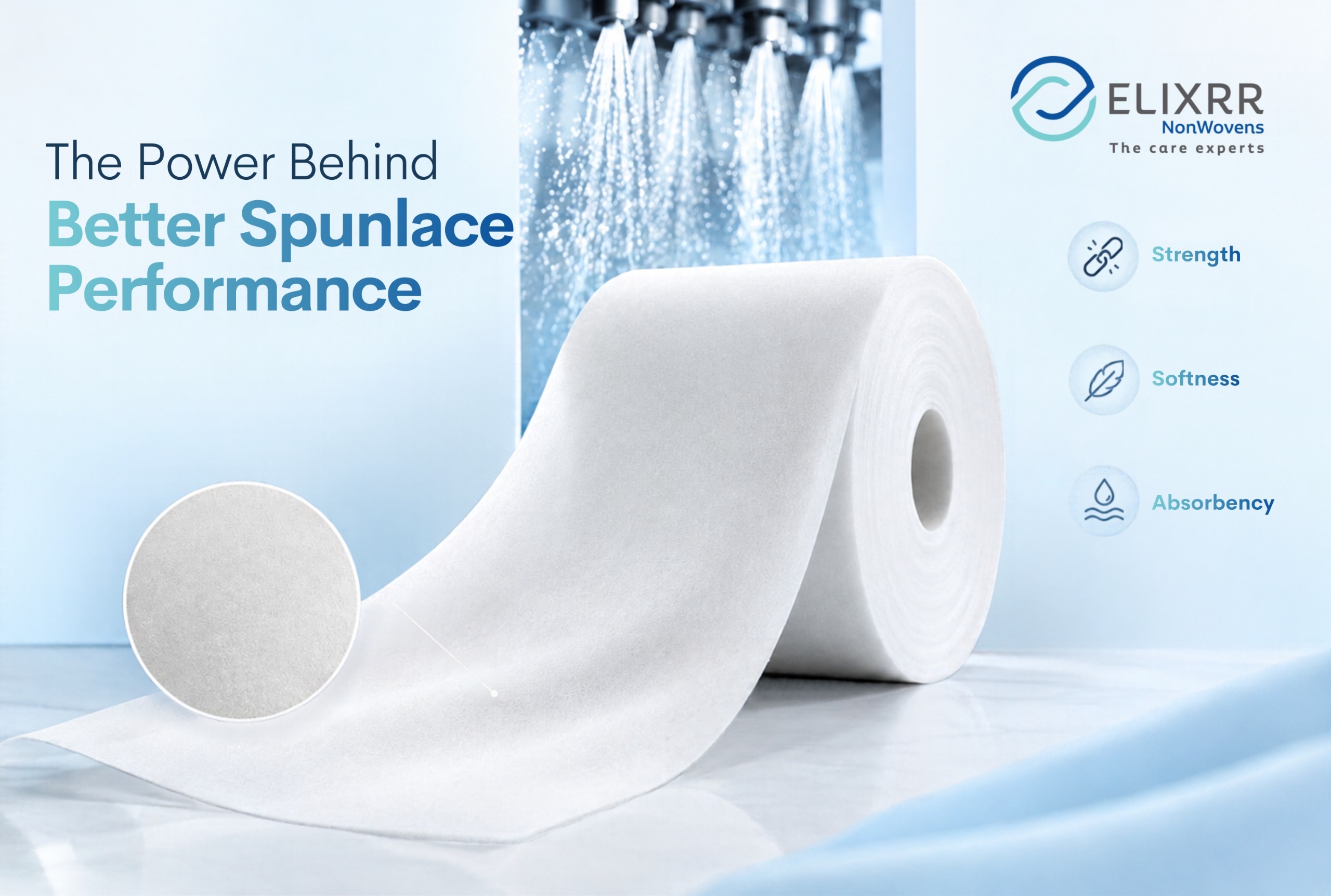
How Hydroentanglement Energy Changes Spunlace Strength, Softness, and Absorbency
Ask a spunlace producer what makes one fabric stronger than another and fibre choice usually comes first. Ask a process engineer, and you will hear a different answer: energy. How much water energy a fibre web receives while it is being bonded has a direct effect on how the finished fabric behaves.
-
Recent Post
-
Why Fibre Ratio Can Change Nonwoven Performance Even When GSM Remains Constant
A buyer lines up two spunlace samples. Both are 50 GSM and the price per square metre is close.A buy
20.06.2026
Read Article -
What Should Be Validated Before Moving From a Nonwoven Trial to Commercial Production?
A trial run that performs well doesn't automatically mean you're ready to commit commercial volume.
14.10.2026
Read Article -
Best GSM For Wet Wipes A Procurement Guide for Choosing the Right Spunlace Fabric
Getting the GSM wrong is one of the most common and most expensive mistakes in wet wipes sourcing.
20.06.2026
Read Article -
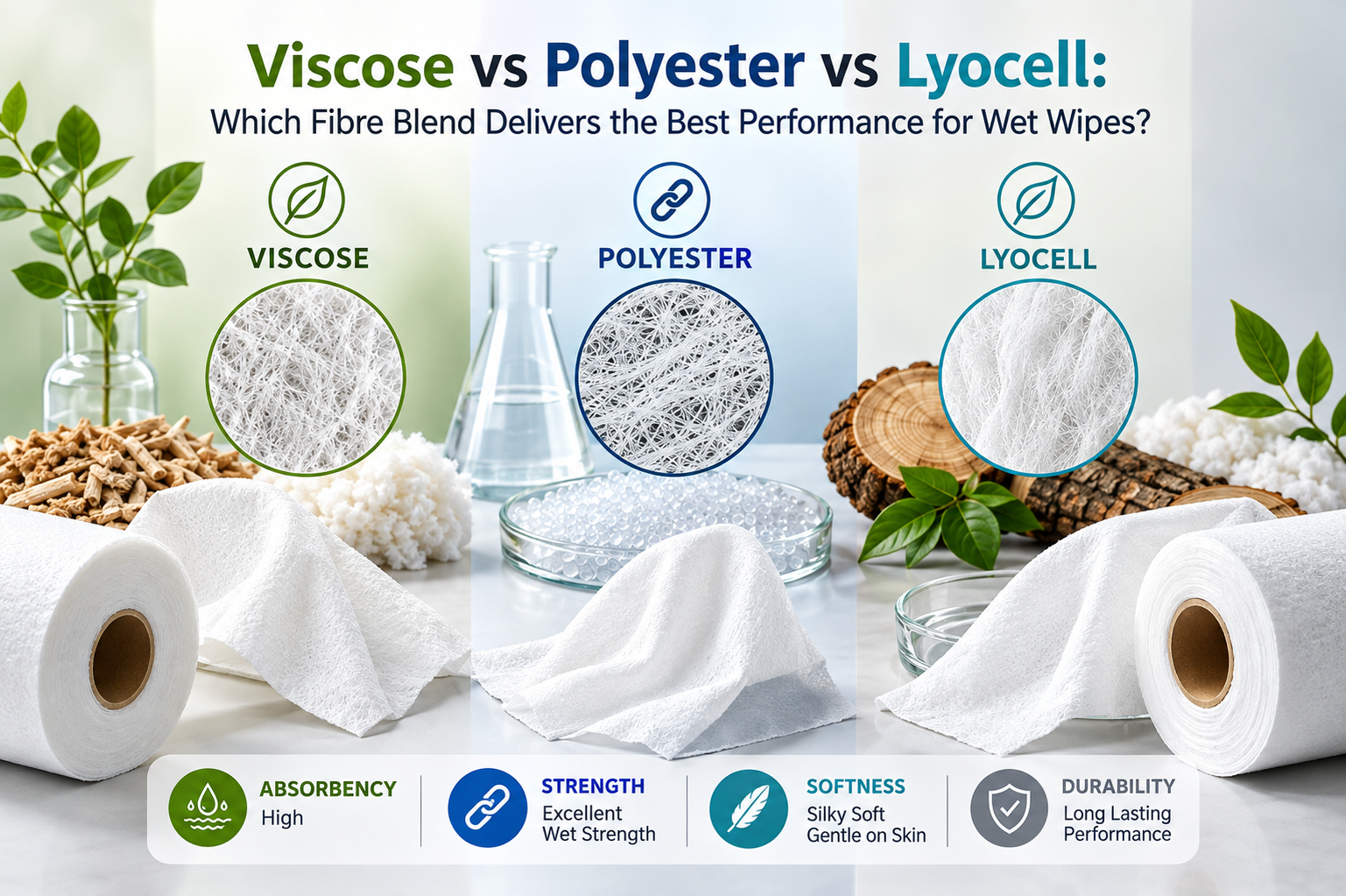
Viscose vs Polyester vs Lyocell: Which Fibre Blend Delivers the Best Performance for Wet Wipes?
Choosing between viscose, polyester, and Lyocell isn't really about picking a "best" fibre. It's abo
22.06.2026
Read Article -
How to Choose the Right Spunlace Nonwoven Fabric Manufacturer for Your Business
Sourcing decisions in the nonwoven category rarely fail because of price. They fail because a buyer
15.09.2026
Read Article -
How Global Wet Wipe Brands Evaluate Nonwoven Fabric Suppliers Before Signing a Contract
Multinational wet wipe brands don't sign with a nonwoven fabric supplier off a single sample and a g
08.09.2026
Read Article - View All Blogs
-
Need nonwoven solutions for your application?
Talk to our team about custom fabrics, sustainability, and product development tailored to your industry.
Frequently Asked Questions
Know everything — be it our products, our process, or why nonwovens are so cool.
What is the hydroentanglement process used for in nonwoven fabrics?
t bonds a loose web of fibres into a fabric using fine, high-pressure water jets, with no glue or heat. The result is a soft, drapeable fabric used widely for wipes, hygiene products, and medical items.
What is spunlace fabric?
Spunlace is a nonwoven fabric made by hydroentanglement. Water jets tangle the fibres together, so the fabric looks and feels closer to a textile than most other nonwovens.
What is the difference between spunbond and spunlace?
Spunbond is made from continuous filaments, usually polypropylene, bonded with heat. Spunlace uses shorter fibres bonded by water jets. Spunlace is typically softer and more absorbent when it contains cellulose, while spunbond is usually stiffer and lower in cost.
What are the three main types of nonwoven fabric?
Nonwovens are often grouped by how the web is formed: dry-laid, wet-laid and spunlaid. Spunlace is a bonding method, most often applied to dry-laid webs.
Does more hydroentanglement energy always make spunlace stronger?
No. Strength rises with energy at first, then levels off. Too much energy can compress the web, damage fibres and make the fabric stiff, so more is not always better.
How does hydroentanglement energy affect softness and absorbency?
Moderate energy keeps the web open, which helps softness and liquid holding. Very high energy compacts the fibres, so the fabric can feel firmer and hold less liquid.
Explore Recent Blogs
How Hydroentanglement Energy Changes Spunlace Strength, Softness, and Absorbency
Ask a spunlace producer what makes one fabric stronger than another and fibre choice usually comes
Read More
Why Fibre Ratio Can Change Nonwoven Performance Even When GSM Remains Constant
A buyer lines up two spunlace samples. Both are 50 GSM and the price per square metre is close.A buy
Read More
What Should Be Validated Before Moving From a Nonwoven Trial to Commercial Production?
A trial run that performs well doesn't automatically mean you're ready to commit commercial volume.
Read More
Best GSM For Wet Wipes A Procurement Guide for Choosing the Right Spunlace Fabric
Getting the GSM wrong is one of the most common and most expensive mistakes in wet wipes sourcing.
Read More

Weave Your Success with Our Revolutionary Fabrics
Power your business with Elixrr's cutting-edge nonwoven fabric solutions. Eco-friendly, customizable, and engineered for excellence—because innovation starts with the right foundation.

How Hydroentanglement Energy Changes Spunlace Strength, Softness, and Absorbency
Ask a spunlace producer what makes one fabric stronger than another, and fibre choice usually comes first. Ask a process engineer, and you will hear a different answer: energy. How much water energy a fibre web receives while it is being bonded has a direct effect on how the finished fabric behaves.
For a buyer, this is worth understanding. It explains why two spunlace rolls with the same fibres and the same weight can still feel and perform differently.
How hydroentanglement works
Hydroentanglement is the bonding step that gives spunlace its name. A loose web of fibres travels on a moving belt or perforated drum while rows of fine, high-pressure water jets pass over it. The jets push fibres sideways and downwards, so they wrap around and lock into each other. No glue or heat is needed, which is one reason spunlace feels more like a textile than most other nonwovens.
Several settings decide how much energy the web receives:
Put together, these set the total energy delivered per kilogram of fabric. More energy means more entanglement, up to a point.
What happens when the energy is too low
Under-bonded fabric looks fine on the roll and fails in use. The fibres are only loosely locked, so the fabric has low strength and tears easily. The surface can look fuzzy, and loose fibres can come off the wipe as lint. On a converting line, weak fabric breaks on unwinding or folding. In a wet wipe, it falls apart under a firm wipe.
What happens when the energy is raised
Raising the energy generally makes the fabric stronger, because more fibre crossings are locked in place. The surface also becomes cleaner and more stable. Up to a point, this is exactly what you want.
Past that point, the returns drop. The web gets compressed and dense. Some fibres can be damaged or broken by the force of the jets, which weakens the structure instead of strengthening it. The fabric can turn stiff, flat and papery. Process cost also climbs, since higher pressure and extra jet strips use more power and water.
Effect on softness
Softness depends on how open and mobile the fibres are. With moderate entanglement, fibres still have room to move, so the fabric drapes well and feels gentle on skin. Very high energy packs those fibres closer together and reduces that freedom, so the hand turns firmer. Fibre type and fineness matter as well. A soft viscose or fine polyester will feel softer than a coarse fibre at the same energy level.
Effect on absorbency
Absorbency has two parts: how much liquid the fabric can hold, and how fast it takes it up. Cellulose fibres such as viscose, cotton and pulp do most of the holding. The structure decides how much room there is for liquid and how well it travels through the fabric.
A bulkier, more open web has more space between fibres, so it holds more. Heavy compaction squeezes that space out. Over-energised fabric can therefore hold less liquid than a gentler version of the same blend. For blends that include pulp, there is another risk: strong jets can wash short pulp fibres out of the web, which hurts both absorbency and cleanliness.
The surface pattern also plays a part
The surface the web rests on during bonding leaves a mark. A smooth surface gives a plain, flat fabric. A patterned or apertured surface creates texture and open zones. Those patterns change how the wipe feels, how it picks up dirt and how liquid moves through it, without changing the fibre blend at all.
What this means for buyers
You do not need to know the machine settings, but you can ask better questions:
Because the effects interact, the practical route is to test samples on your own line. Our guide to fibre ratio and GSM shows how the blend shapes the same properties, and our piece on wet versus dry tensile strength explains what to ask about strength.
If you are comparing options, you can look at the SoftSpun and AbsorvSpun ranges, or contact our team to request spunlace samples for your application.