


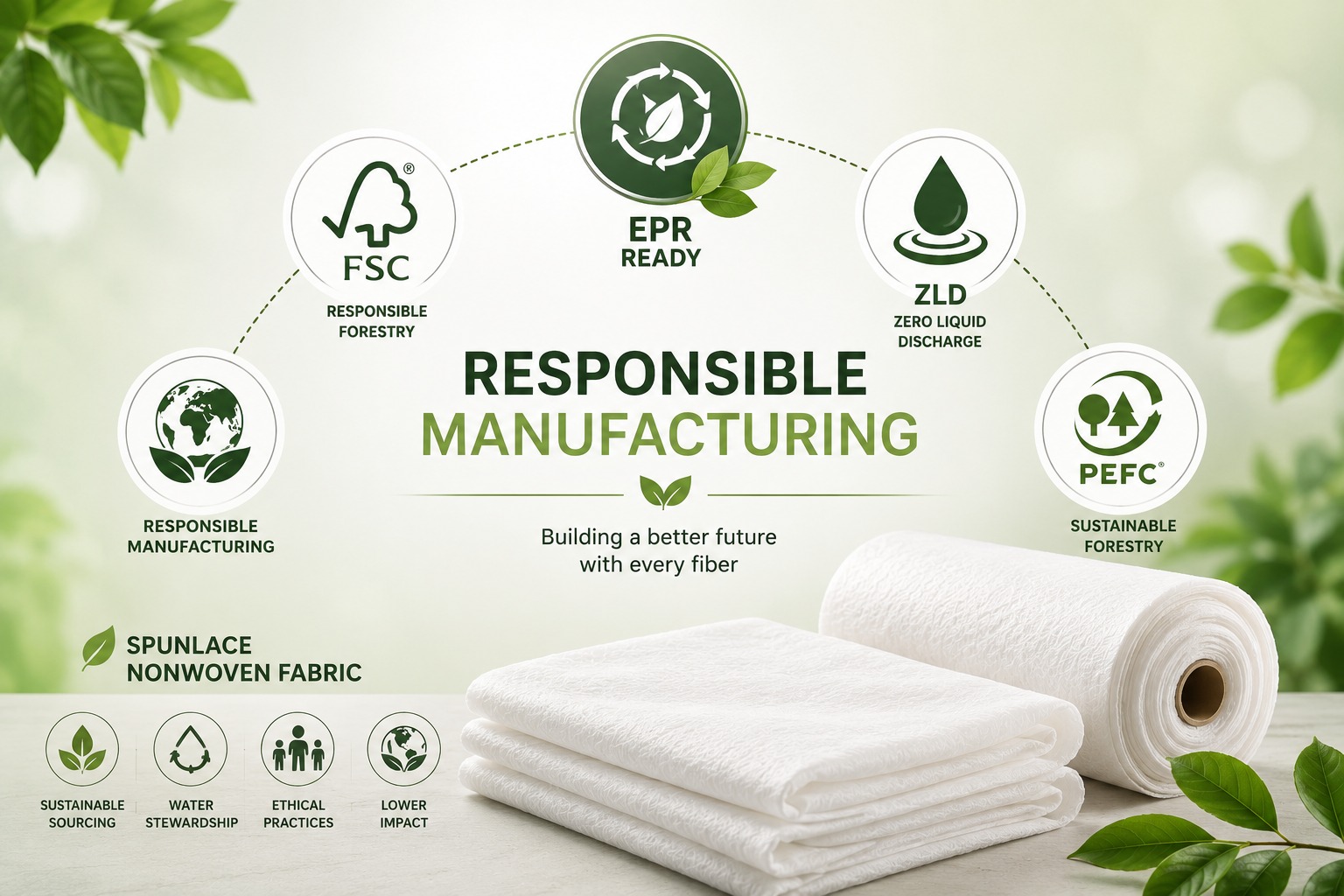
Beyond the Material: What Global Buyers Should Know About Responsible Nonwoven Manufacturing
Responsible nonwoven manufacturing enables global buyers to meet ESG goals through ZLD, FSC and PEFC-certified sourcing, EPR readiness, and transparent supply chains. Discover what makes a nonwoven supplier responsible and compliant for international markets.
-
Recent Post
-
Why Fibre Ratio Can Change Nonwoven Performance Even When GSM Remains Constant
A buyer lines up two spunlace samples. Both are 50 GSM and the price per square metre is close.A buy
20.06.2026
Read Article -
What Should Be Validated Before Moving From a Nonwoven Trial to Commercial Production?
A trial run that performs well doesn't automatically mean you're ready to commit commercial volume.
14.10.2026
Read Article -
Best GSM For Wet Wipes A Procurement Guide for Choosing the Right Spunlace Fabric
Getting the GSM wrong is one of the most common and most expensive mistakes in wet wipes sourcing.
20.06.2026
Read Article -
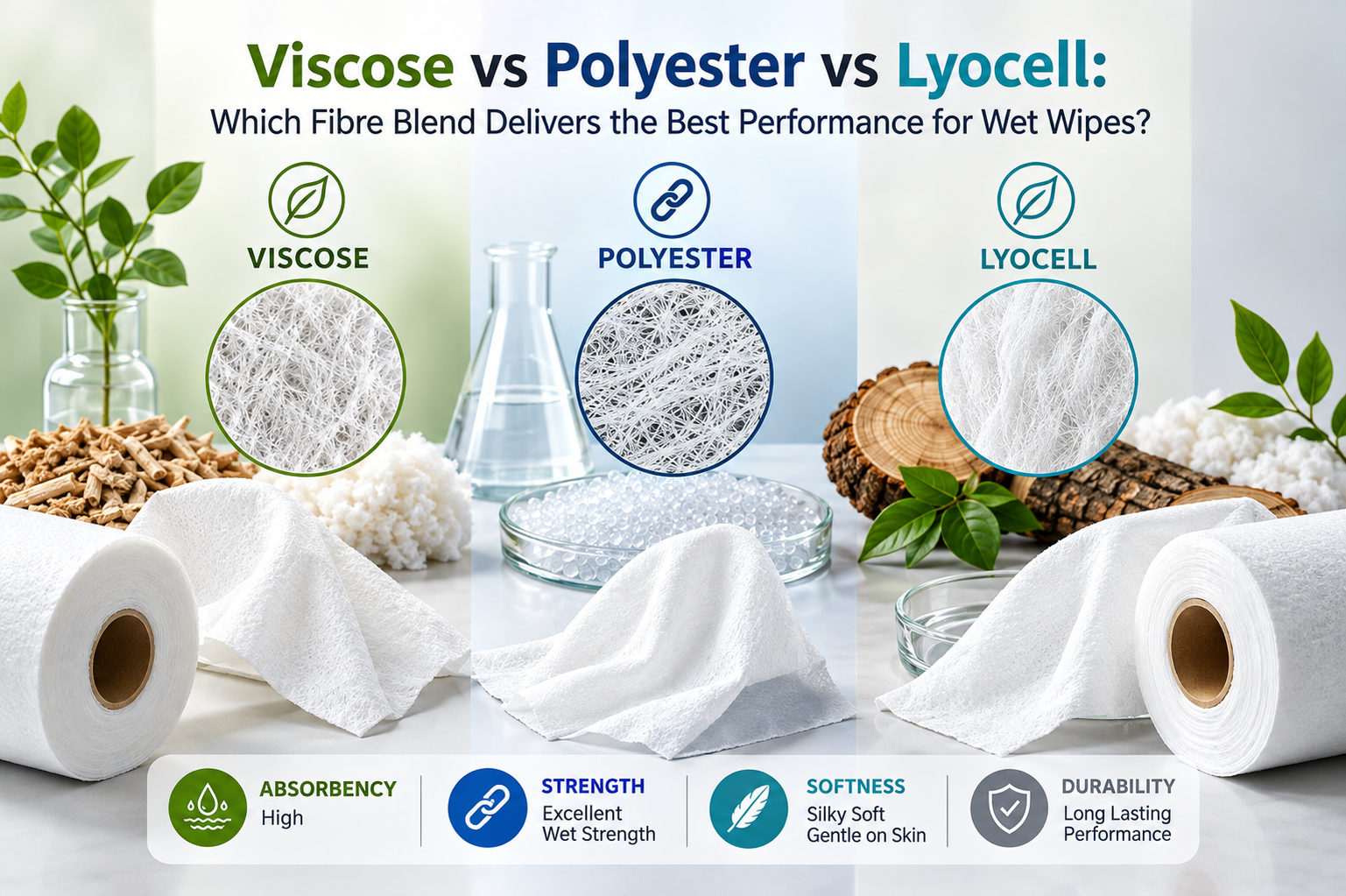
Viscose vs Polyester vs Lyocell: Which Fibre Blend Delivers the Best Performance for Wet Wipes?
Choosing between viscose, polyester, and Lyocell isn't really about picking a "best" fibre. It's abo
22.06.2026
Read Article -
How to Choose the Right Spunlace Nonwoven Fabric Manufacturer for Your Business
Sourcing decisions in the nonwoven category rarely fail because of price. They fail because a buyer
15.09.2026
Read Article -
How Global Wet Wipe Brands Evaluate Nonwoven Fabric Suppliers Before Signing a Contract
Multinational wet wipe brands don't sign with a nonwoven fabric supplier off a single sample and a g
08.09.2026
Read Article - View All Blogs
-
Need nonwoven solutions for your application?
Talk to our team about custom fabrics, sustainability, and product development tailored to your industry.
Frequently Asked Questions
Know everything — be it our products, our process, or why nonwovens are so cool.
What is responsible nonwoven manufacturing?
Responsible nonwoven manufacturing is the process of producing nonwoven fabrics using environmentally responsible practices, ethical sourcing, transparent supply chains, and internationally recognized certifications. It focuses on sustainability, regulatory compliance, and long-term supply chain reliability.
What certifications should a responsible nonwoven manufacturer have?
A responsible nonwoven manufacturing partner should hold certifications such as ISO 9001, ISO 14001, FSC, PEFC, and Zero Liquid Discharge (ZLD), along with documentation that supports traceability, responsible sourcing, and environmental compliance.
How does responsible nonwoven manufacturing help meet EU regulations?
Responsible nonwoven manufacturing helps businesses comply with EU regulations by providing certified materials, documented supply chains, responsible forestry practices, and environmental data that support requirements under CSDDD, LkSG, PPWR, and Extended Producer Responsibility (EPR).
What documents should buyers request from a responsible nonwoven manufacturer?
Buyers should request certifications such as FSC, PEFC, ISO 9001, ISO 14001, and ZLD, along with chain-of-custody records, biodegradability reports, material safety data sheets (MSDS), environmental metrics, and EPR-related documentation to verify responsible nonwoven manufacturing practices.
Explore Recent Blogs
Why Fibre Ratio Can Change Nonwoven Performance Even When GSM Remains Constant
A buyer lines up two spunlace samples. Both are 50 GSM and the price per square metre is close.A buy
Read More
What Should Be Validated Before Moving From a Nonwoven Trial to Commercial Production?
A trial run that performs well doesn't automatically mean you're ready to commit commercial volume.
Read More
Best GSM For Wet Wipes A Procurement Guide for Choosing the Right Spunlace Fabric
Getting the GSM wrong is one of the most common and most expensive mistakes in wet wipes sourcing.
Read More
Viscose vs Polyester vs Lyocell: Which Fibre Blend Delivers the Best Performance for Wet Wipes?
Choosing between viscose, polyester, and Lyocell isn't really about picking a "best" fibre. It's abo
Read More

Weave Your Success with Our Revolutionary Fabrics
Power your business with Elixrr's cutting-edge nonwoven fabric solutions. Eco-friendly, customizable, and engineered for excellence—because innovation starts with the right foundation.

Responsible nonwoven manufacturing is now one of the first things global buyers evaluate when selecting a supplier. Buyers today ask not only how a fabric performs but also whether the manufacturer follows responsible nonwoven manufacturing practices. Responsible operations are just as important as product performance for sustainability teams, ESG managers, and procurement leads in France, Germany, and the US.
Key Takeaways
Why Responsible Nonwoven Manufacturing Matters for Global Buyers
A few years ago, European buyers looking at Indian nonwoven suppliers mainly asked for a spec sheet, a price list, and maybe an ISO 9001 certificate. That process still exists, but now the scope has grown. Sustainability teams, ESG functions, and buyers in regulated markets are leading this change.
The EU's Corporate Sustainability Due Diligence Directive asks companies to identify, prevent, mitigate, and address human rights and environmental impacts across their operations and value chains. This directive goes beyond disclosure to enforcement and liability tied to action. It was published in the EU Official Journal on 5 July 2024. Germany has been operating its own national equivalent, the LkSG, since 2023. From January 2024, the LkSG extended to companies with 1,000 or more employees in Germany, requiring documented due diligence on human rights and environmental risk across the entire supply chain.
Here’s what this means in practice. If a German hygiene brand or a French private-label buyer sources nonwoven substrates from India, they are now legally and commercially responsible for what happens at the supplier’s plant. Water management, raw material sourcing, labor conditions, and environmental compliance are now shared responsibilities.
The Five Pillars of Responsible Nonwoven Manufacturing
Responsible manufacturing is not just one thing. It is a framework based on five main pillars:
Understanding Zero-Liquid-Discharge
Water management is one of the biggest environmental risks in nonwoven manufacturing. The main process, hydroentanglement, uses a lot of water. How this water is managed and whether it is released into local systems is important. Zero Liquid Discharge (ZLD) eliminates discharge completely. All process water is treated on-site and either recycled or safely disposed of, so no wastewater leaves the facility. This lowers environmental impact and shows real water stewardship.
For procurement teams, ZLD is becoming the norm rather than something unusual. It is now a standard expectation for suppliers in EU markets and is becoming more common in the USA. Suppliers with ZLD certification stand out and give buyers confidence that water use is minimised.
Why FSC and PEFC Are Important
FSC and PEFC certifications show that pulp comes from responsibly managed forests. However, buyers should look beyond just having these certifications. They should ask what percentage of pulp is certified and what the certification covers. Also, check if the supplier can provide chain-of-custody documentation. Certified fiber is not perfect, but it does show third-party verification and a commitment to responsible forestry.
Extended Producer Responsibility: Why It Matters
Extended Producer Responsibility (EPR) is changing how brands approach the end-of-life stage of their products. EPR means brands are responsible for how their products are disposed of, starting with the materials they choose. Using a nonwoven substrate like pulp-based spunlace, which is designed for compostability or safe disposal, helps with EPR compliance. If the substrate’s composition is unclear, it makes documentation harder and can hurt a company’s reputation for responsibility.
An EPR-ready supplier knows how their substrate is used in the buyer’s final product. They are clear about recyclability or biodegradability claims and understand what documentation buyers need for EPR reporting. This is especially important for wipes, hygiene products, and packaging, where EU rules like the PPWR and Single-Use Plastics Directive already require labelling and producer responsibility.
Elixrr's sustainability credentials, including ZLD manufacturing and FSC/PEFC-certified raw material sourcing, are directly relevant to buyers building EPR-compliant supply chains. For plastic-free substrate formats, the fibre origin documentation and biodegradability characteristics of pulp-based spunlace help brands substantiate their claims in regulated markets.
What Documents to Request From Suppliers
Conclusion
Responsible sourcing in nonwovens is not a one-time checklist. It depends on the quality of information a supplier provides, the standards they follow, and how easily they can help you meet compliance needs. The best suppliers are those who already have strong documentation systems in place because they saw the need before it became a rule.
To discuss Elixrr's sustainability credentials, request certification documentation, or start a sourcing conversation, speak to the team.