


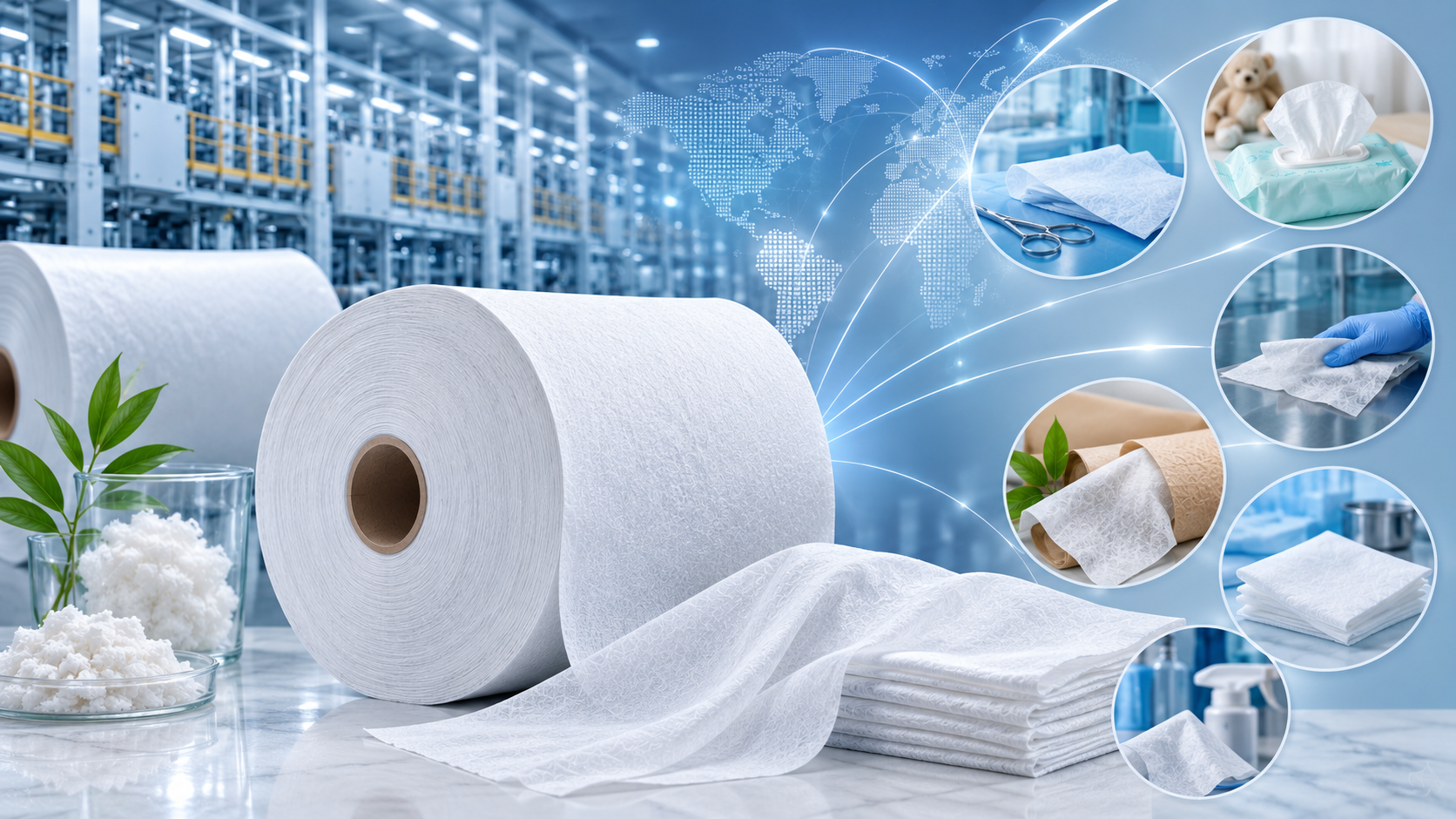
Why Multi-Application Nonwoven Manufacturing Matters to Global Buyers
Discover why global buyers are choosing multi-application nonwoven manufacturers to simplify procurement, reduce supply chain complexity, and maintain consistent quality across hygiene, medical, industrial, and sustainable applications. Learn how a unified manufacturing platform supports compliance, innovation, and long-term sourcing success.
-
Recent Post
-
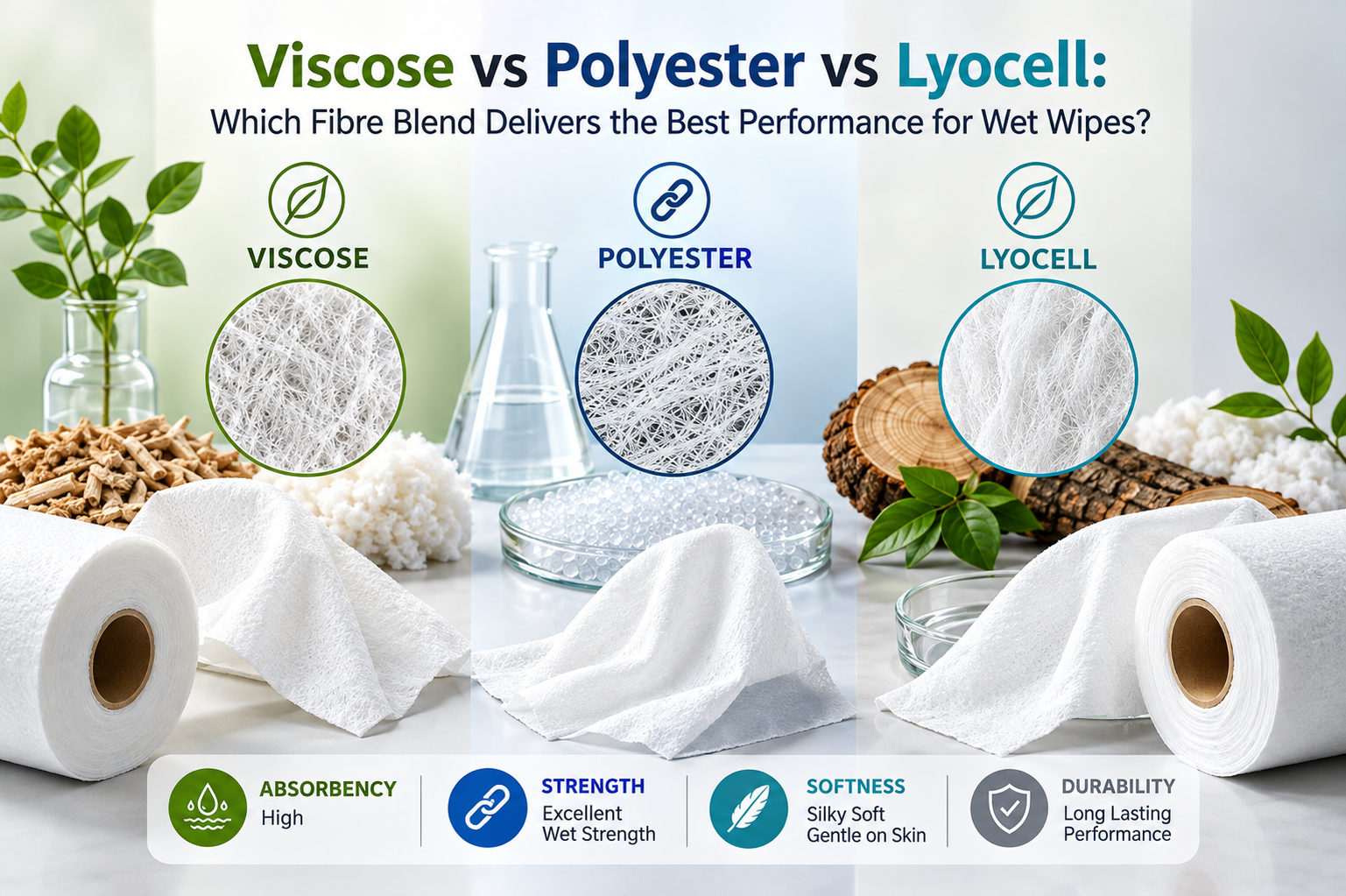
Viscose vs Polyester vs Lyocell: Which Fibre Blend Delivers the Best Performance for Wet Wipes?
Choosing between viscose, polyester, and Lyocell isn't really about picking a "best" fibre. It's abo
22.06.2026
Read Article -
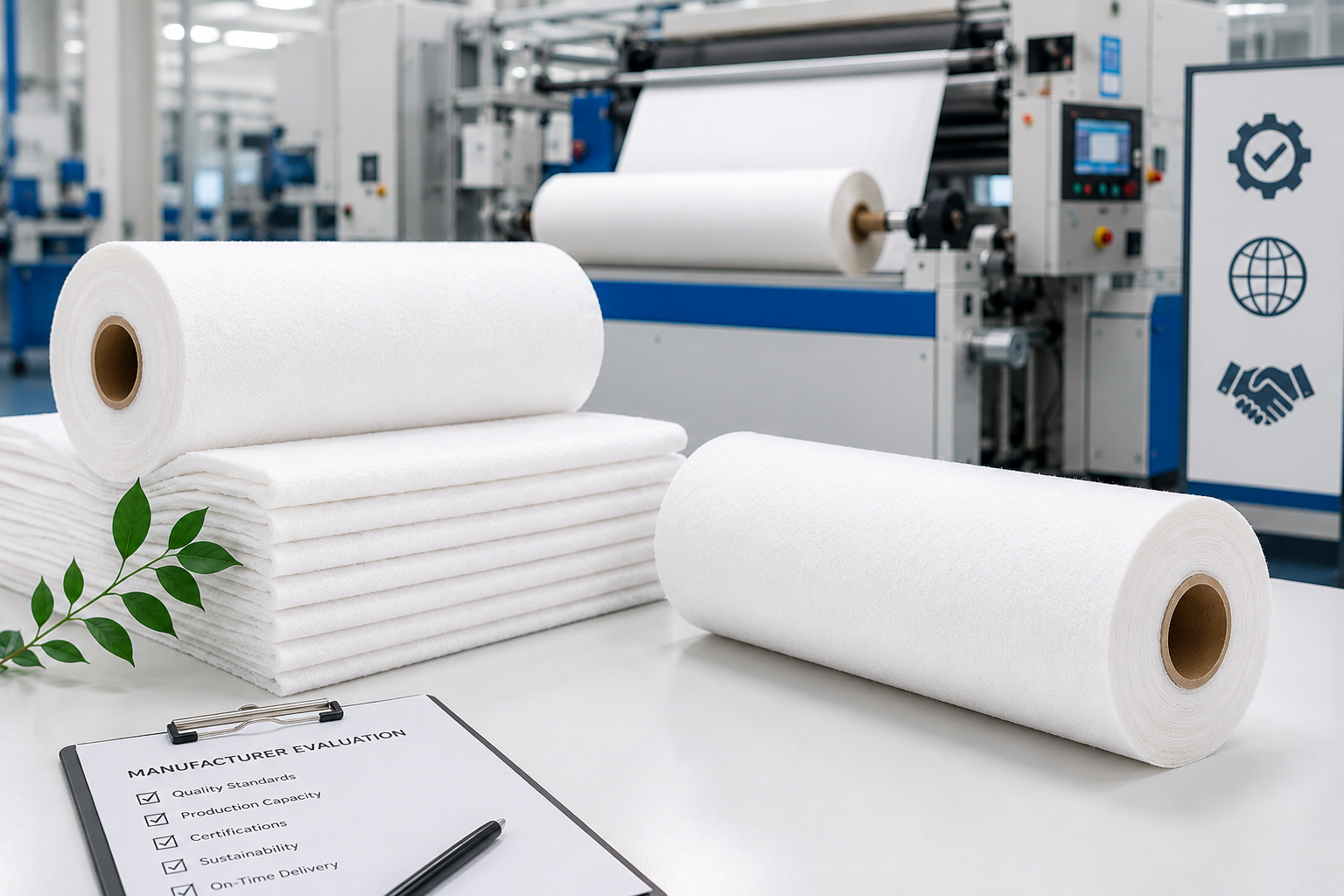
How to Choose the Right Spunlace Nonwoven Fabric Manufacturer for Your Business
Sourcing decisions in the nonwoven category rarely fail because of price. They fail because a buyer
15.09.2026
Read Article -
How Global Wet Wipe Brands Evaluate Nonwoven Fabric Suppliers Before Signing a Contract
Multinational wet wipe brands don't sign with a nonwoven fabric supplier off a single sample and a g
08.09.2026
Read Article -
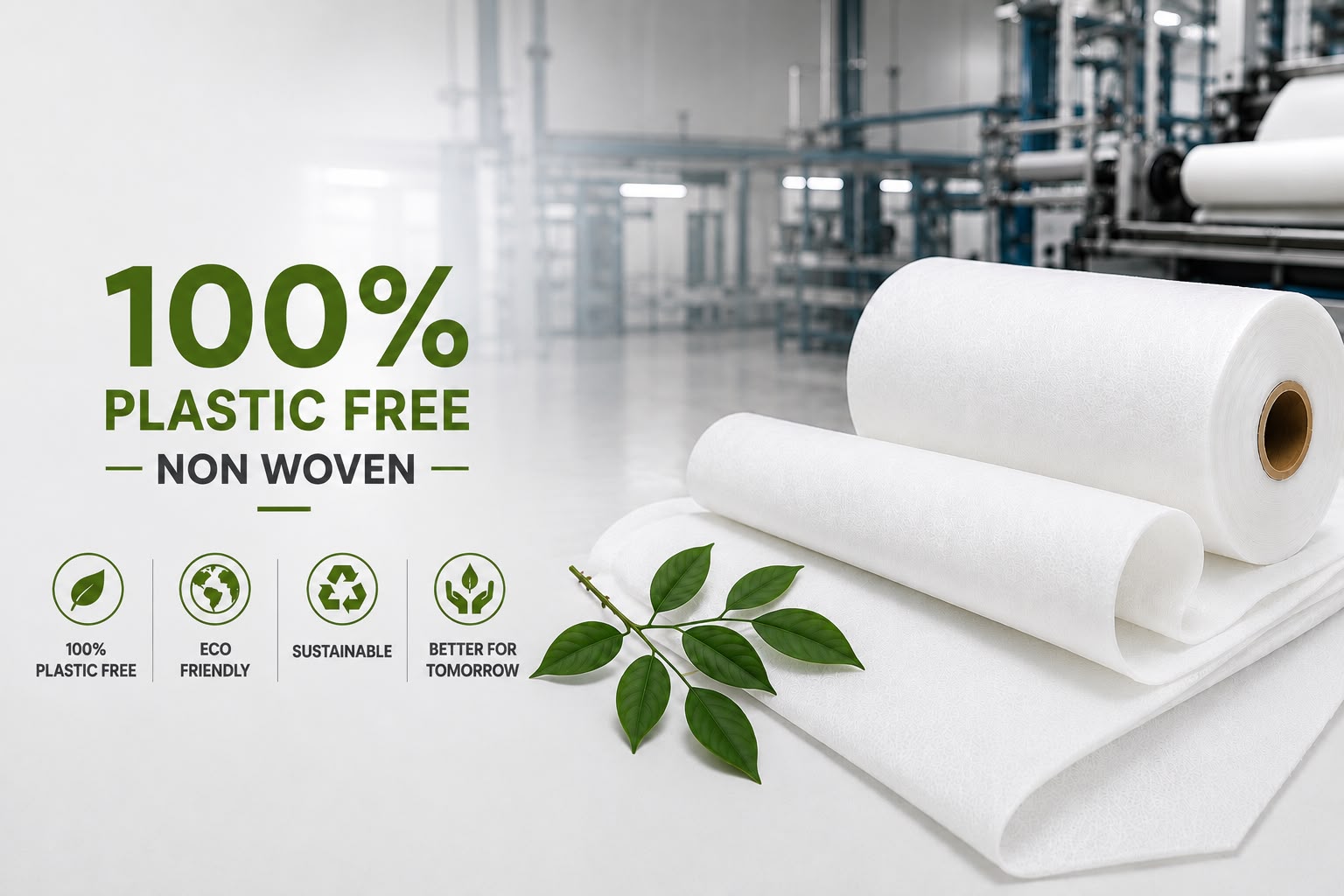
100 Percent Plastic Free Nonwovens: What Global Buyers Need to Know in 2026
Learn how plastic-free nonwoven materials are helping brands meet evolving EU and US sustainability
14.08.2026
Read Article -
What European Buyers Often Get Wrong About Sourcing Nonwovens from India
Sourcing nonwovens from India is no longer driven by cost alone. This blog explains why European buy
29.07.2026
Read Article -
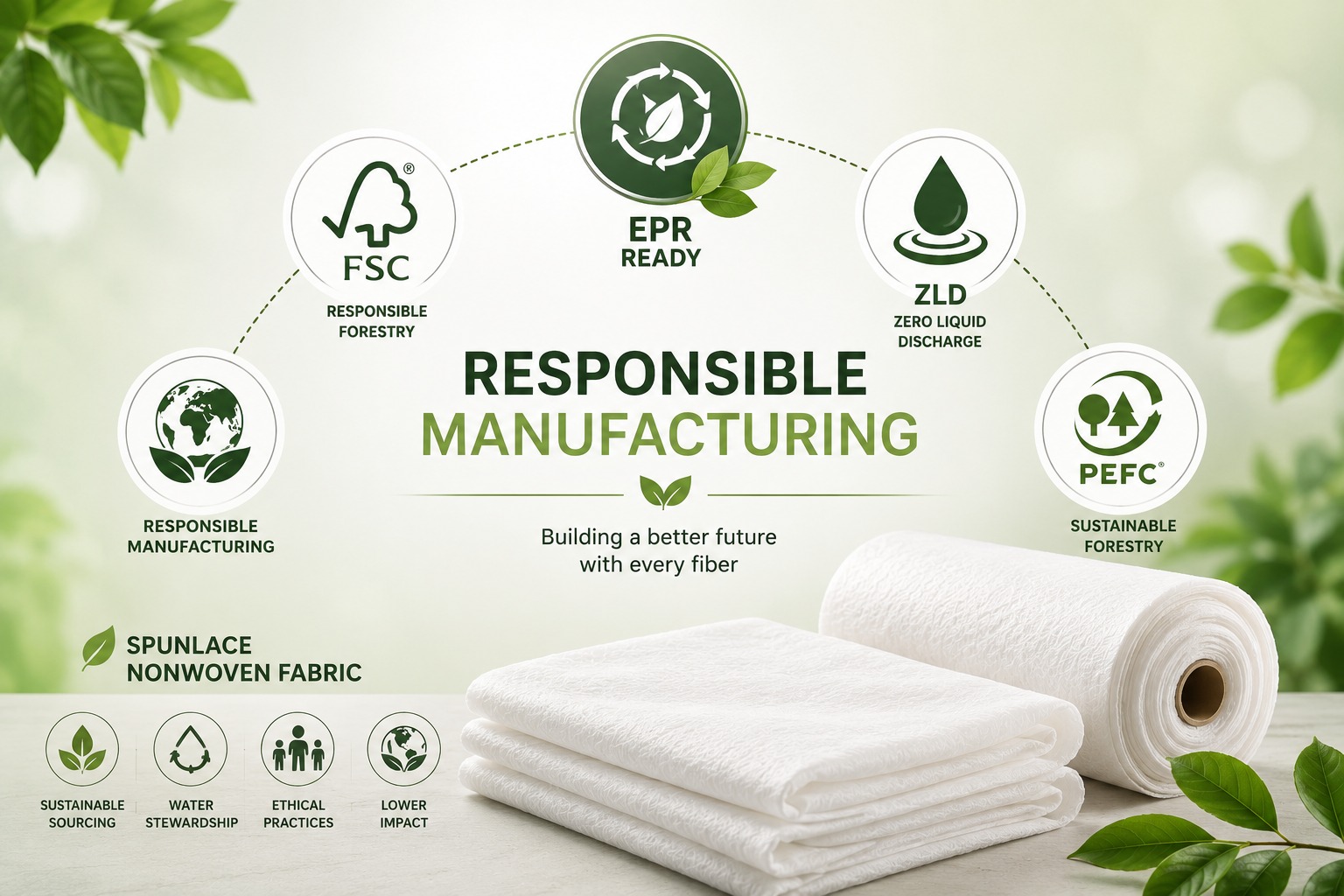
Beyond the Material: What Global Buyers Should Know About Responsible Nonwoven Manufacturing
Responsible nonwoven manufacturing enables global buyers to meet ESG goals through ZLD, FSC and PEFC
22.07.2026
Read Article - View All Blogs
-
Need nonwoven solutions for your application?
Talk to our team about custom fabrics, sustainability, and product development tailored to your industry.
Frequently Asked Questions
Know everything — be it our products, our process, or why nonwovens are so cool.
What is multi-application nonwoven manufacturing?
Multi-application nonwoven manufacturing is a production approach where a single manufacturer produces nonwoven fabrics for multiple industries, including hygiene, medical, industrial cleaning, packaging, and personal care, using one integrated manufacturing platform. This simplifies sourcing while maintaining consistent quality and certifications.
What are the benefits of sourcing from a multi-application nonwoven manufacturer?
Working with a multi-application nonwoven manufacturer offers several advantages, including:
Fewer supplier audits and approvals
Consistent quality management systems
Faster procurement and documentation
Greater supply chain reliability
Easier compliance with international standards
Can one manufacturing platform produce nonwoven fabrics for multiple applications?
Yes. A modern multi-application nonwoven manufacturing platform can produce nonwoven materials for hygiene, medical, industrial, and sustainable packaging applications by adjusting fiber composition, fabric weight, embossing, and surface treatments while maintaining consistent quality standards.
Why is multi-application nonwoven manufacturing important for supply chain efficiency?
Multi-application nonwoven manufacturing improves supply chain efficiency by reducing the number of suppliers, standardizing certifications and documentation, minimizing procurement complexity, and helping businesses respond faster to changes in market demand.
Explore Recent Blogs
Viscose vs Polyester vs Lyocell: Which Fibre Blend Delivers the Best Performance for Wet Wipes?
Choosing between viscose, polyester, and Lyocell isn't really about picking a "best" fibre. It's abo
Read More
How to Choose the Right Spunlace Nonwoven Fabric Manufacturer for Your Business
Sourcing decisions in the nonwoven category rarely fail because of price. They fail because a buyer
Read More
How Global Wet Wipe Brands Evaluate Nonwoven Fabric Suppliers Before Signing a Contract
Multinational wet wipe brands don't sign with a nonwoven fabric supplier off a single sample and a g
Read More
100 Percent Plastic Free Nonwovens: What Global Buyers Need to Know in 2026
Learn how plastic-free nonwoven materials are helping brands meet evolving EU and US sustainability
Read More

Weave Your Success with Our Revolutionary Fabrics
Power your business with Elixrr's cutting-edge nonwoven fabric solutions. Eco-friendly, customizable, and engineered for excellence—because innovation starts with the right foundation.

If you're managing multiple product lines, you probably source nonwovens from multiple suppliers: one for hygiene, another for medical, and possibly a third for industrial or cleaning. Each has different quality protocols, documentation formats, lead times, and minimums. The coordination burden is real.
Certifications often differ from one supplier to another. If a supplier faces a production problem, your entire product pipeline can be affected. These challenges are the hidden costs of working with multiple nonwoven suppliers, and they are encouraging procurement teams worldwide to reconsider their sourcing strategies.
Consolidating suppliers seems like an obvious solution. However, it means finding a partner who understands all your application needs without sacrificing on quality or innovation. This is where multi-application manufacturing platforms truly stand out.
Key Takeaways
The Hidden Costs of Fragmented Sourcing
Every supplier relationship has hidden weight. Onboarding, qualification, audit scheduling, certification alignment, sustainability data collection. None of this appears on the purchase order, but all of it lands on someone's calendar.
When a procurement team in Germany or France manages nonwoven fabric across hygiene, healthcare, and industrial cleaning through separate suppliers, the per-unit material cost might look efficient. But the total cost of managing those supplier relationships — and the compliance overhead of keeping certification documentation consistent across them — rarely does.
There is also the question of what happens when something goes wrong. A production disruption at one supplier does not stay contained. It travels through your product pipeline.
According to the 2025 Deloitte Global Chief Procurement Officer Survey, nearly two-thirds of procurement leaders name supply chain visibility as their top priority for managing risk. For nonwoven sourcing teams working across multiple application categories, visibility built around fewer, better-qualified suppliers is a direct path to that goal.
What a Real Multi-Application Platform Looks Like
A multi-application nonwoven manufacturer architects product families in which each application shares core manufacturing principles and quality systems but delivers specifications tailored to specific needs.
Think about it this way: SoftSpun for hygiene (emphasizing softness and absorbency), EcoSpun+ for sustainability-first applications (plastic-free, certified), EnduraSpun for industrial cleaning (durability and strength), SteriSpun for medical (lint-free and regulated). Each family solves a different problem. But they all come from one supplier, one quality system, one approach to partnership. That coherence matters.
How Composition Flexibility Creates Solutions
Pulp-based spunlace adapts across applications through thoughtful variations in composition, thickness, surface treatment, and embossing. A hygiene substrate might emphasize softness through lyocell content. A medical substrate might minimize lint through specific processing. An industrial substrate might maximize tensile strength through fiber alignment. A sustainable substrate might maximize biodegradability through pulp proportion.For procurement, this means working with one supplier who understands your range of requirements and can innovate within a coherent framework—rather than juggling suppliers with different philosophies and capabilities.
Elixrr's Six Product Families
Elixrr Nonwovens has built its product architecture around this principle. Six product families, one manufacturing platform.
SoftSpun™ handles the hygiene and personal care brief ranging from baby wipes, adult incontinence, feminine care — in pulp-viscose, pulp-lyocell, and lyocell constructions, with biodegradable and GRS-certified options where the application requires it.
EcoSpun+™ covers the chemical-free end of personal care — 100% plastic-free substrates in pulp-lyocell for sensitive-skin and infant applications, with compostable certification.
SteriSpun™ solves the surface cleaning and antimicrobial requirement — dimensionally stable, high-surface-contact-area substrates for cleanroom wipes, food service wipes, and electronic surface cleaning.
EnduraSpun™ addresses the industrial cleaning brief — high-strength, tear-resistant, lint-free fabric for automotive maintenance, food industry, and heavy-duty facility cleaning.
EcoWrap™ covers sustainable packaging — pulp-based spunlace in biodegradable and recyclable formats as a credible alternative to conventional single-use plastic packaging films.
AbsorvSpun™ serves the medical application — sterile, high-absorbency substrates for wound care, surgical drapes, and disposable medical gowns, sterilisation-compatible for regulated EU and US healthcare markets.
All six sit under the same ISO 9001, ISO 14001, FSC, PEFC, and GRS certification stack. One platform, one audit. Explore the full range at Elixrr's product pages.
What to Look for in a Multi-Application Supplier
Final Thoughts
The sourcing problem that we discussed has a straightforward answer. Not a simpler process, but a better supplier architecture.
At Elixrr, care in performance means that every product family we produce is engineered to solve a real application problem, documented under the same quality system, and certified to the same standards. The manufacturing platform is the point. The six product families are the proof.
If you are reviewing your nonwoven supplier base or planning a new application category, speak to our team via our partnership page