


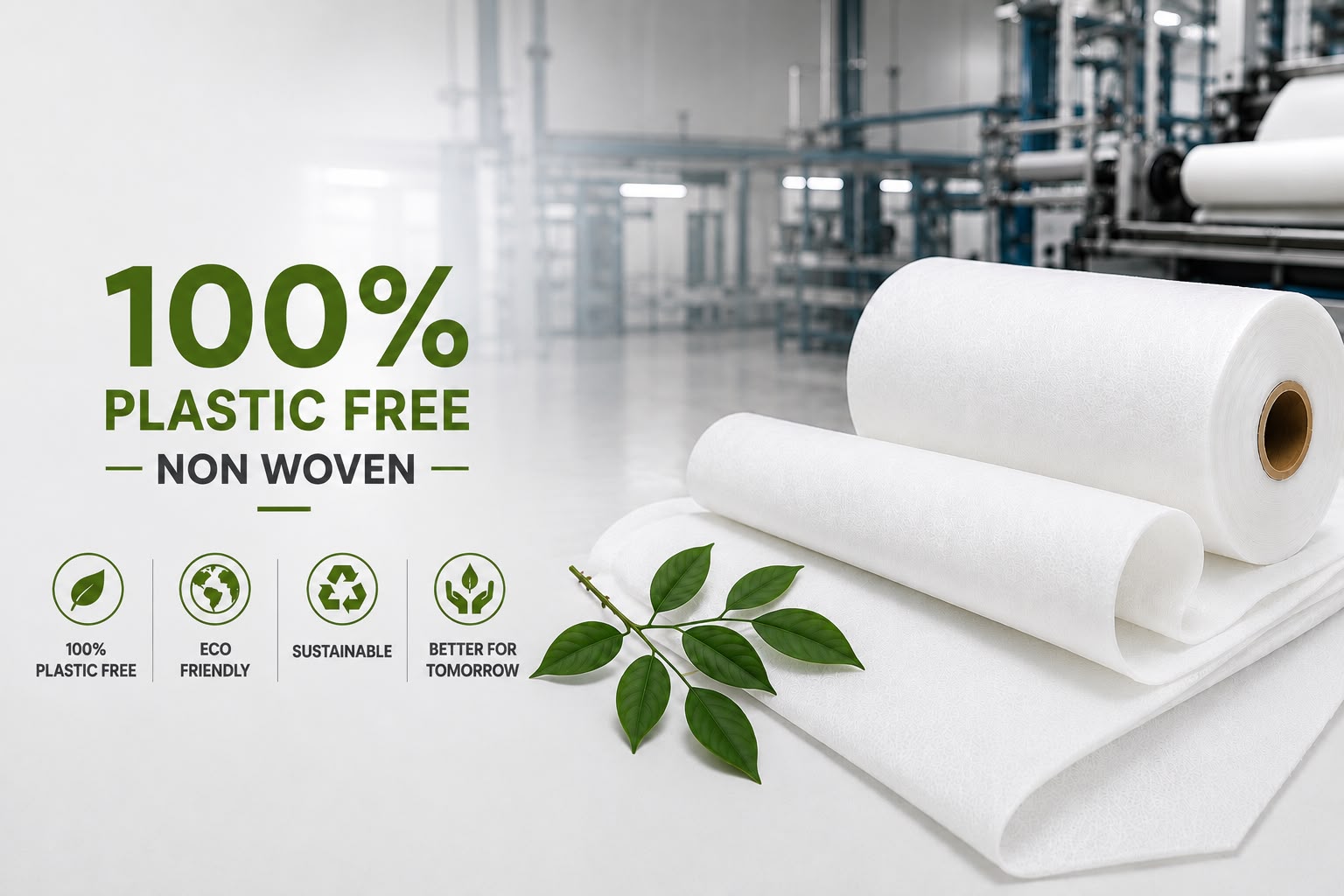
100 Percent Plastic Free Nonwovens: What Global Buyers Need to Know in 2026
Learn how plastic-free nonwoven materials are helping brands meet evolving EU and US sustainability regulations. This blog explores the benefits of Pulp + Lyocell spunlace, explains why plastic-free substrates are becoming the preferred choice for hygiene and personal care applications, and highlights what global buyers should look for in a compliant nonwoven supplier.
-
Recent Post
-
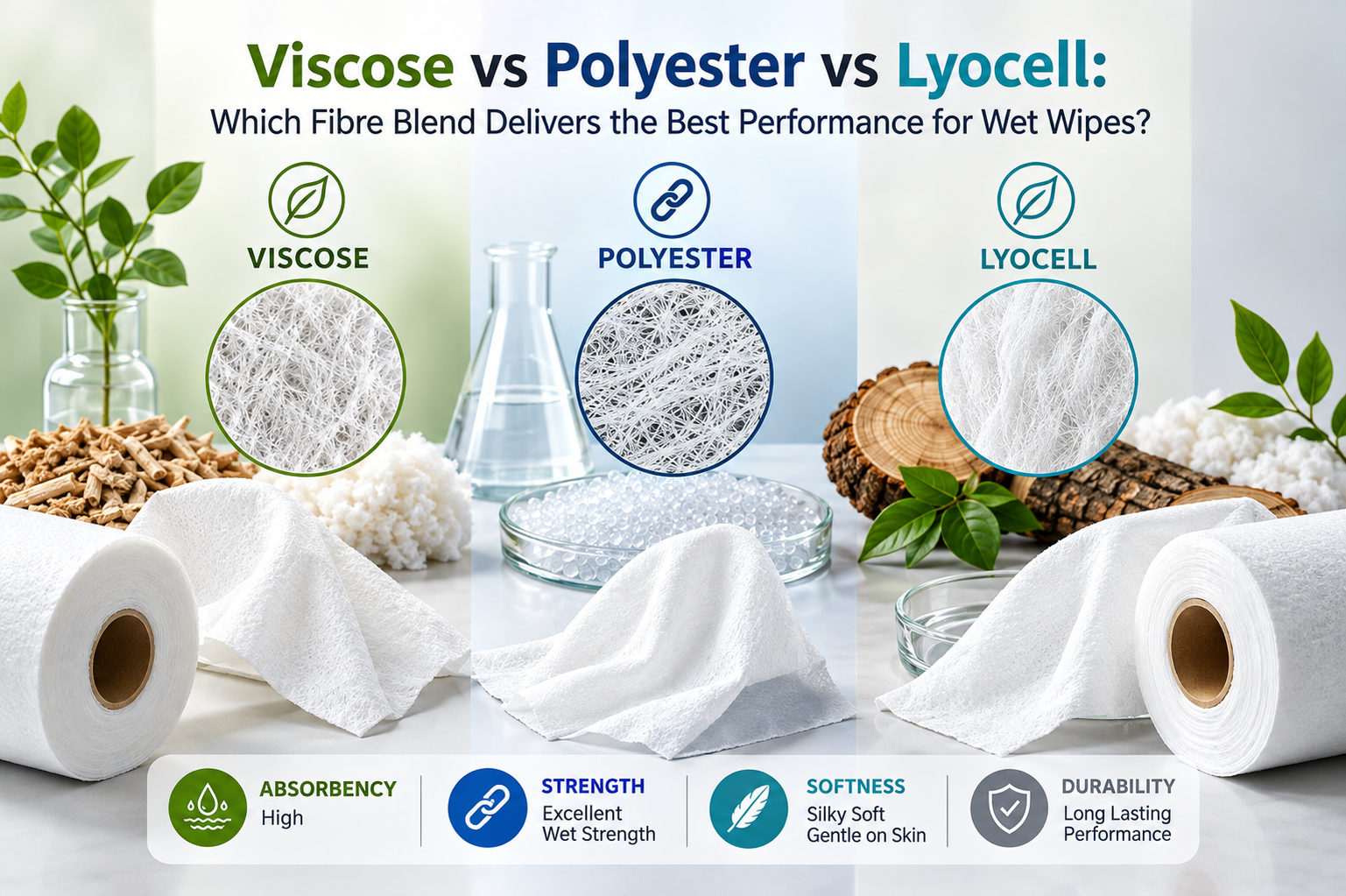
Viscose vs Polyester vs Lyocell: Which Fibre Blend Delivers the Best Performance for Wet Wipes?
Choosing between viscose, polyester, and Lyocell isn't really about picking a "best" fibre. It's abo
22.06.2026
Read Article -
How to Choose the Right Spunlace Nonwoven Fabric Manufacturer for Your Business
Sourcing decisions in the nonwoven category rarely fail because of price. They fail because a buyer
15.09.2026
Read Article -
How Global Wet Wipe Brands Evaluate Nonwoven Fabric Suppliers Before Signing a Contract
Multinational wet wipe brands don't sign with a nonwoven fabric supplier off a single sample and a g
08.09.2026
Read Article -
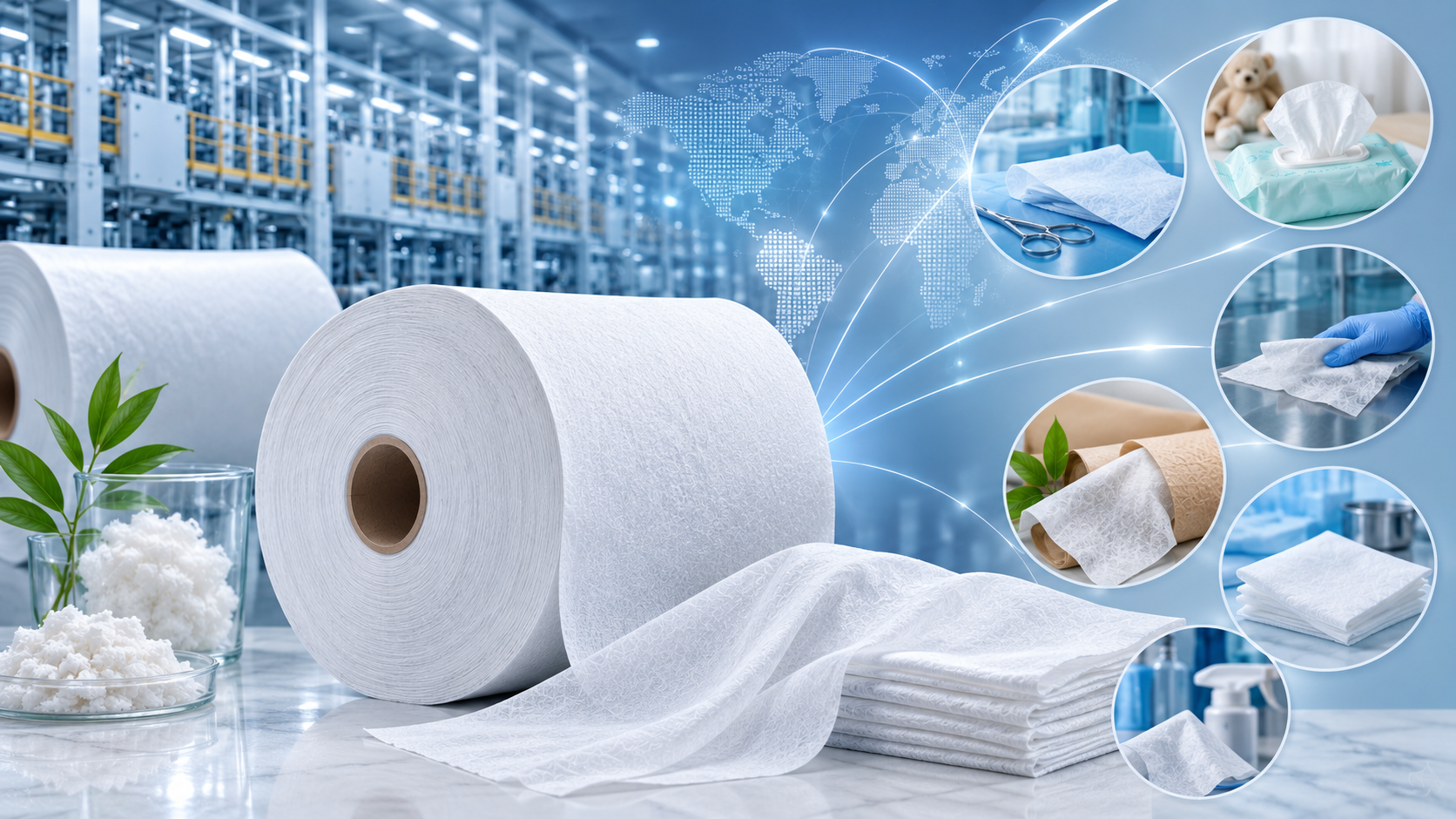
Why Multi-Application Nonwoven Manufacturing Matters to Global Buyers
Discover why global buyers are choosing multi-application nonwoven manufacturers to simplify procure
07.08.2026
Read Article -
What European Buyers Often Get Wrong About Sourcing Nonwovens from India
Sourcing nonwovens from India is no longer driven by cost alone. This blog explains why European buy
29.07.2026
Read Article -
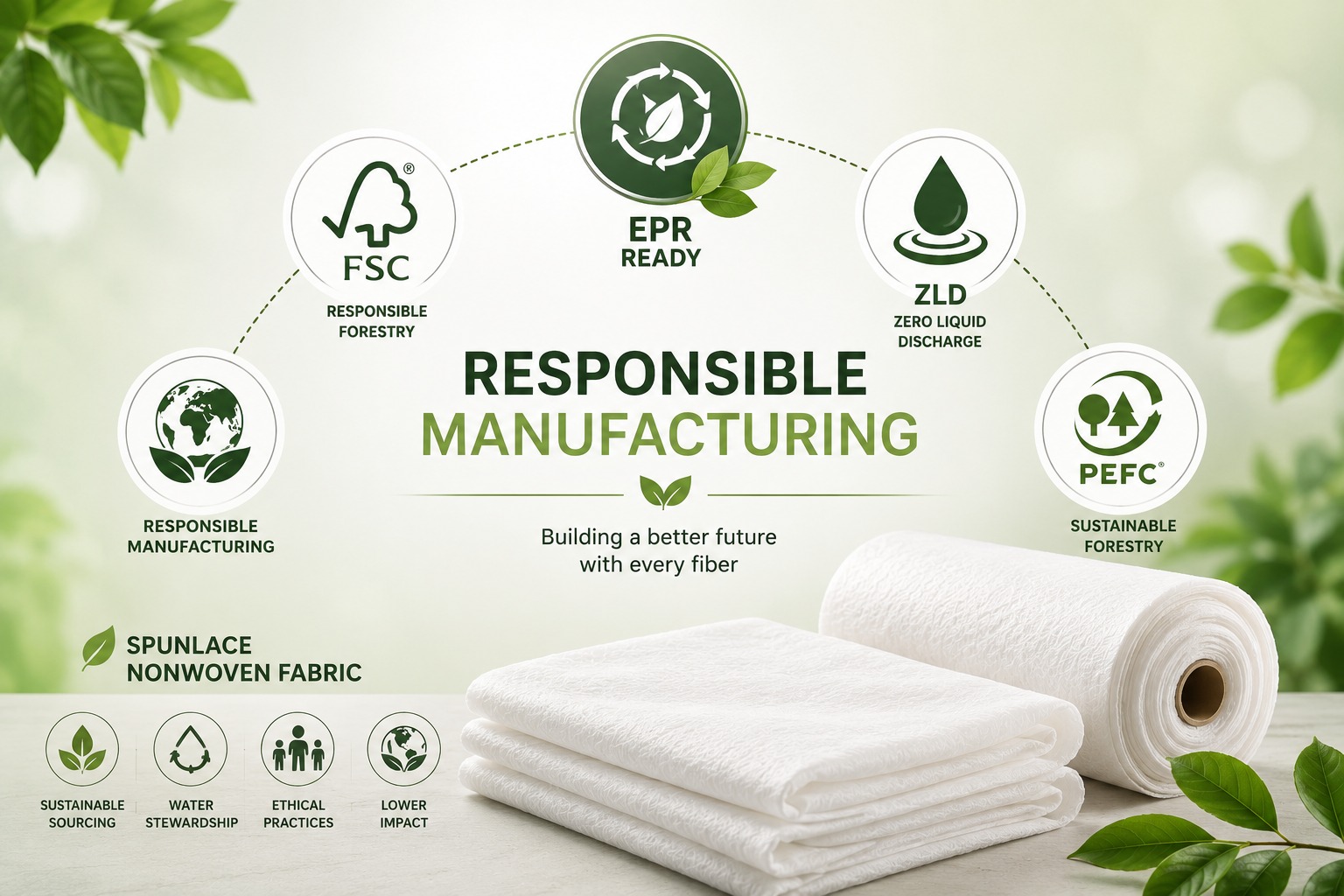
Beyond the Material: What Global Buyers Should Know About Responsible Nonwoven Manufacturing
Responsible nonwoven manufacturing enables global buyers to meet ESG goals through ZLD, FSC and PEFC
22.07.2026
Read Article - View All Blogs
-
Need nonwoven solutions for your application?
Talk to our team about custom fabrics, sustainability, and product development tailored to your industry.
Frequently Asked Questions
Know everything — be it our products, our process, or why nonwovens are so cool.
What are plastic-free nonwovens?
Plastic-free nonwovens are nonwoven fabrics made entirely from natural or cellulosic fibres without synthetic polymers such as polyester, polypropylene, or polyethylene. They are designed to support sustainability goals while meeting the performance requirements of hygiene, personal care, medical, and wipes applications.
What materials are used to manufacture plastic-free nonwovens?
The most widely accepted composition for plastic-free nonwovens is Pulp + Lyocell. Both fibres are biodegradable, sourced from certified forests, and provide excellent softness, absorbency, and strength for a wide range of applications.
What should buyers look for in a plastic-free nonwoven supplier?
When selecting a supplier of plastic-free nonwovens, buyers should evaluate certified raw materials, consistent product quality, regulatory documentation, global export
capability, sustainable manufacturing practices, and experience serving international markets.
How can buyers verify that a nonwoven fabric is truly plastic-free?
To verify plastic-free nonwovens, buyers should request fibre composition certificates, FSC or PEFC certifications, biodegradability test reports, OEKO-TEX certification where applicable, and technical documentation confirming zero synthetic polymer content.
Explore Recent Blogs
Viscose vs Polyester vs Lyocell: Which Fibre Blend Delivers the Best Performance for Wet Wipes?
Choosing between viscose, polyester, and Lyocell isn't really about picking a "best" fibre. It's abo
Read More
How to Choose the Right Spunlace Nonwoven Fabric Manufacturer for Your Business
Sourcing decisions in the nonwoven category rarely fail because of price. They fail because a buyer
Read More
How Global Wet Wipe Brands Evaluate Nonwoven Fabric Suppliers Before Signing a Contract
Multinational wet wipe brands don't sign with a nonwoven fabric supplier off a single sample and a g
Read More
100 Percent Plastic Free Nonwovens: What Global Buyers Need to Know in 2026
Learn how plastic-free nonwoven materials are helping brands meet evolving EU and US sustainability
Read More

Weave Your Success with Our Revolutionary Fabrics
Power your business with Elixrr's cutting-edge nonwoven fabric solutions. Eco-friendly, customizable, and engineered for excellence—because innovation starts with the right foundation.

Procurement teams looking for nonwoven materials for hygiene, personal care, and wipes are facing stricter compliance rules that are changing faster than most suppliers can keep up. Both EU packaging laws and US retailer sustainability scorecards now make plastic-free verification a top priority. June is also a key time for manufacturers to bring on new suppliers before the second half of the year. Plastic-free nonwovens, especially pulp-based spunlace, are the answer. Elixrr Nonwovens now offers more Pulp + Lyocell spunlace options in the EcoSpun+™ and SoftSpun™ lines. These are 100% plastic-free, FSC/PEFC-certified, and ready for global supply.
Key Takeaways
The Regulatory Clock Is Ticking in the EU
Two new rules now control how nonwoven materials are used in EU supply chains. Both require not just brand owners, but also raw material suppliers, to provide proper documentation.
The EU Packaging and Packaging Waste Regulation (PPWR), formally adopted as EU 2025/40 in December 2024, entered into force in February 2025 and will apply broadly from August 2026. It establishes a harmonised legal framework for all packaging placed on the EU market, both for recyclability requirements and supply chain transparency. In Germany, a new Packaging Implementation Act (VerpackDG) is being introduced to replace the existing Verpackungsgesetz and align national law with the EU Packaging Regulation, which applies directly in all member states from August 2026.
These compliance issues are not far off. Brand owners and private label buyers in France and Germany already need materials that pass EPR audits, recyclability checks, and retailer sustainability reports. Nonwovens with polyester or polypropylene are becoming a problem in this paperwork. Synthetic fibers affect labeling, reporting, and producer responsibility costs, while plastic-free options like pulp-based nonwovens avoid these issues.
The EU Single-Use Plastics Directive adds a further live obligation: wet wipes containing plastic must already carry consumer-facing labelling stating their plastic content and its environmental impact. This is active across all EU member states. France is moving towards a full ban on single-use plastics by 2040. Germany's Single-Use Plastics Fund Act has required annual producer reporting through the DIVID platform since 2024, with external audit verification mandatory from 2025.
The US Retail Picture is Changing
US plastic regulations change more slowly than in Europe, but pressure from retailers and brands has had a similar impact on suppliers. The US Plastics Pact, with 130 members, has moved to Roadmap 2.0, aiming to cut virgin plastic use by 30% and boost reusable packaging by 2030. This means nonwoven suppliers now face stricter sustainability requirements from their customers.
Institutional buying has changed too. Since April 2024, new custodial contracts for federal buildings must use certified eco-friendly products. Also, most US states now have Environmental Purchasing Policies. Healthcare, government, and retail private label sectors - all big users of nonwoven wipes, now follow several sustainability rules.
What 100 Percent Plastic Free Actually Means
In nonwoven manufacturing, conventional substrates often contain polyester, polypropylene, or polyethylene that are petroleum-derived fibres valued for strength, processing stability, and cost efficiency. A 100% plastic-free nonwoven substrate, like pulp-based spunlace, contains none of these. The distinction is important as it is a fibre-level claim that gets flagged in an audit.
Of the available cellulosic options, Pulp + Lyocell is the most technically credible and the most widely accepted by certifying bodies and EU auditors:
What You Need to Know Before Choosing a Nonwoven Supplier
For procurement and sourcing teams, the documentation baseline for a pulp-based spunlace supplier should include:
Elixrr's Pulp + Lyocell Capability
Most Indian exporters do not make nonwovens with lyocell. Instead, they usually offer pulp + viscose blends. While these work for many uses, they cannot be called 100% plastic-free with the same level of documentation.
By investing in Pulp + Lyocell spunlace for two product lines, Elixrr gives brands and manufacturers a reliable Indian source that meets EU and US sustainability standards.
EcoSpun+™ — Pulp + Lyocell | 100% plastic-free | GSM 35–90 | Chemical-free, biodegradable | Hydro and Thermal Embossed finishes. It is designed for personal care, baby wipes, and gentle cleansing applications.
SoftSpun™ — Pulp + Lyocell | 100% plastic-free | GSM 35–120 | Ultra-soft, high absorbency | Engineered via PentaTech™ hydroentanglement. This pulp-based spunlace is designed for baby wipes, adult hygiene, and skin-contact formats.
Both products are manufactured using FSC/PEFC-certified raw materials. The production has Zero Liquid Discharge (ZLD) facilities, making it a relevant credential for buyers whose own sustainability reporting includes scope 3 water and waste metrics. Take a look at the full details on Elixrr's sustainability credentials and certifications.
Conclusion
June is the deadline for H2 supplier qualifications. The regulatory timeline in Europe means that brand owners and private label buyers who have not yet chosen a plastic-free substrate supplier are running short on time. Elixrr's Pulp + Lyocell spunlace in EcoSpun+™ and SoftSpun™ is available now, fully documented, certified, and ready for sample evaluation. This is the substrate your sustainability team needs.
Samples and specification sheets are available on request. Start a sourcing conversation with Elixrr's team, or explore the full product range at elixrrnonwovens.com/products.